

VJMP Anzac Day Address 2023: The Inevitability Of Federalisation

Many New Zealanders were pleased by the recent news that Kiwis living in Australia will be able to apply for citizenship after four years. This marks a significant change from the status quo, under which a Kiwi could live in Australia for 20 years without being able to vote or access healthcare. Few realise, though, that the move is another step towards federalisation.

The last time I travelled overseas was some years ago. While in the Auckland Airport departure lounge, I saw some t-shirts for sale that said simply “Yeah nah”. This phrase – yeah nah – is seldom used in Britain or North America and is therefore an iconic expression of Kiwi culture. Or so I thought.

The next leg of the journey saw me in the Sydney Airport departure lounge, where they were also selling t-shirts that said “Yeah nah”. It turned out that this phrase is used so frequently in Australia that it’s considered by Australians to be an iconic expression of their culture.

New Zealand culture is Australasian culture. There are aspects of culture that are unique to New Zealand and not shared with Australia, but those are as minor as the aspects of culture unique to, say, California and not shared with Ohio. For the most part, idiosyncracies that Kiwis consider uniquely Kiwi are in fact shared across Australasia.

These idiosyncracies are set to become even more shared with the new citizenship protocols. Until now, Kiwis had endured a kind of second-class status with several restrictions. Now they will be first-class citizens after only four years – a privilege not afforded to most nationalities, who will have to slog through the permanent residency process.

Some have complained that the new Australian citizenship rules will lead to an intensification of the brain drain from New Zealand. This is probably true. Some claim that this will lead to the Third Worldification of New Zealand as our productive workforce all leaves for higher wages. This is possibly true – but it depends on the future of Trans-Tasman relations.

The new citizenship rules will reduce the legal distinctions between Australian and New Zealand citizens. Eventually people will ask themselves: if Kiwis can freely move to Aussie and can become citizens with a minimum of effort, and vice-versa for Aussies, why even bother having separate systems? Why not just become one Anzac Republic – Anzacistan?

It’s already the case that many young Kiwis studying in New Zealand intend to move to Australia as soon as they are qualified. This is fine from Australia’s point of view, as they get educated additions to their workforce. It’s very bad from New Zealand’s point of view, as their taxpayers pay for 13-18 years’ education only to not get any benefit from the greater productivity.

If New Zealand became a state of Australia, it would mean that Australian tax money also be used to pay for the education of Kiwis. No longer would Kiwi taxpayers fund the Australian workforce to their own detriment. If the Third Worldification of New Zealand can be prevented through federalisation, then both sides would be foolish not to agree to it, given the strategic considerations of New Zealand’s impoverishment.

Such a move is possibly inevitable anyway, given that we are only separate countries due to a historical fluke: The Mistake of 1901. The decision to even be separate countries in the first place was the result of erroneous thinking, in particular the belief that the 2,000km between New Zealand and Australia represented a vast gulf, akin to the distance between Italy and Tunisia.

In reality, the cultural difference between New Zealand and Australia is minuscule. A person can fly from Christchurch to Perth, a distance of over 5,000km, and will find most things in their new city familiar. Dress, mannerisms, architecture, popular brands and culture: all very similar. They can even find a thriving rugby union scene.

Few countries in the world have this degree of cultural homogeneity among regions at their opposite ends. Yet Australia and New Zealand have this, and are not one country. Why? Without referring to The Mistake of 1901, no logical explanation can be given. It seems to have been assumed that we would grow apart, like England and Ireland perhaps, but instead we grew together.

It’s time to accept that our forefathers, who predicted divergent evolution, were wrong. The cultures and peoples of New Zealand and Australia have, in fact, evolved convergently over the last 120 years. To understand this is to accept that federalisation is inevitable.

There are already some 670,000 Kiwis living in Australia. Now that this cohort can easily access Australian citizenship, and given that dual Kiwi-Aussie citizenship is already possible, the thin dividing lines between Kiwis and Aussies will get even thinner.

If federalisation is inevitable, it’s time to stop worrying about what rights Kiwis should have in Australia, and it’s time to start worrying about the terms under which New Zealand would accede to Australian statehood.

*

If you enjoyed reading this essay/article, you can get a compilation of the Best VJMP Essays and Articles from 2021 from Amazon as a Kindle ebook or paperback. Compilations of the Best VJMP Essays and Articles of 2020, the Best VJMP Essays and Articles of 2019, the Best VJMP Essays and Articles of 2018 and the Best VJMP Essays and Articles of 2017 are also available.

*

If you would like to support our work in other ways, subscribe to our SubscribeStar fund, or make a donation to our Paypal! Even better, buy any one of our books!

Buddhism and the Lessons of Suffering

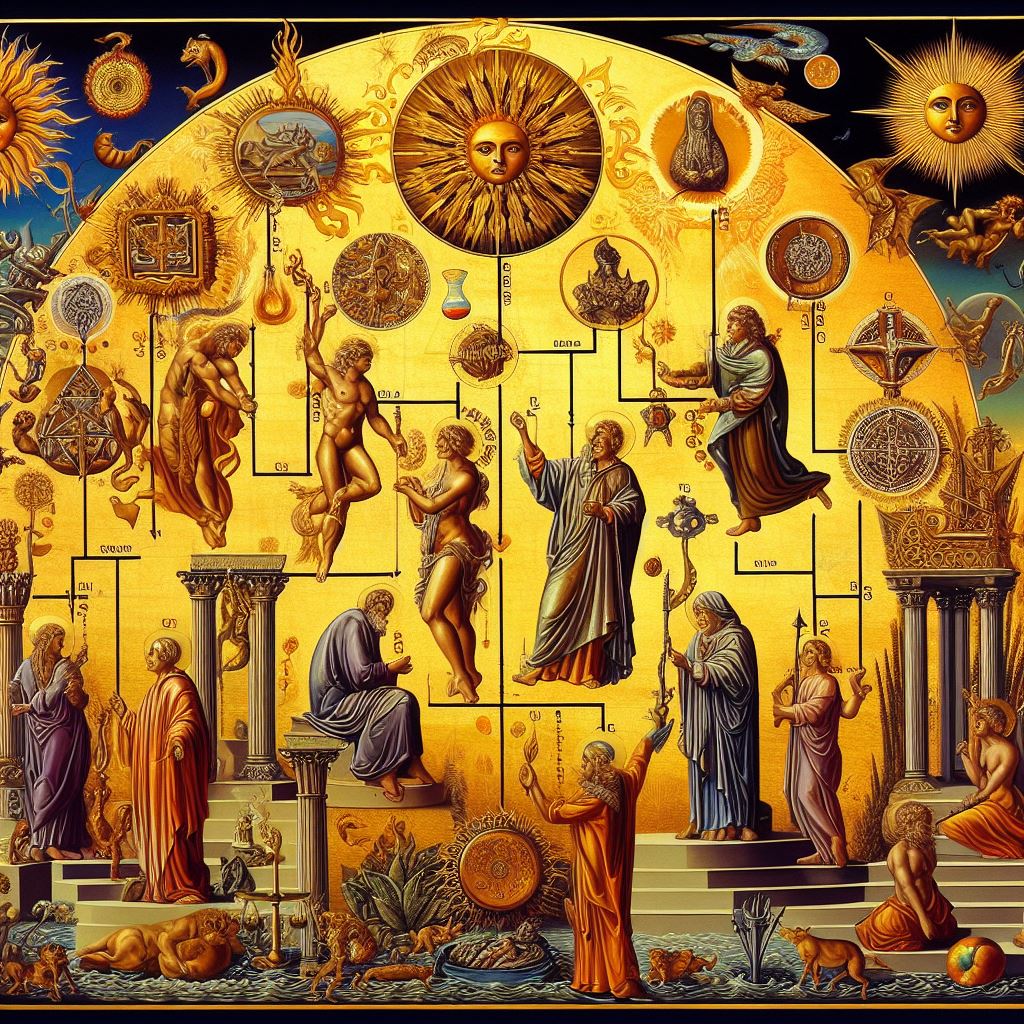
When we are suffering, usually the first thing we are programmed to do as an ego is to curl up and figure out how we can be ok, and how we can look after number one. This is a very deep conditioning, which at a genetic level, precedes every other primitive psychological drive. Self-preservation underpins all of our genetic responsibilities. How this plays out on an experiential level is fear. Fear of annihilation, fear of suffering, fear of not making it. This is the deepest conditioning of the genome, conceivably going back all the way to the origin of our DNA. What if our deeply-rooted assumptions are totally upside-down, from a spiritual perspective? There are many reasons for thinking this to, in fact, be so.

The Buddhist tradition embraces a concept of compassionate service. Imagine a universe written as code. From the bottom up, you have been programmed to act in one direction, so that everything in any other direction would serve only to compromise your genetic existence. What kind of education would that be? An exceptionally challenging one, in my experience. Everything would have to be reviewed, from the very foundations up.

How it is that we are genetically programmed to insulate our suffering by withdrawing into ourselves? Picture a hedgehog rolling up into a ball when it senses danger, and you will have a workable mental image of how our genetic conditioning has encouraged us to respond. This may be perfectly fine insofar as hedgehogs are concerned, but what about us?

Why do spiritual traditions such as Buddhism subvert what we might call genetic values? Why would any spiritual tradition teach us anything even remotely different from that hedgehog’s response of curling up into a ball when in danger? Is it some kind of strange coincidence that the teachings of those who came to bear such massive spiritual influence are at loggerheads with the moral principles encoded into our genome through natural selection?

Here are some of the common threads of these spiritual teachings: unconditional compassion and love for others, including all animals – compassion given even when no material or genetic return could possibly accrue. Unconditional forgiveness, acceptance and understanding: even though people may be our physical adversaries, ideological enemies, or simply those that intend to visit harm upon us.

Why does the moral calculus of material considerations, including genetic fitness and resource-hoarding, function to close the spiritual heart, causing us to contract into an existential foetal position, while spiritual practices of compassion open the heart? How could becoming more vulnerable be any kind of answer to the threat of pain and suffering? Why should these worlds be at such great odds, the material or biological world, and the spiritual world?  What can these ancient traditions, mere thousands of years old, tell us that could be more materially valuable than genetic systems that may have been operating for billions of years from the first cells through to primitive burrow-dwelling mammals, and now us?

Are our spiritual insights an aberration, a kind of warped illusion of freedom from the forces of nature? Or could it be the material world is where falsehood always lay? Do these two facets work side by side as educational tools? These are weighty philosophical questions. I want to put these aside in favour of the here and now, and look at what immediate human involvements are relevant to the discoveries of traditional teachings such as Buddhism.

Whereas many traditional religious systems emphasise moral purity and categorical rejection of evil, Buddhism focuses upon wholeness, skilful living, compassion and wisdom. Seeing the bigger picture in a philosophical or theological sense is nowhere near as important in Buddhism as what we choose to do here and now. Buddhism teaches that our intentions, from our merest thoughts to our most fleeting actions in the world matter supremely. We are either making these decisions skilfully, from a space of what Buddhism calls ‘right view’, or we are perpetuating delusion that was born of the push-and-pull conflicts of the material world, the ‘maya’, which Buddhism views as rooted in illusion.

This Maya, this ingrained system of delusion, incidentally, is a precise reflection of the genetic morality, the unspoken code which promotes striving for power, resources, knowledge, experiences, reproductive leverage over others, warring with others, and outcompeting other groups. This Buddhism identifies this activity as an illusion rooted in fear, the origin of all psychic human suffering. Because all fear activity is based upon a premise of separation, being that you are distinctly separate from the world around you, it becomes a self-reinforcing hypothesis, as well as a self-fulfilling prophecy. This suffering is set to last at least as long as the power of the illusion holds sway over the mind.

How does this impact our life here and now? What are we to do with this insight, how are we to translate this insight when we are actually in the very midst of suffering? When we are in suffering, we are not experiencing the realm of the theoretical. None of our ideas, however advanced, lofty or comforting, may be applied. This is something I have seen from experience. As a long-time meditator, I have observed that when I am in a state of suffering or imbalance, the most pertinent lesson is not that I have failed to understand something intellectually, nor is it that I am being punished because I have done something wrong, but that there is an element of something present that is outside of my immediate control.

It just is. It is a brute, present fact. I have often learned the most in meditation when I have come face to face with what I do not have the power to move. Every meditator eventually meets this phenomenon. The reason we have an entire cultural history of saints, sages, gurus and mystics is testament to the presence and power of suffering. They demonstrate the hunger of humanity, the deep drive to transcend that which torments us at our human level. Without suffering, we would have none of these teachers, nor would a single one of their timeless lessons be relevant to us.

What I have discovered personally in my own lifetime is that following the directives of self-interest is often harmful in very immediate and direct ways. Self-centredness is a compassion-inhibitor.  An attitude of selfishness has never produced anything for me other than misery, even when I managed to get exactly what I thought I wanted. Amazingly, the opposite has been true. When I looked after the well-being and interests of others, I never had to take thought for myself, and even when I didn’t get what I thought I wanted or needed, everything turned out just fine.

So why would it be the case that what should, at least on paper, get us more of what we want lead to even less well-being for us personally? Why doesn’t it feel wholesome, why doesn’t it feel like a good fit for our inner life? I have experienced many miseries that were the result of selfishness, but I cannot think of one single episode of caring and giving in which I experienced forlornness or regret. This may be symptomatic of the fact that in this state, others are visible to us and welcomed within our world, while we ourselves remain almost invisible actors, like God’s unseen hand. This may be why Nisargadatta said:  “Wisdom tells me I am nothing; Love tells me I am everything – and between the two, my life flows.”

In the same way that we all share in an eternal divine nature, we also share in a universal, human brokenness. There are not the pure among us who have somehow got it perfectly right and have escaped all suffering, and there are not the evil among us who have got it wrong and eternally bound themselves to suffering. We all meet somewhere on the spectrum as humans, because to incarnate into a biological form means to court some degree of suffering. What systems such as Buddhism offer is medicine for this suffering.

Let’s go back to my original example of the way a hedgehog reacts to a dangerous situation. While this might be totally normal and practical for a hedgehog, it isn’t normal and practical for a human mind. Natural selection may even have developed minds to react this way, but natural selection has no stake in your mental and spiritual well-being. The only variable being considered is differential genetic success. Evolution applies these pressures to other people and groups as well, and it couldn’t care less which survives. Like a mother squid with thousands of offspring, it has no favourites. There is not a shred of evidence that your genetic success, or lack thereof, has anything to do with your soul – which is to say, your psyche, or your True Self.

We will come across suffering in this life, we will meet with challenge – this much is certain. What I have discovered, as a very slow learner who has historically been very prone to over-intellectualise, is that compassion is the single most vital emergency medicine of the soul. Buddhism cultivates practises of loving compassion for this very reason, for ourselves, even for our enemies. Why? Because it actually works. If you want to see how, try it out for yourself.

Moving from the hedgehog to ourselves, when we suffer, the worst thing I have discovered we could ever do is to close down. We revert to an almost reptilian state of self-obsession in which we are in a kind of genetic first-aid mode. We do anything we can to make sure number one is taken care of – ourselves. We obsess over how every tiny thing that could help us matters, or any way in which we could feel even slightly better. This is not only a magnification of suffering, this is the closest to hell I have been, experientially.

As I mentioned before, selfishness is a compassion-inhibitor. Armouring ourselves is the same movement as shutting down our connection to others. Buddhism shows us how this orientation of shutting down in self-protection and self-armouring actually harms us spiritually. Nothing will make you more miserable than focusing on yourself when you are deeply suffering, distressed or upset. All spiritual teachings have acknowledged this in some form. What is also understood is that this presents a double-bind – how can I look after myself and making sure I am going to be ok when self-consciousness is the one thing that will worsen my condition?

Again, the answer is the practice of compassion. Have you ever wondered why prominent Buddhists such as Thich Nhat Hahn or the Dalai Lama go to such extraordinary lengths to ensure the comfort, happiness and well-being of others instead of focusing on themselves? Recall that these are both men who have lived through the devastating effects of loss, war, political adversity and being driven far from their homes. Why do they choose outgoing compassion, ceaselessly?

They understand. They have suffered enough to understand and witness the truth of the Buddha’s teachings. We cannot merely look after ourselves – there is service to others in a field of compassion that includes us. This is the very medicine by which Buddhism offers the means to transcend the dreaded double-bind of self-consciousness, and thereby, the knot of suffering. 

Another way to say this is: try to focus on the well-being of others, then see what happens. Your own situation will change quite without effort on your part. Remember, Buddhism prescribes medicine, not miracles – though these have certainly been known to happen from time to time. We all have the means to direct compassion outward. We do this by opening our heart to whether others are really ok. This could be as simple as giving our full attention to someone who is expressing themselves, or brushing the fur of a pet.

There is infinite creative potential available in how we attend to others compassionately, even if it is only in thought. If you want to know whether it really works, I can tell you from experience that it does. I can also point to the testimony of many others, including Tibetans held captive as political prisoners who ceaselessly share love and compassion with their prisoners and torturers. They testify that this practice has served as the one thing that has kept them from being sucked into a vortex of despair.

The same conditions may be present to us as traumatic personal history, mental illness, grief or loss. Making sure that others are alright should not be seen primarily as a moral prescription put forward by Buddhism so much as it is an invitation to wisdom, an entry point to experiencing the relief of suffering in our ordinary, daily lives, right here and now. This compassion then becomes a living example for others, showing them how their helping others also relieves their own suffering. Where else could we apply such wisdom but here and now?

*

Simon P Murphy is a Nelson-based esotericist and philosopher, and author of His Master’s Wretched Organ, a brilliant collection of weird fiction stories.

*

If you enjoyed reading this essay/article, you can get a compilation of the Best VJMP Essays and Articles from 2021 from Amazon as a Kindle ebook or paperback. Compilations of the Best VJMP Essays and Articles of 2020, the Best VJMP Essays and Articles of 2019, the Best VJMP Essays and Articles of 2018 and the Best VJMP Essays and Articles of 2017 are also available.

*

If you would like to support our work in other ways, subscribe to our SubscribeStar fund, or make a donation to our Paypal! Even better, buy any one of our books!

The Battle Of The Now: Nothing Is Anything vs. Some Things Are Something

The Western World seems on the brink of civil war. The factions appear to be two completely different conceptions of reality, or how to approach reality. One faction contends, essentially, that nothing is anything. Their opponents assert that some things, in fact, are something. As with many historical battles, it’s fundamentally a battle of masculine vs. feminine.

The feminine side states that nothing is anything. No truths can be known for certain. All is flux, therefore nothing is permanent for long enough to substantiate its existence. Because nothing is certain, there’s no point in being too strict about borders or boundaries. This side is what Alan Watts used to call “gooey” people.

The masculine side, by contrast, states that some things are something. There are such things as objective truths, and they can guide our lives. These truths are often fixed ideals. Such people often react with outrage to Nietzsche’s suggestions that there are no moral truths. This side is what Alan Watts used to call “prickly” people.

In the Clown World of 2023, these are the battle lines of the culture war.

The feminine side has no issue with the trans phenomenon. If nothing is anything, then women are not exclusively those with XX chromosomes. Therefore, femininity is a matter of what gender you “identify as”, or which gender you “represent”. Trans people are whatever they say they are, and the rest of us have to follow along.

The masculine side comes into opposition with this view. To the masculine, gender is fixed, and it’s more or less fixed to sex. Men are men and women are women. It doesn’t matter what you identify as, because there’s a determined and objective reality which itself reveals what you are. Thus, there is a particular bathroom to which you belong, and one to which you don’t.

A similar situation exists with nationality. To the ideologically feminine, nationality is like a mask, that can be put on, taken off, and replaced at will. It’s possible to become a member of a different nation simply by living there. Such a view sees no contradiction in having two or more passports and claiming to belong to more than one nation.

To the ideologically masculine, nationality is rooted in blood and soil, and therefore even people who have lived in a new country for 50 years aren’t members of the nation (although their children might be). Nationality, like gender, is fixed and not fluid. It’s comprised of kinship links that are as real as family ties.

In fact, this division is replicated in attitudes to biology. The feminine reject biological determinism, preferring to believe that anyone can become anything if given the right environment while growing up. Success is primarily a matter of will, and natural talents can be shaped in virtually any direction. This ties in with the modern globalist mindset.

The masculine, by contrast, reject Blank Slate Theory. They support hereditarianism. The masculine approach ties in with the modern nationalist mindset, because it’s concerned with the long-term effects of (e.g.) immigration on the nation’s genetic infrastructure. When some things are something, it tends to be permanently that way.

Complicating matters, sometimes one of the two sides is more correct than the other.

For instance, the masculine side is right when it says that intelligence is mostly genetic, but wrong when it says that mental illness is also mostly genetic. As such, it errs towards exclusion. The feminine side, for its part, is right when it says that mental illness is mostly environmental, but wrong when it says that intelligence is mostly environmental. As such, it errs towards inclusion.

Those who cannot overcome an inherent, entrenched masculine or feminine bias are why public discourse has now degraded to such a low level. Rather than talking to uncover the truth, people now talk to further the interests of their team. Those with the strongest biases are incapable of even perceiving their opponent’s position.

The correct course of action is to stop thinking in crude, black-and-white terms, and to try developing some intellectual nuance. Masculine thinking is useful when it’s necessary to delineate and discriminate, and feminine thinking is useful when it’s necessary to draw similarities. To have a bias towards either is a cognitive weakness.

In order to psychologically survive Clown World, it’s necessary to stand above forced, artificial battles that are designed to destroy your will and waste your mental energy. The simplest way to stand above is to not get sucked into inconsequential masculine vs. feminine debates that have been created by the mainstream media. Try to be, as the Confucianists say, the unwobbling pivot between yin and yang.

*

If you enjoyed reading this essay/article, you can get a compilation of the Best VJMP Essays and Articles from 2021 from Amazon as a Kindle ebook or paperback. Compilations of the Best VJMP Essays and Articles of 2020, the Best VJMP Essays and Articles of 2019, the Best VJMP Essays and Articles of 2018 and the Best VJMP Essays and Articles of 2017 are also available.

*

If you would like to support our work in other ways, subscribe to our SubscribeStar fund, or make a donation to our Paypal! Even better, buy any one of our books!

Turning Within

Everything ever written about the project of self-examination and awakening has at least two potentialities – it could aid in your progression, or it could prove to be obstructive. The inherent problem which anyone who talks or writes about self inquiry faces is that there is a crucial danger of all of this being interpreted as mere talk. In the process of awakening, which is really simply a direct experiential meeting of ourselves, no adding of concepts is required, nor is any kind of conceptual understanding or analysis.

The primary problem I find is that people become so intrigued with the potential suggested by mystical experience that they skip the only important part and wind up erecting a teetering mental tower of beliefs, concepts and assumptions, all resting on a foundation which is itself conceptual, and therefore not grounded in direct experience.

This is the primary danger of the project of self-discovery. If you trip at the very first hurdle, you might delay your awakening for decades, or even indefinitely. The mystics of every tradition have advised us unanimously not to take any assumption for granted in self-discovery, to turn within and find out for ourselves. You may observe that this is the opposite of philosophy or theology, in which a vast body of concepts is accrued and then some degree of rationalistic intellectual commitment is apportioned accordingly.

This is not the case at all with turning inward. In any other endeavor, it is always the last steps that are considered to have the highest importance, whether it is earning a military rank, a degree, a belt in martial arts, or a professorship. In self-discovery, in the meeting of our true self, the first step is always of the highest importance. The authenticity of the drive to self-knowledge is at the beginning, or it is nowhere. We do not accrue it after years of gaining conceptual understanding, nor through years of sitting in meditation, for that matter. This is because awakened nature has absolutely no dependence upon the conceptual.

The fact is, you could have studied anything and if you had not met your true nature from the beginning in total innocence and curiosity, then your understanding will be totally impoverished. This is what is meant by building a house upon a shifting foundation.

None of this other stuff, including everything we talk about to do with the various nuances of self inquiry, ego and spiritual sounding concepts, is finally necessary. In fact, I would go so far as to say that no spiritual concept, however sophisticated or meaningful, is ultimately more important than your actual awakening. There isn’t a universal checklist of things for you to believe or ways to behave after you wake up – it doesn’t work like that. It is certainly true that there are trends, but there is no prescription for what you waking up to yourself should look like. You start fresh every day, or you are really not starting at all – you are simply back in the temporally dominated realm of the egoic mind.

Meeting who we truly are is utterly simple.

The problem is that often once we are implored to turn within, we flex and twist in meditation as if we are in a gym trying to develop muscle for the ultimate test of strength. This isn’t what is being asked of us. We have what we are looking for, because it is unconditionally with us all right from the very beginning of our journey. It is consciousness here and now, the thing we always mistook as being so commonplace and ordinary.

What people don’t typically see is how that ordinariness is actually woven into the other aspect, which is the totally miraculous infinite. Since we could first comprehend language, we were all effectively brainwashed into thinking that this innate experience should be met with anything other than gratitude and astonishment.

All that is ever being asked of you in this mystical venture of turning within is that you stop your trying to get somewhere else, right where you are in this moment, and put down your baggage long enough to see what is really here. Your baggage is your beliefs, assumptions, expectations. Put it all aside for long enough to get a glimpse of that which was always already here and see that it is an immediately available miracle, a flower eternally blooming, an endless act of divine creation.

You only need to see the beginning of the experience once. You will give up every concept for it if you knew what it was, because you would immediately see concepts as chaff before a great fire of being which, at your core, you are. Then, once you have tasted directly from the well of your own soul, see what ventures and beliefs you are drawn to and go about your own way. But I cannot overstate the value of a true meeting with your soul. The fruit of this meeting is not a strengthening of belief, but Gnosis.

I would like to conclude this by saying that if you have not had this meeting, I would encourage you to prioritise it to the point of putting aside everything else practically possible. The alternative is to have a house built upon sand. No matter how elaborate and beautiful the house, it has no lasting basis – it is temporary. When the bedrock is discovered, anything built upon is merely a ‘nice to have’. The bedrock is discovered to be primary and indispensable. That rock is Being – but this is too easy to talk about merely conceptually.

See that which cannot be unseen, discover that which was always there beneath your each and every belief, idea, and concept, with every step and every breath. People are looking everywhere for how they are going to end up, but only because they have a poverty of experience when it comes to understanding where they begin.

Reality is not a belief, it is an experience. Because it is misunderstood as the former, religions and philosophies find disagreement and discord. Precisely because it is the latter, mystics of all traditions find no disagreement. You can believe in infinite variations of what is false conceptually, but you can only ever meet one Reality. So the invitation, as ever, is to turn within. Not for becoming better or more advanced, but to Know once and for all where you begin and end.

*

Simon P Murphy is a Nelson-based esotericist and philosopher, and author of His Master’s Wretched Organ, a brilliant collection of weird fiction stories.

*

If you enjoyed reading this essay/article, you can get a compilation of the Best VJMP Essays and Articles from 2021 from Amazon as a Kindle ebook or paperback. Compilations of the Best VJMP Essays and Articles of 2020, the Best VJMP Essays and Articles of 2019, the Best VJMP Essays and Articles of 2018 and the Best VJMP Essays and Articles of 2017 are also available.