Category: drugs
Writing Post Traumatic Stress Disorder

Post Traumatic Stress Disorder (PTSD) is an unusual condition in that almost everyone has it to a greater or lesser degree, but few realise the impact that it has had on their lives. As the name implies, the condition describes when a person’s stress levels or reactions don’t go back to normal after a major traumatic experience. This article looks at how to write believable characters and situations involving PTSD.
PTSD is caused by exposure to a traumatic event, usually one in which a person thinks they are going to die. The classic examples are exposure to warfare, traffic accidents, sexual assault or physical assault. Experiences like these cause the brain to flood with fear, which can form long-term associations with the other stimuli present. This means that future exposure to those stimuli can trigger that deep fear again.
The classic symptom of PTSD is becoming full of adrenaline and going into combat mode when exposed to a loud noise or a touch to the head. In the former case, the loud noise might remind a character of the explosions of grenades and shellfire in combat; in the latter case, the touch to the head might remind of early childhood abuse at the hands of a parent. In either case, powerful memories of immense fear can quickly come flooding back.
The effects of PTSD are what could be expected from a close brush with gruesome physical death: adrenaline and cortisol prime the character for either combat or running. A character with the condition might easily become stirred into fight-or-flight mode as a response to the trauma. Here it can be seen that PTSD has considerable overlap with other psychiatric disorders, in particular Panic Disorder, Avoidant Personality Disorder and Generalised Anxiety Disorder.
Other effects are an increased propensity for self-harm. After all, one of the natural consequences of having a massively traumatic experience is that a person comes to realise that the world is much nastier or more dangerous than they thought it was. Some people with PTSD might decide that this world is actually pretty shit and not worth living in, given the horrors it contains.
In the case of violent crime or rape, a person might also come to lose all trust in a major societal demographic, which entails everyday difficulties. If a woman comes to distrust all men or a robbery victim comes to distrust all blacks, their life might become a lot harder and quickly, for no real fault of their own. Like children who have had bad experiences with dogs, a person with PTSD might come to dislike anything associated with their initial trauma.
Because PTSD is frequently portrayed in dramatic fiction, care must be taken not to write in cliches. The example of a nightmare leading to someone waking up in the middle of the night screaming, only to realise that the object of their terror is no longer present, is a striking one but also very heavily used. So too is the man staring into the distance, reliving a traumatic experience, not hearing someone calling to them.
A protagonist who suffers from PTSD might be aware of their condition or unaware.
If they are aware that they have PTSD, they might be a deep and sensitive character. They could be directly aware that a particular early life event has damaged them irreparably. This might be the reason for their unusual levels of compassion – the character knows what it feels like to be scared to death and commiserates with others who also do.
A story featuring such a character might be one about how they overcame their psychic damage and managed to find a way to engage joyfully with life. Often this involves healing oneself, the shamanic path. An extremely wise character may have attained their insight through having overcome an equally extreme trauma earlier in their life. Perhaps this experience caused them to understand what another character is going through.
It’s common to have PTSD and to be unaware of it. This is especially plausible on account of that people who incur severe psychological trauma might not show signs of it until many years later. A person might grow into early adulthood with a particularly surly or nasty character because of some heavy trauma incurred while a child. They might also show other signs of being strongly emotional, reckless or impulsive.
Just because a character with PTSD is not aware that they have PTSD, doesn’t mean that other characters will not be aware. In some cases it will be very obvious, because they will observe the first character go into kill mode for what seems like an insufficiently grave provocation. The character with PTSD might soon find that their condition is part of their reputation – they seem “damaged” in the eyes of others.
A combination of the two can also tell a story, such as the case of a protagonist who gradually becomes aware that they have PTSD or something like it. Perhaps they are perceptive enough to realise that a prior event has damaged their psyche – for example, they observe that they feel intense anxiety when presented with a stimulus that reminds them of a particular traumatic event.
If your protagonist encounters a character with PTSD, how that protagonist behaves might depend on their naivety and openness. A naive character might think that simply by being nice to someone with PTSD they can get them to behave normally. Although this is sometimes true up to a point, the reality is that PTSD often carries with it sinister undertones of bitterness and resentment.
It’s common for people who have PTSD for similar reasons to bond strongly over the fact. This is especially true in the case of soldiers, emergency personnel and survivors of abusive relationships. For one thing, misery loves company, but for another, severe trauma is often the kind of experience that deeply shapes a person and their conception of life and reality, so people who share the trauma often share an entire worldview that’s based on it.
C-PTSD (Complex Post Traumatic Stress Disorder) isn’t actually in the DSM-V, but it’s worth covering here for the sake of completeness. Essentially it’s a similar condition, only brought about by repeated exposure to a traumatic person or stimulus, as opposed to one single, horrifying event as is usually the case with regular PTSD.
The major difference with C-PTSD is the loss of a sense of self. One’s boundaries are violated with such consistency that it becomes hard to say where one ends and the outside world begins. This can be related to Depersonalisation Disorder and frequently coincides with a deep sense of distrust about other people.
*
This article is an excerpt from Writing With The DSM-V (Writing With Psychology Book 5), edited by Vince McLeod and due for release by VJM Publishing in the summer of 2018/19.
The New Zealand Government Has Been Separating Children From Their Cannabis-Growing Parents for Decades

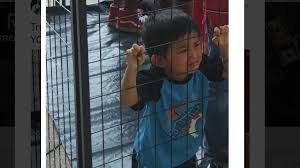
Today’s mass media assault on consciousness involved emotional images from America of Mexican children in cages. The ensuing outrage was based around the fact that when a Mexican family is apprehended crossing the American border illegally, the children are temporarily separated from their parents. Although this is regrettable, what the media is ignoring is that the New Zealand Government has been doing the same thing to its own citizens for decades.
For one thing, it’s standard practice for the New Zealand Government to separate children from their parents if those parents are going into custody for breaking the law. In this regard, the New Zealand Government’s normal actions are no better than what the American Government is doing. Even worse than this is the fact that many of those parents are going to jail for offences that don’t harm anyone, unlike (arguably) illegal immigration.
The fact that cannabis is a medicine is a fact near enough to universally acknowledged by the young people of the world, even if Baby Boomer politicians have been slow to understand it. However, cultivation of it remains a crime punishable by up to seven years imprisonment in New Zealand, despite that the plant has a wide range of medicinal effects and is used all over the country to alleviate needless suffering.
Because cannabis is so good for alleviating suffering – taking away pain, nausea, insomnia among other maladies – people continue to grow it, despite the law. But because of the law, a significant number of these people end up being apprehended by Police and sentenced to prison.
Many of the medicinal cannabis growers who have been put in prison over the past 40 years have had children. Those children were forcibly separated from their parents by the New Zealand Government for the sake of enforcing a law that should never have been a law.
So all the perfectly natural dismay that Kiwis have been induced to feel at what the Mexican children at the American border are forced to endure – a traumatic forced separation from their parents as a consequence of an arbitrary law enforced by armed men – could just as well arise as a result of thinking about what Kiwi children have to go through as a result of cannabis prohibition.
In fact, our own children have it worse, because they will often not get to see their parents again for a long time.
So if people in New Zealand are going to get upset because of an outrage that the global corporate media manufactured in order to target a conservative American President, let’s get equally upset about similar and equally evil actions in New Zealand.
Every time a New Zealander gets put in prison for a cannabis offence that has harmed no-one, leaving a child on the outside who is now missing a parent, we ought to react with the same outrage towards our own Government as we had today for the Trump Administration. If we’re going to expend energy on outrage let’s at least direct it somewhere where it can do some good.
*
If you enjoyed reading this essay, you can get a compilation of the Best VJMP Essays and Articles of 2017 from Amazon for Kindle or Amazon for CreateSpace (for international readers), or TradeMe (for Kiwis).
Can North Korea Teach the West How to Have A Humane Cannabis Policy?

Our media has been giving us the Two Minute Hate about North Korea for over two decades. Anyone who has read 1984 knows that most of the reason for this is to distract from the crimes of our own politicians and industrial leaders. One of these crimes is the War on Cannabis: Western Governments could learn from the North Koreans how to have a humane, honest and fair cannabis policy.
For the past 40-50 years, Western Governments have conducted a War on Drugs against their own people, without the consent of those people. Trillions have been spent during these decades to persecute tens of millions of Western citizens, many of whom had not caused any harm to anyone. This mass human rights abuse – because that’s what it is – continues to this day, despite small wins for the people in some areas.
This War on Drugs has been justified with a rhetoric so clumsy and corrupt that even a 1930s-era propagandist would be embarrassed by the lack of subtlety. From the infamous “Reefer makes darkies think they’re as good as white men” to “Cannabis use causes psychosis” to today’s horseshit stories about how buying cannabis is supporting Mexican narcoterrorism, no more hamfisted effort has ever been made to sell anything.
For roughly half a century, Western families have been ripped apart from having one of their family members sent to prison for a cannabis offence. Tens of millions have been forced into a traumatic encounter with the Police and justice or prison systems, treated as criminals when most were mentally ill and needed help. In America in 2016, there were 574,641 people charged with the crime of simple cannabis possession.
One would expect then, that the punishment for cultivating cannabis in a place as fundamentally evil as North Korea would be horrifically draconian and senseless. If it’s up to seven years imprisonment in New Zealand it must surely be life in prison or even execution there.
To the contrary – far from scheduling cannabis as belonging to the most dangerous category of addictive drugs with no medicinal value as America does, North Korea doesn’t even consider cannabis a drug. Not only are people free to cultivate it without sanction, but it grows freely by the roadside in many places, being a weed and not being subject to eradication programs. North Koreans are free to harvest and smoke it every single day – and they do.
Many would personally be happy to trade all the supposed Western freedoms to drink booze, watch television and chase loose women for the freedom to smoke cannabis, have quality conversations with intelligent people and at the end of the night still be capable of maintaining an erection. So one has to ask: who’s actually better off?
The thawing of relations between the West and North Korea might have implications for cannabis policy in the West. Those Westerners who are still labouring under primitive superstitions such as “cannabis causes brain damage and therefore people should go to prison for it” might learn something from the more enlightened approach taken by the North Korean Government.
Perhaps North Korea could send advisors to the West to educate our politicians about how large industries conspired to make cannabis illegal for the sake of wiping out a competitor, and that keeping it prohibited is actually an immoral thing to do. These North Koreans could also be tasked with going through our Police and justice system employees to root out the sadists who believed that imprisoning someone was ever a fair or reasonable response to drug possession, because they are morally defective and cannot be trusted to serve the public.
*
If you enjoyed reading this essay, you can get a compilation of the Best VJMP Essays and Articles of 2017 from Amazon for Kindle or Amazon for CreateSpace (for international readers), or TradeMe (for Kiwis).