

The Case For Cannabis: Other Acceptable Drugs Are More Harmful

The standard argument is that cannabis is too harmful to be allowed and this is why it has been made illegal. This extreme level of harm is ostensibly the reason why criminal penalties are applied to its possession and cultivation. However, as this article will examine, this argument is hypocritical and dishonest.

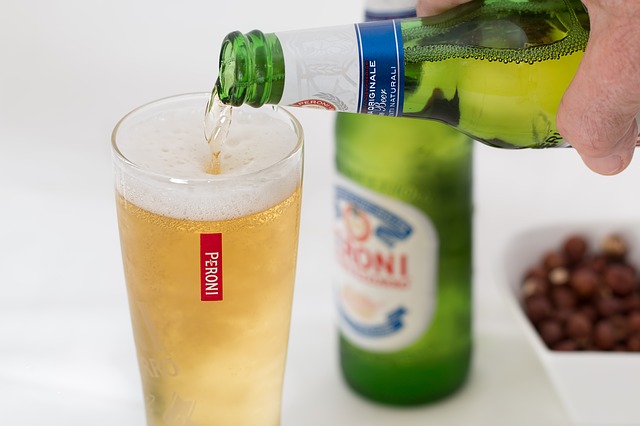
There’s no doubt that alcohol and tobacco are more harmful than cannabis. In New Zealand, alcohol is believed to kill between 600 and 800 people every year, mostly from cancer, heart failure and liver failure. This is a horrendeous body count by any standard, even higher than the suicide count and the road toll.

The butcher’s bill for tobacco is even worse – this is believed to kill 5,000 people in New Zealand every year. 1 in every 1,000 Kiwis killed every year by one legal drug can only really be described as carnage. It’s orders of magnitude more destructive than cannabis, which is not conclusively known to kill anyone.

This argument for cannabis law reform is therefore very simple. If alcohol and tobacco do not meet the threshold for causing sufficient harm to be banned, then neither does cannabis. Put another way, if either alcohol or tobacco are acceptable when judged by balance of harm, then so is cannabis.

Others will respond that there’s no reason to add yet another harmful drug to what’s already available.

As mentioned elsewhere, this argument is ignorant of human psychology. People who want to get high will use whatever is available to them. There are no perfectly sober people enjoying their lives right now who are at risk of becoming a cannabis addict after one puff. There are, however, a lot of hard-core alcohol, tobacco and pharmaceutical users who would switch to using cannabis instead if it were available.

In much the same way that voting in an election means supporting one evil for the sake of defying a greater evil, many people use cannabis instead of a drug that is more harmful. In other words, cannabis can serve as a substitute for alcohol. This point has been argued at length elsewhere, but it’s important enough to be worth bring up again here.

If you could reduce the nation’s alcohol consumption by a quarter, you should also reduce the nation’s death toll by 150-200 every year. A proportion of people would use cannabis instead of alcohol if they were given the opportunity, so if legal cannabis would reduce the alcohol intake then it would save lives.

Even if a third of those who gave up alcohol for cannabis died from complications related to cannabis use (a ridiculous idea if one realises that legalisation will mean vaping instead of smoking), this would still represent a saving of 100 or so lives every year. So if other drugs are both more harmful than cannabis and legal, then it makes sense that cannabis should also be legal, because then some people could switch to it.

Some will respond that alcohol and tobacco are “part of our culture”. Well, we cannabis users would respond that cannabis is part of our culture. Certainly no-one asked us what our culture was, and if they had asked, many of us would have told them that we prefer to use cannabis. The people who made the decision are in the pockets of big alcohol manufacturers – they’re not objective judges.

For those of us who are part of the cannabis culture, using cannabis simply fills the same niche as those who recreationally use alcohol or tobacco. We know that it’s slightly physically harmful and can be mentally harmful if misused. Everyone knows this. It’s just that we believe the social, emotional and psychological benefits of recreational cannabis use outweigh the minor harms.

Yet others will argue that “the horse has bolted” when it comes to alcohol and tobacco. These drugs are so widespread that they are now impossible to prohibit.

However, the same is true of cannabis. Cannabis is easier to manufacture than alcohol, and getting hold of seeds is barely more difficult than getting hold of seeds for any other plant. Cannabis is everywhere in New Zealand, and plenty of people are willing to help others get seeds (or even clones) simply to defy the Government. An entire underground culture dedicated to its survival and propagation exists.

If it’s too late to enforce alcohol prohibition, then it’s too late to enforce cannabis prohibition as well.

In the end, the fact that there are drugs that are both more harmful than cannabis and legal is proof that our drug laws are not logical. Indeed, our drug laws are based more on past hysteria than any sober appraisal of the evidence. Cannabis law reform would be the first step in rewriting these laws to achieve harm minimisation.

*

This article is an excerpt from The Case For Cannabis Law Reform, compiled by Vince McLeod and due for release by VJM Publishing in the summer of 2018/19.
The Case For Cannabis: Prohibition Harms Social Cohesion

Cannabis prohibition does a lot of harm to various groups within society, as other articles here have shown, but it also has an effect on society as a whole. Not only does society have to pay for the cost of enforcing cannabis prohibition, but it suffers at a collective level the same harm done to individuals: as below, so above. As this article will examine, cannabis prohibition harms social cohesion.

Our society relies on co-operation between different groups at all levels.

One of the most important ways is the solidarity between generations. In order for the young to be willing to care for the old when the time comes, the youth have to feel some kind of solidarity with those older ones. They have to feel like those older ones managed the country in such a way as to leave them a worthy inheritance. They have to feel like the old cared about them.

As Dan McGlashan showed in Understanding New Zealand, there is a sharp distinction between young and old when it comes to support for cannabis law reform. The correlation between voting for the Aotearoa Legalise Cannabis Party in 2017 and being in the 65+ age bracket was -0.43 – not extremely strong, but strong enough to suggest that the average person in that age bracket is decidedly against cannabis law reform.

There are several reasons why a young person might feel that the generations before them had failed in their duty of stewardship, but the unwillingness to reform the cannabis laws are one of the foremost. For a young person today, the thought that the nation’s elderly are sitting back on a fat pension drinking whisky and chomping painkillers, while at the same time putting you in prison for growing a medicinal flower, seems obscene.

Given these reasons, why would the young not come to see the elderly as evil? The indifference of the elderly towards the suffering caused to the young by cannabis prohibition certainly appears evil to those suffering it. As a result, their coming to hate those pushing it on them is inevitable. And by such means, society is divided and conquered.

Cannabis prohibition doesn’t just divide society on the basis of age.

Understanding New Zealand also showed that the correlation between voting ALCP in 2017 and being New Zealand-born was 0.73, which is very strong. This is because cannabis use is an integral part of Kiwi culture – it brings Maoris and white people together as well as rugby and barbecues, and especially when it comes to younger demographics.

Because of the central role of cannabis in Kiwi culture, cannabis prohibition is something that pits New Zealand-born Kiwis against immigrants. This is a recipe for deep resentment, because this plays along a pre-existing fracture line in society. If the New Zealand-born would come to feel that it was only because of recent immigrants that they were not allowed to freely use cannabis, they could become very angry.

Neither is the damage done to social cohesion just a matter between different groups. Cannabis prohibition also destroys solidarity within groups.

There are occasions where people don’t get together because the illegal nature of cannabis means that some people don’t want to be associated with others. Many a party guest has been uninvited because the hosts were not sure that the guest would be comfortable with the cannabis being smoked there, or because the hosts didn’t want the guest bringing cannabis to their house.

In such ways, all manner of natural social bonds have been broken because one or the other party was a cannabis user. This isn’t just seen at parties but in romantic relationships and in the workplace too. If cannabis is illegal, then cannabis users will naturally not trust non-cannabis users and non-cannabis users will naturally not trust cannabis users. These divisions are so needless.

As mentioned in another chapter, cannabis prohibition has had a severe impact on people’s respect for the Police. But cannabis prohibition impacts other industries as well. Some people no longer trust their doctors because of their inability to speak honestly about the medicinal value of cannabis. Some people no longer trust journalists because of their past fearmongering and sensationalising over the issue. This loss of trust impacts social cohesion.

Worst of all, prohibition has caused some people to dislike their country and society, when that need not have been the case. This is especially true of those who have faced the wrath of the justice system.

How can a person respect a society that wants to put them in a cage for using a medicinal plant? How can a person respect the hypocrisy that sees hundreds of people kill themselves with alcohol every year, while at the same time targeting others for something much less harmful? Cannabis prohibition is such a poor idea that it cannot be enforced without stoking massive anger and resentment.

All this anger and resentment has had an injurious effect on social cohesion. Prohibition has caused people to dislike and mistrust each other when they otherwise wouldn’t have done so. This has had the total effect of making society worse. The only way to fix it is to legalise cannabis.

*

This article is an excerpt from The Case For Cannabis Law Reform, compiled by Vince McLeod and due for release by VJM Publishing in the summer of 2018/19.

The Case For Cannabis: It Doesn’t Matter That Substance Abusers Use Cannabis

Some people are hesitant to support cannabis law reform because they don’t want to make it easier for substance abusers to destroy themselves. Their fear is that legal cannabis will simply provide another substance for substance abusers to get wasted on. This article will explain why cannabis prohibition is not the best way to deal with those fears.

Like many of the arguments against cannabis law reform, this one is mostly based on a misconception of the psychology of cannabis users, and of substance abusers in general. It could be called the Trainspotting myth, because some people believe that the trajectory of cannabis use proceeds much like heroin use does in the film based on the eponymous Irvine Welsh book.

The fear is that legal cannabis will simply provide another way for degenerates to destroy themselves, and so why should the Government facilitate this? The fewer legal drugs available, the fewer easily-accessible avenues for self-destruction. Better to keep cannabis illegal to persuade people to go straight.

The sort of moraliser that makes arguments like this is generally not the same kind of person that hangs out with actual heavy substance users. As such, they don’t understand the psychology of them. Almost no-one goes from living a completely clean life to misusing any drug just because they “got addicted”.

The reason why people become substance addicts is usually because they have untreated mental illnesses, and this leads to a much stronger sense of enjoyment from the feeling of being drunk/stoned/wasted. The more unpleasant one’s thoughts, the more pleasant to escape from them. Therefore, it’s not so much the drug that leads to the abuse but the way the mind and brain are wired.

There are cases where people are substance abusers, and it may be that, for some of these people, legal cannabis means that they abuse more cannabis than they would have done if it was illegal. If this means that they avoid abusing worse drugs, then this is a good thing. All things being equal, it’s better for a person to use cannabis every day than to use several of the drugs listed in the image at the top of this page.

There’s no guarantee that any individual cannabis user is going to smoke cannabis until they die. Plenty of cannabis users, even heavy ones, get sick of smoking it and move on to other things. After all, although cannabis can be great fun, it can also get boring, much like alcohol and women and loud music and all the other things that people like to indulge in for a while.

So it’s better for them to get their fix on a drug that they are going to survive than on one that is going to kill them. Let them get their kicks on something that’s not going to do any long-term damage. It’s much, much better for people to use cannabis – and to perhaps need a few weeks to come back to normal – than to use something that will permanently change their brain chemistry.

An intelligent approach to cannabis law reform would put the emphasis on harm minimisation. If a person is honestly concerned about the total damage and suffering that a substance abuser might cause themselves, then a regime of regulated, legal cannabis would lead to less harm, for a variety of reasons.

Substance abusers are much more likely to get help from mental health professionals if their substance is legal. This fact has been clearly demonstrated by the willingness of patients to talk to their doctors about their alcohol or tobacco use compared to their willingness to talk about their methamphetamine use. If a substance is illegal there is a lot of fear associated with it.

Legal cannabis would make it easier for actual substance abusers – the sort who are destroying their lives – to trust their doctors or drug counsellors. This would make them more likely to take advice to either quit, or, if necessary, to go on a treatment program such as one that tapers off cannabis.

Legal cannabis would also make it possible for accurate and honest educational campaigns to exist. Right now, there’s no reason for any cannabis user to believe anything the Government says about the substance, because everyone knows they lie about it. So if the Government gave intelligent advice about protecting the lungs, it may not be heeded.

*

This article is an excerpt from The Case For Cannabis Law Reform, compiled by Vince McLeod and due for release by VJM Publishing in the summer of 2018/19.

Who Wins From Having The Cannabis Referendum at The Same Time as The 2020 General Election?

The process about the cannabis referendum next year is starting to take more concrete shape. Not only are we starting to get some kind of idea of what question is going to be asked, but we have had confirmation that the referendum will take place at the same time as the 2020 General Election. In this article, Dan McGlashan, author of Understanding New Zealand, explains the likely electoral ramifications.

In the 2004 American Presidential Elections, George W Bush’s adviser Karl Rove had the genius idea of scheduling a number of referendums to take place at the same time. These referendums all related to state constitutional amendments prohibiting same-sex marriage. Because this issue aroused strong conservative sentiment in the electorate in 2004, it brought conservatives to the polls, where they also voted for George W Bush.

The scheduling of the cannabis referendum at the same time as the 2020 General Election ought to have a similar effect. The sort of person who turns out to vote in this referendum will be those who would normally vote in a General Election, plus some otherwise disenfranchised demographics who didn’t previously feel an incentive to vote at all.

It’s worth looking at who those otherwise disenfranchised demographics are, because if they turn out vote in the referendum, and if they cast a vote for a party in the General Election at the same time, there might be enough of them to tip the balance of the election towards one or the other side.

The cannabis referendum will not bring out a meaningful number of extra conservatives, for two major reasons.

The first is that conservatives don’t really care about cannabis. Conservatism isn’t about being stupid, or being backwards. The average conservative is intelligent enough to have observed that many places overseas have now legal cannabis, and these places are no longer spending tax payers money on enforcing prohibition. Apart from morons like Bob McCoskrie, there’s no real appetite for continuing cannabis prohibition on the right.

The second is that conservatives already vote. As I showed in Understanding New Zealand, the correlation between voting for the National Party in 2017 and turnout rate was 0.68, which is very strong. Because there are no firm boundaries between party lines, this is unlikely to get any stronger from a referendum unless the conservatives really cared about it. And they don’t.

Who the cannabis referendum will bring out are the currently disenfranchised who have lost faith in the democratic system because of (among other reasons) its inability to deliver anything close to the public will on the issue of cannabis law. These people will come from the demographics that did not vote in the 2017 General Election.

The most obvious will be the remainder of the Aotearoa Legalise Cannabis Party’s demographic. The ALCP got 8.075 votes in 2017, and the correlation between voting ALCP in 2017 and turnout rate in 2017 was -0.63. This suggests that at least another 10,000 potential ALCP votes were lost to disenfranchisement.

Whether they would vote for the ALCP is anyone’s guess, although most will realise that, if cannabis is legal, there is no reason for the ALCP to exist, and therefore they might as well vote for someone else.

Many have made the assumption that the largest beneficiaries of a cannabis law reform referendum will be the Green Party. After all, it is the Green Party who has pushed for it, and it seems reasonable that this might lead to some otherwise non-voting cannabis users turning up to the polling booth for the referendum and throwing a vote the Greens’ way.

This simple assumption is likely to be mistaken, also for two reasons.

Simply put, Green voters tend to already vote. The correlation between turnout rate in 2017 and voting Green in 2017 was 0.27 – not very strong on the face of it, but strong if one considers that Green voters come from young demographics, and the turnout rate among those demographics is very low. Green voters and supporters are not disenfranchised.

The other reason is that the demographics that truly support cannabis law reform, the ones who are adversely impacted by the current law, are not the same demographics as Green Party voters.

There is a correlation of 0.73 between being New Zealand-born and voting ALCP in 2017. The reason for this because cannabis law reform is of little interest to those who aren’t either white or Maori. Cannabis is an integral part of true Kiwi culture, and many of those who come out to vote will be nationalists. They will not have much interest in supporting Green Party policies, aside from cannabis, which they can now support without voting Green.

This strong correlation relates to the correlation of 0.91 between being Maori and voting ALCP in 2017. This suggests that a very large number of the people who vote in the General Election because of the referendum will be Maori. Maoris seem to have an aversion to the Green Party, and this probably exists because they distrust globalists – the correlation between being Maori and voting Green in 2017 was -0.14.

Policies like increasing the refugee quota will prove devastating for the cohesion of Maori neighbourhoods and communities, and this is widely understood. The sort of person who is most heavily affected by this kind of thing is precisely the disenfranchised voter who is likely to turn out for the cannabis referendum.

The extra voters will undoubtedly be much younger than average, because the correlation between voting ALCP in 2017 and median age was -0.57. This makes them much younger than both Greens and New Zealand First voters, and only a little older than Labour voters. The young are much more passionate about cannabis law reform because they do not have the generational brainwashing that the older generations endured.

Finally, the extra voters are likely to come from the least educated demographics. The correlation between voting ALCP in 2017 and having no formal education qualifications was 0.68, the highest for any party. New Zealand First was not far behind, on 0.67, but the Green Party were at the other end of the scale, at -0.56. These extra voters are not likely to be impressed by the aloof superiority of the Greens.

Paradoxically, then, it’s most likely that the timing of the cannabis referendum to coincide with the 2020 General Election won’t benefit the party that most strongly pushed for it. Gratitude is not an emotion that can be counted on. It’s much more likely that the young, disenfranchised, Kiwi-born and Maori people who come to the polling booth for the referendum will vote Labour and, perhaps unfairly, New Zealand First.

*

Understanding New Zealand, by Dan McGlashan and published by VJM Publishing, is the comprehensive guide to the demographics and voting patterns of the New Zealand people. It is available on TradeMe (for Kiwis) and on Amazon (for international readers).