
Could New Zealand Legalise Cannabis On Maori Land?

The outcome of last year’s cannabis referendum was bitter for many Maori people. Despite that some 80% of Maoris voted in favour of changing the law, heavy anti-cannabis sentiment among Pacific Islander and Asian voters saw the referendum ultimately fail. Fortunately for all, an elegant solution exists overseas, and we could copy it.

The 2020 cannabis referendum was close. 50.7% of eligible voters wanted to continue with cannabis prohibition, and 48.4% did not. There was a significant positive correlation between being New Zealand-born and voting Yes in the referendum, so within that 50.7% were a large number of recent immigrants, particularly Chinese ones. Some 80% of Chinese voters voted in favour of locking Kiwi cannabis users in cages.

There are roughly 250,000 ethnic Chinese in New Zealand. Assuming that 80% of them were eligible to vote in the referendum, and assuming that 80% of those did, that gives us 160,000 ethnic Chinese voters. We know from above that 80% of those voted in favour of cannabis prohibition, which gives us 128,000 Chinese No voters opposed to 32,000 Chinese Yes voters. This represents a majority of around 96,000 for the No side among Chinese voters.

In the cannabis referendum overall, 1,474,635 people voted in favour of the continued persecution of cannabis users, and 1,406,973 voted to end it (for more detail on who these people were, see Understanding New Zealand 3). This means that the No side won the cannabis referendum by 67,662 votes.

So a little bit of primary school-level maths shows us that non-Chinese voters wanted to change the cannabis laws. But the native Kiwi majority that wanted reform was forced to endure further prohibition because of the wishes of recent immigrants, often from totalitarian political systems, and with little understanding of our culture.

For someone born in New Zealand, with centuries-deep roots in New Zealand, it seems outrageous to me that voters who came to New Zealand in the last decade took away our right to use cannabis. The voters who have flooded into the country since John Key threw the borders open have no real loyalty to, or respect for, the New Zealand people. They shouldn’t be deciding what rights the rest of us have.

That mostly rural-dwelling Maoris wanted legal cannabis, but got trumped by city-dwelling Pacific Islanders and Asians, has worsened existing social tensions in New Zealand. Maoris already had reason to resent the cannabis laws, which were forced on them by outsiders in the first place. The Sixth Labour Government’s response to their 80% support for legal cannabis has been, so far, to tell them to go fuck themselves.

One obvious, and obviously superior, solution presents itself.

In 2014, the United States Federal Government stated that it would not interfere with any Indian reservation or territory that wanted to legalise cannabis on its land. This declaration was a formality that followed from their already declared policy of non-interference with legal cannabis in Colorado.

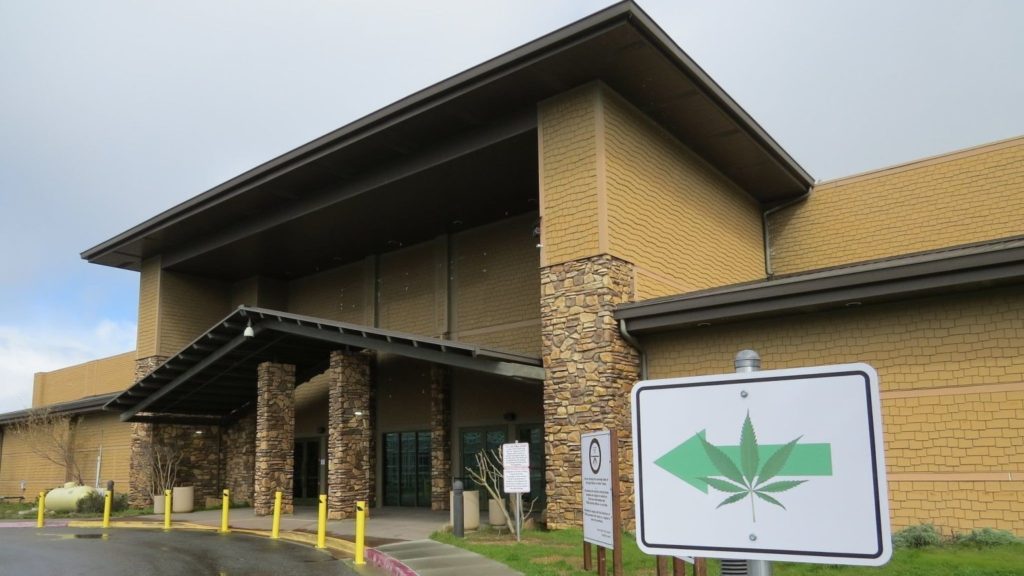
One tribe, that of Squaxin Island in Washington, opened a legal cannabis store called ‘Elevation’ in 2015. First nations peoples in Canada have also allowed for legal cannabis sales on their lands. Native tribes in the Americas are generally pro-cannabis for the same reasons that Maoris are: they know it’s much better for them than alcohol is and that cannabis prohibition was pushed on them by outsiders.

This article proposes that the New Zealand Government allow individual Maori tribes to legalise and sell cannabis on their land.

There are two major benefits to this proposal.

The first, and most major, is that it shows some respect to the 48.4% of Kiwis and roughly 80% of Maoris who want a legal respite from cannabis prohibition. Currently, these two groups of people are told that they just have to eat shit, because neither a Labour nor a National Government will do anything about the cannabis laws.

Legal cannabis sales on Maori land would allow for the pro-cannabis half of the population to freely access and to use cannabis there, away from the judgment of those who think they’re scum. This would allow for the custodians of that land to build cannabis dispensaries, cafes and accommodation for the cannabis tourists. If the anti-cannabis half of the population doesn’t like it, they can stay in the cities and drink booze.

The second major benefit, or group of benefits, relate to the tourism potential of this proposal.

If you’re a young Western tourist, and you can choose between travelling to the American West Coast and using cannabis and alcohol, or travelling to New Zealand and using alcohol only, it’s an easy decision. About as easy as choosing between travelling to a Western country and using alcohol or travelling to a Middle Eastern theocracy and using nothing.

Legalising cannabis on Maori land would create a massive tourism boost in rural and impoverished areas like Northland and the East Coast of the North Island. These areas would benefit from both domestic and international tourists, and it would also create a spillover tourism effect for non-Maori businesses who catered to the international tourists who would otherwise have gone to a country with legal cannabis.

The idea of legalising cannabis on Maori land is a sure win for the first party to propose it. It’s the kind of solution that New Zealand needs. Unfortunately, our current parties are either bereft of imagination or more interested in grandstanding than making positive, practical solutions.

*

If you enjoyed reading this essay/article, you can get a compilation of the Best VJMP Essays and Articles of 2020 from Amazon for Kindle or Amazon for CreateSpace (for international readers), or TradeMe (for Kiwis). A compilation of the Best VJMP Essays and Articles of 2019, the Best VJMP Essays and Articles of 2018 and the Best VJMP Essays and Articles of 2017 are also available.

*

If you would like to support our work in other ways, please consider subscribing to our SubscribeStar fund. Even better, buy any one of our books!
Tobacco Prohibition Will Fail Like Alcohol And Cannabis Prohibition Failed

The New Zealand Government announced yesterday that they intend to prohibit tobacco. Being the mealy-mouthed, gutless scum that they are, they didn’t outright state this. Rather, they obfuscated the fact that tobacco use will effectively become illegal by introducing new regulations that make it technically still legal, but practically all but impossible to get hold of.

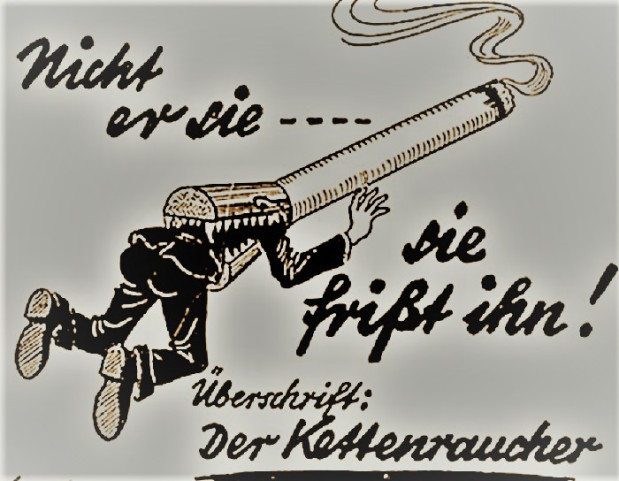
The new regulations will make New Zealand one of the most stringently anti-tobacco jurisdictions in the world. In becoming so, New Zealand will pick up the baton once held by Nazi Germany, which was the first country to widely persecute tobacco users on the grounds of public health. The Sixth Labour Government, also being authoritarian socialists, have copied the Nazi idea of prohibiting tobacco out of supposed concern for the public health.

The reality is that tobacco prohibition will be an expensive and pointless failure. This we can say with confidence, because alcohol and cannabis prohibition were also expensive and pointless failures. So why is Labour going through with a policy that obviously won’t work?

As the great historian Basil Henry Liddell Hart wrote in Why Don’t We Learn from History?, one of the main reasons why politicians keep making mistakes is that they keep denying reality. Politicians denied that alcohol played a role in good mental health by facilitating sociability. They also denied that cannabis was a psychiatric medicine that alleviated anxiety and depression. Both of these denials of reality, motivated by puritanical authoritarianism, led to enormous suffering.

The fact is that tobacco is an excellent medicine for Post-Traumatic Stress Disorder. This reality is denied by today’s politicians, who parrot the addiction myth promulgated by puritanical authoritarians. But it’s well understood by the many people who use tobacco to treat the suffering associated with conditions like PTSD, C-PTSD and schizophrenia. It had been understood by most people for centuries, until the addiction narrative took root.

What people who use tobacco to treat the symptoms of psychiatric conditions understand is that prohibition simply doesn’t work.

It didn’t work for alcohol – alcohol prohibition simply created a black market that empowered criminal empires and led to countless deaths. It didn’t work for cannabis – cannabis prohibition simply created a black market that empowered criminal empires and led to countless deaths. It won’t work for tobacco either.

There is already a black market for tobacco in New Zealand, and it’s estimated to comprise 11.5% of the size of the total market. That hasn’t yet led to criminal empires and countless deaths – but it will. This is inevitable.

By making tobacco a high-value item, instead of the low-value item it is when freely traded on the legal market, the Government has created an incentive for the black market to supply it. This means, instead of being mostly sold by retailers like dairies, criminals will move in and dominate the tobacco trade. The predictable consequence of this is more violent crime.

Another predictable consequence of prohibiting tobacco is that the suicide rate will skyrocket. Although it’s denied by the political class, tobacco is a mental health medicine, and many New Zealanders are only just hanging in there thanks to the solace it offers. A ban on tobacco will force these already mentally vulnerable people to go cold turkey. This will make them act impulsively and irrationally.

Yet another predictable consequence is that future tourist receipts will plummet. Why would a tobacco user choose to vacation in a country where tobacco is prohibited? They’d rather go almost anywhere else. Tourists rarely visit countries that have alcohol prohibition, because those places are horrible, soulless hellholes. Unfortunately for us, that’s how many tourists will now perceive New Zealand.

It might seem incredible that the Sixth Labour Government came to power in 2017 with the promise to stop persecuting medicinal cannabis users, but instead expanded the War on Drugs to include tobacco.

The simple explanation is that the Sixth Labour Government are authoritarian. This is why they refuse to countenance returning freedoms to the New Zealand people, but are quick to take freedoms away. They came to power in 2017 promising to allow Kiwis the right to use medicinal cannabis, but instead took away our firearms rights, our free assembly rights and now our free speech rights and our rights to use tobacco medicinally.

As George Orwell wrote, the future is a boot stomping on a human face, forever. New Zealand voters in 2017 might never have guessed that the boot would be worn by a breeding-age woman, but that’s the sort of surprise that the ruling class likes to throw the people’s way to keep us off-balance.

Understanding the Sixth Labour Government is as simple as understanding authoritarian socialists stomping down the people and the brainless NPCs who applaud it. This week’s announcement of the intention to prohibit tobacco will achieve no other purpose than to show the New Zealand people who their masters are. It will cause more suffering than it alleviates.

*

If you enjoyed reading this essay/article, you can get a compilation of the Best VJMP Essays and Articles of 2019 from Amazon for Kindle or Amazon for CreateSpace (for international readers), or TradeMe (for Kiwis). A compilation of the Best VJMP Essays and Articles of 2018 and the Best VJMP Essays and Articles of 2017 are also available.

*

If you would like to support our work in other ways, please consider subscribing to our SubscribeStar fund. Even better, buy any one of our books!

Our Great War Is A Spiritual War

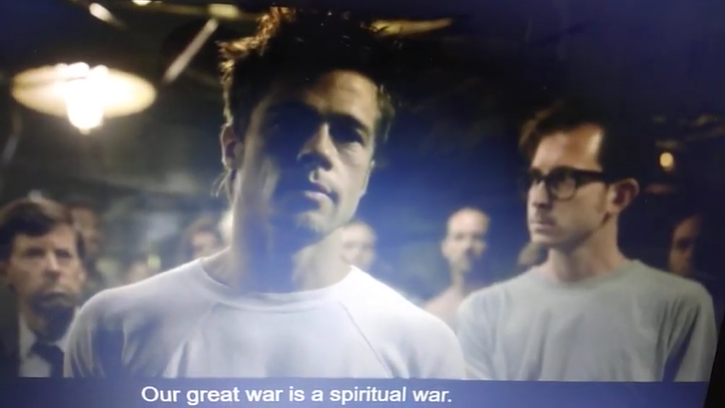
Brad Pitt summarised the challenges facing the Western World in the 1999 film Fight Club, when his character Tyler Durden said: “We’re the middle children of history, men. No purpose or place. We have no Great War. No Great Depression. Our Great War’s a spiritual war… our Great Depression is our lives.” 22 years later, our Great War is still a spiritual war.

There exists a supercosmic spiritual force that wills suffering upon all conscious beings. This nameless Principle of Evil has inspired countless acts of sadism throughout the ages. It is at work everywhere a person acts with malice or indifference towards the suffering of their fellows.

This Principle of Evil is in eternal conflict with the Principle of Good, which seeks to alleviate the suffering of all conscious beings. The two are locked in a Great Spiritual War, one which profoundly affects the lives of every creature. The Principle of Evil seeks to cause those creatures to suffer, and the Principle of Good seeks to counter the Principle of Evil.

The influence of this Principle of Evil, as Solzhenitsyn understood, runs through the heart of every human being. It is not exclusive to any gender, race, nation, occupation or creed (although some creeds, such as the Abrahamic cults, worship the Principle of Evil and its demons). Therefore, this spiritual war is fought everywhere, in all times and places.

Every conscious being is conscripted into the war against this Principle of Evil, which seeks to cause them suffering. The easiest way for the Principle of Evil to cause suffering is by provoking passions. Every impulse felt by any conscious being creates a conflict: between the will to gratify that desire, and the will to alleviate suffering.

One of the main theatres of the Great Spiritual War involves keeping people ignorant about the spiritual truths of reality.

As Socrates and Buddha both laboured to point out, suffering is primarily caused by ignorance. The most effective way for the Principle of Evil to increase the suffering in the world is to spread ignorance, because ignorance empowers the passions. There are two main ways to spread ignorance: denying the truth, and asserting falsehoods.

Denying the truth involves denying the spiritual truths. The followers of the Principle of Evil deny the fundamental all-rightness of the Universe. They also deny the Law of Assortative Reincarnation. These two denials lead to extreme anxiety among those who are influenced to agree with them.

Asserting falsehood involves inserting lies in the space vacated by the destruction of the truth. The followers of the Principle of Evil do this by asserting things such as “Jesus Christ is God”, or “the brain generates consciousness”. These falsehoods serve to mislead people who might be searching for spiritual truths.

The combined result of denying the truth and asserting falsehood is mass spiritual confusion. The Principle of Evil preys on this confusion by tricking people into giving their power away. Once enslaved, they can be made to suffer without being able to resist.

One of the fronts of this theatre of spiritual warfare involves the legal status of spiritual sacraments.

The followers of the Principle of Evil are aware that people have used spiritual sacraments, such as cannabis and psilocybin mushrooms, for thousands of years to reconnect with the divine. In places such as India, where the native spiritual traditions were not eradicated by Abrahamic invaders, cannabis is still used as a spiritual sacrament.

In order to increase the amount of suffering in the world, then, the followers of the Principle of Evil have acted to destroy all genuine spiritual traditions. This is why they murdered Pythagoras and Hypatia, and it’s why they destroyed the Eleusianian Mysteries and the Library of Alexandria. It’s why their colonists have assiduously attacked the native spiritual traditions of every land they settled in.

This is also why Christians and Muslims came together to oppose cannabis law reform in New Zealand last year. By destroying the possibility of using cannabis as a spiritual sacrament, they worked to maximise the spiritual ignorance in New Zealand, and thereby the suffering. Abrahamists may spend a lot of time killing each other, but they’re capable of co-operating if the common objective is to attack ordinary people.

Victory in the Great Spiritual War entails the eradication of all Abrahamic traditions from the face of the Earth. This would result in the total defeat of the Principle of Evil, who, without worshippers, would be powerless to increase the suffering in the world. At that point, a new spiritual Golden Age would begin.

The first step is to reassert our freedom to use spiritual sacraments to reconnect with the divine. The truth – that cannabis, psilocybin and various other substances are spiritual sacraments – must be spoken widely once again. Their open, ritual use must retake a centre stage in our civic life.

With our natural connection to the divine re-established, we will once more come to act in accordance with the Will of God. This will lead to the minimisation of suffering in the world.

*

If you enjoyed reading this essay/article, you can get a compilation of the Best VJMP Essays and Articles of 2019 from Amazon for Kindle or Amazon for CreateSpace (for international readers), or TradeMe (for Kiwis). A compilation of the Best VJMP Essays and Articles of 2018 and the Best VJMP Essays and Articles of 2017 are also available.

*

If you would like to support our work in other ways, please consider subscribing to our SubscribeStar fund. Even better, buy any one of our books!

Why I Won’t Be Taking A Coronavirus Vaccine

The whole world seems to be at a standstill, awaiting a coronavirus vaccine. Only when a vaccine is available, we are told, can we risk opening up the borders again and resuming normal life. But there are many good reasons to be skeptical about these impeding vaccines. I won’t be taking one – and in this essay I explain why not.

The mainstream media has presented a misleading picture of how easy it is to produce a coronavirus vaccine. The story we’ve been sold is that we just have to wait a few months longer, then it will be ready and all will be good. Apparently, “COVID-19 vaccine development has been expedited via unprecedented collaboration in the multinational pharmaceutical industry and between governments.”

By September last year, a variety of different potential vaccines were supposedly in advanced stages of development. At some point – soon – doctors everywhere will be telling people that they have an effective and safe coronavirus vaccine, and they’ll be expecting people to believe them and take one, as they expect people to believe everything else they say.

And I won’t be believing them and I won’t be taking a coronavirus vaccine.

Why?

Because they still don’t know that cannabis is medicinal. If they still don’t know that cannabis is medicinal, when there are mountains of evidence suggesting this and has been for decades, then how can I trust them to have an accurate picture about a coronavirus vaccine?

In 1996, doctors in California, being aware already then that cannabis was medicinal, organised to have it made legal. They arranged to have a referendum on the subject and made sure that the voters were correctly educated. Since then, recognising the science, 16 countries and 39 other American jurisdictions have legalised medicinal cannabis.

Despite these advances, doctors here in New Zealand have resolutely stayed ignorant. They know nothing about medicinal cannabis, not even the difference between CBD and THC. All cannabis use causes mental illness, they bleat, as if it were still 1970. The most recent quarter-century of scientific advancement can just fuck off.

So when doctors start telling me about a coronavirus vaccine, and how they’re sure it’s safe and effective, I’m just going to laugh. Their approach to medicinal cannabis has shown me that they’re more interested in political realities than scientific ones. Twelve years of trying to communicate with New Zealand doctors about medicinal cannabis has been utterly fruitless.

If these doctors want people to trust them about a vaccine that has been known for a few months, they have to start telling the truth about a medicine that has been known for thousands of years. If they’re not capable of doing that, I’m going to stay well away from any vaccines they might offer me.

*

If you enjoyed reading this essay/article, you can get a compilation of the Best VJMP Essays and Articles of 2019 from Amazon for Kindle or Amazon for CreateSpace (for international readers), or TradeMe (for Kiwis). A compilation of the Best VJMP Essays and Articles of 2018 and the Best VJMP Essays and Articles of 2017 are also available.

*

If you would like to support our work in other ways, please consider subscribing to our SubscribeStar fund. Even better, buy any one of our books!