

Category: cannabis
Cannabis and Alcohol Users Must Unite Against the Wowsers and Control Freaks
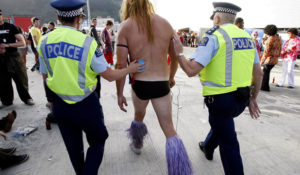
Some Kiwis might have woken up from a New Year’s-induced stupor long enough to ask: “What happened to the Wellington Sevens?” Well, sit down, folks – I’ve got a bitter and tragic tale to tell.
The short of it, though, is this – New Zealand is full of wowsers, and those wowsers saw Kiwis having a good time and decided that this had to be stomped down as soon as possible, lest anyone get carried away.
The linked article notes that the occasion was essentially “a two day party with a bit of sevens rugby on the side” and it died because “the organisers have slowly strangled the event with tighter and tighter regulations as the years went by.”
Amazingly, putting several tens of thousands of drunks in a confined space in the middle of summer didn’t end without problems.
But, as this essay will argue, so what?
14 years of what had grown to become the single greatest annual festival in the Kiwi cultural calendar, was destroyed by the Fun Police in a couple of years: “the wowsers have killed off the atmosphere that made the Wellington Sevens so popular.”
This year, an event that used to sell out a 30,000+ seat stadium in minutes has struggled to sell so much as 1,300 tickets. The general attitude towards the event from once-loyal partygoers is that “they can’t have fun at the event in case they upset someone.”
The question is: why do we let them do this to us?
So what if a few drunks caused trouble and created a sub-optimally family-friendly atmosphere. So what? Do we live in a McDonald’s playground?
It’s time to stop the rout! Everyone who enjoys drinking alcohol has to face up to this fact – cannabis is already illegal and tobacco is being made illegal. What’s going to stop the control freaks from cracking down on alcohol once they’ve banned tobacco?
And will Kiwis do anything it when it happens, or just take it up the arse as we have done thus far?
Is it acceptable that it is gradually becoming illegal to have fun? Are we doomed to end up like the Soviet Union, streets full of dour, grey-faced citizens conditioned to be afraid to crack a joke or a smile, lest they fall foul of some bureaucratic juggernaut that comes after them like a pitbull?
New Zealand has to face the very real possibility that, as our population continues to age, we will eventually ban every possible avenue of enjoyment and turn the whole country into a giant old folks’ home.
Pissheads and potheads, its time to acknowledge that we have a mutual enemy that is only growing in power as the population ages and our politicians become ever more out of touch with reality.
This enemy has existed all throughout history, and it waxes and wanes in strength according to the fashions of the age. It’s an enemy that resents all fun, resents all happiness, and which resents life itself.
The New Zealand Wowser is the single greatest threat to our quality of life. If we do not begin to oppose them, we will wake up one morning to find that everything is illegal except for a curated, Health and Safety-approved set of behaviours on a short list.
Understanding New Zealand: Voting by Industry and Employment Status I
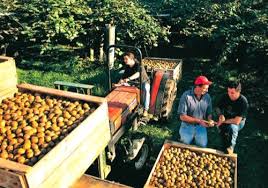
This article looks at what we can tell about the preferred industries of certain voting blocs based on their voting patterns. For the most part, the statistics in this area are fairly predictable, because industry types tend to be class defined and we already know which social classes vote for which parties.
There were few occupations that correlated with a significantly lower vote for the National Party in 2014, which is not surprising considering that National won the election. The most prominent was the transport, postal and warehousing industry, who had a correlation of -0.51 with voting National in 2014. As mentioned above, this can likely be best explained by the fact this is generally a working class industry.
It was a different story with rental, hiring and real estate services, which had a correlation of 0.49 with voting National. This is also not particularly surprising as it is an industry that essentially tries to generate money without performing any labour, i.e. by rent-seeking. Real estate agents and property managers are known for being the types that will do anything for a buck.
For the Labour Party these roles were, unsurprisingly, reversed – the transport, postal and warehousing industry had a correlation of 0.55 with voting for the Labour Party, probably reflecting the fact that if a Kiwi drives for a living they are very likely to be some kind of bogan and therefore a natural Labour voter.
One statistic that will surprise many is the voting pattern of people in the agriculture, forestry and fishing industries. Many would expect people in these primary industries to vote Labour or Green, but it is not the case. These people are more likely than anyone to vote New Zealand First – there is a correlation of 0.40 between being in agriculture, forestry or fishing and voting New Zealand First, compared to -0.31 for Labour and -0.24 for the Greens.
This can be explained to some extent by the fact that people working in agriculture, forestry and fishing are more likely than average to be Maori (the correlation between the two is 0.22), and Maoris are significantly more like to vote New Zealand First.
The interesting thing about that is it shows the people who vote Green seldom actually have anything to do with the environment, because they usually live in wealthy neighbourhoods in big cities.
Green voters are more likely than any others to be students – being on the student allowance has a correlation of 0.55 with voting Green in 2014, compared to 0.34 for Labour, -0.18 for New Zealand First and -0.46 for National. They are also more likely than any other to work in hospitality – voting Green in 2014 had a correlation of 0.52 with working in accommodation.
Green voters are the ones most likely to be involved in the new technological occupations. Even though Green voters are older than Labour ones, voting for them correlates more strongly with high-tech occupations than voting for Labour does. Voting Green in 2014 has a correlation of 0.63 with working in professional, scientific and technical services, and a correlation of 0.70 with working in information media and telecommunications.
The Greens also overwhelmingly dominate the arts and recreational services industry. People working in this industry have a correlation of 0.69 with voting Green in 2014, compared to -0.17 for National voters, -0.13 for Labour voters and -0.18 for New Zealand First voters.
Oddly, there’s a pattern based on benefit type. Pensioners vote National (correlation: 0.50), unemployment beneficiaries vote Labour (0.62), students vote Green (0.55) and invalid’s beneficiaries vote for the Aotearoa Legalise Cannabis Party (0.76).
This latter correlation is both very strong and will be very surprising to many, until one considers that it is precisely invalid’s beneficiaries who suffer the worst from the Government’s refusal to reform our cannabis laws.
*
This article is an excerpt from Understanding New Zealand, by Dan McGlashan, published by VJM Publishing in the winter of 2017.
How Much Has Peter Dunne Cost New Zealand By Stopping Cannabis Law Reform?

After the reign of Graham Capill, Peter Dunne vied with Colin Craig and Nick Smith for the title of “New Zealand Politician Considered Most Likely To Get Sent Down For Kiddy Fiddling”, as Dunne is also a highly narcissistic, sexually repressed, out-of-touch Bible thumper – the prime demographic. But in the cold light of day, not even a dozen Beasts of Blenheim could have done as much damage to Aotearoa New Zealand as Peter Dunne.
This article limits itself to calculating the amount of financial damage Peter Dunne did to New Zealand through his one-man campaign to prevent even the possibility of reform to our expensive, vicious and counterproductive cannabis laws.
After the 2002 General Election, called in the wake of the collapse of the Alliance Party, Labour Leader Helen Clark had three possible options to help her stitch together a Government: New Zealand First, who wanted no immigration; the Greens, who wanted no genetic engineering; and United Future, who wanted no reform on social issues.
In the end it was apparent that big business strongly supported both mass immigration and genetic engineering, so cannabis users and gays and lesbians wishing to marry got thrown under the bus for the $$$$$. Helen Clark signed on the Wormrider’s bottom line for the support of his 8 MPs and the rest is history.
After the 2005 General Election things were slightly different. United Future had less influence on account of voters not being so easily tricked by a television gimmick this time around, so Labour was in a position to try and unfuck the country.
Dunne was able to get a cabinet position, cementing his reputation as “Hemhorroid of the House” by resisting all progress.
He continued to oppose progress on social issues by voting against the Civil Unions Bill, a half-arsed attempt at a gay marriage bill sold as an ingenious compromise with New Zealand’s legion of elderly Christian bigots, and, of course, by not allowing so much as a discussion about cannabis.
After 2008 the conservative National Government took power, and naturally they did not repeal cannabis prohibition as it directly serves major capitalist interests to have a competitor to the alcohol, tobacco and pharmaceutical industries crushed.
Dunne managed to worm his way into the position of Associate Minister of Health, from where he was able to garrote all attempts at cannabis law reform in their infancy, most notably by skillful and successful actions in dividing the cannabis law reform movement.
The two most notable examples of this were declaring the grossly unsuitable fraudster Toni-Marie Matich to be the public face of cannabis law reform, thus damaging the credibility of the movement, and the Orwellian Psychoactive Substances Act, which made everything illegal and divided the movement into people who had read it and people who hadn’t.
So, aside from the couple of million that Dunne has leeched from the public funds in the form of an MP’s salary and perks, how much has he cost the country?
There is no simple calculation because it depends on the extent of the cannabis law reform that was prevented in the last window of opportunity presented by the Fifth Labour Government.
We know that full, Colorado-style reform would save New Zealand $500,000,000 per year in Police costs, court costs, prison costs, and lost tax revenue. Multiplying this by the 14 years since 2002, when Dunne first had his influence in preventing reform, gives us a figure of $7,000,000,000.
In reality, the Clark Administration would have likely brought in some kind of medicinal cannabis and/or decriminalisation in 2003/4, with full legalisation coming later, so the immediate savings might have been a third to a half of their final value, increasing as time went on.
This suggests a figure for the total wastage of Kiwi labour and resources due to Peter Dunne’s actions of between $3 and $7 billion.
This thought experiment ought to be a sobering one for anyone worried about Maori beneficiaries having too many kids and Chinese restaurants not paying taxes. If one politician can cost the country $3,000,000,000 because of moral and intellectual incompetence, all of our scrutiny ought to be directed at the ruling classes, and not on each other.