Spirituality Is Bad For The Economy

Many people feel that spirituality is a taboo topic. Part of the reason for this is because it reminds people of death – questions of God and life’s meaning go hand-in-hand with questions about the afterlife. Therefore, talking about spirituality is bad because it reminds people that they will die one day. As this essay will show, this is only part of the reason.

The purpose of spirituality is to reduce suffering.

The objective of the Buddhist path is to achieve nirvana, the objective of the Hindu path is to achieve moksha and the purpose of the Western esoteric traditions is to achieve ataraxia. In all cases, this state of ultimate enlightenment offers a liberated existence independent of material acquisition, status anxiety, social anxiety or attachment to food, sex or power – a state in which one no longer suffers.

Buddha was motivated to end the suffering of all sentient beings, and his conception of the Eightfold Path was an attempt to teach how an individual could achieve this for themselves. He taught that happiness could not be found in the material, which was an illusion. Every person had to look within themselves.

Buddha is famous for advocating meditation as an avenue to enlightenment, but all true spiritual traditions teach that happiness (or at least an end to suffering) is found within. Analects 15:20 quotes Confucius as saying “The Superior Man seeks within himself. The inferior man seeks within others.” The Tao Te Ching, likewise, is replete with admonitions to find satisfaction in everyday life and not to strive for it.

Looking within is the secret to ending suffering. From society’s perspective, however, a dilemma lies therein.

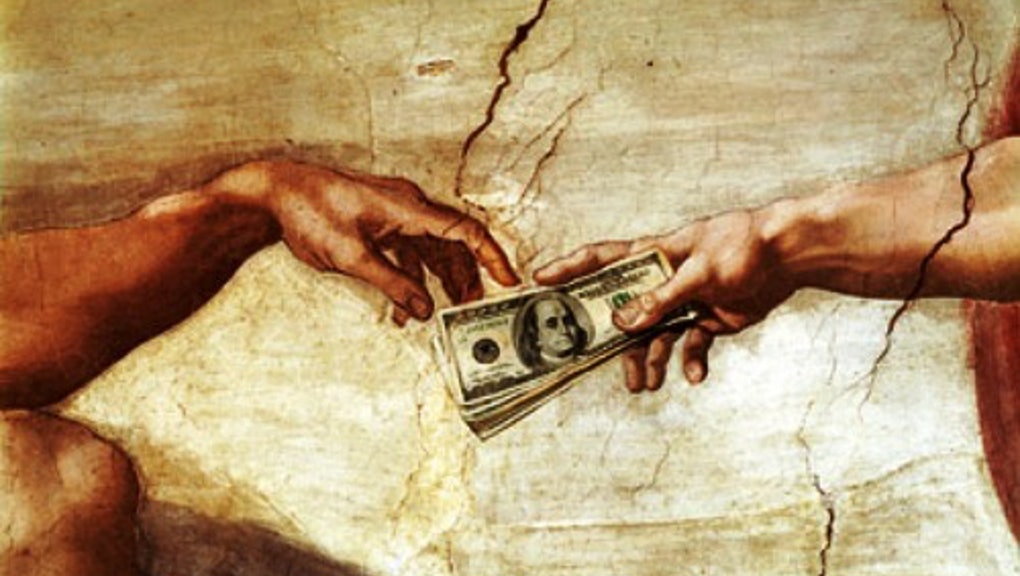
In our society, the most important thing of all is money, and getting money requires jobs. In order for a job to exist, there has to be demand for goods and services. This demand comes from only one place: human dissatisfaction. Without human suffering, there could not be money. Therefore there must be human suffering.

Many people have never comprehended the fact that other people exist, and that they are conscious, and that this consciousness suffers just like one’s own does. These people act as if the world was a virtual reality game that only they were playing, and everyone else was just an NPC. In life they are as hungry ghosts, their insatiable appetites causing them to lurch from one instinct-fueled lust to the next.

In our culture, the dissatisfaction of these unfortunates has been channelled towards buying stuff. New clothes, new cars, new toys, new foods – and all of it greases the wheels of commerce. Consumerism is therefore powered by this dissatisfaction, by suffering. It follows that anything that stops people consuming is bad.

Spirituality, though, tends to have a profound effect on people’s consumption habits. Once a person starts to look within, they start asking questions like: did that most recent purchase really increase my happiness? Or did I get more happiness from the chance social encounter I had in town last week? Once a person starts thinking like this, their lives start to change profoundly.

When a person becomes skilled at meditation, it’s easy for them to feel a more powerful sense of satisfaction from meditating than from buying new stuff. Meditating is the ultimate activity in many ways, and one of the main ways is that it is anti-consumerist. The dissatisfaction that people feel in everyday life is assuaged by meditation. So people who are into meditating are seldom the same people who line up overnight for the next iPhone release.

It follows from all of this that the engine of consumerism runs on godlessness. The further a person is from God, they more they suffer, and the more they suffer the greater the volume of goods and services they consume. The ruthless logic of the markets has led to a horrific outcome: genuine spirituality has deliberately been attacked in order to power the capitalist machine.

People with genuine spiritual insight have been persecuted for thousands of years, but this has intensified in recent centuries according to the demands of capitalism. Witches have been burned at the stake and hippies – their cultural descendants – have also been attacked. True spiritual sacraments such as cannabis and psilocybin have been criminalised, those who grow or gather them locked in cages.

Worse, false spiritual traditions have been promoted to distract people from the true ones that would help them. There are hundreds of different Christian churches who teach that wealth is evidence of God’s grace, and hundreds of millions of other Abrahamists who mutilate the genitals of their children, persecute homosexuals and who consider women and non-believers to be subhumans.

This combination has obliterated the spiritual wealth of the masses. In doing so, however, it has caused the material wealth of the elites to overflow. Thus, it is perpetuated. Spirituality is bad for the economy, and that’s why it’s been suppressed.

We can hope that, in the coming years, the economy will be considered less important, and human suffering more important. At the least, we can hope that it will be remembered that the economy is a means for ending human suffering, and that human suffering is not a fuel that should power the economy.

*

If you enjoyed reading this essay, you can get a compilation of the Best VJMP Essays and Articles of 2019 from Amazon for Kindle or Amazon for CreateSpace (for international readers), or TradeMe (for Kiwis). A compilation of the Best VJMP Essays and Articles of 2018 and the Best VJMP Essays and Articles of 2017 are also available.

*

If you would like to support our work in other ways, please consider subscribing to our SubscribeStar fund. Even better, buy any one of our books!
What It Means To Turn Lead Into Gold

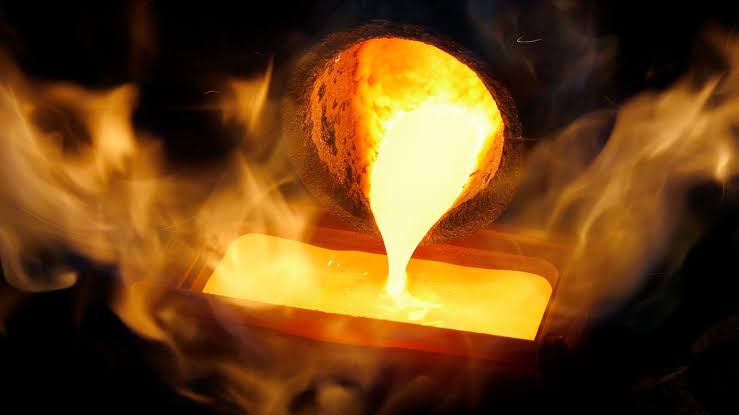
Materialists laugh at the old alchemists because modern science knows that it’s not possible to make money by transmuting lead into gold. The new alchemists laugh at the materialists, because they know that the transmutation of lead into gold is nothing close to what the materialists conceive of it as. This essay explains.

The story of alchemy that my high school science teacher told me was this. Lead is a common metal, found everywhere. Therefore it was plentiful and cheap. Gold, by contrast, is the rarest of all metals, and therefore the most expensive. Anyone who was able to take lead and transmute it into gold would effectively have the power to buy anything they wanted for the rest of their lives.

The ancient alchemists, I was told, were fools who had developed a superstitious obsession with turning physical lead into physical gold in the vain pursuit of material wealth. Led astray by promises of infinite riches, these poor wretches wasted their lives on primitive chemistry experiments, achieving nothing but early deaths from mercury poisoning.

If a clever person heard this story, they would know that lead wasn’t the most common metal anyway. Iron, zinc, nickel and copper are all more abundant in the Earth’s crust, and all of these metals were known to the ancients. Therefore, anyone seeking to transmute something cheap into something expensive would have started with iron or copper, not lead. The materialist explanation doesn’t add up.

The truth is that alchemy is not about physically transmuting lead into gold. Alchemy is about seeking a much, much more valuable treasure than mere mountains of physical gold. It’s about transmuting spiritual lead into spiritual gold.

What could one mean by “spiritual lead”?

In an alchemical sense, lead is a metaphor for the basest of all metals. Lead is heavy, soft and dark – it is yin and feminine in all aspects. The reason why the alchemist begins with lead is because lead represents the primal, animal urges that all humans are born with, and which intensify further with puberty and the onset of adulthood.

Gold is a metaphor for the most precious of all metals. Gold is bright, and the way it shines is similar to how the light of God brightens the life of those it touches. Gold is the most precious of all metals, and this is true whether one is thinking in physical or spiritual terms. Gold represents the enlightened state of being that arises when one is philosophically complete.

Lead, then, is the frequency of consciousness that people enter the world with. The alchemical task is to raise this frequency of consciousness from the basest level, through levels where one gets lucky, strong, striking, smart and creative (in that order), before finally reuniting one’s will with the Will of God. These seven stages correspond to the seven masculine elements.

Turning lead into gold is the art of transmuting one’s True Will, from that of the selfish, aggressive and ruthless primate one is born as, to that of an angel who wills nothing else than an end to the suffering of all sentient beings. It is to complete the mystic process. Someone who has done so can be said to be in possession of the Philosopher’s Stone (also a metaphor).

The final result of the alchemical process is not a pile of physical gold. It is a frequency of consciousness that grants absolution. A person who has completed the Great Work is enlightened. They have accepted the nature of reality for what it is, and their personal will is aligned with the Tao. This type of personality is so powerful and so rare that it has a similar effect on people to physical gold – it instills a sense of joyous awe.

Although this is understood by few, a person at that frequency of consciousness will have a much easier time of things than other people. A person on the frequency of gold will not struggle against the Tao – they will go with the flow and live a life without resistance. This will mean that other people generally treat them much better, perhaps even with reverence.

Few people even attempt the process of transmuting spiritual lead into spiritual gold, as the vast majority of people fall at one of the three spiritual hurdles. Of those who attempt it, only a small fraction succeed. Physical gold is present in the Earth’s crust at the rate of four parts per billion, and there’s no reason to think spiritual gold would be more common than this.

For those who do succeed in transmuting spiritual lead into spiritual gold, the rewards are infinite. A person in possession of the Philosopher’s Stone has no fear of death, for they know that the physical body (like all suffering) is just an illusion and that the True Self lives forever. This is a treasure that cannot be stolen, and is therefore greater in value than all the physical gold in the wide world.

*

If you enjoyed reading this essay, you can get a compilation of the Best VJMP Essays and Articles of 2018 from Amazon for Kindle or Amazon for CreateSpace (for international readers), or TradeMe (for Kiwis). A compilation of the Best VJMP Essays and Articles of 2017 is also available.

*

If you would like to support our work in other ways, please consider subscribing to our SubscribeStar fund.

The Law of Assortative Reincarnation

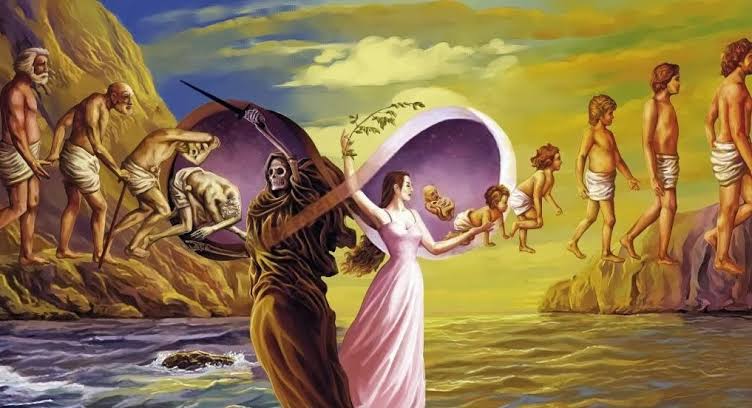
Some people, upon being told that consciousness survives the death of the physical body, say: so what? The really interesting question is what the order of reality looks like on the far side of death. This essay discusses an ancient concept – the Law of Associative Reincarnation.

A person’s frequency of consciousness determines the sort of reality they manifest. This is true in life, and it’s true in death.

In life, this rule is known as the Law of Attraction. This holds that (among other things) a person’s frequency of consciousness repels both higher and lower frequencies, so that people tend to attract other people like themselves. Angry people attract angry people, humble people attract humble people and curious people attract curious people.

This law holds that the energy you put out into the world will be the same as the energy that comes back to you from the world. Reality will come to manifest itself according to your thoughts, because thoughts lead to actions. If you dwell on bad things, they will come. If you dwell on good things, they will come.

In death, we might call this rule the Law of Assortative Reincarnation. This is a very similar concept to the biological concept of assortative mating. This refers to the observation that, in sexually reproducing species, mating tends to occur between individuals that have important things in common. Tall people tend to mate with other tall people, pretty people with other pretty people, smart people with other smart people etc.

In order words: we attract, on the other side of death, the same sort of beings that we attract on this side of death. This we do by means of the frequency that we project into the world.

When a person’s body dies, their ego dies with it, and so the person no longer has the part of the mind that lies and makes unjustified excuses for itself. After death, consciousness returns to God – and to God’s judgment. Being without ego, people don’t question God’s judgment on the other side of death. Consequently, they accept their fate.

Although God is without malice, the fact is that every person, when stripped of ego, will agree that they ought to get what they deserve. The fairest thing for every sentient being is to live in a reality filled with beings on the same frequency of consciousness as themselves. God facilitates this. Some call this the Law of Karma, and this law underpins both the Law of Attraction and the Law of Associative Reincarnation.

The frequency of consciousness that a person is at when the death of the physical body occurs is the same frequency of the part of the Great Fractal that that person will reincarnate into. All the beings that populate the next world that a person reincarnates in are fractal expressions of that person’s own frequency of consciousness – and that person is a fractal expression of all those other beings.

The Law of Assortative Reincarnation holds that people reincarnate into worlds with the same frequency as themselves. This means that people reincarnate into worlds populated by beings at a similar frequency. Some will be lower, and some will be higher, but the average will be similar to one’s own. Thus, each being is assigned to the part of the Great Fractal that is appropriate for their frequency of consciousness.

Shocking at it may sound to some, the Universe is perfectly just – but only at high levels of resolution, such as when one observes chunks of multiple lifetimes. At low levels of resolution, such as a mere decade, it can appear extremely unjust. This is why short-sighted and materialistic people are often preoccupied with some grievance or other.

This means that people really do get what they deserve. People who are cruel will adopt a frequency that reflects cruelty. Consequently, they will attract cruel people into their lives and will repel kind ones. People who are kind will adopt a frequency that reflects kindness. Consequently, they will attract kind people into their lives and repel cruel ones. This is true on both sides of death.

A person may or may not get punished legally for acts of cruelty, but they always get punished spiritually. This is because acts of cruelty transmute a person’s consciousness into a cruel frequency, and that attracts similar beings, who then inevitably treat the cruel person the way they treated others. It’s impossible to transmute one’s consciousness into a cruel frequency and attract kind people. It might be possible to temporarily do it by tricking them, but they will never intuitively trust a cruel person.

If a person wants to go to heaven after they die, or at least wants to reincarnate in a world with less egregious suffering than here on Earth, they need to perform enough works of alchemy to transmute their consciousness into a level where it would be heavenly to be around that person. Are you the sort of person whose frequency would create a heaven? If not, you don’t deserve to live in one.

Understanding the Law of Assortative Reincarnation means that one would never complain about the nature of life on this Earth. This Earth may be cruel, and it may be brutal, but the reason why everyone incarnated here is because of the frequency of consciousness that we cultivated in our past lives.

If a person thinks that the world is too cruel (and who doesn’t?), it’s impossible to change things by suicide. Committing suicide simply means that one will incarnate in a world where other beings are inclined to commit suicide. Because suicide is a cruel thing to do, one will therefore incarnate around other cruel beings and will not have escaped the cruelty of Earth.

The correct thing to do is to transmute one’s frequency of consciousness from the basest, most egotistical level to the highest and most noble one. This will ensure that one attracts other beings on that level, whether on this side of death or the other. The easiest way to do this is to focus on alleviating the suffering of one’s fellow sentient beings.

*

If you enjoyed reading this essay, you can get a compilation of the Best VJMP Essays and Articles of 2018 from Amazon for Kindle or Amazon for CreateSpace (for international readers), or TradeMe (for Kiwis). A compilation of the Best VJMP Essays and Articles of 2017 is also available.

*

If you would like to support our work in other ways, please consider subscribing to our SubscribeStar fund.

In The Land Of The Blind, The One-Eyed Man Will Be Blinded

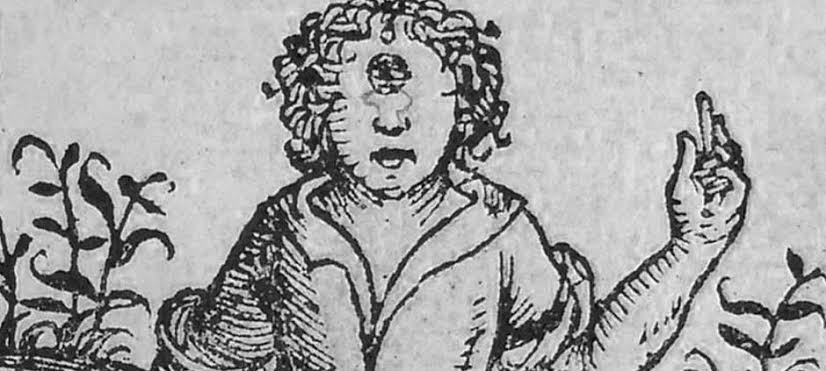
A popular piece of wisdom holds that “In the land of the blind, the one-eyed man is king.” This is supposed to imply that any individual with superior perception will inevitably rise to the top of any dominance hierarchy. The reality in a Slave Culture such as our own is different. In a culture as blind as ours, anyone who can see clearly will be blinded.

The blind, like all humans, will never simply accept the dominance of someone who claims to see things that they don’t. It’s not in human nature to do this.

If a one-eyed man entered the land of the blind and started talking about how he could see things that the others could not, the blind would rather deem him insane. They would adamantly refuse to acknowledge that any higher insight to their own was possible. The land of the blind would have its own dominance hierarchy, and its own incumbent alphas, and they would defend their positions.

If the one-eyed man insisted that he could see things that the others could not, he’d be declared acutely psychotic. The things seen would be dismissed as hallucinations, and it would be declared that these hallucinations were brought on by excessive stimulation, and they’d forcibly sedate him. They might put him in a cell so that his disturbed mental state didn’t upset others.

Eventually, they’d just rip the eye clean out of his head. They’d come to the conclusion that there was something wrong with the function of the eye itself, and that was why he couldn’t break the delusion of being able to see things that others could not. Better to just remove the offending organ with surgery.

Anyone who doubts the plausibility of this conjecture need only observe the way that our society today, operating under a materialist paradigm, treats those of a sensitive enough psychic disposition to detect a world beyond the physical.

In today’s society, anyone who claims to possess any spiritual knowledge whatsoever is considered psychotic. If a person makes a claim to some minor knowledge, they might be politely humoured, but anyone making a claim to major spiritual truth is despised as someone too weak to maintain a grip on reality.

Anyone claiming firm gnosis is simply dismissed as schizophrenic. Especially forbidden is any talk that we may be God ourselves. The mental health system might begrudgingly allow someone a belief in Rabbi Yeshua ben Yosef, but any idea that all conscious beings are co-creating reality in the eternal moment is absolutely right out.

This is the land of the blind – the spiritually blind. The vast majority of the population either superstitiously follows a dead tradition or follows none at all. But we cannot expect that a spiritual man, should one arise, would be welcomed and his insight greeted. Far more likely he would be shunned as a heretic.

*

If you enjoyed reading this essay, you can get a compilation of the Best VJMP Essays and Articles of 2018 from Amazon for Kindle or Amazon for CreateSpace (for international readers), or TradeMe (for Kiwis). A compilation of the Best VJMP Essays and Articles of 2017 is also available.

*

If you would like to support our work in other ways, please consider subscribing to our SubscribeStar fund.