
Clown World Chronicles: What Is A ‘Gutmensch’?

For Clown World to be possible, the people building it have to have popular support. It has plenty of support, of course, among the ruling elites and the great capital interests that profit from the alienation, despair and fragmentation of the people. But how does it get support from the common person, who doesn’t benefit from Clown World? This essay explains.

‘Gutmensch’ is a German term that literally means ‘good human’. It’s a pejorative term that means something akin to “do-gooder” or “goody two-shoes”.

The gutmensch is someone who tries very hard to be seen to be doing the right thing, but who lacks the intellect to actually discern what the right thing is. They are not intelligent enough for philosophy, and they are not intelligent enough to understand the material world and to extrapolate from that, and they do not have a natural moral sense. So they have to take cues from the social world.

The process of determining right from wrong by way of observing the social world is an error-strewn one that takes decades to become any good – and is inaccurate at the best of times. As such, the gutmensch learns right from wrong from learning what the authorities say it is. Their parents, the government, their church, the boss, doesn’t matter – the authorities are always right.

The great weakness of this approach, of course, is that the social world can easily be manipulated by malicious actors. Most people older than children understand that there are many malicious people out there, and that it’s common for these malicious people to seek power in institutions that give them authority over others.

By the time intelligent people are 15 years old, they have figured out that hierarchies of power attract evil people and therefore it’s unwise to ever trust police officers, politicians, psychiatrists or priests. These intelligent people naturally distrust anyone who appears motivated to exult themselves or to assert control over other people.

The gutmensch never figures this out. He will go on blindly parroting what these authority figures say as if it were the word of God. For him, social dominance hierarchies can only be climbed by competence, and people can only become authorities if they were better than others. This child-like naivety makes it possible for all kinds of malicious actors to get support from gutmenschen.

These malicious actors prey on the sheep-like nature of the gutmensch to induce him to support policies which are in the interests of those malicious actors, but not in the interests of the gutmensch. Mass immigration is the foremost example. As such, the gutmensch can be herded to his doom, like a deer driven over a cliff.

The big problem with that is that the gutmenschen take the rest of us down with them. Their overwhelming mass support for the status quo and for the established rulers of society means that, in order to effect positive change, one has to fight against society itself. The gutmensch serves as a mindless drone guarding the elites, something that has to be overcome if Clown World is to be overcome.

Another way that the gutmensch weakens society is from his fear of taboos. There are so many things that the gutmensch forbids themselves from speaking about that, sometimes, talking to them feels like talking to a religious fundamentalist. Topics of race, religion, sex and gender differences cannot be discussed, and if they can be, only the most blue-pilled, Government-approved opinions can be offered.

All these taboos have the final effect of destroying conversation and making communication more difficult. In the final analysis, the gutmensch is, despite his intentions, a destroyer.

Although the gutmensch thinks himself an upstanding citizen who wouldn’t harm anyone, he was on the front lines of the Nazi and Communist battles against their own people, comprising a large proportion of those who ratted out their neighbours. The gutmensch is capable of committing any atrocity while thinking that, because the Government approved of them, they were doing a good thing.

Fundamental to gutmensch psychology is a terror of being judged, especially of being found unworthy. This is because the gutmensch has no real self esteem, and must find it elsewhere. Because his social equals are also pathetic, the gutmensch must seek approval from authority figures. This is why he is so eager to please them.

Underneath it all, gutmenschen are massively egotistical losers, so incredibly precious that they’ll happily go along with any mob, no matter how destructive, rather than risk disapproval. In their hearts, they know they are pathetic, which is why they resent those who are not. Fundamentally, then, gutmensch mentality is a slave morality.

In most cases, gutmenschen turn out the way they do because they have lived extremely sheltered lives. The typical gutmensch will never have travelled outside of their comfort zone, much less backpacked through the third world or lived in countries where they speak another language. They have never been challenged, and as such remain men of clay.

These gutmenschen evoke plenty of hate on account of that their self-righteous moralising makes people want to punch them. These sentiments are well warranted, because it is the gutmensch who normalises every government abuse, from those of the Nazis and Communists to the War and Drugs and alcohol prohibition.

The difference between a gutmensch and a baizuo is subtle, and mostly a matter of age and education. Perhaps the best way to explain the difference is by analogy to the animal kingdom. The baizuo is like a peacock: it preens, it appears vain, and its elaborate virtue signalling does more harm than good. The gutmensch, by contrast, is a simple herd animal. It doesn’t care about anything other than fitting in.

*

This article is an excerpt from Clown World Chronicles, a book about the insanity of life in the post-Industrial West. This is being compiled by Vince McLeod for an expected release in the middle of 2020.

*

If you enjoyed reading this essay, you can get a compilation of the Best VJMP Essays and Articles of 2019 from Amazon for Kindle or Amazon for CreateSpace (for international readers), or TradeMe (for Kiwis). A compilation of the Best VJMP Essays and Articles of 2018 and the Best VJMP Essays and Articles of 2017 are also available.

*

If you would like to support our work in other ways, please consider subscribing to our SubscribeStar fund. Even better, buy any one of our books!

The Political Alliance That Would Terrify The New Zealand Establishment

Four months out from a General Election, people start talking about potential political alliances. Once it becomes clear that certain parties are unlikely to clear the 5% threshold, teaming up becomes the obvious way forwards. Although most discussions of this nature are unfruitful, there’s one option that would upend the New Zealand political order.

The Establishment parties are National on the right, Labour on the left and New Zealand First in the centre. These parties are full of the old, mature people who want to maintain the status quo but with slight adjustments. These parties represent those who already have it good, so they most they want to do is tinker.

From this cozy arrangement came the Alliance Party, which provided an alternative on the left. This alternative left is now represented by the Green Party, who developed out of the Alliance (although the Greens are arguably now part of the neoliberal globalist establishment). The other alternative parties are ACT on the right and The Opportunities Party in the centre.

These three parties are the only ones to have consistently offered meaningful alternatives to the status quo over the past quarter century.

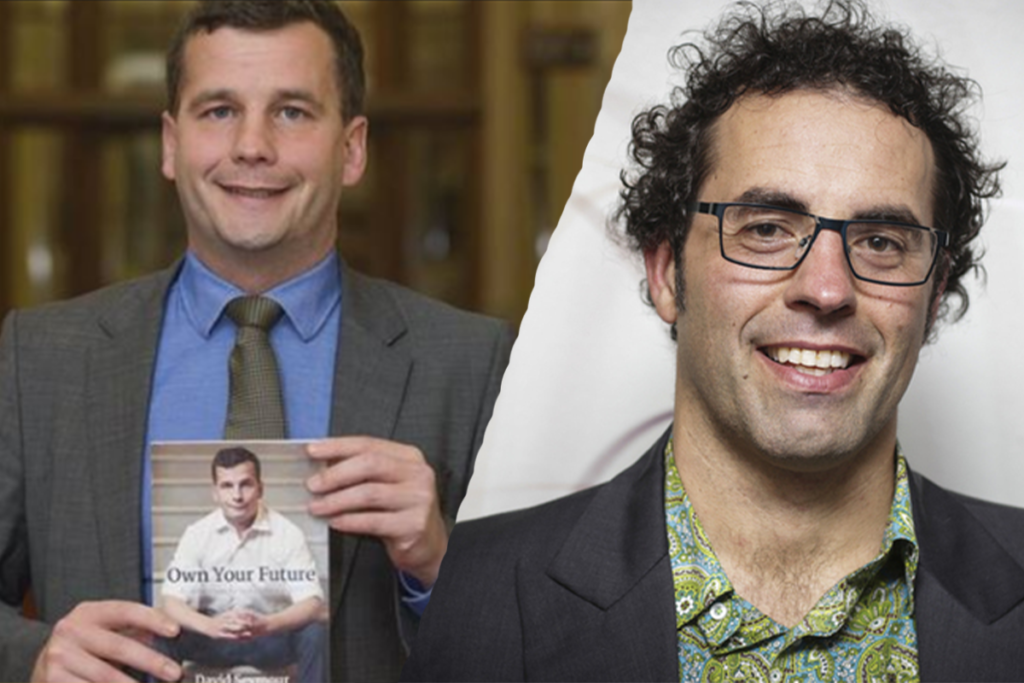
The basic logic of an ACT-TOP alliance is that the two parties share many sentiments, both moral and economic. Both parties oppose cannabis prohibition, both are in favour of euthanasia rights and abortion rights. Both appeal primarily to young and educated people. An alliance between the two might allow for them to come close to the 5% threshold on their own merits, without needing Seymour to win in Epsom.

This hints at the idea that gives National and Labour party strategists sleepless nights: a grand alliance between all of the anti-Establishment parties.

As it is, the anti-Establishment forces are so disorganised that the major parties can easily knock them out. All that Labour and the Greens have to do to keep the Aotearoa Legalise Cannabis Party from threatening their position is to adopt ALCP policies as they become popular, and mainstream voters will vote for the established left parties so as to “not waste a vote”.

Likewise, National can keep ACT and the New Conservatives small by adopting the most popular of their policies. If either of them have a policy that attracts more than half a percent of votes on its own (which is about what the ALCP wins), National can and will simply adopt it themselves, leaving the smaller parties holding their dicks.

What would really put the shits up the Establishment would be if all of these minor parties, instead of letting themselves get divided and conquered, came together as a single bloc. This anti-Establishment bloc would unite on the basis that a new political order is of primary importance, with the precise details being secondary (note that the New Conservatives, not wanting change, are not part of this).

Many people want alternative politics, but are put off the Greens because they know that if the Greens get enough to get into Parliament, they will inevitably bring rubbish like Marama Davidson and Golriz Ghahraman in with them. They are also put off ACT because ACT’s unrepentant neoliberalism seems like a recipe for more of the suffering that we’re already enduring.

This alliance would assuage both concerns. Not only would the Greens be limited to a few members (or, better yet, excluded altogether), but the presence of centrist elements would help moderate Seymour’s soulless “show me the money” hypercapitalism. Mirroring this, Seymour would provide a sober restraint to the potential kookery from the other parties.

It’s worth noting here that, should it be decided the Greens really are an Establishment party, it’s possible to find an element of the alternative left elsewhere. Amanda Vickers is intelligent, has developed a respected social media profile and has done good work for the Social Credit Party, which once was strong enough to get over 20% in the 1981 General Election. Either she, the Social Credit Party leader Chris Leitch, or both, could combine with the best ACT and TOP candidates to create an Alternative A-Team.

Such an alliance would benefit from the leadership of Seymour, who is highly respected among Generation X and younger voters (some go as far as to declare him the true Leader of the Opposition). It could count on the current numbers of votes achieved by all the constituent parties (ACT got 13,075 votes in 2017, and TOP 63,260), plus two major groups of new voters.

The first are those put off from supporting alternative parties by the 5% threshold. This threshold is a hurdle so high that only three new parties have surmounted it in 24 years – the Alliance/Greens, New Zealand First and ACT, and the latter now relies on winning the Epsom electorate for any Parliamentary representation (1).

This division of alternative forces across three or more parties severely weakens them, and the 5% threshold, like a battlefield reaver, finishes them off. An ACT-TOP-Socred alliance would obviate any realistic fear of inducing wasted votes – even if they did not get 5%, they would still have Epsom, and so could realistically count on at least four or five seats to begin with.

The second major group of likely new voters are those who are put off by all the retards in the other parties. Characters like Davidson and Ghahraman, although they are idolised by Marxist malcontents, place a hard upper limit on how much support their parties can ever get from the public at large. The vast majority of voters listen to them and are repulsed.

A genuine Alternative Alliance with a top seven of David Seymour, Geoff Simmons, Amanda Vickers, some intelligent young candidates like TOP’s Joshua Love and Matthew Pottinger, and rounded off by ACT’s deputy Beth Houlbrooke, would have a minimum of objectionable weirdos while still maintaining a firm anti-Establishment line. The coming of such a movement would land tsunami-like upon the New Zealand Establishment.

This would not require the dismantling of the existing parties, merely their temporarily coming together for the sake of the General Election. Then the nature of the alliance could be revisited.

(1) This article initially stated that ACT has never cleared the 5% threshold. Credit to Stephen Berry for the correction.

*

If you enjoyed reading this essay, you can get a compilation of the Best VJMP Essays and Articles of 2019 from Amazon for Kindle or Amazon for CreateSpace (for international readers), or TradeMe (for Kiwis). A compilation of the Best VJMP Essays and Articles of 2018 and the Best VJMP Essays and Articles of 2017 are also available.

*

If you would like to support our work in other ways, please consider subscribing to our SubscribeStar fund. Even better, buy any one of our books!
Writing Characters of Lead

A character of lead is one who is yet to be affected by the energy of your story. They might be a peasant, or the son of a blacksmith, or the daughter of any random family. In principle, such a character could be practically anything as long as they are not in any way enlightened.

Lead is a metaphor for the base condition of man. In this sense, the lead represents the lowest possible spiritual level. A character at this level is yet to hear the call to adventure, and has no concept of it. They will not believe in God, or in anything spiritual (although they might claim to). They will be a human being in their natural, material state.

Going back to the metaphor of light, a character of lead could be considered entirely unilluminated. There is no higher order in them; their daily lives are characterised by fear. Lead is sometimes represented by the planet Saturn, this being the furthest from the light of the Sun. As such, it is sometimes represented by an old man with a wooden leg and a scythe, all three components suggesting death.

A character of lead has no higher calling, or even any idea of what that would feel like. They have no great battle to win, whether external or internal. Their lives tend to be a string of battles against whichever adversary appears in the moment. This is usually whoever is preventing them from gratifying whichever impulse is currently gripping them.

Three of the most salient features of lead are that it is soft, dark and dense.

Characters of lead are soft because they are passive. This softness is not physical but spiritual. Lead is extremely easy to bend, and this is also true of characters of lead. Men and women of lead are not the ones that will stand up and lead a rebellion against a tyrannical king. Instead, they yield.

This softness doesn’t prevent passive aggression. Characters of lead are capable of all kinds of passive aggression, but they lack a conception of honour. Therefore, they are not hard enough for direct assaults, and must slink about in the shadows looking for the backstab.

Characters of lead are dark in the sense that they are of the soil and live close to it. It’s likely that such a character will be dressed in blacks and browns, perhaps of sackcloth. Their facial expressions are commonly “leaden-faced”, and their manner of walking can be described as “leaden-footed”.

In many cases, the emotions of characters of lead will also be dark. Because of the absence of spiritual enlightenment, characters of lead take offence easily and hold bitter grudges for a long time. Sometimes their low frequency will make them stand out in a room of people. They regularly appear sinister to characters of higher frequencies.

Lead is also dense. This reflects the way that characters of lead are often described as not very intelligent. A character of lead is one that has extreme difficulty learning from adversity or changing their behaviour to avoid future suffering, at least in the long term.

On a metaphorical level, this density means that they are not easily affected by light. A character of lead might find themselves in the presence of a highly spiritual individual and not appreciate it. Spiritual insight is to characters of lead as pearls before swine.

Characters of lead might be noteworthy for an advanced sense of smell. Being of lead, they tend to be very close to nature, and to the soil. This can give them certain advantages. Whereas the more refined characters might be precious on occasion, the characters of lead are perfectly happy wallowing in the mud.

A character of lead can be motivated by anything, usually whatever instinct happens to flow through their veins at any moment. Typically this is fear – having no spiritual sense, the character of lead has no reason to be brave about anything. A fear of death is perhaps the most salient feature of their mentality.

Despite being passive, a character of lead can provide an impetus to your story. Their fear of death may cause them to take a cowardly action that sets off a chain of reactions. Someone else may have entrusted them with the responsibility of standing firm, only to have them yield.

Characters of lead tend to be young, because lead represents the earliest stage in development. A callow youth who is yet to learn any major life lessons, and as such does not respect his betters, is archetypal. A middle-aged character of lead might be pitifully immature, having failed to learn from their mistakes. An elderly character of lead might be on death’s door, life’s spirit leaving them.

Characters of lead tend to cause a lot of strife. Although they don’t have the outright fondness for violence that marks out characters of iron, their lack of spiritual refinement makes them unforgiving. As such, they are prone to petty feuds and grievances. The tendency is for them to leave destruction in their wake.

Because characters of lead don’t tend to have any spiritual sense at all, it’s very rare for them to think about life after death, or even further ahead than the next winter. If another character tries to speak to them about spiritual subjects, they’ll probably get a shrug. They don’t share the contempt for the spiritual possessed by the characters of iron and silver – they’re simply indifferent.

Piss and fart jokes, on the other hand, are greatly amusing to characters of lead. In fact, the more crass and vulgar the better, because that will more vigorously stick it to the snotty characters of silver and mercury. Toilet humour is the perfect accompaniment to characters of lead.

It’s common for characters of lead to serve as thieves or rogues. This is because they have very little in the way of moral compunctions – at least not when it comes to other people’s suffering. When it comes to their own suffering, on the other hand, they can be just as precious as anyone else.

In summary, characters of lead occupy the bottom rung of spiritual development. As such, they represent humans in their unrefined state. Characters of lead are not necessarily evil, although they are certainly capable of evil acts. This level is often where the protagonist of your story will start, and will only transform once the magic of your story begins.

*

This is an excerpt from The Alchemy of Character Development by Viktor Hellman, the sixth book in the Writing With Psychology series.

*

If you enjoyed reading this essay, you can get a compilation of the Best VJMP Essays and Articles of 2019 from Amazon for Kindle or Amazon for CreateSpace (for international readers), or TradeMe (for Kiwis). A compilation of the Best VJMP Essays and Articles of 2018 and the Best VJMP Essays and Articles of 2017 are also available.

*

If you would like to support our work in other ways, please consider subscribing to our SubscribeStar fund. Even better, buy any one of our books!

Fear Porn In An Age Of Superstition And Ignorance

By DIE SIENER

“The psychological rule says that when an inner situation is not made conscious, it happens outside, as fate. That is to say; when the individual remains undivided and does not become conscious of his inner opposite, the world must perforce act out the conflict and be torn into opposing halves.” – C. G. Jung, Aion (Collected Works 9ii)

As humanity enters a new decade, the sum of our collective fear, superstitions and ignorance has manifested into the smallest of nature’s creatures. A simple virus, just a fraction of a micrometre in length, a small chain of biochemical coding, has triggered the near-collapse of the most complex political, moral and economic system man has ever constructed.

The continuing effects of Corona-chan on our fragile world have been most enlightening. The sheer amount of fear this virus has sparked is sure to leave a deep and lasting impression on humanity. The consciousness of man, his whole paradigm of existence, is eternally changed.

Where could this lead? Let us explore some of the aspects of this transformative event with the aid of the hermit’s lamp.

A virus is a genuine oddity in nature; it exists in the twilight zone, somewhere between the concepts of alive and dead. A virus is incapable of self-replication and does not feed or produce its own metabolic energy. Even though it lacks impetus, within its complex chains of chemical information lies hidden structure and function.

Consider that a virus functions on the principles of attraction. Receptors on the virus’ outer membrane act as a key which fits into the corresponding lock of a target cell’s outer membrane. Once the key finds a lock that matches its specific pattern, the virus enters the cell by chemical subterfuge. Once inside the cell, the information hidden within the virus structure goes about certain practical functions through chemical processes most profound.

This sophisticated chemical program runs within set parameters; it first seizes specific operational components within the cell and then proceeds to replicate itself all while deploying an elaborate chemical camouflage to hide its activities. This process continues until a particular chemical trigger is released.

Now multiplied thousands of times, the virus violently explodes out of the cell and in the process destroys it. The process repeats in this way until the host dies or its native functions find a way to destroy all the infected cells. Once the organism has “learnt” how to identify and kill infected cells, re-infection of the host by the same virus does not typically reoccur.

Now, let us cast these observations into the mirror and reflect on how analogous a virus is to a meme. As with a virus, a meme encapsulates information within a structure that serves a particular function. Furthermore, as with a virus, a meme spreads by way of unlocking the consciousness through mimicry. Inside the mind, it goes about copying itself and then once it reaches a critical mass, explodes out of the host and into the memetic environment.

A most profound revelation can now be found when considering that this methodology, by which a virus or meme propagates, can also be its cause. Using the hermit’s lamp, we see the macrocosm reflected in the microcosm. As such, we can see how the forces which birthed Corona-chan are the very same spiritual forces representing humanity’s pent up anxieties.

Keeping these concepts in mind, let us consider the effects of fear on destiny, and what part ignorance and superstition play in the obfuscation of our destiny.

When the mob governs, man is ruled by ignorance; when the church governs, he is ruled by superstition; and when the state governs, he is ruled by fear – Manly P. Hall, The Secret Teachings of All Ages

Some of the ruling elites – best exemplified by Bill Gates, Elon Musk or Mark Zuckerberg – seek to subdue humanity to a twisted vision of a technocratic and totalitarian future. For the sake of us all, they urge, we need to expand the cages of our captivity and become even more connected in the never-ending pursuit of building a globe-spanning, human-machine.

In their dreams, the individual will become subjugated to the hive mind through technology. The ruling class of technocrats will direct the masses from their lofty heights for the common good. Transhumanism becomes the ultimate goal of humanity, especially the elites, in an attempt to alleviate our collective fear. Look to movies such as The Matrix, Ghost in the Shell or Transcendence as metaphysical critiques of this idea.

Some politicians eagerly support such an outcome and use the Corona-chan induced fear as a trigger to activate mass enforcement of such a memeplex. It is a forgone conclusion, they tell the masses. We will become progressively more integrated, progressively more “unified” as time progresses, it is only a matter of time, resisting this movement is counterproductive and short-sighted. They use fear to herd humanity into this consensus, but our divine soul reacts against this by producing a strong force of repulsion. This repulsion creates a feedback loop, empowering Corona-chan further.

The creeping technocracy illustrates one possible aspect of fear and how our spiritual subjugation to its memes can lead to an undesirable future. There are, however, an infinite number of these memeplexes fighting for dominance. They are all, by necessity, going nowhere – they are all primarily based on fear.

Let us now consider superstition. The MSM is today’s church, our moral leaders, the ones who tell us right from wrong and instruct as in all things ethical. Confronted with the Corona-chan meme, the MSM went into a fear porn inspired gala of superstitious claptrap of the “we are all going to die” variety. It is cringeworthy, to be honest.

For the first few weeks, when the virus was spreading around China, everything was all fine and dandy. Their sermons continued along the usual lines of “checking that racism”, “hugging your local Asian” or “go to Chinatown to eat stir fry, bigot.”

Their usual admonishments of globalist utopianism were not to last once it became clear that the virus indeed posed a real threat to the system on which they feed. The editors faltered a bit but managed to realign their moral compass in short order. They quickly directed their underlings to spew out sermon after sermon of tabloid grade fear porn. Superstition mixed with fear is to be the new drug with which they will subjugate the masses.

Now, yes, the ruling elites and high priests of the MSM are not the only ones to blame. In a world where materialism has become all-encompassing, humanity as a whole has become ignorant of their real purpose. Lost in Maya, the phenomenal world, and dragged down into ignorance by the fears and superstitions of their lower nature, the human race has become lost.

This existential crisis is probably the underlying anxiety from which the Corona-chan meme manifested.

The origins of Corona-chan may be a mystery to some, but others firmly believe that it is the manifestation of these three forces that birthed her into this world. It is now up to us, ordinary people, to decide which way this will go. Will fear, superstition and ignorance overpower humanity completely? Or is there another way forward?

If, as there is ample reason to suspect, the modern Freemasonic Order was profoundly influenced by, if it is not an actual outgrowth of, Francis Bacon’s secret society, its symbolism is undoubtedly permeated with Bacon’s two great ideas: universal education and universal democracy. The deadly enemies of universal education are ignorance, superstition, and fear, by which the human soul is held in bondage to the lowest part of its own constitution. The arrant enemies of universal democracy have ever been the crown, the tiara, and the torch. – Manly P. Hall, The Secret Teachings of All Ages

This short passage regarding Francis Bacon’s desire is most illuminating in the context of the discussion above. The uninitiated often ask, “What is our purpose?”, but to the initiated, it seems so obvious. The initiate, through Gnosis, knows that which alleviates all fears, sets aside all superstitions and vanquishes all ignorance. It is through this middle path, this hidden path and centrist philosophy that we can balance the spheres and remain focused on the great work.

Now more than ever, humanity needs to band together against those that want to subjugate our Spirit. We need to stand firm – there is another way, and it is yearning to be manifested.

*

If you enjoyed reading this essay, you can get a compilation of the Best VJMP Essays and Articles of 2019 from Amazon for Kindle or Amazon for CreateSpace (for international readers), or TradeMe (for Kiwis). A compilation of the Best VJMP Essays and Articles of 2018 and the Best VJMP Essays and Articles of 2017 are also available.

*

If you would like to support our work in other ways, please consider subscribing to our SubscribeStar fund. Even better, buy any one of our books!