
Clown World Chronicles: What Is ‘Hypergamy’?

Perhaps the most salient feature of Clown World is the disintegration of relations between the sexes. Dave Chappelle said years ago that “men and women don’t get along anymore”, and things have only become worse since then. Mistrust and communication difficulties have increased to the point where genuine animosity is often present. This article describes one of the causal factors.

Hypergamy is a biological term that refers to mating strategies, particularly the strategy of females, who serve as the gatekeepers of reproduction in most species.

Evolutionary psychology teaches that females have evolved to “marry up” by the workings of natural biological laws. The higher the quality of the mate they can attract, the more likely their offspring will survive to reproduce. Over the course of the biological past, the offspring of females that specifically sought out high-quality breeding partners have outcompeted the offspring of those who were not as selective. The end result: hypergamous females.

Social science has adopted the term for human behaviour. In this context, hypergamy still refers to sexual selection, but specifically to the female tendency to prefer men who are wealthy, educated and ambitious (i.e. males who have demonstrated the greatest capacity for resource acquisition). In societies all over the world, free women try to attract high-status men if they can.

Described thus far is the scientific background of the term ‘hypergamy’. When people talk about hypergamy in the context of Clown World, they’re referring to two related, undesired phenomena.

Thanks to the advent of dating apps such as Tinder, women have a greater choice of mating partners than ever. Before social media, the choice was mostly restricted to who they knew in physical space: friends of friends, studymates, workmates, men at the pub. After social media, the choice has expanded to every available male in the entire city.

Before social media, unattractive men could go to a pub and rely on the fact that, sooner or later, a woman would choose to sleep with them on account of that her other options were limited. After social media, unattractive men have to compete with every spare Chad within 50 kilometres. This has led to a great number of them simply giving up hope of finding a sexual partner.

Today, even moderately attractive men are uncertain of being able to attract a decent woman. Because women inevitably choose from among the highest quality of the men available to them, and because the majority of men are now available to them, getting laid sometimes comes down to being in the top 10 or 20 percent. This has led to a record number of young men not getting laid.

The second phenomenon relates to women discarding the men they are already with in the hope of trading up.

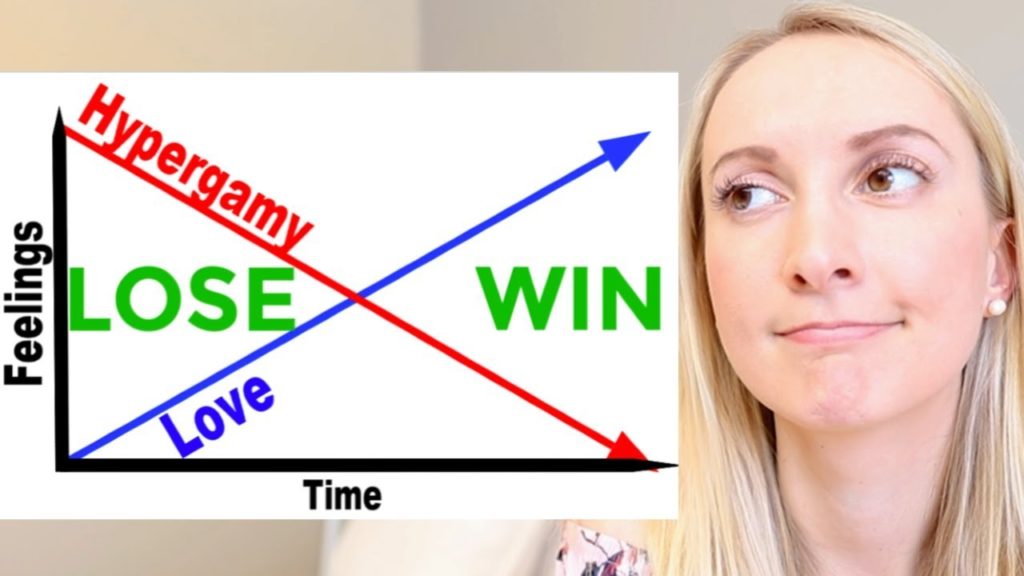
A commonly held maxim states that “women are only as loyal as their options”, and today, thanks to social media, they have an abundance of options. The Internet is capable of connecting every woman with a near-unlimited stream of tall, muscular, good-looking men. Some women think that some of those men look a lot better than their current partners.

Many men today feel – whether justified or not – that the women of today are likely to abandon any relationship they are in as soon as a more attractive male comes along. These men feel that long-term relationships are much less secure that they used to be, owing to the fact that hypergamy is out of control.

Clown World is more cut-throat than normal life in many ways. Because the basic spiritual connection to other sentient life has been broken, people don’t care so much about other people’s suffering. As such, relationships are a lot more exploitative and shallow than they used to be. This is as true of sexual relationships as business ones.

The existence of hypergamy has led to one extremely thorny political question: to what degree, if any, should female sexual nature be controlled?

Marriage was invented to control hypergamy. The idea was that if every man got exactly one woman – no more, no less – that fighting for the highest quality mates would no longer happen. As long as men could be convinced to be faithful to one woman, the resentment that arises from men not being able to get laid would be minimised.

The problem is that no-one wants to get married in Clown World. Not only are people mostly incapable of making a long-term commitment to anything nowadays, but the law also makes it a dangerous proposition. The rise of “divorce rape” has meant that men who marry are in danger of the woman getting bored, divorcing them, and then claiming alimony on the grounds that she is accustomed to a certain lifestyle.

This has led to a return of the social outcomes that marriage was designed to prevent. The few Chads at the top of the dominance hierarchy get laid all the time, the many at the bottom of the dominance hierarchy never get laid, those in the middle live in fear of losing their position, and misery abounds. The inevitable outcome is a large number of men dropping out of society entirely.

It’s hard to predict where the hypergamy phenomenon will end. But some clues might come from the disconcerting increase in men who no longer believe in women’s emancipation. A return to what Jordan Peterson calls “forced monogamy” is entirely possible, as unlikely as it might seem right now.

*

This article is an excerpt from Clown World Chronicles, a book about the insanity of life in the post-Industrial West. This is being compiled by Vince McLeod for an expected release in the middle of 2020.

*

If you enjoyed reading this essay, you can get a compilation of the Best VJMP Essays and Articles of 2019 from Amazon for Kindle or Amazon for CreateSpace (for international readers), or TradeMe (for Kiwis). A compilation of the Best VJMP Essays and Articles of 2018 and the Best VJMP Essays and Articles of 2017 are also available.

*

If you would like to support our work in other ways, please consider subscribing to our SubscribeStar fund. Even better, buy any one of our books!
The Political Implications Of Kinship Intensity

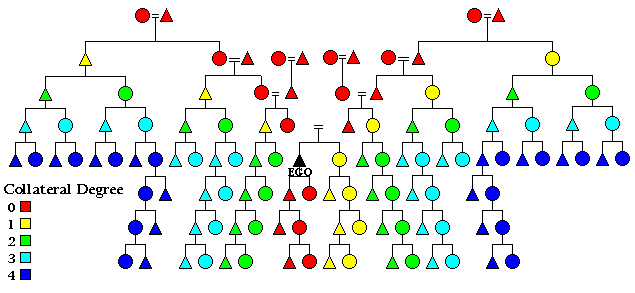
The phrase “kinship intensity” is rare in the behavioural science literature, but it’s making a resurgence thanks to new understandings of genetics. Although the concept of kinship intensity has been thoroughly elaborated upon with regards to mate selection, its inevitable profound impact on our political philosophy has yet to occur. This essay gives a foretaste.

Kinship is the primary organising principle of human societies. The reasons for this have been described at length by evolutionary psychologists and by biologists in works such as The Selfish Gene. In short, kinship organises societies because organisms that co-operate socially are more likely to survive and to reproduce than ones who don’t.

The great political philosophers like Plato, Aristotle, Confucius, Chanakya, Machiavelli and Hobbes didn’t know about genes, and so they had no concept of kinship intensity. Aristotle was aware that families organised into villages, and villages into provinces, and provinces into nations, but he didn’t know that it was kin selection on the basis of shared genes that drove all of that.

Back in the old days, before the Age of Exploration and mass transit, almost everyone lived in a state of high kinship intensity. Most people only knew a couple of hundred other people from their village and a few regional luminaries like the local sheriff or priest. Virtually everyone was related to each other in some way. They celebrated each others’ weddings and birthdays all the time.

In the modern world, most people live in a low state of kinship intensity. Living in big cities, many people encounter strangers all day – not only people from other tribes but from other countries and continents. In big cities, one comes into contact with people whose natural behaviour is so different to one’s own that it seems alien.

This change – from medieval to modern – has had profound effects on our political attitudes.

When a society has a high degree of kinship intensity, people are much more generous and co-operative. It’s logical to be, because any given act of kindness is more likely to benefit someone like you. If many of your kin live in the same society, it makes sense to work towards the betterment of that society, perhaps even making sacrifices for it. Your kin will benefit, and will reciprocate.

When a society has a low degree of kinship intensity, people are much less generous and co-operative. This is also logical, because acts of kindness cost the same amount to perform but will benefit someone unlike you, who is unlikely to reciprocate it. If you’re the only one of your kin in a society, there’s very little reason to work hard to better that society.

The West has always been split into a high kinship intensity Old World and a low kinship intensity New World. As mass immigration continues, the kinship intensity of all societies in the West will continue to fall: the Old World will become like the New and the New World will become like Brazil. This will have predictable consequences for human political behaviour.

As the degree of kinship intensity in Western countries continues to fall, people will care less and less about the people on the bottom of society. Once rich people no longer have much in common with poor people, those rich people will stop wanting to pay taxes or donate to charities that help. Decreasing kinship intensity will inevitably lead to both lower taxes and a corporate mentality where other people are viewed as tools to generate profit, and not as human beings.

If the people you’re exploiting aren’t related to you, then who cares?

The more diversity there is in a society, the more willing people in that society are to exploit others. People tend to enslave outsiders if they can, rather than their neighbours. The Barbary Coast slave traders raided Europe for slaves; the plantation owners of the American South bought theirs from Africa. African slaves constitute the largest proportion of slaves traded today, mostly by Arabs.

By contrast, the societies with the least amount of exploitation are the homogenous ones. Japan, South Korea and Scandinavia are characterised by being high-trust, low-crime societies where people habitually contribute to the common good. Societies like these, with high degrees of kinship intensity, are like large families.

We can see from this that kinship intensity predicts a number of outcomes. The higher it is, the less within-group exploitation there is. The lower it is, the greater within-group exploitation there is.

Kinship intensity predicts outcomes such as weight of taxation. In societies with high kinship intensity (like Scandinavia), people are generally happy to pay high taxes, knowing that the tax money will benefit their kin. In societies with low kinship intensity (like America), people don’t want to pay any taxes, because they feel that the tax money will benefit those who aren’t their kin.

It follows logically, therefore, that lowering the kinship intensity of a society through means such as mass immigration will make people less willing to contribute to the greater good. This apparent selfishness makes perfect sense from a kin selection perspective, and will obtain until intermarriage makes the newcomers the same kin as everyone else (or until there is civil war).

So anyone who wants to have a culture in which people contribute to the greater good, instead of exploiting it, better support policies that maintain a high level of kinship intensity. Crucial to this objective is limiting immigration to a level at which the newcomers can be absorbed into the kin networks of the existing population, rather than forming their own parallel networks.

*

If you enjoyed reading this essay, you can get a compilation of the Best VJMP Essays and Articles of 2019 from Amazon for Kindle or Amazon for CreateSpace (for international readers), or TradeMe (for Kiwis). A compilation of the Best VJMP Essays and Articles of 2018 and the Best VJMP Essays and Articles of 2017 are also available.

*

If you would like to support our work in other ways, please consider subscribing to our SubscribeStar fund. Even better, buy any one of our books!
Writing Characters Of Gold

The highest possible spiritual level is the element of gold. This represents perfection. Gold is the most precious of the metals known to the ancients. As such, its presence had the greatest influence on their behaviour. Gold is very much the fulcrum around which the world turns, and for this it has long been worshipped.

In the ancient world, gold represented the Sun, the life-giving force. The Sun was also worshipped by all of the ancients at some point or other, most notably in the Roman cult of Sol Invictus. This was due to the realisation that if the Sun did not return to the world after the Winter Solstice then all life on Earth would perish.

In an alchemical sense, gold represents God. The uppermost pole of the alchemical spectrum belongs to God, and the raising up of any of the lesser elements is to imbue them with God’s energy. Characters of gold, then, are divine. Characters of mercury might be messengers of God’s will, but characters of gold are direct expressions of it.

Viewed metaphysically, a character of gold is every bit as important to the world as the light of the Sun. Without the moral rectitude afforded by the character of gold, the human race would regress into a pre-civilised state. We would go back to being animals, God’s light being entirely absent. The characters of gold, and their messengers in the characters of mercury, are the force that imposes moral order upon the world.

The real power of the element of gold is its subtlety. Being perfect, it need not use any force or coercion. It is already in accordance with the Will of God, and consequently it acts without resistance. Its power is exemplified in the fable of Aesop, in which the Sun and the wind compete to induce a man to take off his coat. The Sun wins, because its gentle power does not inspire resistance.

The essential characteristic of characters of gold is radiance. Whereas the characters of silver are learned and the characters of mercury brilliant, the characters of gold radiate a divinity that comes from a consciousness that is perfectly attuned to the Will of God. They are wise – a quality that is not appreciated by all, although all benefit from it.

This radiance will set all of the other characters in their presence at ease. Being around a character of gold will incline the anxious to calmness, the angry to peace and the lustful to temperance. The ambitious characters of mercury will switch to enjoying their lives rather than exulting themselves. This is the power of the character of gold – to create peace.

In contrast to the characters of iron, who dominate with physical force, and to the characters of silver, who dominate with psychological force, the characters of gold dominate with spiritual force. They have no need to twist other characters’ arms or trick them with contracts; they influence the world by living in accordance with the Tao. This causes other characters to look up to them.

A character of gold will be one that other characters tend to speak about very fondly. This is a reflection of the generous personal warmth that the characters of gold exude. The character of gold will recognise the gold in others. As such, it will feel good to be around them.

The greatest motivation of the character of gold is to alleviate the suffering of all sentient beings. This is true to a lesser extent of the characters of mercury, silver and copper, but only the character of gold represents the perfect expression of this. The character of gold wants for nothing more than an end to the suffering in the world, and they are happy to put themselves second to this goal.

Gold is the most malleable of all metals. This softness is one of its prime characteristics. A character of gold will seldom be prickly, bad-tempered, abusive or impatient. If directly insulted, they will be extremely slow to take offence or to show anger. This may not work out to their advantage when other characters, interpreting the situation through their own base lens, come to think them weak.

This malleability is such that, in the physical word, one gram of pure gold can be beaten into a sheet one square metre in size. That the tiniest piece of gold can create something that shines so brightly captures the essence of metaphysical gold. The smallest amount of it is potentially enough to completely upend the order of the world.

Concomitant with this softness is a reluctance to cause divisions or separations. However, gold is still a metal, and still has enough of an edge to cut if necessary.

The ability to expand itself beyond the capabilities of the other elements is reflective of the ability of characters of gold to see the bigger picture. A character of gold will never be motivated by short-term instincts. They have perfected themselves to the degree that impulses not in accordance with their true will no longer arise.

Characters of gold, despite their glorious radiance, are entirely capable of being destroyed by the envy of baser characters. Characters of iron can run a sword through them; characters of silver can destroy their social standing. In no sense are characters of gold superheroes with special powers. They are simply people of a higher spiritual frequency to all the others.

A character of gold can be of any age. Young or old doesn’t matter because alchemical gold is an expression of the spirit. As long as they are good, they are gold. In practice, a character is more likely to be of the gold if they are either very young or very old, because the former will not have been corrupted yet and the latter will have entire lives to mine for wisdom.

In practice, it will be almost impossible to portray a character of gold with true accuracy if the author themselves are not of the gold. This doesn’t matter, as long as the reader can be induced to believe that the character of gold is perfect.

Perhaps the closest example fiction has seen to a character of gold is that of Michael Valentine in Robert Heinlein’s Stranger In A Strange Land. A modern real life example might be Jiddu Krishnamurti, an ancient one Socrates.

A character of gold in your story might be a legend that informs your story world, rather than an actual character that appears and speaks lines. They might be the legendary founder of the state in which your protagonist resides, someone whose perfection has created a space for an entire nation to thrive.

A character of gold might otherwise be someone who only makes a fleeting appearance, and that to change the direction that a character or the story is going in. Like Gandalf in Lord of The Rings, they appear to move the other characters in the direction of absolution.

Characters of gold have warm feelings towards characters of all of the baser elements, but they have a special fondness for the characters of mercury, who are their messengers. Characters of gold are often in opposition to characters of silver or below, on account of that the latter are frequently acting under the influence of baser instincts.

*

This article is from Viktor Hellman’s The Alchemy of Character Development, the sixth book in VJM Publishing’s Writing With Psychology series. This book will show you how to use alchemy to create deep, realistic and engaging characters for your creative fiction.

*

If you enjoyed reading this essay, you can get a compilation of the Best VJMP Essays and Articles of 2019 from Amazon for Kindle or Amazon for CreateSpace (for international readers), or TradeMe (for Kiwis). A compilation of the Best VJMP Essays and Articles of 2018 and the Best VJMP Essays and Articles of 2017 are also available.

*

If you would like to support our work in other ways, please consider subscribing to our SubscribeStar fund. Even better, buy any one of our books!

Debunking The “Structural Racism” Conspiracy Theory

The most prevalent conspiracy theory of our time is so prevalent that it’s accepted as truth by most media entities. This theory has it that black and brown academic and economic underachievement can best be explained by structural racism and white supremacy. The truth is that, like most conspiracy theories, this theory goes directly against the relevant science, and can be disproven by it.

When 9/11 happened, a popular conspiracy theory said it was an inside job. One particular version claimed that, as the melting point of steel is higher than the burning point of jet fuel, the twin towers could not have collapsed on account of being struck by aeroplanes (the official explanation). They had to have been taken down by explosives placed within the structure of the buildings.

The way to refute this theory was to ask people qualified in the relevant science. You could say to a civil engineer or a physicist “Jet fuel can’t melt steel beams,” and they would tell you that it doesn’t have to melt the beams, it just has to heat them up enough so that they become too soft to support the weight of the building, at which point it will collapse. This is what happened in the case of the twin towers. Conspiracy theory debunked.

Anyone wanting to test other conspiracy theories can do likewise. If you want to know whether the Earth is flat you could ask an astronomer. If you wanted to know whether the Earth was 6,000 years old you could ask a geologist. If you wanted to know whether humans landed on the Moon you could ask an aeronautical engineer. And if you wanted to test whether the structural racism conspiracy theory was bullshit, you could ask a psychologist.

This is what a psychologist would tell you.

The science of IQ is the most robust and heavily supported of any social science. There is more evidence backing the validity of it than there is backing anything else. Most importantly, IQ also has more predictive power than any single other variable known to Psychology.

If you disagree about its predictive power, consider the following analogy.

You have two 13-year old boys. One is tested to have an IQ of 115, i.e. one standard deviation above average. The other is tested to have an IQ of 85, one standard deviation below average. The two boys are followed up ten years after the test. Without knowing which boy is which, you’re told that one has recently completed an accounting degree, whereas the other dropped out of school and drifted into petty crime.

Can you guess which is which?

Almost everyone would guess that the boy with an IQ of 115 became the accountant. And, in the vast majority of such cases, they’d be right. Accountancy is intellectually challenging: far more accountants have IQs closer to 115 than to 85. Likewise, far more petty criminals have IQs closer to 85 than to 115. Almost everyone knows this, and almost no-one questions it.

The fact is that IQ is so powerfully predictive that we can already get a rough idea of how a person’s life will turn out just from accurately measuring their IQ. The average person with an IQ of 85 will have much greater trouble learning and recalling information than the average person with an IQ of 100. Their impulse control, measured by ability to delay gratification, will be significantly inferior.

Because their intellectual ability and their discipline are poorer than than of the average person, they will be less able to meet the demands of the modern workplace. As such, they will be marginalised into unemployment and underemployment more often. Any population of people with an average IQ of 85 will be much poorer and much more criminal than any population with an IQ of 100 or higher.

85 is also the average IQ of black Americans and Pacific Islanders, with Maoris being slightly higher (around 90). This we know from the research compiled by researchers like Richard Lynn in books like Race Differences in Intelligence.

Psychological science, therefore, can predict on the basis of IQ alone that black Americans and brown Kiwis will be poorer and will be more involved in the criminal justice system than white Americans and white Kiwis. This can be confidently predicted even in the total absence of structural racism or white supremacy.

At this point, a believer in the structural racism conspiracy theory will argue that structural racism not only makes blacks and browns poorer and more likely to be involved with the criminal justice system, but it also makes their IQs lower on account of things like teachers ignoring them more often during class or discouraging them from study. Therefore, even if they do have lower IQs, it’s still white people’s fault.

For one thing, we know that this contention can’t be true because intelligence is mostly genetic and not environmental. Although the environment can have a powerful effect on the intelligence of young people, the effect of environment on IQ is no more than 0.2 by adulthood – a phenomenon known as the Wilson Effect. Therefore, low adult IQ is primarily a genetic phenomenon.

For another thing, we can observe the experience and outcomes of other racial groups who have similar IQs to white people.

105 is the average IQ of Far East Asians. The structural racism conspiracy theory would predict that Far East Asians do worse than white people, on account of that white people deny them opportunities for advancement and discriminate against them in business and politics. After all, white supremacists don’t like Asians any more than they like blacks.

The psychological science theory would predict that Far East Asians do as well or better than white people, on account of that their high IQs lead to successful careers and less criminality. Being high IQ and having good impulse control, they should study hard and get decent jobs.

As it turns out, Asian Americans earn 7% more than whites at the median. They are also significantly less criminal, despite that more of them are from poor families and many are even refugees. This directly refutes the structural racism conspiracy theory and directly supports the psychological science theory.

Ultimately, the main reason why blacks do worse than whites in America, and the main reason why browns do worse than whites in New Zealand, is because of low IQ. This low IQ leads them to make more impulsive decisions, which leads to poverty. This isn’t at all controversial among those who have studied the relevant science.

The conspiracy theory that says blacks and browns do worse because of white racism is bullshit. This means that the poorer outcomes of blacks and browns cannot be explained by white racism, but by factors inherent to the blacks and browns themselves.

*

If you enjoyed reading this essay, you can get a compilation of the Best VJMP Essays and Articles of 2019 from Amazon for Kindle or Amazon for CreateSpace (for international readers), or TradeMe (for Kiwis). A compilation of the Best VJMP Essays and Articles of 2018 and the Best VJMP Essays and Articles of 2017 are also available.

*

If you would like to support our work in other ways, please consider subscribing to our SubscribeStar fund. Even better, buy any one of our books!