Many people ask themselves why the mainstream media does so much race-baiting. It’s apparent that there a conscious and widespread effort to divide every Western nation along racial lines, and to promote racial consciousness wherever possible. The mainstream media does all this as part of a deliberate strategy to divide and conquer all Western nations.
The first thing to be understood is that the mainstream media of almost every Western nation is owned and controlled by international banking and finance interests. This is true of New Zealand, and it’s true of almost everywhere else as well, and has been true for over a century now.
These international banking and finance interests don’t permit the journalists of the mainstream media to present the news objectively. Control of the narrative is far too valuable to allow mere journalists to decide what information gets presented to the masses.
The mainstream media serves as the apparatus of propaganda, through which consent for the desires of the ruling class is manufactured. The owners of that apparatus make sure that its every action serves their interests. To that end, every story, article or bulletin is manicured to achieve the maximum possible propaganda benefit to the ruling class.
The major interest of the international banking and finance interests, a.k.a. the ruling class, is to maintain their position at the top of the social dominance hierarchy. Staying at the top, when you are grossly outnumbered, is primarily a matter of dividing and conquering the masses and setting them against each other. That way, they can’t unify and set themselves against you.
It is in serving this interest that the mainstream media does so much race-baiting. Their repeated emphasis on racial issues distracts from the class issues that are harming both working-class whites and working-class non-whites. This is true of every Western country.
Whether it’s whites and blacks, whites and Muslims, whites and Maoris – both or all sides have to be set against each other through constant emphasis of their differences and denial of their similarities. At no point, ever, may it be acknowledged that working-class whites and working-class non-whites have anything in common.
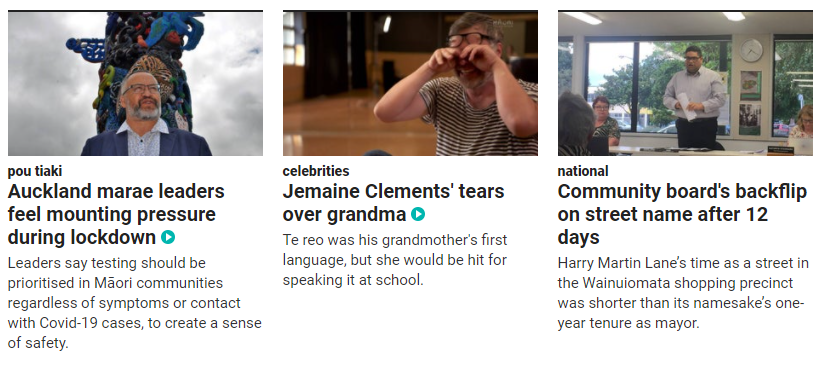
This is why the mainstream media dishes up shit like this week’s report about the Vodafone CEO telling one of his customers to fuck off in Maori, which is not news in any sense. The only purpose of stories like this is to normalise the division of the nation into racial groups, which is achieved by normalising race consciousness.
The Vodafone CEO is a wealthy, ruling class man, who benefits directly from the division of the working class, whose wages are his biggest expense. He is not a friend of Maoris in any sense, especially not working-class ones. But the apparatus of propaganda is willing to present him as an ally for the sake of race-baiting.
This is why New Zealand’s Stuff, the 12th most-visited website in the country (according to Alexa rankings), has an entire section devoted purely to race-baiting. The ‘Pou tiaki’ section runs nothing but race hate stories, usually with a particular focus on demonising white people. Even when white people are not demonised directly, this section propounds the narrative that every New Zealander is their race first and foremost.
Such narratives have an extremely destructive effect on working class solidarity. Working-class whites, many of who are still suffering intergenerational trauma from their ancestors’ participation in World Wars I and II, naturally resent being told that they are privileged. Working-class Maoris, for their part, are torn between loyalty to their fellow working-class whites and their own Maori elders, who tend to push race hate narratives.
This resentment and divided loyalties make it impossible for the working class to present a unified front to the ruling class.
The mainstream media, and the people who own them, don’t care whether the average white Kiwi sees Maoris as an angelic race of innocent victims or as a criminal race of grifters and gang members. All that matters is that they’re seen as an other. There’s a white Us and a brown Them, and class narratives don’t come into it at all, ever.
As long as people think that “we are our race”, they don’t ever think that “we are our class”. That would be the real danger – if working-class whites and working-class Maoris would come together to assert their class differences in the face of the ruling class. It is to prevent this outcome that the ruling class directs its lackeys in the mainstream media to fill the airwaves with race-baiting propaganda.
Normalising racial consciousness also abnormalises the idea that a random working-class white and a random working-class Maori can come together in bonds of solidarity. Racial consciousness means that the first thought of a white upon seeing a Maori, or vice-versa, is suspicion and mistrust. Class consciousness, by contrast, means that working-class people put all their mutual suspicion and mistrust aside to achieve a greater goal.
So the reason why the mainstream media does so much race-baiting is to keep the enemies of their owners divided. The owners of the mainstream media want a divided working class, one that cannot come together to effect any real change to the status quo of the political and economic systems. Every story about racial injustice is a story that distracts from class injustice.
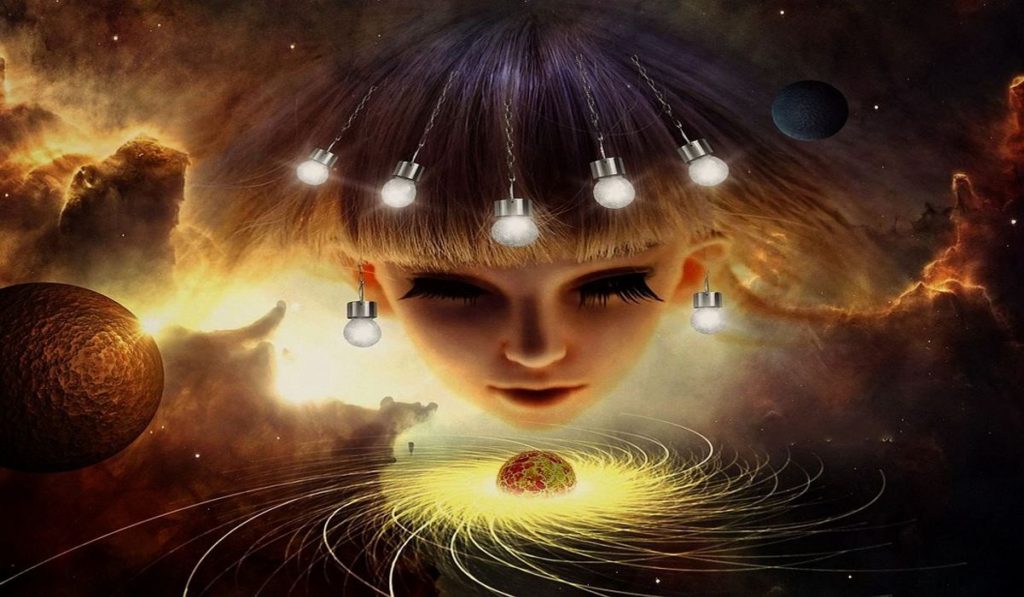
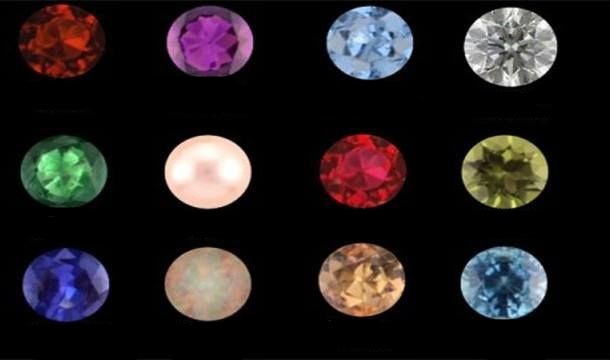
The following is an attempt to reconcile ancient Western esoteric psychology with ancient Eastern esoteric psychology. The idea is that all human psychopathological conditions fall into one of twelve categories, the categories being all permutations of genetic, environmental and spiritual (in the first place) and clay, iron, silver and gold (in the second place).
The first condition is genetic clay. This refers to a person who is weak for genetic reasons.
In this category are all sufferers of genetic conditions which make them weaker or more passive than normal. The typical outcome of falling into this category is that a person becomes resentful and bitter. Hatred for the world and for life in general is characteristic of people in the first condition.
This is also the category for people who are simply dumb. Most people not naturally intelligent enough to find a place in the world become resentful. In practice, there’s good reason to categorise such people with the other genetic unfortunates. In principle, it doesn’t matter much if a person is genetically weak for physical or mental reasons, because the attitude will be similar.
The second condition is genetic iron. This refers to a person who is cruel for genetic reasons.
The usual reason for a person to fall into this category is that they are physically stronger than average, but mentally weaker than average. This combination can lead to contempt for those physically weaker than them. This is the category that schoolyard bullies usually fall into, and it’s the one that adults fall into if they don’t grow out of the schoolyard bully stage.
People in this category might be ‘bad’, but they’re not ‘fucked-up’ or ‘evil’ like people from the sixth and tenth categories. It’s more a matter of being unusually boisterous or vigourous. Many juvenile delinquents fall into this category owing to understimulation, and most of those grow out of it (or have it knocked out of them).
The third condition is genetic silver. This refers to someone who has no genetic conditions, but who is otherwise not special.
The condition here is indifference towards those who are genetically less fortunate. Many people who are born without genetic conditions are incapable of understanding the suffering caused by them, and as such they feel contempt instead of sympathy towards those who have them.
Characteristic of the third condition, then, is a callous kind of apathy for ordinary people. It’s not really malicious, although it can be. It is different to the cruelty of the second condition in the sense that people in the third condition tend to direct others to cause harm, rather than causing harm themselves.
The fourth condition is genetic gold. This refers to someone who is perfectly in balance.
Those of genetic gold possess neither the weakness of people in the first condition, nor the brutality of people in the second condition, nor the cold apathy of people in the third condition. Belonging to this fourth condition are all the people who naturally feel empathy with other living beings.
Insofar as belonging to this group is a condition, it is the condition of suffering the envy of the less gifted, and the despair of not being appreciated in proportion to one’s true worth. Those of genetic gold will always have to adapt themselves to a world created to suit someone else. Someone in the fourth condition, then, is someone who literally has it too good for their own good.
Those are the four genetic conditions. In short, they are: suffering weakness and becoming masochistic; suffering weakness and becoming sadistic; not suffering weakness and becoming apathetic; and not suffering weakness and becoming sympathetic.
The fifth condition is environmental clay. This refers to people who have endured so much trauma that they have become depressed.
Abuse and neglect that lead to giving up on life is the most common reason for a person to belong to the fifth condition. If a person suffers so much during childhood that they come to feel that the world is an evil place, and so there’s no point in trying to be happy here, then they fall into this category. This is also the category for people who have become shut-ins owing to adverse early childhood experiences.
The fifth condition is for people that were created genetically normal but who were then broken by the world. A great number of suicides fall into this category, because those with harmful genetic conditions have often learned to live with them by the time they reach suicide age. Most deaths of despair afflict people in the fifth condition.
The sixth condition is environmental iron. This refers to people who have endured so much trauma that they have become sadistic.
When children are born, they don’t immediately know if the world is a good place or an evil one. They learn this, based on how their environment treats them. Those who come into the world and are met with abuse learn that the world runs on abuse. As such, they naturally come to abuse others. Alchemically speaking, their environment has hammered them into shape like a blacksmith would hammer into a shape an iron dagger.
The main difference between genetic iron and environmental iron is that the former is dumb, whereas the latter can be of any level of intelligence. Genetic iron tends to fall in line with a smack to the head; environmental iron is much less predictable. Although people of both genetic iron and environmental iron can behave like psychopaths, the latter is closer to what used to be called a sociopath.
The seventh condition is environmental silver. This is otherwise known as “having a decent upbringing”.
It’s comparatively rare for people to grow up in this world without suffering heavily. Someone who grew up genetically unremarkable and who also had an unremarkable upbringing usually enjoys the human experience. Much like people in the third condition, the major characteristic of the seventh condition is apathy.
The main difference between the seventh condition and the third is that people in the seventh condition are much more likely to move out of it. Those in the third condition are usually stuck there on account of the mindless inertia of biological forces, but those in the seventh can either reason their way out of apathy or have an experience that causes them to learn sympathy.
The eighth condition is environmental gold. This refers to a person who has endured trauma that made their behaviour worse, but who has overcome that.
The eighth condition is analogous to gold because of its value and rarity. The vast majority of people who suffer heavily become either meek or cruel, and the majority of those who don’t suffer become apathetic. A person who has suffered, and overcome it, has demonstrated a spiritual quality of the highest value.
All of the world’s genuine spiritual leaders fall into this category. It is the category for those who have learned the ultimate spiritual and alchemical power of transmuting suffering into joy. Eckhart Tolle is probably the most famous example right now, having learned to transmute a near-suicidal depression into tranquility.
These are the four environmental conditions. In short, they are: suffering trauma and becoming masochistic; suffering trauma and becoming sadistic; not suffering trauma and becoming apathetic; becoming sympathetic regardless of whether one suffered trauma.
These eight conditions are as far as mainstream psychology goes. Mainstream psychology is only concerned with biological nature and environmental nurture; it allows no concept of any spiritual dimension, because any such dimension would not be amenable to measurement. The latter four conditions in alchemical psychopathlogy are spiritual.
The ninth condition is spiritual clay. This refers to a person whose true will is to withdraw from the world.
People in the ninth condition have a spiritual attachment to suffering. They are often described by others as excessively sensitive. They are not broken like people in the fifth condition or defective like people in the first. They just don’t want more life.
Many old people come into this condition once the prime of their lives are over. It’s both common and understandable for a person to mentally check out of reality once they only have pain and suffering to look forward to. People with schizoid personality disorder also fall into this category, as does everyone who has simply become bored of life.
The tenth position is spiritual iron. This refers to people whose true will is to increase the amount of suffering in the world.
People belonging to this condition are rare, and are often hard to detect until it’s too late. People without a genetic reason to be resentful and who have not suffered significant environmental trauma, but who still act to increase the net amount of suffering in the world, could be said to be evil.
The characteristic way to recognise a person in this condition is that there’s no explicable reason for their actions. This is why they can’t be said to be ‘fucked-up’ like a person in the sixth condition. A lot of old people end up in the tenth condition if they become bitter, because it’s common for old people to become resentful about their impending deaths and to take this resentment out on the young.
The eleventh position is spiritual silver. This refers to people whose true will is to be indifferent to suffering.
Most people in the eleventh condition have drifted through life in a state of bliss. They haven’t suffered for genetic reasons, haven’t suffered for environmental reasons, and they do not have a strong spiritual attachment to suffering. They experience life much like an enlightened person does, without appreciating why.
People in the eleventh condition are different to people in the seventh because people in the eleventh are indifferent to their own suffering, not only (or even primarily) the suffering of others. Someone in the seventh condition might suffer and then become a person of the fifth or sixth conditions, but a person in the eleventh condition can suffer without being affected.
The twelfth position is spiritual gold. This refers to people whose true will is to decrease the suffering in the world.
People in the twelfth condition are the bodhisattvas of this part of the Great Fractal. They are the ones who have managed to find a way to transmute suffering into joy, not just for themselves but also for others. Their spiritual nature has overpowered both their genetic nature and their conditioned nature, but in the best possible way. People in this condition plant trees even though they won’t get to sit in the shade of them.
David Bowie once said that “Religion is for people who fear hell, spirituality is for people who have been there.” The twelfth condition is for those who have suffered but who have found a way to overcome it absolutely, not partially or temporarily as people in the eighth condition have. These people are the masters of alchemy who have succeeded at the meaning of life.
These are the four spiritual conditions. In short, they are: a true will to withdraw from suffering; a true will to increase suffering; a true will to be indifferent to suffering; a true will to decrease suffering.
Generally speaking, a person will fall into one of the earlier conditions as their life begins, will move into the middle conditions as their life progresses, and will finally move into the latter conditions as their life comes to a close.
This reflects the developmental influences of humans from almost purely genetic when they are born, to genetic and environmental in youth, to genetic, environmental and spiritual in middle age and to spiritual in old age.
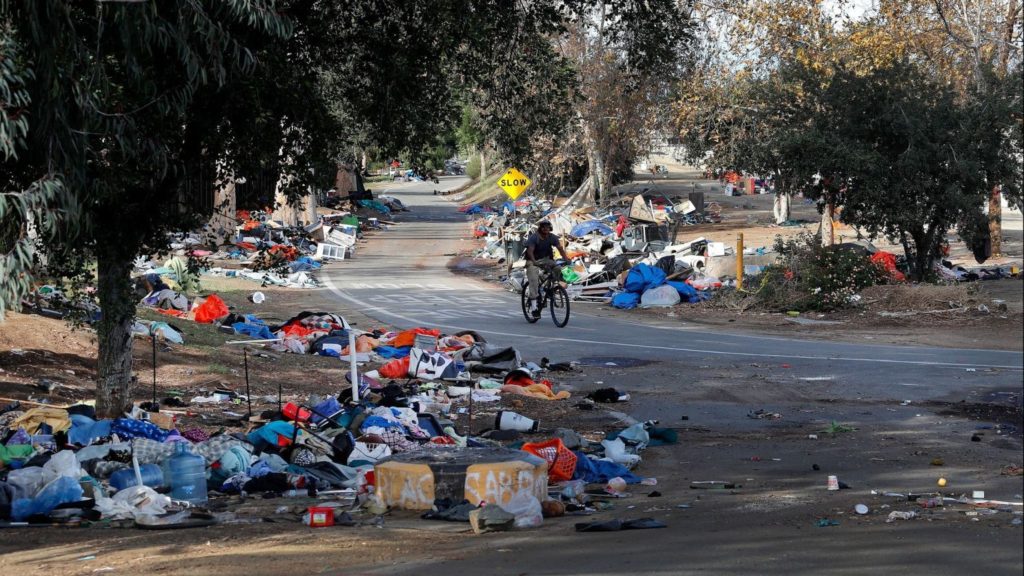
Increasing levels of homelessness have been observed all over the Western World. The waiting list of families in severe need of housing in New Zealand has increased sevenfold since 2016, and has nearly quadrupled since the Sixth Labour Government came to power in late 2017. A similar situation exists in America, where “tent cities” of homeless people now surround major metropolitan areas.
A great deal of thought has gone into solving this crisis – or so we’re told. Apparently it’s an issue of great concern to the leaders of the West, who are doing everything they can to get their young people into houses. The reality is that they don’t care about homelessness at all – in fact, they want more of it. Homelessness serves a very important social role.
Like much of human behaviour, whether or not the lower classes rebel is a function of two factors: reward and risk.
The greater the reward for rebelling, the greater the likelihood it will happen. The more oppressed a people are, the greater the reward for rebelling. Anyone who has to endure daily humiliations, especially those of a physical kind, will soon come to feel that it’s worth rolling the dice.
The greater the risk for rebelling, the less the likelihood it will happen. This is why ancient kings used to put every male in rebellious villages to the sword. Others had to learn that the consequences of rebellion were either self-determination or death.
The ruling classes have always had to keep this reward-to-risk balance titled towards not rebelling. A failure to do so could mean that those ruling classes were violently deposed.
Ever since the advent of agriculture, the ruling classes have been preoccupied with one question: how to get people to work. Tilling fields is much less interesting than hunting. Left to their own devices, people would rather hunt and fish, and then lie around the rest of the time, than till fields and accumulate a surplus of grain.
Using violence to force people to work led to rebellion. So the ruling classes had to be subtle about tinkering with the reward-to-risk ratio.
One approach was to increase the reward for working. This was originally how early societies came to have a schedule of festivals, such as harvest festivals in Autumn, fertility festivals in Spring, and festivals for Midsummer and Midwinter. The idea was that people would more readily work a week of tilling fields if they had a festival to look forward to.
The other approach was to increase the risk of not working. As mentioned above, the ruling class couldn’t simply whip people, because they would rebel. The punishment for not working had to be more subtle. The usual solution was ostracisation. Anyone considered to not be working hard enough was deemed a ‘bludger’ or ‘malingerer’ and abused psychologically, instead of physically.
In contrast to physical abuse, psychological abuse can be dished out with very little chance of retaliation. So the ruling classes of today seek to maximise the amount of psychological abuse they inflict upon the lower classes, and that means spreading fear. The ruling class, in the final analysis, are little different to terrorists, and to that end they deliberately cultivate visible homelessness.
Most homelessness has been purposefully created by the ruling class, because they need to have people visibly suffering in public in order to scare the rest of the population into submission. In the terms used above, homelessness has been purposefully cultivated by the ruling class in order to increase the risk of not working.
The presence of homelessness means that the working classes put their heads down and obey orders without complaint, for fear of being made homeless themselves.
Many people have wondered about the logic of doubling the refugee quota, as Labour did in 2017. It seemed especially mysterious, as we were already in the grip of a housing crisis at the time, and each refugee family we housed meant one Kiwi family had to go without.
But that was the precise outcome intended.
The reason why they let the refugees in, and give them housing, while leaving Kiwis to suffer homeless, is because they want Kiwis to suffer. They want the average New Zealander to see his fellows suffering and homeless every day, because this will keep the average New Zealander compliant.
This strategy, which could be summarised as “A boot stamping on a human face, forever,” has reached its apogee in today’s America, where major Californian cities are now surrounded by miles and miles of tents. Los Angeles is believed to contain 60,000 homeless, many of who live in tents in the downtown commercial area.
This need to threaten people into submission is why they will never solve the homelessness crisis.
Much like cannabis prohibition, homelessness serves the purpose of signalling the government’s cruelty, and thereby works to bring the lower classes into a state of compliance. The homeless have to be there, so that the average citizen can be reminded of the consequences of resisting the government’s will. The more tyrannical the government becomes, the more homeless there will be.
The presence of homeless people, then, could be considered a sign of tyranny. Therefore, the homelessness problem won’t be solved until the tyranny one is.
Like the ACT Party, the Greens have been described as the next generation’s alternative to the Establishment. Also like the ACT Party, the Greens increased their vote from 2017, although the Greens only increased slightly, from 162,443 votes (6.3% of the total) to 226,757 votes (7.9% of the total). This was enough for ten seats in Parliament.
As in previous years, those who voted Greens in 2020 were much better educated than the average New Zealander. This, more than anything else, was the most distinguishing characteristic of the Greens voter.
Variable
Voting Greens in 2020
No qualifications
-0.64
Level 1 certificate
-0.58
Level 2 certificate
-0.53
Level 3 certificate
0.31
Level 4 certificate
-0.60
Level 5 diploma
-0.71
Level 6 diploma
0.05
Bachelor’s degree
0.59
Honours degree
0.77
Master’s degree
0.74
Doctorate
0.77
The correlation between having any one of the three highest university degrees and voting Greens in 2020 was at least 0.74. This is one of the strongest correlations between any demographic variable and voting for a particular party in 2020.
The reason for this is simple, but widely denied. People who can understand scientific literature understand that the human race is on a path to destruction, and that our current lifestyles are not sustainable. As such, they vote for environmentalism. This pattern is replicated in most other Western countries.
On the other hand, the correlation between having no qualifications and voting Greens in 2020 was -0.64. Poorly-educated people often resent the scientific approach taken by the Greens, and don’t consider it particularly intelligent. In general, the more poorly-educated a person is, the more they will resent being told that our current lifestyles are unsustainable.
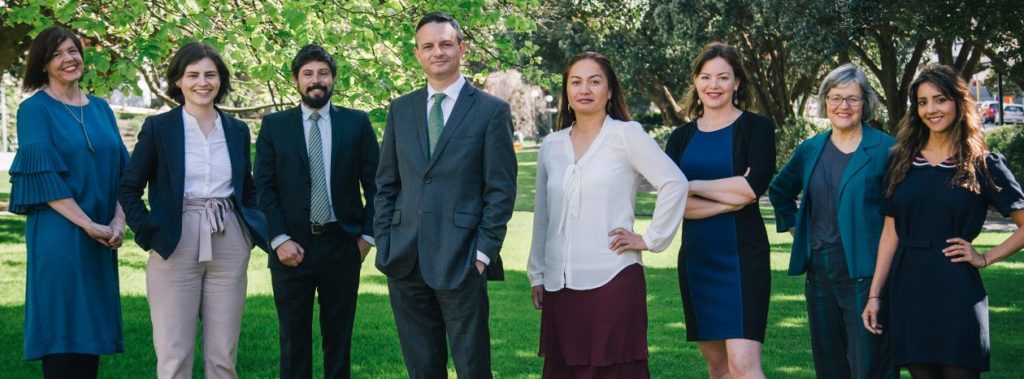
The Greens are a large enough movement to present different faces to different people. Although some might see Marama Davidson and Golriz Ghahraman, and decide that the Greens are a dangerous pack of Brown Communists, others see Chloe Swarbrick and James Shaw and decide that the Greens are the only party who take science and scientific evidence seriously.
Variable
Voting Greens in 2020
Special voting Yes for euthanasia
0.70
Special voting Yes for cannabis
0.68
This latter point is shown most clearly in the results of the cannabis referendum. There was a very strong positive correlation of 0.68 between casting a special vote for Yes in the cannabis referendum and voting Greens in 2020.
The reason for this is clear: anyone who actually looks at the scientific evidence will understand that cannabis is medicinal and not anywhere near as harmful as its detractors have claimed it to be (two points that VJM Publishing discussed at length in The Case For Cannabis Law Reform). Given this, it seems unreasonably cruel to keep locking people up for using it.
The correlation was even more strongly positive for the euthanasia referendum, which speaks to the absence of religious superstition among Green Party voters. The most common reason for people to vote No in the euthanasia referendum was a superstitious fear of death, and not many Green voters suffer from this.
Variable
Voting Greens in 2020
No religion
0.31
Buddhism
0.22
Christianity
-0.39
Hinduism
0.09
Islam
0.10
Judaism
0.54
Maori religions
-0.30
Spiritualism and New Age religions
0.34
It’s easily possible to overstate how irreligious the Greens are. Although there was a significant negative correlation between voting Greens in 2020 and being either Christian (-0.39) or a follower of a Maori religion (-0.30), these were the only religions to be so negatively correlated.
The strongest positive correlation between voting Green in 2020 and belonging to a religion was with Judaism, at 0.54. Next was Buddhism, at 0.22. For the most part, this follows the rule that, the better educated a voter is, the more likely they are to vote Green.
The one notable exception is people who follow Spiritualism and New Age religions. This group is not particularly well educated, but they like to vote Green nevertheless. The correlation between being a Spiritualist or New Ager and voting Greens in 2020 was 0.34. The explanation is probably because Spiritualists and New Agers share with the Greens many anti-capitalist and anti-consumerist sentiments.
There was a significant positive correlation, of 0.31, between having no religion and voting Greens in 2020. This speaks to the extent to which Greens supporters are members of the scientific and technical elite, which is educated into a scientific materialist paradigm at high school and university.
Variable
Voting Greens in 2020
Living in an urban electorate
0.30
Living on the North Island
-0.08
Percentage of males
-0.16
Surprising to many is the fact that Greens voters in 2020 were significantly more urban than rural. Some might suggest that this shows the Greens to not really care much about environmental issues. A more plausible explanation is that educated people have to move to urban environments to get jobs that make the most of their skills, and so it’s the fact that Green voters are highly educated that explains why they are so urban.
Green voters are slightly more likely to live on the South Island. These correlations reveal that their strongest support is in places like Christchurch, Dunedin and Nelson. Indeed, these are the places where environmentalist and anti-consumerist sentiments are strongest.
Green voters are also slightly more likely to be female, although the correlation between voting Greens in 2020 and percentage of males was also not statistically significant, at -0.16. This suggests that educated young women like Julie Anne Genter and Chloe Swarbrick represent the archetypal Green supporter.
Variable
Voting Greens in 2020
Working as a manager
-0.04
Working as a professional
0.75
Working as a technician or trades worker
-0.50
Working as a community or personal service worker
-0.03
Working as a clerical or administrative worker
0.03
Working as a sales worker
-0.09
Working as a machinery operator or driver
-0.58
Working as a labourer
-0.48
The most striking thing about Greens voters is how heavily represented they are among professionals. The correlation between voting Greens in 2020 and working as a professional was 0.75, one of the strongest between any party and any occupation. This is inevitable given how well-educated Greens voters and professionals both are.
There were significant negative correlations between voting Greens in 2020 and working as a machinery operator or driver (-0.58), as a technician or trades worker (-0.50) or as a labourer (-0.48), three of the most typically working-class occupations.
These correlations might seem strange, given that the Greens are a firmly left-wing party and therefore are supposed to represent the working class. The paradox at the heart of the Greens is that, despite their positioning, few working-class people vote for them.
The reality is that the Greens, like all Parliamentary parties, represent not a specific part of the population but a specific part of the Establishment. The Greens’ turf is the young, well-educated globalists whose parents usually vote National.
Variable
Voting Greens in 2020
European
0.19
Maori
-0.27
Pacific Islander
-0.19
Asian
0.12
Many will also be surprised, given the virtue signalling that the Greens do around Maori issues, that there was a significant negative correlation (-0.27) between voting Greens in 2020 and being Maori. There was also a negative correlation between voting Greens in 2020 and being a Pacific Islander.
On the other hand, there were positive correlations between voting Greens in 2020 and being either a Kiwi of European descent or Asian. Neither of these correlations were significant, but they reflected the general trend that the better-educated any one group of New Zealanders is, the more likely they are to vote for the Green Party.
Variable
Voting Greens in 2020
< $5,000
-0.01
$5,001-$10,000
0.34
$10,001-$20,000
-0.37
$20,001-$30,000
-0.37
$30,001-$50,000
-0.52
$50,001-$70,000
-0.04
$70,000+
0.52
That voting Green is not considered a working-class option is underlined by the fact that there is a negative correlation of -0.52 between voting Greens in 2020 and having an income of $30,001-$50,000. Someone working 2,000 hours a week, or close to it, at or just above minimum wage will be in the middle of this income bracket.
On the other hand, there was a strong positive correlation of 0.52 between voting Greens in 2020 and having an income of $70,000+. Many people in the top 15-20% of income are Greens supporters, which is a function of the fact that Greens supporters tend to be better educated than average and that educated people tend to earn more than average.
Variable
Voting Greens 2020
Aged 20-24
0.56
Aged 25-29
0.45
Aged 30-34
0.34
Aged 35-39
0.24
Aged 40-44
0.21
Aged 45-49
0.08
Aged 50-54
-0.02
Aged 55-59
-0.13
Aged 60-64
-0.17
Aged 65-69
-0.16
Aged 70-74
-0.16
Aged 75-79
-0.17
Aged 80-84
-0.15
Aged 85+
-0.04
Up until pension age, there is a clear trend: the younger someone is, the more likely they are to vote Greens.
The aged 20-24 demographic, or the “student” demographic, are the strongest supporters. The correlation between being in this age bracket and voting Greens in 2020 was 0.56. This contrasts sharply with the correlation between being aged 20-24 and voting Labour in 2020, which was -0.02.
For every age bracket older than this up until pension age, the correlation between being in that bracket and voting Greens in 2020 becomes less positive or more negative. The correlation between being aged 60-64 and voting Greens in 2020 was -0.17, and the correlations for older age brackets were similar.
These numbers support the idea of the four basic political niches, with the Greens representing young women (or the alternative left). It remains to be seen whether Green-voting young women switch to Labour in coming years as they get older.
Variable
Voting Greens 2020
Work in agriculture, forestry and fishing
-0.34
Work in mining
-0.12
Work in manufacturing
-0.69
Work in electricity, gas, water and waste
-0.20
Work in construction
-0.46
Work in wholesale trade
-0.30
Work in retail trade
-0.23
Work in accommodation and food service
0.41
Work in transport, postal and warehousing
-0.41
Work in information media and telecommunications
0.64
Work in financial and insurance services
0.44
Work in rental, hiring and real estate services
0.05
Work in professional, scientific and technical services
0.62
Work in administrative and support services
-0.05
Work in public administration and safety
0.51
Work in education and training
0.29
Work in healthcare and social assistance
0.04
Work in arts and recreation services
0.61
Examining the industries in which Greens supporters work reveals that they are heavily represented in cultural and social jobs as well as intellectual ones.
Given the strength of the correlations between having a university degree and voting Greens in 2020, it’s unsurprising that Greens supporters are heavily represented among those working in professional, scientific and technical services. The correlation between working in such services and voting Greens in 2020 was 0.62.
There was an even stronger correlation between working in information media and telecommunications and voting Greens in 2020 – this was 0.64. As with professional, scientific and technical services, employment in this industry generally requires a good education. The information media and telecommunications industry also attracts many young people, which increases the proportion of Greens voters among them.
The third industry to have heavy Green representation is working in arts and recreation services. This industry is heavily populated with the young and talented and these people tend to vote Green. Women like Eleanor Catton are typical of the kind of high-IQ Green supporter that works in the arts.
Green voters are least likely to work in typical working-class industries, which is again surprising to those who consider the Greens to be a leftist movement. There was a significant negative correlation between voting Greens in 2020 and working in manufacturing (-0.69), working in construction (-0.46), working in transport, postal and warehousing (-0.41) or working in agriculture, forestry and fishing (-0.34).
The significant correlation between voting Greens in 2020 and working in accommodation and food services can be explained by the fact that many Greens voters are students, and students comprise a large proportion of those working in that industry.
Variable
Voting Greens 2020
Voting Greens 2017
Voting Labour same year
0.29
0.11
Voting National same year
-0.16
-0.25
Voting ACT same year
-0.08
0.17
Voting New Zealand First same year
-0.24
-0.48
Voting Maori Party same year
-0.15
-0.06
Voting ALCP same year
-0.23
-0.13
Voting New Conservative/Conservative same year
-0.35
-0.33
Voting The Opportunities Party same year
0.84
0.77
Voting Advance NZ same year
-0.36
n/a
Voting Sustainable NZ same year
0.26
n/a
The Greens might not have that much in common with their fellow leftists in Labour, but there was a significant positive correlation between voting Greens in 2020 and voting Labour in 2020 (0.29). The correlation between voting for these parties was not significant in 2017.
The strongest positive correlation between voting Greens in 2020 and voting for any other party that year was with voting The Opportunities Party in 2020, which was 0.84. Both parties seem to be targeting the same niche, of young urban leftists. The danger for the Greens in 2023 will be that The Opportunities Party wins so many votes that the Greens fall under the 5% threshold.
Some might be surprised to see that the correlation between voting Greens in 2020 and voting National in 2020 (-0.16) is more strongly negative than the correlation between voting Greens in 2020 and voting ACT in 2020 (-0.08). After all, ACT is even further to the right than National is, and the Greens are a far-left party.
This can be explained by the fact that both the Greens and ACT appeal primarily to younger and better-educated people, whereas National (like Labour) appeals more to older and more poorly-educated people. This means that the support base of the Greens and ACT overlap demographically in ways that they do not overlap ideologically.
The strongest negative correlations with voting Greens in 2020 were with voting Advance NZ in 2020 (-0.36) or voting New Conservatives in 2020 (-0.35). The reasons for these are obvious: Advance NZ and New Conservatives are the two parties with the most poorly-educated followers. They both attract old, poorly-educated and religious voters, which is the exact opposite of the Greens.
Variable
Voting Green 2020
Median income
0.37
Mean income
0.49
Unsurprisingly, given the heavy representation of Greens voters in highly-paid occupations and industries, there were significant positive correlations between voting Greens in 2020 and both median income (0.37) and mean income (0.49). These correlations aren’t quite as strong as the correlations between voting Greens in 2020 and having any of the university degrees, because many Greens voters are still too young to have achieved any workplace seniority.
Variable
Voting Greens in 2020
Income from wage or salary
0.44
Income from self-employment or owning own business
0.15
Income from interest, dividends, rent or other investments
0.43
Income from ACC or private work insurance
-0.47
Income from NZ Super or Veteran’s pension
-0.20
Income from Jobseeker Support
-0.27
Income from Sole Parent Support
-0.31
Income from Supported Living Payment
-0.06
Income from Student Allowance
0.54
Unsurprisingly for a party with so much student support, the correlation between between voting Greens in 2020 and receiving an income from the Student Allowance (0.54) was stronger than any correlation between voting Greens in 2020 and receiving income from any other source.
Some, however, might be surprised to learn that there was a significant positive correlation between voting Greens in 2020 and receiving an income from interest, dividends, rents or other investments (0.43). This statistic speaks to the paradox at the heart of the Greens: they are privileged people speaking for the non-privileged.
In summary, the typical Greens voter is young and urban, and is either on a Student Allowance or has earned a postgraduate degree and is earning a full-time salary as a professional in a major urban centre.
*
This article is an excerpt from the upcoming 3rd Edition of Understanding New Zealand, by Dan McGlashan and published by VJM Publishing. Understanding New Zealand is the comprehensive guide to the demographics and voting patterns of the New Zealand people.