As another year in Clown World ends, many are casting their mind forwards to the future. VJM Publishing has taken it upon ourselves to bring the light of edification to the Anglosphere masses, in opposition to the great stupifying force that is the mainstream media. To that end, we offer some ideas on what might happen in 2023.
The general prediction is that basically everything will get worse, save for a few things. And those few things will be subtle and not appreciated by all.
The area that we can be most confident will decline is the economy. Everyone is predicting a recession for 2023. Recession appears inevitable to most people, given that interest rates have risen sharply across the world in 2022, and that most countries and individuals were heavily burdened with debt before the rise. Maximum debt plus maximum interest rates equals maximum bankruptcies and maximum pain.
On top of the macroeconomic trends, we can also expect high consumer inflation next year. Electricity and food prices have risen sharply in Europe in 2022, and we can expect this to continue into 2023 now that Emmanuel Macron has signalled “The end of the age of abundance.” We won’t see Weimar conditions next year, but we will edge towards them.
Most ominous are the signs of the world continuing to split into the three territories predicted by Orwell in 1984. The Ukraine war has already divided the world into a Oceania (Western) bloc versus a Eurasian bloc. All that remains is for China to fall out with Russia, and to carve a sphere of influence for themselves, and to call it Eastasia.
The mainstream media of 2023 will continue to create the impression that megadeath in nuclear hellfire is imminent. In reality, the true threats to our well-being will be increasingly precarious housing, medical care (especially mental health care) and employment. In other words, the adverse microeconomic trends of recent decades will continue.
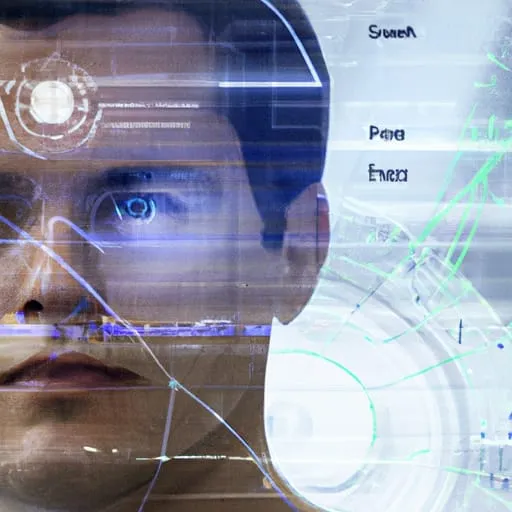
Life quality will also decline when it comes to surveillance technology, in particular facial recognition technology. Predictably, this tech will be marketed to us as necessary to keep us safe, but in reality will be used to monitor and harass dissidents. Artificial intelligence will also play an increasing role in identifying wrongthinkers.
The economic maladies will contribute to an ongoing collapse in social cohesion. In urban areas all over the Anglosphere, the atmosphere will become more desperate and nasty. Main street shoppers will find themselves subject to more aggressive panhandling, and public drug use and sexual displays will become more common.
2023 will bring us more and more videos of people beating the shit out of each other in public. The collective IQ will continue to decline from the degeneration of social media, combined with decades of dysgenic breeding. Pointing out that society resembles Idiocracy will become a cliche. Reading books will become a core part of the counterculture.
Television, in contrast to books, will become extremely unfashionable, the preserve of Boomers on their way out. Boomers themselves will become openly hated. Whether justified or not (and it mostly is), Boomers will start taking the blame for every aspect of Clown World.
Trust will reach all-time lows. Already, at the end of 2022, there is almost zero trust for politicians and journalists. This will spread to other professions traditionally considered trustworthy, such as professors and doctors. The ability of mainstream media to manufacture trust in authority figures will decline. This will lead to rapidly increasing support for the alternative media.
Social isolation will become more common, especially among young men. Escapism in the form of screen time will increase (where it’s still possible). Social media will continue to replace other forms of socialisation, and it will become increasingly toxic. Smart people will deliberately remove themselves from FaceBook, Twitter and Reddit.
Despite all this doom and gloom, there are a few good reasons to be optimistic. The Fifth Hermetic Principle, a.k.a. The Law of Rhythm, tells us that even as most things get bad, pressure rises on certain other things to become good. Although we can expect things to get worse in physical and emotional realms, the forecast is that improvements will come in spiritual areas.
Increasing acceptance of traditional spiritual sacraments such as cannabis and psilocybin suggests that a new spiritual age is dawning. We predict a revival of the prisca theologia, the perennial philosophy of which there is a multitude of religious expressions. Small groups of dedicated spiritual seekers will form, away from the oversight of the nihilistic masses.
These small groups will explore incredible, far-reaching new realities. Eventually they will start to join together in order to influence the human race as a whole, away from the darkness of ignorance and towards the light of theognosis. The observed effect of this action, however, will remain subtle throughout 2023.
In summary, most things will get worse for most people, but there is still plenty of good energy coming our way.
Such a great portion of our human lives involves paid work. There is an important sense in which we have been convinced that the ultimate goal of work is to pay off our debts, only to then retire. There is value in challenging the assumptions beneath this kind of myth, because so much of our lives are invested in what is at stake. Unless we come to a very clear understanding of what it is that we feel and what the outcomes are of our participation in this life, we will never arrive at any kind of satisfactory point, nor will we have divined any beneficial understanding of our place in the world.
Firstly, we have inherited a cultural premise that tells us that ultimate well-being can be postponed to the future. This is a very large assumption with far-reaching implications.
Your learned capacity to be happy in the future is a clear reflection of how you have learned to be happy now. Obviously, when the future seems to have arrived, that will also be ‘now’, so your appreciation of your present environment must be managed skilfully.
Have you ever come across people who are retired who cannot stop for one moment? The garden, the housework, the motorhome. These people are continuing the education of a lifetime of work, which is an ethic of keeping busy. People will object: ‘What is wrong if this is what they want?’, but do we really know what we want? Do we know what is best for us, and where we may have misunderstood?
For example, there is hidden assumption that many people have accepted which is that a lifetime of work is also a lifetime involved with suffering, therefore retirement from working life will also equate to retirement from a lifetime of suffering. Just how true is this assumption? It is true that much work, being the expenditure of effort under often physically or mentally stressful conditions, can promote much in the way of personal suffering.
What a lot of people fail to see is that leaving daily work behind is allowing the departure of only one source of suffering, it is not a salvation from suffering as a whole. In fact, the point at which we are accepted to have earned the right to withdraw from a lifetime of work is also the same point at which our mind as well as our physical body is beginning to deteriorate, marking the onset of all kinds of potential physical and medical challenges.
Suffering still follows at our heels from other sources, most notably the illness and death of friends, peers and loved ones who are also subject to the ravages of time. In this respect, retirement enjoys the benefit of a kind of afterlife mythology, in which all of our pain and effort on a daily basis will one day be ultimately vindicated and returned in full measure.
This raises an alarming question: just how much daily tolerance of misery does this mythology support? How many of us are laboring under the illusion that all of our effort is guiding us toward somewhere ultimate where we will have eternal peace and we can finally kick up our heels?
I share a couple of examples of this from my own life which I believe touch upon something relevant here.
I have a friend whose father is in his seventies, and despite remaining reasonably physically fit, he still works himself to the bone every day of his life. He is still in full time employment, despite that fact that he has been given the nod of approval that he could leave his work if he wanted to. Now, you might say ‘If he is doing what he wants to, why not?’ And I would naturally agree, except that all he ever seems to talk about is how much of a welcome change it is going to be when he finally retires.
This poses an odd kind of paradox in which he is on the cusp of retirement, and really past his culturally accepted retirement age, but the actual notion of stopping work seems to terrify him. His insistence on the myth of retirement has been well noted – he has waxed eloquent about the benefits of not having to get up in the morning, to not have to do anything, to have the freedom to kick back with a beer in his hand and watch TV (incidentally, this mythology is also recounted in minor form in the notion of the weekend, almost like a mythic foretaste of Valhalla).
The sad irony is, these are things he has not given himself the permission to enjoy. He may literally never arrive at the point at which he is comfortable with letting go of the ethic of early rising and hard work before he dies. To have lived this way for over seventy years, with no substantial appreciation for being able to allow himself to get a real break, is quite a confounding and yet exceptionally ubiquitous social phenomenon.
We could surmise it comes down to a person’s character and their ethos of being a hard worker, which unsurprisingly is a highly respected social value in any country. It could also be that like the rest of us, he has been successfully indoctrinated into a program of lifelong drudgery, being strung along by an imaginary dangling carrot.
Another example I will give was when I was working out of town one day, an older man came up to me struggling to walk with a stick and specifically wanted to tell me his story. We were the only two people around for at least a kilometer, and he specifically made the effort to approach me from a distance of about three hundred meters.
He told me that he was a keen hunter and fisherman, and that shortly after retiring, he had experienced a stroke which meant that there was no aspect of his retirement he felt he could enjoy. He told me that he worked his whole life, expecting to be able to retire and do what he wanted, except now he felt he had been cheated out of it.
While I don’t believe there is nothing he could have left of value in his life, the fact remains that we do place an inordinate amount of good faith in the application of effort over decades of our lives hoping to have something tangible to show at the end of the process. How does this contribute to us putting off our lives now, and how are we foregoing our responsibility to live wisely and skilfully today?
Are we collectively so enamoured by the prospect of the future holding some form of salvation, either material or spiritual, that we can justify subjecting ourselves to misery today? What would we do differently today, what changes would we be willing to allow in our lives if we discovered the possibility that our imagined future with its ease, relaxation and distance from suffering would never eventuate?
*
Simon P Murphy is a Nelson-based esotericist and philosopher, and author of His Master’s Wretched Organ, a brilliant collection of weird fiction stories.
Mainstream political discourse is hopelessly divided into the two poorly-defined camps of left and right. Leftists believe they’re the good and nice people against the evil and nasty rightists, and rightists believe they’re the good and tough people against the evil and weak leftists. The truth is that both sides are fuckwits.
The left vs. right axis is bullshit anyway – it’s completely arbitrary. Leftists claim to be for the working class, then dump hordes of violent refugees into working-class neighbourhoods. Rightists claim to be conservatives, but have conserved nothing, being more than happy to sell their descendants’ inheritance at discount price.
The truth is that there is a multitude of different axes upon which we can divide people’s political attitudes. The left vs. right axis has been subject to so many lies over the decades that talking about it no longer conveys any useful information. But there are at least three political axes that are still useful.
First: Authoritarian vs. Libertarian.
Mainstream academia likes to pretend that there’s no such thing as left-wing authoritarianism. As anyone who has read The Gulag Archipelago knows, this is bullshit. Left-wingers are more than happy to dictate how others are allowed to live, as evidenced by the creeping spread of cancel culture.
Right-wing authoritarians exist, of course, in the form of theocrats, and centrist ones exist in the form of Nazis. But fighting against one or two of the three kinds, while ignoring the malice of the others, is foolish. All that can be achieved by such an approach is to let authoritarianism in through the backdoor.
George Orwell summarised this insight best when he wrote that “The real division is not between conservatives and revolutionaries but between authoritarians and libertarians.” As a simple comparison of the American Revolution versus the French and Russian ones makes clear, libertarian revolutions tend to go much better than authoritarian ones.
Second: Globalist vs. Nationalist.
The received wisdom for most of the last 100 years has been that globalisation is inevitable. The reality is that increasing globalisation is dependent on increasing energy use, and we’re running out of the fossil fuels that have provided us with so much cheap energy. As this cheap energy declines, so too will the impetus for globalism, and nationalism will ebb back into fashion.
As with the previous axis, there can be left-wing globalists and right-wing ones, and the same is true of nationalism. A person’s position on the globalist vs. nationalist axis will tell you more about their position on issues such as immigration, free trade and military interventionism than their position on the left vs. right axis.
Globalist interests overlap heavily with authoritarian ones in the age of the World Economic Forum. In any case, there are plenty of left-wing reasons to be a nationalist, and plenty of right-wing reasons to be a globalist. So it’s more indicative just to say if you are a nationalist or a globalist. The truth is that many people use the labels of ‘left’ and ‘right’ to hide the fact that they are globalists.
Third: Materialist vs. Idealist.
People act as if someone’s position on materialism vs. idealism is just a philosophical whimsy, a private matter of faith with no import. The reality is that people who don’t believe in an afterlife behave predictably differently to those who do.
As Erwin Schroedinger realised, people who don’t believe in an afterlife have little moral incentive to act altruistically. If the brain generates consciousness, and if the death of the physical body means the extinction of consciousness, then all possible karmic debt for bad actions is annulled upon the death of the physical body. If no afterlife exists, then death wipes the slate clean.
Because many people who claim to believe in God actually don’t, and are just superstitious, it’s impossible to tell from a person’s assertions if they are an idealist or not. It’s possible to tell from their actions, though – if they act as if it’s possible to truly get away with fucking another person over, chances are they’re a materialist.
In summary, dividing people into left and right is low-IQ, and rarely helps a person make accurate predictions about people’s future behaviour. The left-right spectrum considers globalist neoliberals to be centre-right, and nationalist socialists to be far-right. It considers ultra-conservative theocrats similar to low-tax anarcho-capitalists. It doesn’t make any sense at all.
The next time someone claims to be proudly or staunchly left-wing or right-wing, ignore it, and ask yourself where they stand on the questions of authoritarianism vs. libertarianism, globalism vs. nationalism and materialism vs. idealism. That will tell you much more about them than their position on left vs. right.
The title is necessarily misleading here, because for reasons that will hopefully one day become quite clear to you, you cannot discover yourself any more than the eye can see itself directly. Where we do have space to act is in introducing novelty to our otherwise well habituated lives.
The following exercises, whilst beneficial, are not designed with comfort or accomplishment in mind. In fact, many of these exercises will feel about as comfortable and familiar as stepping into a shower fully dressed. There is an enormous comfort in the tried and true, and conversely there can be great discomfort in the discovery of that which is unfamiliar, even when it is wholesome.
The problem with truth is that it is the slipperiest thing in the known universe if your goal is to arrive at it. We can’t grab hold of it for inspection, or to congratulate ourselves upon having caught it. We are it, but it is not ours to own. We can however consent to look with the eyes of innocence, but it asks something in return, and that is postponing our insistence upon asserting the presumed known, which includes the comfortable and the familiar.
One day, all of the familiar could suddenly be gone. This could come by way of death, but not necessarily. The important thing to know is that death, like any other psychic or physical upheaval, is not an obstacle to your ongoing existence. If you ever become determined to uncover that which lies beneath your mind by whichever method, you may end up with these discoveries in spades. For our purposes here, as an introductory exercise in which you are by small degrees introduced to the nature of your soul, it is sufficient to look for the light shining through tiny cracks in the walls of our minds.
Exercise One:Do not justify your choices or actions before other people and do not give in to the temptation to defend your image.
This one is simple and straightforward, yet the core message of this exercise, if explored to its fullest capacity, will reveal the most brilliant jewel of your being; it will also completely suck at first. Make no mistake, it is going to feel terrible – but so would detoxing off of a drug such as nicotine or heroin.
Anything by way of action in defending your ego you thought was going to work in fact didn’t, so what do you have to lose? People berate, judge and insult us in many ways, but what does defending our image actually achieve? Is that which we are defending even real? Really? Do you know that for certain? And if it is indeed real and factual, why should the truth require your defense? Is it temporary nuisance, or do the same issues keep cropping up again and again? Do we really need to either become thick-skinned, or a master of witty comebacks? What about not participating, inwardly or outwardly?
We often feel like defending our image and justifying ourselves is not only so familiar, but feels like coming up for air when we have been trapped under water for a time. It is less an activity than it is a compulsion attached to suffering.
The reason that this feels so central to the way you are used to functioning in social situations is that because of the way humans have been conditioned in our upbringing, you have grown up having conflated the ideas about who you are, with who you truly are.
This is an error of the first order – something you thought was real was not. That has a lot of repercussions, and it is going to take some getting used to once you really see through it. The not so well-hidden secret is that your justifications and personal defenses are intimately linked with your suffering and your sense of separateness. That is what makes you feel like you ought to defend yourself.
The promotion and defense of your false image is the ongoing cause of great pain.
Choosing to not act upon even these often forceful compulsions of psychic activity initially presents a unique discovery when ventured into, which is that you don’t actually have to follow your each and every compulsion. Not only that, but because it is not even really you, it will not ultimately impact you. In other words, the real you cannot be hurt by this. In fact, you can only be liberated by this. Try this often enough and you will eventually discover that whatever people say about you, doesn’t touch upon that which is observably and changelessly true about who you are. We have it collectively wired internally that the complete opposite is true, and the cultural world we inhabit is more than happy to encourage this lie.
If you decide to keep going with this, it could lead you to enormous discoveries. You may also decide that this isn’t for you quite yet. Ego or false self can even in some instances lead to a very buoyant and upbeat life while things seem to be going right for it. The common varieties of ego, however, I find to be quite run-down, generally miserable and exhausted, and very much in need of retirement.
It is relatively easy to stay true to inquiry when there is great pain, but we often don’t recognise what pain includes. It also includes augmentations to our ego such as being told we are wonderful, intelligent, or otherwise special. A more advanced version of this exercise is not to allow compliments to influence your inner states, not because they are true or untrue, but because your worth is elsewhere and independent. Whether you are being insulted or complimented, and you accept it, what is really happening is that you are being presented with a power differential, and you are going into agreement with it. That is a game, and you aren’t being forced to play it, it is a proposition.
All you are doing in this exercise is not agreeing to the power differential being proposed. Do this often enough and it will soon be very clear that what is changelessly real is not subject to personal, social and cultural tides.
Another way of looking at all of this is that one day, your body will be deceased and likely either buried in the ground somewhere, reduced to ashes, or perhaps even strewn out in the open for wild animals to pick amongst. In that situation, if people continue to say upsetting or hurtful things about you, what is going to happen then? One day you will not have any power over this, so you might as well introduce yourself to the truth of the situation now in order to get some benefit out of it.
Exercise Two:Observe the wave-like nature of the present moment
Place your attention on the fact that as time passes, or seems to pass, it consists of an energetic wave, very much like the waves upon the ocean. In the case of water, it appears to be the case that water is moving along, whereas really it is the energy moving through the water itself that seamlessly composes the wave in each instance.
That wave you occupy is very, very special. It is not just an idea. You are always at the peak of this movement, and it is impossible not to be. This is why it is always the present moment whether your body is five, fifty, or one hundred years old. We are all here now, and there is no option but to be here now. This makes this moment supremely worth paying attention to.
All activities, all birth and death come through this one gateless gate. Notice it with diligence and it will reward you with insights beyond what you currently conceive of as knowable. This is not a ploy, and it is not a trick of perspective.
Exercise Three:Become aware of the stream of thought and emotions passing through awareness
Notice at every available opportunity the nature of thought and feeling. You do not need to apply analysis to this, simply observe. Eventually what will begin to happen is that in a very tangible way, it will sink in that you are not a person at all – although being a person is included in the space you currently inhabit as awareness. All things, people, thoughts, emotions and events, real or imagined, come to pass within the theatre of this space. This awareness itself is not localised in space and time, at least not in our usual way of thinking, and its contents are capable of endless permutations whilst that which is unchanging remains shiningly, eternally changeless.
Such is the power of the psyche.
At some point in human history, as well as in our ‘personal’ history, we decided something else was more important, or more worthy of attention. Once you see this, you will not be able to fathom why, nor will you be able to return to the world’s illusions with anything like unwavering commitment. Awareness will become the primary value of your life, your most treasured am-ness.
Plato used the Analogy of the Cave in which the dedicated troglodytes who eventually made it out of the darkness were blinded by the sunlight above, and were thus unable to see the contents of the cave in the same way ever again. The difficulty of seeing this is that your perception of the things that you thought were so important before will be greatly altered. Most people I know who have seen this have had major personal upheavals as their perspective shifts.
You will likely find the majority of cultural institutions and things everyone else is enamoured by quite trivial and uninteresting by comparison. Be forewarned, this isn’t a game. The perception of the soul is a serious business, even though this experience on earth is something of a temporary game. Perhaps it would be more accurate to say that you would be unwise to seek this for thrills, or for a mere change in scenery.
Dedicated inquiry can and will turn your comfortable inner world upside-down. The only way to stomach the often disruptive results is to have touched upon either an insatiable desire for Truth for its own sake, or a total dissatisfaction with the flimsy and shallow offerings of the material world. You are warned, but you are also encouraged and supported. Eventually every entity on this planet will have to proceed beyond this point anyway, so you may as well start as soon as you sense that you are ready.
Exercise Four: challenge the authority of displacement.
Have you ever noticed within yourself a kind of internal lockdown where you suddenly go into unconscious, automatic and usually negative patterns or thoughts or behaviours? One word for this is displacement. You are being shut down and kicked off your seat of consciousness so that the real ‘you’ is no longer there to observe, learn and act anymore.
This habit is very deeply ingrained. It is a dysfunctional habit of the psyche that has been encouraged by a deeply confused and misled society. It happens most often when emotions which are very powerful such as anger or fear arise. They are strong stimuli that threaten to tug you down into unconsciousness like a swimmer being drawn into a swift, strong undercurrent.
The feeling when this is about to happen is a sense similar to when you first start to fall asleep at night. Witness it in action and get a feel for it so that you can understand the warning signs and remain seated for the coming events as consciousness. You will surprise yourself. Your willingness alone to pursue this will begin to net you immediate results. I know of no one person who has applied themselves willingly to the discipline of awareness whose life was not immeasurably enriched, and usually within a matter of months if not weeks.
For example: someone starts to insult you or imply something facetious about your actions or your motives. You feel the inner urge to react in some way, so you feel the pull to duck down behind a psychic shield. Now your psychological defense mechanisms are active. You are blind, in fact you are not there. Your third eye is squeezed shut whilst fear takes over to run its well scripted code. You begged the mind to keep you safe, and it is dutifully trying to do just that in the only way it knows how. It doesn’t work – at least not for the real you.
The mind’s habituation to withdraw from suffering IS what keeps suffering happening.
Originally, it is the misperception of separation that causes suffering, but it is our panicked reaction to escape that really keeps the fire of suffering alight. Psychological suffering is always represented in our body by some form of discomfort, physical pain or tension, and it is an excellent gauge of the truthfulness of our inner state.
Suffering is how the separate sense of self, being the false self, attempts to convince you that you are not whole, that you should withdraw like a snail into its shell, shrinking from reality. When believed and thus obeyed, it gives birth to inner hells. When firmly rejected, there comes a strange peace that passes all understanding. Despair cannot touch you.
Do you want to give anyone the power over you to turn you into an unconscious, reactive idiot? Does that line up with your inmost sense of who you truly are in spirit? Have you seen those plastic toy animals whose limbs are held erect by cable tension, and when you press the button, all the tension releases and the animal crumples into a heap? That is what you give people the power to do to you, even when you get very angry and respond with what we call ‘assertiveness’.
No one wants this slavery, because it is a lie against the truth of who we are. Once you know about it, that is sufficient motivation to act from a space of wisdom.
If you can stay awake during these episodes of rage, anger, anxiety and fear- and I guarantee that you have the capacity to – what a joy and wonder you will discover! None of it is real. It isn’t a real threat, it is all a mass hallucination. It is instructional in educational terms, yes, but not ultimately real. It is a dream of form we were all born into, with our consent. That birth didn’t happen ‘once upon a time’, it is repeated every day – this is the nature of re-birth. It is happening in every waking moment, every day.
You never need to let yourself throw a tantrum over a dream. Spend some time addressing the illusions of yourself and others – not with more arguments, but with awareness itself – then see what problems you have. Your efforts will be recognized as reality shifts around you to accommodate one who has eyes to see and ears to listen. You will encounter more and more openings and insights until there is only one timeless, uninterrupted seeing. Then, instead of piloting an insane ego that insists upon the totality of the universe being beaten into its preferred shape, you will become a willing student of reality.
*
Simon P Murphy is a Nelson-based esotericist and philosopher, and author of His Master’s Wretched Organ, a brilliant collection of weird fiction stories.