

Author: vjmp
The West’s Weirdest Political Alliances
It is said that “politics makes for strange bedfellows”. Well, so does the sister industry to politics, prostitution. The major difference between politicians and prostitutes, as this essay will illuminate, is that there are things that prostitutes are too ashamed to do for money.
The Sanders-Clinton alliance was weird, but not especially weird by the standards that we have now degenerated to. It’s not especially surprising that a defeated social democratic candidate would endorse the more left-wing of the remaining two.
One truly weird one that has been going strong for over a century is the Marxist feminist – Christian fundamentalist anti-porn and prostitution alliance.
These two forces both have an immense hatred of natural sexual liberty. The Marxists want to destroy all natural sexual impulses and pervert them into worship of the state, whereas the Christians want to lay guilt trips on people for these same impulses and call them sinful.
For these reasons the two have combined against women.
This was never going to be a particularly strong alliance, though, for the reason that the Marxists want to promote all manner of sexual degeneracy in place of natural sexual relations, whereas the Christians want to suppress and repress everything, natural or otherwise.
Another unusual alliance is that of the various control freaks who oppose cannabis law reform.
This has seen the Police (who do not want to lose the power they have to control people or the funding given to them to do so) and the alcohol companies (whose product causes over half of the damage that the Police have to clean up) to get into bed with each other.
Here it is really the Police that have been cucked by business interests. Because alcohol and pharmaceutical companies see cannabis as a competing product, they have bribed the people that the Police answer to to make it illegal – and the men and women of the Police force pay the price.
The fact that this has resulted in making life immensely more difficult for the Police themselves, who have to face the carnage wrought by booze on a daily basis, appears to be completely lost on them – they continue to vocally oppose cannabis law reform.
Even weirder are the shifting anti-nationalist forces that have opposed Brexit, Trump and which now oppose Marine Le Pen.
This alliance has seen trendy liberals who consider themselves leftists coming out on the side of the political establishment (including the conservative parties), the international bankers, the corporate media and the unelected European Commission against the working class that the left supposedly exists to help.
This column has previously raised the possibility that these people may, in fact, be crypto-conservatives, and it’s certain that some are.
Most of them, though, are genuinely stupid enough to believe that they are acting in favour of the underdog and the unfortunate when they come out in support of the same globalist forces who have spent the past 30 years attacking the standard of living of the working classes.
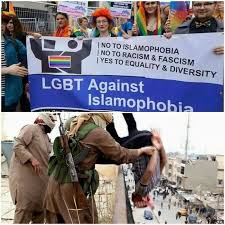
The pro-Islam league of homosexuals, however, tops them all.
It appears that, because Muslims are generally considered outsiders in Western society, other groups who are also generally considered outsiders have decided to see Islam as a kindred spirit under the motto of “the enemy of my enemy is my friend.”
Unfortunately for the homosexuals, the Muslims they love and the Christians they hate are both Abrahamists, and as they are both male supremacist religions they share a common hatred of homosexuality.
Indeed, homosexual conduct is punishable by death in all of Afghanistan, Brunei, Gaza Strip, Iran, Iraq, Mauritania, Nigeria, Saudi Arabia, Sudan, United Arab Emirates and Yemen.
But thanks to a mutual hatred of The Man, homosexuals are frequently willing to passionately defend a religious tradition that would like to see them thrown from rooftops.
That has to be the West’s weirdest political alliance.
Understanding New Zealand: Demographics of Industry

Some stereotypes are true; others are not. One of those that is not true is that Maoris dominate all working-class industries. Although (as described elsewhere) many working-class industries and occupations are heavily populated by Maoris, this isn’t the full story.
The correlation between working in the agriculture, forestry and fishing industry and being of European descent (0.37) was stronger than the correlation between working in that industry and being Maori (0.22). Part of the reason for this is the number of family-run farms, especially on the South Island, that are run by Pakeha.
Working in the mining industry was also much more strongly correlated with being of European descent (0.25) than with being Maori (0.08). This is a consequence of that a large proportion of the Maori population lives in Auckland and thus far from where most of the mining takes place.
Being Maori did have significant positive correlations with a number of generally working-class industries, in particular transport, postal and warehousing (0.47), manufacturing (0.44), education and training (0.43), electricity, gas, water and waste services (0.42) and administrative and support services (0.37).
One point to note here is that these industries are not so much working class as they are people-focused. It might be that much of the association between being Maori and being working class is because many people-focused jobs happen to be working class ones and Maori gravitate towards people-focused jobs.
The correlations with median personal income give us a good indication of which industries in New Zealand are the best paid.
The strongest positive correlations between median personal income and working in a particular industry were 0.76 for professional, scientific and technical services, 0.69 for financial and insurance services, 0.54 for information media and telecommunications and 0.49 for rental, hiring and real estate services.
The strongest negative correlations between median personal income and working in a particular industry were -0.40 for manufacturing, -0.29 for transport, postal and warehousing, -0.23 for agriculture, forestry and fishing and -0.15 for mining.
The negative correlations were weaker than the positive ones for the reason that anyone in gainful employment – in any industry – is almost guaranteed to be wealthier than all beneficiaries and the majority of pensioners.
The correlations with education reflected that the highest paying industries were also the ones that generally required the greatest degree of previous training and therefore education.
The strongest of all was the correlation between working in scientific, technical and professional services and having a Master’s degree – this was 0.94. There is nothing suprising about this because often a Master’s degree minimum is necessary for a professional job.
The correlations between working in a particular industry and being born in New Zealand are interesting because they can tell us what sort of person is most likely to successfully get through our immigration system. Because our immigration system prioritises the sort of person who has a skill that New Zealand has a shortage of, these people will be disproportionately many in some industries.
Foremost of these was scientific, technical and professional services. The correlation between working in this industry and being born in New Zealand was -0.47, which tells us that a fair number of these workers have moved here from overseas.
The correlation between being born in New Zealand and working in financial and insurance services was even more strongly negative, at -0.56. The main reason for this is probably because the bulk of this industry in New Zealand is based in Auckland and that’s also where most foreign-born people are.
Many of the people who own their own farms work at home in a family business. This is evident from the strong positive correlation between working at home and working in the agriculture, fishing and forestry industries, which was 0.81, and the very strong positive correlation between working unpaid in the family business and working in the agriculture, fishing and forestry industries, which was 0.90.
One trend that makes sense if considered from an economic psychology perspective is that the better paid a person’s job is, the more likely they are to work full time.
The industries that had the strongest positive correlation with working full-time were professional, scientific and technical services (0.52), financial and insurance services (0.48) and information media and telecommunications (0.44).
There are several reasons for this, but the major one is that anyone of a mind to learn the skills necessary to do jobs in these industries are usually also of a mind to work full-time and to earn as much money as possible during this time.
The other major one is that anyone with the capital to employ a person with these skills is likely to be a serious operator and consequently will be looking to get full productivity out of their employees.
Perhaps the best way to determine which industries are the best paid are to see which of them have the strongest correlations with high income bands.
The industries that had the strongest correlations with low income bands were hospitality in the $5-10K band; mining in the $15-20K band; healthcare and social assistance in the $20-25K band; agriculture, forestry and fishing in the $25-30K band; electricity, gas, water and waste services in the $30-35K band; and manufacturing and transport, postal and warehousing in the $35-40K band.
These are the industries for people who are generally doing it hard. The jobs are not well paid, and they are insecure, and they are often seasonal. Usually they are also jobs that have a high turnover (hospitality is particularly well known for this).
Where jobs are more stable, regular and predictable, we can also see a rise in which income band their workers belong in.
The industries that had the strongest correlations with medium income bands were construction and retail trade in the $40-50K band; administrative and support services in the $50-60K band; education and training in the $60-70K band; and wholesale trade, public administration and safety and arts and recreation services in the $70-100K band.
Construction is arguably the top of the working class industries, because even though the majority of the labour is manual it involves very high amounts of capital. The other five industries in this group (leaving aside retail trade) are the start of the knowledge industries, in that they generally demand a higher level of prior education.
The industries that had the strongest correlations with the high income bands were information, media and telecommunications, finanical and insurance services and professional, scientific and technical services at $100-150K, and rental, hiring and real estate services at $150K+.
In other words, if a New Zealander works in any of these industries, the odds are that they have a six figure salary. This is because these industries all, like construction, involve gigantic amounts of capital, but unlike construction they are knowledge industries and the workers in these industries are in higher demand and shorter supply.
Rental, hiring and real estate services involves not only big money but employees that work on a commission and not a salary. This explains why working in this industry has its strongest correlation with the highest income band.
*
This article is an excerpt from Understanding New Zealand, by Dan McGlashan, published by VJM Publishing in the winter of 2017.
An Essay Concerning Who Ought to Take the Crease at the Fall of a Wicket in T20s
When ODI cricket was invented, it took players, coaches and strategists a while to adapt to the fact that they were no longer playing Test cricket. For example, the fact that 220/3 after 50 overs is great in Tests and terrible in ODIs was not immediately appreciated.
The first ever Cricket World Cup match was famously marred by an innings of 36 off 174 balls from Sunil Gavasakar, who went on to state that “I wasn’t overjoyed at the prospect of playing non-cricketing shots and I just got into a mental rut after that.”
Gavaskar’s Test record shows that he was an exceptionally capable batsman, so the initial adjustment to such concepts as “scoreboard pressure” and “required run rate” must have been a big one, and a psychological one.
It was solved when it was realised that strike rate is about as important as average runs scored for an ODI batsman, especially the closer the game gets to the last over.
T20 cricket is still new enough that original plays are still being thought up. Every year there are new innovations, or new variations on old ones. Some concepts have to be abandoned, some concepts have to be tweaked, and some concepts have to be synthesised out of wordless intuition and perception.
This essay suggests one radical concept: that we need to do away with the old concept of batting order, and to replace it with a batting dynamic.
The major advantage of thinking in terms of a batting dynamic is that it would help the Black Caps find a place in the T20 side for Ross Taylor, who is simply too good to be left out.
A batting dynamic means no longer having a batting order in terms of openers, a first drop, a middle order etc. It means (to simplify it) to have one accumulator and one hitter at the crease at all times.
The reasons for this are mathematical. It’s better to have one accumulator than two hitters, because the hitters can lose wickets in clumps very easily and cripple the team. But it’s better to have one hitter than two accumulators, because you only have 20 overs and batting too slowly will lose you the game just as surely as losing a pile of wickets.
It’s best to consider these to be entirely separate skills – which they are, until the real slog of the last few overs.
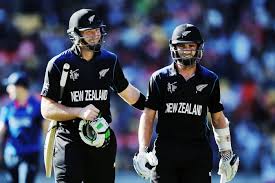
The Black Caps have made it to No. 1 in the world T20 rankings partially by opening the batting with who are at time of writing both in the top 8 in the world – Kane Williamson at 3 and Martin Guptill at 8.
In doing so, they have a world-class accumulator in Williamson and a world-class hitter in Guptill, so all is good.
The problems arise when the first wicket falls.
Under the old concept of a batting order, this wouldn’t matter much, as it seldom does in Tests and hardly matters in ODIs.
But when the first wicket falls in a Black Caps T20 innings, the team runs the risk of making two mistakes, namely having two accumulators or two hitters at the crease.
The concept of a batting dynamic means that we divide the batsmen into accumulators and hitters, and that we try not to have two of both until the last few overs when everyone hits.
So for the T20 side, one might open with Kane Williamson and Martin Guptill, with Williamson the designated accumulator and Guptill the designated hitter.
If Williamson is dismissed early, we send Ross Taylor in. This way, it becomes less likely that the opposition will run through our lineup, as happened in February this year.
Conversely, if Guptill is dismissed first, the next hitter in line comes in to bat – perhaps Colin Munro, Corey Anderson, Tom Bruce, Colin de Grandhomme or even Tim Southee.
It doesn’t matter who it is, as long as they have a licence to hit, because the emphasis is on avoiding having two accumulators at the crease. This way we can avoid burning through the overs while scoring too few boundaries and using up our 20 with piles of wickets in hand.
So if Kane Williamson carries his bat, then Ross Taylor will not take the crease until all the other hitters are out. This means that Taylor could bat anywhere between 3 and 7 depending on the hitting ability of the other batsmen and when Williamson is dismissed.
But if Williamson is out on the first ball then Taylor comes in to ensure that the strike is always rotated to the hitter at the other end.
The worst case scenario (besides being bowled out) is that all our hitters get dismissed and we’re left with Williamson and Taylor to finish the innings. Obviously this is still an excellent outcome.
The other point is that if we aim to always have one of Williamson or Taylor at the crease until the death (let’s say until the 15th over at least), then the choice of the other batsmen in the team becomes much more straight-forward: they can simply all be hitters, as it’s very unlikely that Williamson and Taylor will both get out early.
Statistically, one would expect this to have the effect of causing the Black Caps to win by smaller margins, but to win more games, as the variance of the scores will be reduced if there are fewer hit-and-miss batsmen at the crease.
– DAN McGLASHAN