Writing the Narcissist

Portraying believable narcissistic characters in your creative writing poses a set of challenges that are similar to those posed by writing psychopathic ones. This is because both types of characters are extremely selfish, but there are many differences nonetheless. This article looks at the typical qualities of the narcissist so that a creative writer can most realistically portray such a character.

In that the narcissist is arrogant, self-absorbed and exploitative they are similar to the psychopath. Where they are different is that the psychopath seems dead inside to those that really know them, whereas the narcissist is full of emotions and life.

For example, narcissists are highly prone to strong feelings of envy. If the protagonist of your story achieved a major personal milestone, and received adulation from all around them, this could be the plot point that drove a secondary narcissist character into action.

That character might feel so bitter about the positive attention received by your protagonist that they began to scheme to bring them down. This could result in anything from gossip, to spreading false rumours, to a false accusation or even to violence. The more likely it is that the narcissist would step into the shoes of the protagonist if they took them down, the more strongly the narcissist will be motivated.

Narcissists also have a marked tendency towards magical thinking. If the narcissist makes a mistake, or lets someone down, or has an embarrassing failure of some kind, they are likely to use all kinds of implausible and bizarre explanations to escape any feeling of shame. Often they will simply distort reality rather than admit to being at fault for anything, and distortions of reality can lead to all manner of problems.

They are also likely to project their failures onto others, as a way of dealing with the internal feeling of shame. They are extremely reluctant to admit to either failure or weakness, and experience admitting such things as very humiliating. An intelligent character will be able to use this tendency as a way of determining the narcissist’s secrets, because they tend to accuse other people of what they themselves are guilty of.

Perhaps the defining characteristic of the narcissist is grandiosity, which manifests as a deep sense of superiority. This frequently becomes difficult for other characters in short order, because in the mind of the narcissist this sense of superiority gives them the right to treat others with contempt or disdain.

For this reason, narcissists tend to upset other characters. The more narcissistic those other characters are, the more they are likely to get upset – which is why it’s often dynamite when two narcissists meet. The coming together of two narcissist characters could make a fitting climax to any story or comedy.

Similar to the psychopath, the narcissist is capable of engendering powerful feelings of hate in other characters. These other characters are bound to feel that the narcissistic character is arrogant and rude, and the narcissistic tendency to be completely oblivious to the damage they cause only makes it more aggravating.

The narcissist is also capable of engendering powerful feelings of hate in themselves. Not being the centre of attention and adulation can be extremely damaging to the self-esteem of the narcissist. They might find meeting someone like a famous politician or distinguished intellectual to be an extremely unpleasant and belittling experience, enough to cause them depression for a while.

A narcissistic character will not necessarily bring misery into your story world, and this is another major way they are different to the psychopath. They may have found a way to sublimate their narcissism into bringing a lot of joy to people, such as becoming an actor or professional sportsman. Such a character might struggle with the excesses of their narcissism at the same time as mostly succeeding in bringing people joy.

Usually, however, narcissists do bring misery to those they encounter. The nature of the narcissist demands that they try and get the most adulation possible, and this means that they are prone to aggressively seeking high-status positions, even when there is another candidate who is obviously better qualified (a narcissist is not likely to realise that someone else is better qualified).

The narcissistic character might have an unpleasant early history that partially explains why they themselves are not a pleasant person. Many theorists believe that narcissism in adults is frequently caused by a lack of empathy and respect towards them when they were children, leading them to overcompensate as adults.

Frequently the narcissist will have one, or both, parents who did not seem to treat them as valuable when they were children. This lack of a normal, healthy level of positive attention in childhood is what makes the narcissist so desperate to receive it in adulthood. The narcissist might reveal, in their behaviour and actions, the resentment they feel towards perceived neglect.

*

This article is an excerpt from Writing With The DSM (Writing With Psychology Book 5), edited by Vince McLeod and due for release by VJM Publishing in the summer of 2017/18.

Fellas – It’s (Almost Entirely) A Question Of Demonstrating A Capacity For Resource Acquisition

If you have the health, the strength, the brains or the will to do this, then you can get laid

Countless reams have been written about the question of what women really want. This question has bedevilled great minds going all the way back to antiquity, and not even Sigmund Freud had a clue. Recent advances in evolutionary psychology have given us an answer from a biological perspective – but only for those who dare to read on!

In the animal world from which we have climbed, survival is primarily a matter of meeting metabolic needs. Every creature that lives has a need to eat, because only by eating are most animals capable of acquiring the necessary nutrients to keep breathing, to stay warm, and to have the energy to keep moving and find a breeding partner.

This is why the animal world has been described as “red in tooth and claw”, but there’s more to it than that. Whether a creature eats or dies, and therefore whether its genes are selected for in the next generation, is primarily a question of its capacity for resource acquisition.

Getting laid is all about demonstrating a capacity for resource acquisition. Why? Because this is by far the most accurate way for a female onlooker to determine if your genes are likely to produce offspring that are themselves capable of acquiring resources – in other words, if your genes are likely to produce offspring that can survive.

Whether an individual woman realises it or not, the females of every sexually reproducing species don’t care about anything else – and why would they? Compared to the need to gather resources to meet your metabolic needs, there’s little else that really matters for a sexually reproducing creature.

If one thinks about it, almost all of the qualities that women find attractive in men relate directly to his capacity for resource acquisition, and, by extension, the capacity for resource acquisition of any potential offspring.

There are four major ways that women determine a man’s capacity for resource acquisition, and all four of them correspond directly to major evolutionary challenges in the biological past of the human species (they also correspond to the four alchemical stages of clay, iron, silver and gold).

The first is to be healthy. After all, ill health in animals is often a consequence of not getting enough food, because without enough food it’s difficult to maintain an immune system that can keep the body free of diseases.

Having diseased skin or a rancid body odour will turn a woman off faster than anything, which is why men spend so much time washing and showering before they go into town. Both of those things suggest strongly that the man in question has failed to acquire the necessary resources for maintaining healthy bodily function. In other words, they appear to be dying, and nothing is less sexy than that!

The second major quality is to be tall and strong. Everyone knows that women are attracted to this, but fewer have thought it through to the next stage. Being tall and strong is extremely advantageous to the degree that resource acquisition has historically been dependent on the physical strength of the male in question.

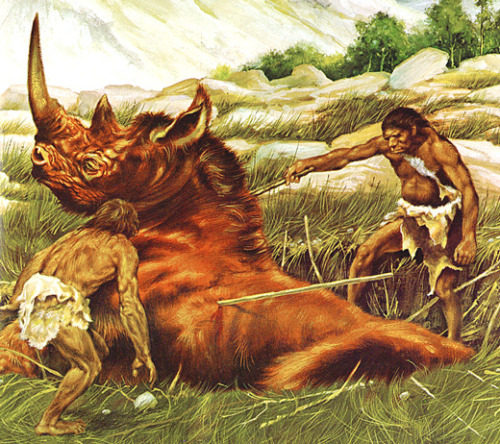
This is apparent when one considers that males spent most of their time in the biological past hunting, which sometimes required hitting animals with sticks and bones or throwing rocks at them, and then carrying the prey back to the rest of the tribe on his shoulders, which are all matters of physical strength.

Arguably even more important is that fact that height and strength correlate very strongly with a male’s position on the social dominance hierarchy, which is the prime determinant of future mating opportunities. The stronger a man is the easier he will be able to defuse threats to himself, to his breeding partner or to their offspring.

The third major quality is to be intelligent. Not everyone appreciates the intense degree to which women are attracted to intelligence in breeding partners, which is probably because most people don’t really understand what intelligence is.

In the biological past, humans were able to acquire resources far more effectively if they were intelligent enough to notice and memorise certain patterns of nature. For instance, the first humans to figure out that large herbivores frequented watering holes were able to ambush those large herbivores, club them to death and thereby feed the entire tribe.

Ancient bushlore contains thousands of little patterns like this, unique to each locale in which they developed, but all with one thing in common – whoever possessed this bushlore was more effectively able to predict when and where the food was going to be.

The fact that intelligence has historically been an extremely important indicator of a man’s capacity to acquire resources can be seen from the manyfold increase in brain capacity in hominids over the past few million years, which is evidence of an extremely strong selective pressure in favour of it.

The fourth major quality is to be brave. This quality relates alchemically to the level of gold. Like the gold it is more subtle than the other qualities, and because of its rarity not quite as obvious.

Bravery relates to resource acquisition in ways like not letting another man take away the food that you have successfully hunted, or not letting the size of an animal scare you away from trying to club it to death. Essentially it’s the quality that allows a man to reduce the fear that makes him weaker and less intelligent.

In the modern world, resource acquisition has basically been reduced to having a job. If you have a job, chances are excellent that you have the capacity to acquire the necessary resources to feed a wife and children until those children are themselves capable of acquiring resources.

This is why being unemployed is extremely unattractive to women. Most women will naturally assume that a man without a job is either too lazy, too weak, too stupid or too cowardly to work or to hold down a job, and all of those four things correlate very poorly with the capacity to acquire resources.

Chris Rock joked about this in a stand-up comedy special, when he said “Fellas! If you lose your job you will lose your woman.” The reason why he had observed this pattern play out in his social circles is because a man losing his job has also lost his capacity for resource acquisition.

The other major quality that a man can possess to demonstrate his capacity for resource acquisition is to own a house. Females of all territorial species intuitively understand that the creature that dominates any given territory naturally controls all the resources within that territory, and so a man that controls a house appeals to very deep and powerful instincts.

Essentially, if a man is unable to get laid he needs to either become better looking, stronger, smarter or braver, because those are the qualities that correlate with a capacity for resource acquisition and are therefore the qualities that woman have evolved to select for in their breeding partners.

VJMP Reads: Anders Breivik’s Manifesto XI

This reading carries on from here.

In this section (pages 848-948), Breivik talks about the details of actually planning a terrorist attack. These hundred pages are very detailed and it is easy for the reader to feel a chilling sense of the ruthlessness with which Breivik carried out his own operation.

Opening with the quote “Violence is the mother of change”, this section is as comprehensive as any of the previous ones.

It goes into considerable detail in advising would-be terrorists how to keep their intentions a secret from their fellows. For example, there are several pages devoted specifically to the advantages in pretending to have a World of Warcraft addiction when it comes to explaining away the avoidance of social occasions, and pretending to be gay is given as a good strategy for deflecting intrusive questions.

Ironically, the document references the success of Muslim terrorists at several points during this section, in particular when Breivik is talking about the need to maintain psychological discipline and motivation, and how the very same psychological straitjacket that Breivik despises is so effective when it comes to guerrilla warfare.

Keeping with the same vein of the earlier parts of the document, this section goes into bemusing levels of details when it comes to planning an operation. There is an exhaustive account of all the considerations necessary for putting together a suit of ballistic armour that would resist even rifle fire.

This section also covers the use of steroids to achieve the maximum physical ability to carry out a terror attack, as well as the use of ephedrine, caffeine and aspirin stacks. No detail is too trivial to be added here, which underlines the degree that Breivik was serious about action.

Perhaps the strangest part of this document is the passage relating to the possibility of using like-minded white nationalist or national socialist contacts to secure weaponry. Here Breivik takes care to point out that these groups are likely to view the potential operative as hostile if they learn that he is pro-Israel. This passage more than any other speaks to the self-imposed social isolation that was necessary for Breivik to carry out the actions he did.

In a passage that is reminiscent of the reasoning of Charles Manson, Breivik talks about targeting Muslim women out of the specific hope that male relatives will swear revenge against the people of Europe and thereby create a continent-wide race war.

Further underlying the isolation that Breivik found himself in, his list of prime targets for terror operations consist of the political parties that he considers to be Cultural Marxists. These lists contain almost every party in the Parliament of every country.

The Two Strains of Neo-Christianity

Pope Francis lectures the world about the need for open borders from behind these gigantic stone walls, a hypocrisy typical of Exoteric neo-Christianity

21st century neo-Christians are very diverse people, but they fall into two major groups, as Christians have done throughout history – Exoteric and Esoteric Christians. Exoteric Jesus and Esoteric Jesus are remembrances of the same man, but their overlap is nevertheless small. This essay looks at the difference between the two, and what it means for us.

Exoteric Christianity bears so little relation to the original apotheosis of Jesus that it can no longer honestly be considered the same creature. The apotheosis of Jesus was an experience so far from the shameless virtue signalling of Pope Francis that the remaining connection is entirely cosmetic. The exoteric form of neo-Christianity that the Church promulgates is little more than a mockery of the lessons that Jesus – an advanced spiritual master – felt impelled to teach.

Exoteric Jesus is the Jesus figure that is known to the masses from what their ruling classes tell them. He is otherwise known as Masochist Jesus. Believers in Exoteric Jesus can tell you all about turning the other cheek, and all about giving up your worldly possessions, and all about how the meek will inherit the Earth.

This is the Jesus, and the Christianity, that Nietzsche criticised when he called the religion a “slave morality” founded on resentment. This figure is also known as Beta Jesus, because ethologically the behaviours considered morally correct by those that follow him are the same submissive behaviours demonstrated by beta males in chimpanzee packs.

This Exoteric Jesus has been used as a weapon by the ruling classes against the plebs for centuries. The ruling classes have used this weakling Jesus to convince the masses to give up their claims to a fair deal, or to fair representation in government. This Jesus is a totem of passive acceptance, who just meekly accepts what is being done to him.

It can be observed today that only the nations with pretensions to being Christian also have an obsession with letting in large numbers of Muslims under the guise that they are refugees who need shelter, and despite the massive suffering this causes to their own poor. This obsession is fundamentally grounded in the virtue signalling of Exoteric neo-Christianity, in which one appears virtuous to the degree that one is submissive.

Angela Merkel is, unbeknownst to many, the leader of the Christian Democrat Party, and it’s clear that the moral corruption of Exoteric neo-Christianity has inspired her stance.

The logic appears to be that keeping invaders out of your territory is an act of aggression, and is therefore masculine, and is therefore morally wrong. The right way to go by Exoteric Jesus is to open yourself up for plundering – this is essentially a feminising philosophy, and it’s easy to see why the ruling class calculated 1,700 years ago that if they spread it to the plebs it would dampen down rebellious instincts.

Esoteric Jesus is the kind of man who is hard to visualise if you are not yourself an esotericist. What’s obvious to any esotericist is that this Jesus is very different to the Beta Jesus worshipped by the Exoteric neo-Christian. This is clear from examples such as when Jesus drove the moneychangers out of the temple.

The real truth, hidden from the plebs ever since the time of Constantine, is that Esoteric Jesus behaves not submissively but correctly, and in being correct he is sometimes masculine, sometimes feminine – depending on what is right for the situation. He is therefore a figure of balance, and in this regard is entirely different to his Exoteric counterpart.

Esoteric Jesus was likely inspired, at least in part, by the Buddhist philosophy that was brought back to the Middle East by scribes and philosophers who travelled East with the conquests of Alexander, as well as by the mystery schools of Ancient Greece and Egypt.

This tells us that what motivated him was likely to be the cessation of suffering of all sentient beings – as it is for the Eastern religions – and not the grovelling before a masculine authority figure that characterises Exoteric Christianity.

Knowledge about this forms the esoteric part of neo-Christianity – a 21st century revival of the original apotheosis of Jesus Christ himself. This is, obviously, a kind of Christianity that will appeal to far fewer people than the lazy masochism of Exoteric Christianity. In fact, in our degraded age, it could be argued that it was Luciferian.