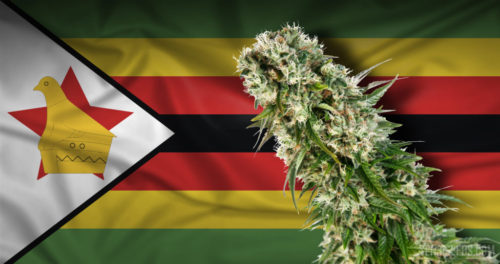
Why New Zealand is Now Behind Zimbabwe On Cannabis Law Reform

For all the gloating about how incredibly progressive New Zealand is on issues relating to race and sexual orientation, we Kiwis sometimes fail to notice that we are lagging behind the rest of the world on many other human rights issues. Incredibly, New Zealand is more backwards than Zimbabwe now when it comes to cannabis law reform. This essay examines why.

You read correctly: New Zealand is now behind Zimbabwe on cannabis law reform. The despotic Southern African state announced recently that both individuals and companies can apply to the Minister of Health for a licence to grow medicinal cannabis. You don’t have to be dying, as is the criteria in New Zealand.

So how did our human rights decay to the point where Zimbabwe is beating us on major human rights issues like medicinal cannabis law reform?

Crucial to understanding this is understanding that the National Party has always been the pisshead’s friend. When drinkers wanted pub hours extended for the 2015 Rugby World Cup, the National Party was eager to help. But when Kiwi medicinal cannabis users petitioned them for nine years to allow them equal rights to people in California, they were utterly unmoving, despite the evidence in the research journals and from the examples set overseas.

When the Electoral Commission revealed the list of each party’s donations last month, it became clear why New Zealand is now more backwards than Zimbabwe when it comes to cannabis law reform. Simply put, the National Party has whored itself out to the same alcohol and pharmaceutical interests that have opposed cannabis medicine from the beginning.

In 2017, the National Party got $41,945 in donations from Stoneyridge Vineyard, $25,438 from Gibbston Valley Winery, $16,700 from Spirits NZ and $42,000 from Graeme Douglas of Douglas Pharmaceuticals, whose morphine product is competing with medicinal cannabis for the billion-dollar analgesic market. This totals $126,083 in donations from industries that are implacably opposed to cannabis law reform.

The National Party spent around $2,500,000 on their 2017 General Election campaign, which means that these donations are reasonably small in the overall scheme of things, amounting to only c. 5% of the total spending. But this has to be contrasted with the fact that the Aotearoa Legalise Cannabis Party, the only party seriously promoting the will of the 80% of Kiwis who want a change to the cannabis laws, spent less than $1,700.

In other words, anti-cannabis forces spent over 70 times as much on bribing National Party MPs as pro-cannabis forces spent in total during the 2017 General Election. Little wonder, then, that National Party MPs unanimously voted against Chloe Swarbrick’s bill that would have allowed sick Kiwis to grow their own medicinal cannabis at home without fear of prosecution.

This all sounds very cynical but unfortunately, this is how the game is played in politics, which belongs ultimately to the paradigm of silver. Our politicians are literally whores – this is a truth universally acknowledged by anyone who has had cause to observe the politically ambitious at close range for any length of time. They will say whatever someone wants to be said for money, so their tongues are for hire as much as those of any streetwalker.

Despite all that, this situation may not last. The experience of American states that have liberalised their cannabis laws (beginning with medicinal cannabis in California in 1996), suggests that money talks both ways.

East Coast medicinal cannabis operation Hikurangi Enterprises recently raised $2,000,000 in their share offering and were heavily oversubscribed – so much so that the crowdfunding site handling it crashed twice. Considering that most people who are interested in medicinal cannabis are sick and therefore poor, being able to raise two million dollars speaks to a tremendous level of support among the population.

What this means is that, sooner or later, there will be a player with extremely deep pockets who wants to break into the New Zealand cannabis market, and this player will see fit to make a “donation” to a reformist party in return for that party supporting some form of repeal of cannabis prohibition. It will probably be a while before this donation matches the six-figure sum that the booze and pills industries are spending on keeping medicinal cannabis illegal, but the gap ought to keep closing.

New Zealanders have fewer rights to access medicinal cannabis than people in Zimbabwe, and the reason for it is alcohol and pharmaceutical industry bribe money going to the National Party. Until we can remove this blatant corruption from our political system, sick Kiwis can only access their medicine in secret.

*

Vince McLeod is a former Membership Secretary of the Aotearoa Legalise Cannabis Party and author of the Cannabis Activist’s Handbook.
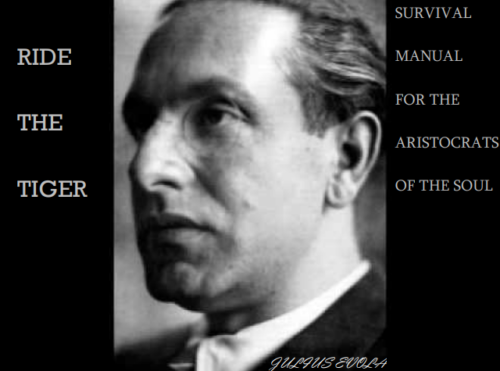

VJMP Reads: Julius Evola’s Ride the Tiger VIII

This reading continues on from here.

The 22nd essay in Ride The Tiger is called ‘Dissolution of Modern Art’. Much like everything else, Evola contends that art has also degenerated. In the case of art, it has degenerated into a feminine subjectivity that is too afraid to say anything. Now we can no longer even speak of traditional art because no-one has any idea what that even is.

In this essay Evola echoes Plato’s description of the degeneration of political forms, only applied to the world of art. Modern art would be best served by achieving maximum craptitude, because that would provide the clean spiritual slate upon which something authentic could be written. Literature is also criticised as “fetishising” human relationships and merely documenting them with full banality.

As in many previous essays, Evola concludes that art has been given too great an importance, to the detrimental of the spiritual. What gives meaning to life can exist “even in the virtual absence of art”. Art has, in reality, undermined idealism, especially in the modern world. Positive realism lies in the assertion of values such as truth and spiritual courage. That which truly has value needs no consensus to agree.

The 23rd essay is ‘Modern Music and Jazz’. Evola has a keen interest in music and understands its development over the course of recent centuries. Perhaps weirdly, Evola writes here about the “preponderance of dance music over vocal and emotional music” – a sentiment shared by many today. He considers that the drift towards nihilism in philosophy and art has been echoed by one in music.

Music has, according to Evola, developed in ways that mirror the development of all other social movements. Therefore, the advent of jazz is no surprise – it is merely the democratisation of music, something “primitively ecstatic”. This doesn’t mean that jazz is crude, though, or that jazz players are unskilled musicians. It simply heralds the return to the world of fundamental, elemental forces.

This “Negro music” is associated with “dark forms of ecstasy” in Evola’s reckoning. He compares the feelings that arise from dancing to rhythmic music to the frenzies of the dervishes: “possessions of savage ritual”. Despite frequently being paired with drugs, these occasions cannot be compared to the ancient rites of Dionysus etc. because there is nothing sacred about them – they are mere escapism.

On the subject of drugs, the 24th essay is ‘Excursus on Drugs’. Evola considers drugs to “most visibly have the goal of an ecstatic escape”. Some of the people who choose such an escape are those who have perceived the meaninglessness of human existence. Others are “neurotics and psychopaths”. Part of the danger of drugs is, like rhythmic music, they can be used to open up awareness to a suprasensible world, such as in initiatory ritual.

Despite this caution, Evola gives due credit to the use of various drugs in sacred ritual. The Taoists considered even the use of alcohol to have a kind of magical effect, and he mentions the Central American shamanic traditions that made much use of mescaline, peyote and psilocybin mushrooms. However, he also points out that no-one really understands how to use these sacraments anymore, because no-one is capable of the necessary spiritual preparation. This leads to the risk of “possession by dark powers”.

If used correctly, nonprofanely, drugs offer the possibility of coming into contract with a superior dimension of reality. Stimulants and depressants can more or less be ignored for these purposes. Hallucinogens are excellent but have many drawbacks; their ancient use involved guiding the trip with symbols and a preliminary catharsis of emotion, two things that are seldom done today. Narcotics can be useful for the sake of dissociating from the mundane but the experience is hard to control.

*

If you enjoyed reading this essay, you can get a compilation of the Best VJMP Essays and Articles of 2017 from Amazon for Kindle or Amazon for CreateSpace (for international readers), or TradeMe (for Kiwis).

How to Detect An Anti-White Bigot

Everyone’s obsessed with making a show of fighting bigotry nowadays. Paradise could have befallen the Earth by now, we are told, if only haters didn’t oppress the disadvantaged. The problem with this attitude is that many anti-white bigots have slipped under the radar in the guise of social justice warriors. As this essay will examine, the easiest way to detect an anti-white bigot is by observing hypocritical double standards.

There’s little reason to be prejudiced against anyone unless you hate them. Hating someone may or may not be justified at any given moment, but an inevitable consequence of hating someone is that you will judge them by high standards, while allowing people you don’t hate to get away with low standards. This reveals itself primarily as hypocrisy.

So one way that anti-white bigots give themselves away is in the explanations they give for individual success. For instance, high achieving Asians or Jews are credited with working hard and being from a culture that values scholastic dedication, but high achieving whites are considered merely the beneficiaries of a white supremacist system.

By itself, that means nothing, but anti-white bigots will also make the claim that low achieving whites have failed morally by not valuing education enough, or because they lacked the discipline to study hard or are naturally just dumb, whereas low achieving blacks and browns have been failed by that same white supremacist system.

An objective person would credit both high-achieving Asians and high-achieving whites with having earned at least some of their personal accomplishments, because even with the easiest of upbringings it takes a lot of will to dedicate oneself to learning. If high Asian or Jewish achievement need not be explained by structural racism or exploitation of dark-skinned people, then there’s no reason to attribute white achievement to such things either.

Either that, or they would excuse the failure of low-achieving whites with the same appeal to social and environmental factors that they appeal to when they excuse the failure of black and brown people. After all, it genuinely is a lot harder to succeed when you face prejudice from society – but low-achieving white people have inevitably encountered as much difficulty on account of class prejudice as equally low-achieving brown and black people have encountered on account of race prejudice.

Another way to detect an anti-white bigot is that they will make accusations of racism when unwarranted – but only if a white person is speaking. If a Malaysian says that Muslims are terrorists because of the troubles in the South, or a Chinese says that Muslims are terrorists because of the troubles in the West, the anti-white bigot will say nothing. But if a white person points out that the Koran condones and encourages terrorism, the anti-white bigot will start the attacks.

By contrast, the anti-white bigots will excuse all manner of racism or bigotry from non-white people. This is especially notable in the case of attitudes to homosexuality or gender equality. Anti-homosexual bigotry is rife among brown and black communities, which is believed to contribute heavily to the high rates of youth suicide in those communities. Anti-white bigots will excuse this, however, by saying that these communities have somehow absorbed the prejudice from white people.

A third way to pick an anti-white bigot is that they will blame all white people for actions that are or were committed by a minority of white people, such as owning slaves, or bombing the Middle East. Related to this that the anti-white bigot will often blame a much larger amount of the world’s suffering on white people than what is fair or reasonable. For instance, it will often be claimed that Africa would be a peaceful and highly technologically advanced society if only white people hadn’t ruined it all.

When one gets down to the bottom of it, if a person claims to hate white people, what they often really mean is either that they hate the white working class (because they look down on them) or they hate the white ruling class (because they have caused so much historical damage). A class prejudice is expressed as a racial prejudice and thereby misunderstood.

A real anti-white bigot will make no distinction. They will still blame middle-class white people for the crude violence, abuse and neglect of the white working-class, and they will still blame working-class white people for the greed and duplicitousness of the white middle-class. Even more tellingly, both will be asked to carry the blame for the historical misdeeds of the white upper classes.

In summary, detecting an anti-white bigot is little different to detecting any other kind of bigot. They will hold the object of their hate (white people) to an unrealistically high moral standard, while allowing those who they don’t hate to be judged by a very low moral standard. The greater the double standard, the greater the prejudice.

*

If you enjoyed reading this essay, you can get a compilation of the Best VJMP Essays and Articles of 2017 from Amazon for Kindle or Amazon for CreateSpace (for international readers), or TradeMe (for Kiwis).

The Greater Electoral Cycle

If you’re in your mid-30s, and start feeling like you’ve seen it all before, it’s because you have

Many commentators like to talk about what they call the electoral cycle. This refers to the fact that, in the vast majority of modern liberal democracies, a party coming to power inevitably soon hits a high point and then steadily loses support over time until they are ousted. This essay looks at a broader phenomenon that we will call the Greater Electoral Cycle.

The Lesser Electoral Cycle is the one that most people, by now, are well familiar with. A party or President comes to power, immediately makes the changes that the previous regime had neglected to make, then rides a wave of popular support, until inevitably their own lust to cling onto power at all costs causes them to make poor moral decisions and the voters throw them out in disgust.

In the old days, this expulsion of the previous rulers could lead to any kind of new philosophy or ideology taking its place. If the previous rulers weren’t good enough, try fascism, try democracy, try republicanism, try anarchy. So there was no real greater cycle beyond this. It was just come to power and cling to power for as long as possible.

In recent decades, now that the ruling classes have refined and perfected their strategies for dividing and brainwashing us, all we get is neoliberalism with a red mask or neoliberalism with a blue one. The Greater Electoral Cycle, then, is from the start of one government to the start of another government of that kind (i.e centre-right or centre-left).

New greater cycles begin all the time. One has just now begun after 16 years in America, and one has begun after 18 years in New Zealand. Because of this, anyone with a memory that goes back 20 years or so has by now heard all the arguments and excuses already, and is starting to hear them again. Political arguments, like fashions and the Teenage Mutant Ninja Turtles, are simply repackaged every generation for a new audience not exposed to them yet.

For example, Internet commentators often make reference to Trump Derangement Syndrome. This is a joke referring to the reactions of people on the left to the election of Donald Trump as American President. The idea is that many leftists have reacted so badly to the news of Trump’s ascendancy that they have essentially become clinically deranged.

Those who have been around a bit longer remember that this as Obama Derangement Syndrome, which is essentially the same thing but triggered by the sight of Barack Obama as President. Those of us as old as Generation X might even remember everyone talking about Bush Derangement Syndrome, and there might have been a Clinton Derangement Syndrome before that.

A lot of Millennials have now observed that Trump is little different from George W Bush in a lot of ways, and the Democrats’ reactions to him are very similar to their reactions to Dubya. Trump, like Dubya, uses certain patterns of speech to appeal to people who aren’t particularly well educated. His concern is that he might cause resentment and alienation by speaking to them in long sentences with multiple clauses and ten-dollar words. So he’s painted as dumb – when he really isn’t dumb.

Likewise, in New Zealand, Jacinda Ardern tells many of the same lies as her Labour predecessor Helen Clark, from whose playbook Ardern appears to be reading. Claiming that the previous Government left the books in a terrible state, and so there’s much less money available than anyone supposedly thought, Ardern’s Labour has gone back on almost all of its spending promises. Typically, they will suggest in 2020 that we will have to vote them in again if we actually want all those goodies, because we sure won’t get them from National.

If we want to know what’s happening next in the Greater Electoral Cycle, we just need to look at what happened at this point last time. The Democrats in America will probably run a weak candidate because incumbent Presidents are rarely prevented from winning a second term (not even George W Bush failed to do so). Trump will probably easily defeat them, as he will be in the high point of the centre-right part of the cycle.

The National Party of New Zealand has already handed the poisoned chalice to Simon Bridges, who is unimpressive even by the low standards of New Zealand politicians. He will probably lead National to a crushing defeat akin to that suffered by Bill English in 2002.

The West will keep going around and around in these greater cycles until the charade of democracy finally ends. At that point, either a tyrant arises to take us all to hell or a new movement of philosopher-kings arises and initiates a new Golden Age.

*

If you enjoyed reading this essay, you can get a compilation of the Best VJMP Essays and Articles of 2017 from Amazon for Kindle or Amazon for CreateSpace (for international readers), or TradeMe (for Kiwis).