

Alchemical Silver, Silver Magic and Silver Magicians

Silver is brilliant and dazzling, and its magic can pacify the man of iron and bring peace and order to the world

The elementary masculine division is into precious and base, into good and bad. The secondary masculine division is the further division of the precious into silver (colourless precious) and gold (colourful precious). This essay describes more closely the paradigm of silver and the phenomena associated with it.

In biological terms, silver represents intelligence. It is the quality that arises from finding the correct balance of masculine and feminine to suit the situation, instead of the masculine extreme (represented by iron) or the feminine extreme (represented by clay). This means that silver does not win by violence, as does the iron, but rather by deception. It’s no coincidence that spiders spin silvery webs.

Characteristic of silver is that it shines or dazzles – hence the metonymn “silver screen” for the cinema screen. Silver is so amenable to polishing that it can be made into a mirror. This is symbolic for how a man of silver can be highly educated – to the point of being able to shine in oratory, scientific achievement, philosophy or letters. People of iron or clay cannot be polished so brightly on account of their inherent baseness.

Science, knowledge and social status is the paradigm of silver. This is its own hierarchy, entirely different to the hierarchy of iron, which is all about who can beat who in a fight. A college of men of silver would frown most heavily on the use of iron magic within their group. The hierarchy of silver is who knows the most about something. More esoterically, it refers to whoever can see physical reality the most accurately.

This is the basis for the power that silver magicians have over iron. It isn’t obvious how a physically weaker person can dominate a physically stronger one, and in a state of raw, primal nature it’s extremely difficult. It’s not necessarily enough to be more intelligent, because the physically stronger man might not respect that the man of silver is more intelligent, or they might simply not care. One must make use of that intelligence by performing silver magic.

Crucially, iron may be harder than silver and dominate it when it comes to physical battle, but silver will dominate it on all other occasions. Therefore, peace, order, civilisation and goodwill are all cultivated by the man of silver. Inventing alcoholic beverages, by means of which the muscle advantage of the man of iron can be neutralised, is an example of silver magic.

It’s necessary to note here that silver itself has no moral sense. For a person of silver, any non-violent way of gaining power is legitimate, including fraud. After all, fraud can be considered a battle of intellect, in which the person defrauded lacked the wit to defend themselves against the fraud attempt.

That doesn’t mean that silver is immoral, per se, rather that morality belongs to the paradigm of gold. Silver is perfectly capable of reducing the amount of suffering in the world. Indeed, it must do so to some extent, because it must bring peace and civilisation to all in order to counteract the physical dominance that the men of iron have.

Also characteristic of silver – and this is the crucial way in which it is different to gold – is a cold, ruthless elitism. This elitism is capable of manifesting all as kinds of narcissisms and resentments. This is otherwise known as the Conceit of Silver – it is bedazzled more than anyone else by its own reflection, by its own glory.

Neither does silver have any sympathy for the resentment caused by its apparent brilliance. In the mind of a person in the paradigm of silver, it’s simply natural for beings of clay and iron to understand that they are of lesser value to the person of silver. The conceit of silver is such that it cannot countenance the thought that everything has its own value, in its own niche.

Having said that, much of the self-regard that silver possesses is fair. The man of silver knows that if it had not been for his predecessors, the human animal would still be much like a monkey – it was he who mastered fire, he who developed the flint axe, he who understood the military advantage of a spear. That the man of iron has resented him ever since is due that the baseness inherent within iron.

It’s common for men of silver to identify with this as their primary characteristic and to eschew bonds of nationality, race or religion. Voltaire once wrote “When it comes to money, everyone is of the same religion”. Indeed, to the men of silver, being wealthy (in the sense of possessing alchemical silver) makes you part of an elite inner circle of initiates.

This can easily be observed in places of heavy concentration of silver, such as universities or the CBDs of major financial centres. In such places, it’s rare for anyone to express a will to enforce the rigid divisions between groups of people that the man of iron loves to enforce. No-one cares if you’re black, or gay, or from a religion that worships goats – as long as you have class.

To the silver magician, bonds of blood and solidarity are for plebs. All that matters is wealth. If I am wealthy and you are wealthy, then you are part of my ingroup, even if we are of different races, peoples, cultures etc. The man of iron sees this as a betrayal of blood, which helps to fuel his resentment and chagrin.

*

If you enjoyed reading this essay, you can get a compilation of the Best VJMP Essays and Articles of 2017 from Amazon for Kindle or Amazon for CreateSpace (for international readers), or TradeMe (for Kiwis).


The New Zealand Government Has Been Separating Children From Their Cannabis-Growing Parents for Decades

This is no worse than what our own Government is doing to us

Today’s mass media assault on consciousness involved emotional images from America of Mexican children in cages. The ensuing outrage was based around the fact that when a Mexican family is apprehended crossing the American border illegally, the children are temporarily separated from their parents. Although this is regrettable, what the media is ignoring is that the New Zealand Government has been doing the same thing to its own citizens for decades.

For one thing, it’s standard practice for the New Zealand Government to separate children from their parents if those parents are going into custody for breaking the law. In this regard, the New Zealand Government’s normal actions are no better than what the American Government is doing. Even worse than this is the fact that many of those parents are going to jail for offences that don’t harm anyone, unlike (arguably) illegal immigration.

The fact that cannabis is a medicine is a fact near enough to universally acknowledged by the young people of the world, even if Baby Boomer politicians have been slow to understand it. However, cultivation of it remains a crime punishable by up to seven years imprisonment in New Zealand, despite that the plant has a wide range of medicinal effects and is used all over the country to alleviate needless suffering.

Because cannabis is so good for alleviating suffering – taking away pain, nausea, insomnia among other maladies – people continue to grow it, despite the law. But because of the law, a significant number of these people end up being apprehended by Police and sentenced to prison.

Many of the medicinal cannabis growers who have been put in prison over the past 40 years have had children. Those children were forcibly separated from their parents by the New Zealand Government for the sake of enforcing a law that should never have been a law.

So all the perfectly natural dismay that Kiwis have been induced to feel at what the Mexican children at the American border are forced to endure – a traumatic forced separation from their parents as a consequence of an arbitrary law enforced by armed men – could just as well arise as a result of thinking about what Kiwi children have to go through as a result of cannabis prohibition.

In fact, our own children have it worse, because they will often not get to see their parents again for a long time.

So if people in New Zealand are going to get upset because of an outrage that the global corporate media manufactured in order to target a conservative American President, let’s get equally upset about similar and equally evil actions in New Zealand.

Every time a New Zealander gets put in prison for a cannabis offence that has harmed no-one, leaving a child on the outside who is now missing a parent, we ought to react with the same outrage towards our own Government as we had today for the Trump Administration. If we’re going to expend energy on outrage let’s at least direct it somewhere where it can do some good.

*

If you enjoyed reading this essay, you can get a compilation of the Best VJMP Essays and Articles of 2017 from Amazon for Kindle or Amazon for CreateSpace (for international readers), or TradeMe (for Kiwis).
Why Neoliberals Love Mass Immigration

Mass immigration is often supported by the left, but it happens to also achieve a number of major right-wing goals

Neoliberalism is a right-wing movement in the sense that the ultimate aim of it is to take power away from the poor and give it to the rich. However, it is not a conservative movement, because neoliberals don’t care at all about the disruption that their policies have on people’s lives. So some of their positions are hard to understand at first. This essay seeks to explain why neoliberals love mass immigration so much.

Classical conservatism recognises that the wealthy already have the power, and so the wealthy try to keep things the same to preserve their good position. Change is therefore considered bad. Where this differs from neoliberalism is that the neoliberal tries to entrench the already strong position of the wealthy by further weakening the position of the poor. Accordingly, changes to the social structure are permissible if they make the rich richer and the poor poorer.

The basics of labour solidarity work like this. The rate of pay is a function of the supply and demand of labour. As long as labour is not available below a certain level of pay, then the rate of pay must rise above this to meet a higher equilibrium. So if all the workers in a certain area or industry get together and agree to not work for less than, say, $15/hour, this constricts the supply of cheap labour, which presses the price of labour upward.

To counter this, employers like to import cheap labour from outside of the area. The most infamous example of this is the trans-Atlantic slave trade, but the importation of labour doesn’t have to be involuntary. To the contrary – there is a virtually infinite supply of cheap labour in the world that can willingly be brought in to work for less, because there are always impoverished shitholes with high birth rates that people want to escape from in exchange for the McDonalds lifestyle.

Seen in union-busting terms, immigrants who are brought into the country by capitalist interests to work for less money than the locals are effectively scab labour. After all, there’s no real difference between scab labour that breaks a picket line and someone willing to immigrate to another country to do work at a wage lower than the locals would accept: both push wages down.

Not only does this outside labour have the effect of lowering wages through the scab effect, but it also makes future labour organisation more difficult. It’s much harder to conduct the conversations necessary to start a union when the workplace has no common language, and no-one is going to start a union anyway if their work visa is dependent on pleasing their employer.

It can be seen, then, that liberalising immigration through globalising the workforce has the immediate effect of not only driving wages down by increasing the supply of labour, but it also makes it harder to agitate for a higher wage, a double effect.

In other words, mass immigration is simply another example of the same union-busting behaviour that the ruling class has always used. The only difference is that it destroys the bonds of solidarity on the national level, instead of only destroying them in a certain area or industry. With a menagerie of different languages and cultures in the same area, the solidarity necessary to resist the divide and conquer attempts of the ruling class cannot be achieved. If that area is the whole nation so much the better.

Regular conservatives are a bit leery about destroying the working class in quite so brazen and irreparable a manner. The fear seems to be that they might rise up in anger and riot. Neoliberals have to be understood as significantly different to regular conservatives in this manner. They’re not at all shy about rubbing the faces of the Western working class in dogshit, knowing that their complete media domination makes the threat of retaliation essentially nil.

The real beauty of the mass immigration issue, from the neoliberal perspective, is that they can destroy the Western working class in this manner with the kindest of rhetoric. Mass immigration is presented by the mainstream media – almost completely owned by banks – as a compassionate solution to foreign poverty, only opposed by racists, bigots and rednecks.

This means that the already disadvantaged classes tear themselves in half as the globalists feel solidarity with the immigrants and refugees and the nationalists with the indigenous people. The neoliberals laugh all the way to the bank.

*

If you enjoyed reading this essay, you can get a compilation of the Best VJMP Essays and Articles of 2017 from Amazon for Kindle or Amazon for CreateSpace (for international readers), or TradeMe (for Kiwis).

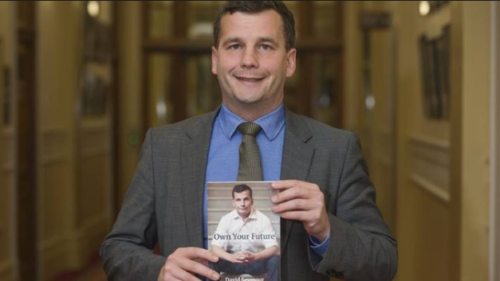
VJMP Reads: David Seymour’s Own Your Future IV

A Liberal Vision for New Zealand in 2017

This reading carries on from here.

The third chapter in Own Your Future is ‘Superannuation and the Gold Card’. This essay starts with a dig at Winston Peters, who was once investigated by the Serious Fraud Office. Seymour doesn’t like the wasteful spending he sees in the Gold Card, especially as many of the recipients of the largesse of it are already millionaires.

Universal super is set to cost us around $20,000,000,000 per year by 2031, Seymour informs us. Here he makes a play for younger voters by having a go at the Baby Boomers. He references the suspicion of the younger generations that they aren’t going to get the same sweet pension deal that their parents got – after all, we didn’t get the same free tertiary education that they got.

He raises the spectre of a Greece-style economic apocalypse happening as a result of a debt spiral triggered by having to pay these lavish pension funds up to and past 2060. It’s hard to deny Seymour’s maths, as it appears to be true that we will soon reach a point where there are only two workers for every pensioner (as opposed to today’s four).

The options, as he sees it, are: raising taxes by about a quarter or raising the retirement age, neither likely to happen because young people don’t vote. Seymour here criticises both John Key and Bill English for lacking the courage to deal with the issue, and makes an entreaty to the young to not become disengaged from politics.

This seems baldly hypocritical, considering that ACT spent all of the last nine years voting alongside the National Party, who are the party that represents all the Baby Boomers. As Dan McGlashan showed in Understanding New Zealand, the vast majority of Baby Boomers vote for National, whose efforts to fuck over the young were eagerly supported, for nine years straight, by all ACT MPs including David Seymour.

National closed down rape crisis centres and gutted mental health funding, leading to New Zealand having the developed world’s highest youth suicide rate, and Seymour supported them all the way, despite that many young people voted ACT in 2014. He does not acknowledge that this may have contributed to the low turnout rate among the young.

True to neoliberal form, Seymour’s solution to this looming pension crisis is to squeeze some extra labour out of the working class, by raising the age of retirement to 67, and soon. No means testing, despite that 25% of people claiming the pension are also either claiming a salary or run their own business (as admitted by Seymour himself) and at that point the chapter abruptly ends.

One realises here that Seymour is primarily trying to win votes from people too young to know anything other than neoliberalism. Old people are too conservative to vote anything other than National or sometimes New Zealand first, and it’s the young and well-heeled (who don’t expect to be reliant on a public pension in old age) who are the most amenable to Seymour’s suggestions here.

*

If you enjoyed reading this essay, you can get a compilation of the Best VJMP Essays and Articles of 2017 from Amazon for Kindle or Amazon for CreateSpace (for international readers), or TradeMe (for Kiwis).