

The Philosophy of Materialism is The Memetic Cancer of Our Age

The brain generates consciousness and therefore the death of the physical body means the extinction of all awareness – so buy buy buy!

Materialism – what is it good for? To give it its due, it’s a very useful paradigm to adopt if one wants to conduct an experiment in any of the physical sciences. The monkey who first realised that fire could be started from the friction of a hard wood on a soft one derived an enormous advantage over the monkeys who were still doing dances to try to please the lightning gods.

More recently, materialist science such as physics and chemistry led to Anglo-American dominance of the sea trade routes, as the adoption of first coal, then oil, then uranium allowed these powers to keep a naval force in operation that was orders of magnitude more powerful than what was possible under sail. Mastery of these sciences also allowed these same powers a decisive military advantage in terms of weaponry.

All well and good – but what is materialism bad for? Many, many, many things. Unfortunately, materialism has strengthened beyond being a mere scientific approach. It’s not even a worldview anymore. In our blind 21st century, materialism must be accorded the status of a legitimate religion. This has had profound effects on the political, scientific and intellectual discourse of all nations.

Like any dominant religion, the presuppositions of materialism can no longer be questioned in polite society. It’s possible to talk about “the” biological basis of consciousness as if it were already an established fact that consciousness has a biological basis. Asking how it is that it’s known that consciousness has a biological basis elicits, in materialist circles, a similar response to going into a church and demanding the priest prove his contention that the Bible is the Word of God.

It’s just not the done thing.

And so it’s possible for one of the world’s most prominent intellectuals, Sam Harris, to discuss consciousness with a supposed expert on the subject for over an hour without either of them questioning the dogma of the “biological basis of consciousness”. That the brain generates consciousness and not the other way around is assumed from the beginning, and all subsequent data has to be shoehorned into this framework or discarded.

Ironically, the podcast mentions that consciousness had hitherto been the purview of philosophers, in a passage exclaiming how good it was that other disciplines are now considering it. The reason why this had been the case is now obvious – because physicists, chemists and neurobiologists are incapable of the logical reasoning necessary to truly consider the question. This logical failure leads to errors like assuming right off the bat that the brain generates consciousness, the type of error that philosophers generally don’t make.

Listening to a supposed expert in neuroscience ramble on about the biological substrates of consciousness is every bit as depressing as listening to some old priest ramble on about whether or not we’re allowed to drink wine on Sundays. Both charades are dependent on one gimmick: take for granted the biological basis of consciousness and we can explain everything (says the neuroscientist), take for granted the eternal truth of the Bible and we can explain everything (says the theologian).

The worst part of it is that – just like Abrahamism, Nazism, Communism and Marxism – materialism has also rotted the minds of the people who have come to believe in it. Like a cancer, it has given rise to a number of bad things, all of them ultimately caused by the belief of materialist individuals that the death of their brain inevitably means the extinguishing of their consciousness.

Materialists are generally indifferent to the condition of the world after they die. Let’s just rape it now is their motto. After all, if their consciousness is extinguished upon the death of the brain, there is no logical reason to act in a manner custodial to the life that comes after you. There won’t be any way it affects you, so why bother?

Materialists are also easily manipulated by death anxiety. People who know that the consciousness survives the death of the physical body can laugh in the face of death, because they know that death will not occasion a traumatically significant change from the state of existence that pertained before death.

This latter point is why materialist cultures like the British fight wars all over the world while non-materialist ones such as the Indians do not. A Brit can easily be terrified into doing what you tell him because of the fear of invasion or economic disaster or God’s judgment or some other catastrophe; the Indian will just laugh.

For Western culture to survive, we have to cast off the spiritual sickness that we inherited even as we assumed scientific and military dominance. We have to move past materialism and the ludicrous contortions of reasoning that it forces people to undergo.

Psychedelic drugs and meditation are the cures for the memetic cancer that has been growing in the West for a few centuries.

*

If you enjoyed reading this essay, you can get a compilation of the Best VJMP Essays and Articles of 2017 from Amazon for Kindle or Amazon for CreateSpace (for international readers), or TradeMe (for Kiwis).
To Deny That Cannabis Is Medicinal Is To Deny The Humanity of Medicinal Cannabis Users

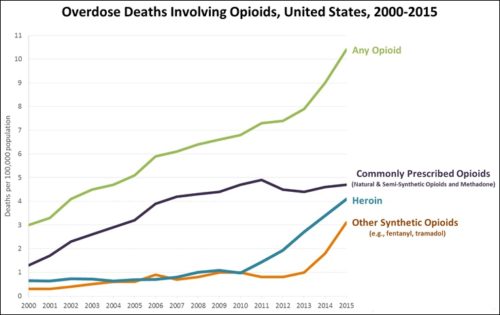
Opioids kill 1 in every 10,000 Americans every year, but they’re fully legal

One of the most awful aspects of being a medicinal cannabis user is getting lied to by doctors and mental healthcare workers who deny the emotional and spiritual benefits of cannabis use. The problem isn’t that they won’t help you get hold of cannabis medicine (because there are plenty of people who will) – it’s that they refuse to have an honest conversation with you about the benefits and side-effects of using it.

It’s impossible, in most places, for a sick person who uses medicinal cannabis to expect that their doctor will listen honestly to what they have to say. If the patient mentions the benefits of their cannabis use, the doctor will insist that the patient must be mistaken when they believe that cannabis helped them. Even if the doctor goes as far as conceding that cannabis has some medicinal value, they will almost always attribute all manner of ghastly side-effects to using it.

Worst of all, it’s impossible to change the mind of your doctor by presenting evidence from jurisdictions that have legalised medicinal cannabis. It doesn’t matter that medicinal cannabis was made legal in California in 1996 after the doctors there looked at the evidence – those doctors are simply presumed to be wrong, and recklessly so. End of story.

This refusal to speak honestly with patients is, from the patient’s perspective, a dehumanising experience. It’s a way of saying that your experience can be discounted, because you are worth less than a normal human being. With almost every other medicine it’s possible to tell a doctor that it alleviates your suffering and have it considered enough to get a prescription.

This is even true of opioids, which kill 1 in every 10,000 Americans every year, and which have been so recklessly overprescribed that the opioid crisis now has its own Wikipedia page.

Not so with cannabis. Somehow cannabis has the mysterious property of causing suffering that only doctors, politicians and pharmaceutical company lobbyists are able to see. A patient might feel that their suffering is reduced from using medicinal cannabis, but unfortunately for them, they are not considered full human beings on account of the claim that cannabis causes psychosis. Therefore, their belief that cannabis alleviates suffering can be dismissed on account of it being a belief held by a psychotic person.

It’s a vicious Catch-22: you might feel that the cannabis takes your suffering away, but this can be trumped by the declaring that using cannabis robs you of your ability to reason, and then anything you say can be dismissed as the ravings of a lunatic.

If a person is suffering psychologically, and they take a substance that they believe to be medicinal, and their experience of using this substance is that it ameliorates psychological suffering, then how can anyone else possibly presume to judge otherwise?

It might be that the side-effects of using some particular medicines are so great that, on balance, it’s better to look for an alternative than to prescribe them, but significant side-effects from cannabis use are non-existent.

The feeling from the patient’s perspective is that doctors are saying that ameliorating your suffering, in particular, is not worth pursuing because you are not valuable. Elderly Baby Boomers are getting stuffed full of opioids at the first murmur of complaint, but if anyone else wants to use some cannabis they have to risk several years in prison.

*

If you enjoyed reading this essay, you can get a compilation of the Best VJMP Essays and Articles of 2017 from Amazon for Kindle or Amazon for CreateSpace (for international readers), or TradeMe (for Kiwis).
Psychedelics Fill The Vacuum Left By The Destruction of Genuine Spirituality

In the West we have no common spiritual tradition. The closest we come is an empty imitation of the old myths and legends of a Middle Eastern tribe of genital mutilators. Where the Buddhists pray for an end to the suffering of all sentient beings and the Hindus know for certain that consciousness survives the death of the physical body, we Westerners are still mutilating the genitals of our baby boys and living in utter terror of the day our vital organs shut down. Luckily, there is historical precedent for solving these problems.

The natural spiritual traditions of Westerners were destroyed by successive waves of Abrahamic invasions, beginning when the Romans made the terrible mistake of taking in Abrahamic refugees. Allowing this evil supremacist tradition into the West had the effect of corrupting those tasked with maintaining these natural spiritual traditions, ending with their replacement by hollow lies.

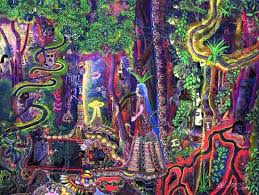
Before the Abrahamists invaded, Europe was rich in folk spiritual practices, with use of the amanita muscaria mushroom in the North and psilocybin mushrooms in the South allowing our forebears to reconnect with God. Not only did the ancients use psychedelics, but they did so frequently and with reverence, like any skilled practitioner would use them today.

The amanita muscaria folklore lives on in our stories about Santa Claus and his reindeer (Santa’s red and white costume represents the mushroom, his rotund build represents its roundness. The reindeer are there because Nordic shamans would potentiate the psychedelic effect of the mushroom by inducing reindeer to eat it and then drinking the animals’ urine).

The ancient Greeks partook in the ceremony at Eleusis once every mushroom season, and they did so with such reverence that to this day no-one is quite sure of precisely what the recipe of the kykeon was. This enabled them to see the world beyond in a way that had up until then been the province of exceptionally gifted shamans.

The Abrahamists destroyed as many of these traditions as they could, as Abrahamists have done everywhere in the world they have set foot, on account of the unique viciousness of that religious tradition. But they could not destroy the mushrooms themselves, no matter how severely they punished their use. And so it was only a matter of time until they lost their grip and the folk spiritual traditions reasserted themselves.

This causes problems, although we don’t realise it because you need a little bit of spirituality to realise it, and we have none left. If one of us does become a little bit spiritual, they tend to realise all of these problems, and this often leads directly to the state of psychological collapse known as psychosis.

Because our culture is rotten with materialism, we have no commonly understood way of recognising when one of us has achieved a state of spiritual insight. Indeed, the usual response appears to mock them for being a “loony”, as if the eternal truth of materialism was so self-evident that only a mentally ill person would even pause to question it.

This is why Westerners who achieve a spiritual breakthrough usually end up with a psychiatric diagnosis in short order. Our culture is so spiritually dead that we cannot recognise spiritual gnosis even when it’s right in front of us. We sneer and jeer at any hint of it.

But knowledge of magic mushroom use (alongside that of LSD) has slowly seeped into the Western consciousness since the 1950s. Thanks to the Internet and what’s left of our culture of intellectual free inquiry, it has been possible for those who have heard the call of the shaman to share their experiences with others, and after much discussion it has become clear that the psychedelic experience and the spiritual experiences of the ancients are much the same thing.

The Church did such a good job of destroying natural spirituality, and they did it for so long, that they are unable to act when it starts to arise again (as it is doing now), because they have forgotten what their enemy even is. This means that knowledge of how to use psychedelics will once again become widespread, and this will once again lead to a spiritual golden age.

*

If you enjoyed reading this essay, you can get a compilation of the Best VJMP Essays and Articles of 2017 from Amazon for Kindle or Amazon for CreateSpace (for international readers), or TradeMe (for Kiwis).

Does Cannabis Prohibition Cause Schizophrenia?

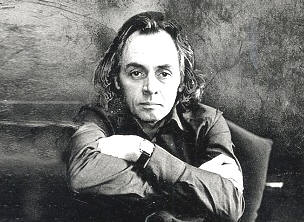
R. D. Laing

In The Politics of Experience, the great Scottish psychiatrist R. D. Laing presents his own understanding on the ultimate causes of schizophrenia. He concludes that schizophrenia is not mainly caused by either genetic or environmental factors but rather “the experience and behaviour that gets labelled schizophrenic is a special strategy that a person invents in order to live in an unlivable situation.”

This is a position that many schizophrenics could themselves agree with. Common to the schizophrenic experience is a sense of having been “skewered” by the world, in that one is doomed if one chooses a certain option but also doomed if one does not choose it. This kind of Catch-22 situation is regularly accompanied by a level of anxiety that is impossible to live with, followed by the mind starting to disintegrate as a way of relieving unendurable levels of stress.

It’s not a position that receives much sympathy from the psychiatric establishment, who are almost all hard-core worshippers of the cult of materialism. Most Western psychiatrists cannot conceive of mental health in any other terms than brain chemistry, and they cannot conceive of treatment in any other fashion than dishing out pills. That someone has been driven insane by society is an unpalatable possibility.

Cannabis use is believed by many to be the cause of schizophrenia, because the association between cannabis use and getting such a mental health diagnosis has long been noted. In the mainstream Western model, it is assumed that the causal relationship of these two variables goes in the direction of cannabis use causing people to develop psychosis and schizophrenia.

This has led to many psychiatrists telling their patients that not only are the patients themselves to blame for their own mental illness (which leads to terrible feelings of guilt and self-recrimination) but that only by avoiding cannabis can they hope to make a recovery.

The problem with this approach is, obviously, that cannabis is medicinal, and the vast majority of cannabis users know this, and so being told such things by a mental health “professional” is confusing, frustrating and enraging.

Getting lectured about what one needs to do to stay mentally healthy by a person who has never had schizophrenia, who has never had any experience with psychosis and who has almost certainly never used cannabis, much less a major psychedelic, is a difficult thing for any person to put up with, let alone an experienced psychonaut. When that person doing the lecturing is actually ignoring one’s own lived experiences with the medicinal qualities of the substance, it’s mind-boggling.

Because of cannabis prohibition, mental health care workers are extremely reluctant to tell the truth about the medicinal qualities of the substance (if they’re even aware of them). After all, if they recommend medicinal cannabis to a patient in a place where it’s illegal, they’re effectively recommending that the patient commit a crime, which comes with various ethical issues.

The problem is that the patient is frequently aware that the mental health care workers are lying by omission, which puts them in an impossible situation – exactly the kind of situation described by Laing as schizophrenogenic. If you have problems knowing what’s real and what isn’t, talking to someone who you know is lying to you while that person is also claiming to be helping you is just too much for the human mind to cope with.

If doctors and psychiatrists are there to help us, why don’t they tell us the truth about the medicine that does so much to relieve abominable suffering? The fact that they refuse to do so only feeds into the perception often held by paranoid schizophrenics – that they really are out to get you. It also makes people wonder if they’ve fallen into a time warp of some kind.

Prohibition of cannabis medicine is so absurd, so ludicrous, that it actually causes mental illness in the people whose lives are affected by it.

*

If you enjoyed reading this essay, you can get a compilation of the Best VJMP Essays and Articles of 2017 from Amazon for Kindle or Amazon for CreateSpace (for international readers), or TradeMe (for Kiwis).