Writing Attention Deficit Hyperactivity Disorder

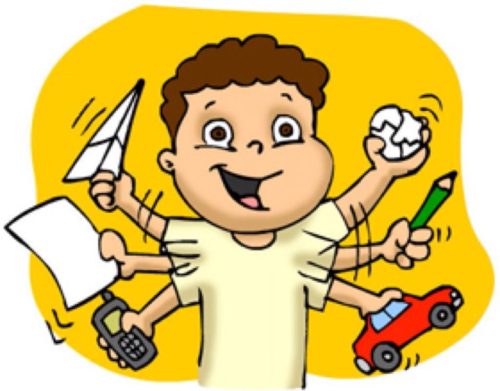
Attention Deficit Hyperactivity Disorder (ADHD) is characterised by problems paying attention, hence “attention deficit”. For whatever reasons, people with ADHD tend to flit like butterflies from one focus of obsession to the next, usually fidgeting the whole time. It might not be one of the most severe mental illnesses, but it’s still capable of severely degrading a person’s quality of life.

People with ADHD often do things without remembering. The cliche is of a person with ADHD hearing their phone ring from the fridge, where they mistakenly put it because they thought it was a carton of milk or similar. This is common because attention has to be paid to something before it can be remembered, and a person with ADHD might have been paying attention to the thoughts in their head instead of the phone in their hands.

Also common for people with ADHD is struggling to complete tasks owing to having difficulty sustaining attention. They might start to complete a task, only to get distracted by something they noticed, and then to get sidetracked from that by a particularly unusual thought (the potential comedy value of such a thing should not be overlooked!).

The experience of having ADHD is, much like many other conditions, one of having too much chaos in one’s life. A character who has it will tend to be very disorganised, for the reason that paying attention to a task long enough to get it done is difficult (and rare).

Writing about this from a first-person perspective will be exhausting. Not only will it be hard to sustain for long, but it will seldom be necessary, for the reader should get the idea very quickly. For this reason, it’s hard to write from a stream of consciousness perspective here. Subtlety will have to be employed to describe an environment that reflects the impact of a person with ADHD.

As with many mental disorders, it’s easy to confuse ADHD with other conditions on account of apparently shared symptoms. A character with ADHD might appear psychotic to another because of a rambling conversational style that leaps from subject to subject. They might also seem dull-witted to someone who’s trying to teach them something that isn’t very interesting.

It’s also distressing to have ADHD (in most cases), and so many symptoms of it are those that are common to other mental disorders and which are ultimately stress-based: insomnia, anxiety, irritability, nausea, low self-esteem etc.

A lot of ADHD-induced behaviour can be mistaken for being on drugs. A lack of apparent ability to pay attention might be explained by another character as drug influence that is forcing the character with ADHD to pay attention to their inner world. The stereotypical caffeine high of jittery behaviour and staccato speech can also be hard to distinguish from a bout of attention deficit. It doesn’t help that use of drugs is common among people with ADHD.

For a variety of reasons, the personal experience of ADHD is frequently one of frustration. The condition itself is frustrating, because it’s hard to get things done and so chores and errands tend to build up and become stressful, but also the world, and its responses to ADHD, are frustrating – and often cruel.

Part of the story of a character with ADHD, then, might be about their experience as an outsider, for two major reasons.

The first is rejection by their peers. People with ADHD, especially as children, tend to behave in ways that lead to low social status. They are often not fun to be around because the fast talking and constant fidgeting puts others on edge. Worse, their attentional deficits can lead to a failure to process speech and body language cues as efficiently as someone without ADHD, degrading the social value of communicating with them.

Someone with ADHD might have trouble finding a friend who has the patience to listen to their machine-gun conversational style. On the other hand, if they do, it is more likely to be a genuine friend. There’s a good chance that the friends of people with ADHD have bonded with them by way of a shared experience of being an outsider.

The second is rejection by society. Society expects its charges to conform to a certain pattern: a pattern of passive, obedient consumerism. A character with ADHD might have trouble fitting into this pattern, because they find it boring as all hell (for good reason). Modern life is experienced by many as a cage, and few people feel this more keenly than those with ADHD.

This can lead to a kind of outsiderhood that brings with it bitterness, but it can also lead to characters who live highly unconventional lives owing to being unable to fit in with the demands placed on them by the standard work place. A character with ADHD could easily be a hero (or anti-hero) who rejected the excessive sobriety and mindless strictures of society in favour of a psychonautic life of consciousness exploration.

It’s easy for a person with an ADHD diagnosis to believe that the problem isn’t with them but rather with the world. After all, the demands of modern schooling are extremely unnatural if one considers that the human child has evolved to suit an environment that contains infinitely more novelty than a school classroom.

Indeed, there is some debate over whether ADHD is a mental disorder at all, or if it’s just a label given to those who have a high desire for stimulation and novelty. The biological past was a far more dangerous, violent, unpredictable – and therefore, exciting – place than the modern classroom or workplace, and it’s not realistic to expect all people to be easily able to make the transition.

It might be that your character is capable of distinguishing themselves from the majority of people with their condition by overcoming it and mastering an area of particular interest. People with ADHD sometimes are better at paying attention than the average person, as long as the subject matter appeals enough.

*

This article is an excerpt from Writing With The DSM (Writing With Psychology Book 5), edited by Vince McLeod and due for release by VJM Publishing in the summer of 2018/19.

Masculine Conservatism and Feminine Conservatism

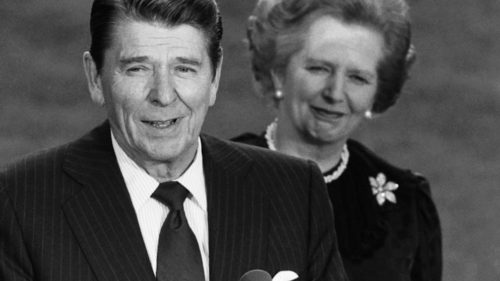
One male, one female, but both represented a very masculine, active conservatism

Contemporary political philosophy suffers from an inability to accurately define terms. Political discussion has been so inundated with lies from all quarters that no-one any longer knows what anyone else is really talking about. This essay makes an attempt to make sense of conservatism by teasing it apart into recognisably masculine and feminine strands.

Like its synonym ‘right-wing’, conservatism is usually equated with a will to keep things the same as they are now. This seems to be naturally implied by the root verb ‘to conserve’. In most cases, this makes a lot of sense. The balance of power has traditionally been held by men, by the religious and by the wealthy, and these are generally the same people who promote and support conservatism.

In some cases, however, it makes less sense. Why, for example, would a conservative support mass immigration to America of low-skilled Mexican workers? Such an action not only fails to conserve the status quo but actively disrupts it. Why also would a conservative support the introduction of government surveillance measures like the PATRIOT Act? Such an action also marks a distinct change of attitude on the part of the American Government towards the people.

One solution to this dilemma is to think in terms of vertical or horizontal dominance hierarchies. Another potential solution follows from the understanding that conservative attitudes divide neatly into two major strains. The basic dichotomy could be considered between active conservatism (or masculine conservatism) and passive (or feminine) conservatism.

The core tenet of masculine conservatism is that people have a moral obligation to take action to impose order; in other words, an obligation to take action to reduce chaos. This is a missionary, evangelical form of conservatism in that it goes out into the world looking for disorder to impose itself upon. It’s an extremely popular sentiment in the New World, because the immigration histories of these countries selected for people willing to impose order upon chaos, on account of that the New World had so much chaos.

Done correctly, this masculine conservatism can lead to a person being able to maintain a complex system at high performance for a long time. A doctor who makes a diagnosis is operating to reduce the chaos in their patient’s body; a mechanic who makes a diagnosis is operating to reduce the chaos in their client’s vehicle.

The core tenet of feminine conservatism is that people have a moral obligation to not change anything, to maintain the status quo. This strand of conservatism is the one that makes appeals to “tradition” so as to justify not changing anything. Change is here seen as disruptive, destructive, stressful – and fundamentally unnecessary.

In an ideal situation, these two impulses overlap so much as to be indistinguishable. After all, if things are already in good order, there’s no pressing reason to change anything, and therefore a desire for the status quo is a desire for good order. Moreover, in such a situation, a desire for good order is a desire for the status quo, so a conservative can simply copy what their forebears did to succeed.

In the situation we have inherited, these two impulses are far away from harmonious co-operation. Another way of expressing this disharmony is to consider it in terms of fault lines within the conservative movement. Anti-conservative forces might target the loci of these divisions between masculine and feminine with agitprop intended to further the divide.

There are two ways to do this. The first is to draw attention to a situation of persisting disorder, because one half of the conservatives will want the situation to persist and the other half will want the disorder to be resolved. The second is to draw attention to a situation of disintegrating order, because one half of the conservatives will see this disintegration as a natural process and the other half will want to retain that which is at risk of being lost.

The two strands of conservatism that this essay considers masculine and feminine are extremely powerful – if they work in unison – but, if they don’t, the overall system is fragile and highly vulnerable to direct pressure from the outside.

*

If you enjoyed reading this essay, you can get a compilation of the Best VJMP Essays and Articles of 2017 from Amazon for Kindle or Amazon for CreateSpace (for international readers), or TradeMe (for Kiwis).

Why Immigration Is a Weapon Of The Parasitic Rich

The parasitic class has many different strategies for destroying the mutual trust among the people – and opening the borders achieves several of them at once

Many were surprised, and many were not, by the news that the New Zealand Bus Drivers Union was opposing the request of Ritchies to import 110 indentured servants in the form of “migrant bus drivers”. Those who were surprised were those who thought that the union, being comprised ostensibly of leftists, ought to support bringing third-world people in to compete with the indigenous working class, because leftists are supposed to be all about solidarity for poor brown people.

Those who were not surprised were those who understand how reality works. The reality is that Ritchies put in such a low bid for the bus drivers’ contract that they couldn’t fill the positions with Kiwi staff, because the supply of people willing to work at wages that they can’t live off is almost nil. There is now an established precedent, however, for Kiwi employers who can’t find enough local suckers to subsidise their parasitic lifestyles: immigration.

Much like American employers with illegal Mexicans, Kiwi employers have cottoned on to the fact that maximising profitability is a function of minimising wages, and that minimising wages is a function of the leverage the employer has in the negotiation, and that this leverage is vastly increased if the worker is illegally in the country or wholly dependent on the whims of the employer for future work.

Not only does immigration give the local ruling class great power by populating the land with people dependent on them, but it also strengthens their economic position by destroying the leverage that local workers have in employment negotiations. This destruction of leverage is achieved by destroying the amount of trust that people have for each other, because solidarity is necessary to resist the depredations of the parasitic class and solidarity is primarily a matter of trust.

Game theory* tells us about the factors necessary for the evolution of trust.

The first is repeated interaction. People rarely trust others if they believe that they will never meet that other again, and for good reason: it makes sense from a game theory perspective to be more likely to exploit a person who you will never see again, for the reason that they will not be able to take revenge.

The greater the flow of people, the less repeated interaction there is. At one extreme end, there is very little solidarity in an airport terminal, for the reason that the vast majority of interactions here will not be repeated. At the other extreme, there is immense solidarity among members of a pioneer family deep in the Canadian wilderness, for the reason that virtually all interactions will be repeated.

The second important factor is the capacity for social interactions to be non-zero-sum games. In other words, trust only develops when social interactions result in clear mutual benefit. If either side feels like they lost out from the exchange, trust will dissipate.

Many people will make the claim here that immigration grows the overall size of the pie, for the reason that each new immigrant, even if they take up a job, creates at least one job’s worth of demand for other goods and services. This argument is often touted as a counter to the “Lump of Labour Fallacy” and, to that end, it has merit. But this argument ignores the impact of social status on a person’s well-being.

Social status is a zero-sum game in the sense that the higher one person is up the dominance hierarchy, the lower someone else must be. Low social status is extremely stressful – perhaps it wouldn’t have to be experienced as such in an ideal world, but we don’t live in one. In our world, a native person having to accept a lower social status than an immigrant is regularly experienced as a humiliation, for the reason that the native feels pushed out, as if by a cuckoo hatchling.

In a social environment where immigration means that the natives have to accept lower positions (such as an unemployment benefit in lieu of a living wage, as in the case of the indigenous bus drivers in the opening paragraph), there will naturally and understandably be resistance from those natives. This means that forcing it on those natives, against their will, will inevitably have the effect of causing those natives to hate the immigrants instead of trusting them.

The third important factor for the development of trust is to have low levels of miscommunication. As everyone who has spent any time on the Internet knows, clarity and precision are the cornerstones of communication, and when you have hordes of jabbering retards you end up having arguments and fights.

The greater the diversity, the greater the levels of miscommunication. This is because you have more languages and dialects to contend with, and any given person has an upper limit as to how many of these various forms of communication they can master. Exceeding this limit – which is guaranteed to happen if diversity keeps increasing – will cause miscommunication to happen.

Increasing the rates of immigration has the effect of bringing a diverse range of different forms of communication into everyday life, which increases the likelihood of someone misunderstanding someone else. So the greater the levels of immigration, the greater the levels of miscommunication and therefore the lower the levels of trust.

Who benefits from all this destruction of trust? The cheaters. The very same parasite class who entreats the Government to let them import indentured servants instead of paying a fair wage to local workers who are looking for employment. They benefit immensely from the destruction of trust, because an environment of distrust makes the people less able to organise to resist the hoarding of wealth, and this shifts the balance of power in favour of the wealthy.

The greatest trick the rich ever pulled on the poor was to convince them to open the net of solidarity so wide that no-one in it has anything in common with each other any more. The circle of trust has been cast so wide that it has fallen apart, and the traditional ways of re-forming bonds of trust have been destroyed or are severely discouraged.

This makes about as much sense as opening your pantry for the neighbourhood rats and mice to come and take their fill, on the grounds that rodents are disadvantaged compared to humans and therefore solidarity with other humans is a form of supremacism.

* For an outstandingly brilliant demonstration of the basic principles of game theory as it pertains to trust, see http://ncase.me/trust/

*

If you enjoyed reading this essay, you can get a compilation of the Best VJMP Essays and Articles of 2017 from Amazon for Kindle or Amazon for CreateSpace (for international readers), or TradeMe (for Kiwis).

The Ultimate Evil Is To Continue To Exist

To live is to destroy

You! You are an aggressor! There is no way that you can exist on this planet otherwise. All of us have to carve a niche out of Nature, with violence or treachery, for there is simply no other way to survive. So malicious are you that you commit the ultimate evil – to continue to exist!

Every living creature has a need to metabolise in order to stay warm. This metabolisation requires energy, which means food, which means a need to eat, which means a need to kill. In order to live, you have to kill!

Every bit of food you have ever eaten was a living being that had to be killed so that you could eat it! What right do you have to assert the primacy of your own existence over that of another being, over a fellow creation of God? The morally correct thing to do, in order to avoid bringing suffering into the world, is to lie down and starve to death!

Worse, as a mostly hairless ape, you also have a need for shelter – and there’s no other way to build a house than by carving a space out of Nature for yourself. This means destroying the habitats of other creatures.

150 square metres of floor space means 150 square metres of land on which no forests can grow, and through which no streams can run. It’s 150 square metres worth of trees that had to be chopped down, with all the bird and insect life supported by it destroyed.

Neither can you escape your own energy needs. Driving a car around consumes oil – a finite energy source, and one that has to be extracted at the price of more environmental damage. Reading this website requires electricity, which requires energy. All the goods in your house were shipped to you by transportation methods that required energy.

Collectively, these demands meant even more coal mines put down, even more oil wells sunk, even more valleys wiped out by hydroelectric dams. To use energy is to render parts of the Earth to chaos!

There’s nothing you can do about any of these things! To continue to exist is to destroy – for only through destruction can one continue to exist!

To reproduce causes even more damage. The facts are stark: the single most ecologically destructive move a person can make is to bring another human being into the world – a human who will have to eat, to shelter themselves and to use energy, and at ever-increasing appetites!

Worst of all, merely to keep existing means you run the risk of bringing more conscious life into the world to suffer. Even if you don’t intend to breed, you might meet a certain person who causes a massive dump of some hormone to be released by your brain and then you fall in love and nek minnit you have eight children, all of whom must find their own way to come to terms with the fact that they are mortal creatures in a world of ceaseless slaughter!

If you should stop existing, on the other hand, not only does it become impossible to bring more conscious suffering into the world in the form of human offspring, but one also vacates a niche within the biosphere that can (and will) be occupied by gentler, kinder forms of life.

Think of the biomass of the worms that would eat your corpse!

You should be killed!

*

If you enjoyed reading this essay, you can get a compilation of the Best VJMP Essays and Articles of 2017 from Amazon for Kindle or Amazon for CreateSpace (for international readers), or TradeMe (for Kiwis).