

The Masculine Approach, the Feminine Approach, and the Four Elementary Perceptions

If one wishes to divide the world into two halves, a problem immediately arises: on what basis does one make the division? There seem to be an infinite number of dimensions that a division can be made along. This essay argues that there are two orthogonal, fundamentally different ways to divide the world in two, and this leads to four elementary perceptions.

In its initial state, perception is untrammelled. When consciousness is united with God, one is aware of everything. From this state, the only way that change is possible is for this perfect perception to become occluded somewhere. Somewhere, consciousness must turn to unconsciousness, light to dark, warm to cold.

There are two ways to look at this inevitable fall from union with God. The first way is to simply perceive the change; the second way is to judge the change. This dichotomy is true of all distinctions between feminine and masculine, as the feminine is associated with the perception end of the perceiving-judging spectrum, and the masculine with the judging end.

This first way, making the choice to perceive, is the feminine way. This way divides the world into light and dark or hot and cold, where no judgment is made about one of the two being better than the other. The feminine way of dividing the world does so horizontally, in that the halves are seen as interdependent and as feminine and masculine.

The second way, making the choice to judge, is the masculine way. This way divides the world into good and bad, where good and bad are different to (but overlapping with) the feminine division of yin and yang. This way of dividing the world does so vertically, in that one half is judged to be worth more than the other half. Good is set above bad.

These two perceptions are just perceptions. Neither of them is right or wrong, and that isn’t important in any case. What is important is when these perceptions are useful, because either is useful in some situations and not in others.

Masculine is good when you have just come inside from the rain. Then, masculine is a warm cup of coffee. Feminine is good when you have just come inside from a hot day of playing sport in the Sun. Then, feminine is a cool beer. So either masculine or feminine can be good or bad in the moment, without a moral judgment needing to be made.

Likewise, judging is good when deciding whether to let a person into your house. It’s important to make sure that a person is not bad before opening your doors to them. Perceiving is good when trying to enjoy a piece of music, because it’s enough to just experience the sound and to let oneself by raised and lowered by it. Judging might take the fun out of it.

So the decision whether to perceive or to judge in any given moment depends on the environment a person is in and the situation around them. Generally speaking, if things are relaxed then people are inclined to perceive and if they are stressful people are inclined to judge. It also depends on inherent personality characteristics: women are more likely to break towards perceiving if in doubt, while men are more likely to break towards judging.

In all, this means that there are four different perspectives that one can take to anything in the world. Any other thing can be treated as either good, evil, yang or yin, depending on whether one chooses to primarily judge it or to primarily perceive it. Whichever of the four is chosen only makes sense in reference to the other three not chosen: bad is non-perceptive, non-good; good is non-perceptive, non-bad; feminine is non-judgmental, non-masculine, and masculine is non-judgmental, non-masculine.

This way of thinking (of dividing four elementary perceptions into two groups of two, based on approach) represents a middle point between the vertical, masculine logic of clay-iron-silver-gold and the horizontal, feminine logic of earth-water-air-fire. It might therefore claim to be a way of thinking that represented a higher degree of balance than the other two.

It also leads to them both after a small amount of extrapolation, because the distinction between good and evil is essentially identical to the distinction between precious (gold and silver) and base (iron and clay). Here gold distinguishes itself from silver by being double good, because silver is relatively bad as far as precious elements go. Likewise, iron is good in comparison to clay, because it is hard and can be used in tools, and is therefore relatively good as far as base elements go.

Likewise, the distinction between masculine and feminine is essentially identical to the distinction between warm (fire and air) and cold (water and earth). Here, fire distinguishes itself from air by being double masculine (i.e. it is hot and dry, not just hot), and earth distinguishes itself from water by being double feminine (i.e. it is cold and unyielding, not just cold).

*

If you enjoyed reading this essay, you can get a compilation of the Best VJMP Essays and Articles of 2017 from Amazon for Kindle or Amazon for CreateSpace (for international readers), or TradeMe (for Kiwis).

Writing Depersonalisation Disorder

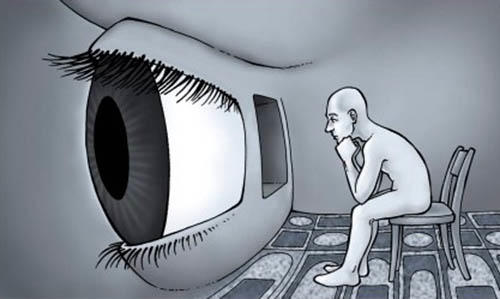
Depersonalisation Disorder is a brutally surreal experience. Also known as Derealisation Disorder, this condition is characterised by feeling like an outside observer of one’s own body despite being in it, and feeling like one isn’t actually in control of that body’s actions. Also common are feelings about reality being vague, dream-like, or less real than usual. This article gives some hints for how writers can handle characters with Depersonalisation Disorder.

This condition is almost always the result of stress, but a distinction needs to be made between a person who is temporarily dissociating in the moment because of an intensely traumatic event that has just happened, a person who has an established pattern of dissociating when exposed to certain stimuli that should not themselves be distressing, and a person who has a tendency to dissociate under small amounts of stress owing to psychological damage from past trauma.

It has to be made clear that Depersonalisation Disorder is not the same thing as psychosis. A person in a dissociated state will be aware that their perceptions are altered (or, at the very least, that something is wrong). In other words, they will not have lost touch with reality, which is a necessary quality of a psychotic experience. They will just have dissociation.

Dissociation is when one starts to feel emotions and sensations that aren’t usually associated with the environment that one is in. For example, one might be in an extremely stressful situation but not actually feel any stress: one simply watches everything from the perspective of consciousness, as if floating outside the body. Things feel unreal, surreal, so that sometimes one feels as if one is watching a film with one’s life on it instead of actually living it.

This lack of connection with the body is the strangest and most difficult thing about the condition. A person with depersonalisation can look at their own hand and not feel like they’re looking at their own body, which is a highly disconcerting experience. It’s also disconcerting to look at yourself in the mirror and not really understand who it is or that it’s you, or to recall a past memory and feel as if it really happened to someone else.

If written from a first person perspective, and written well, the experience of a character with Depersonalisation Disorder might be terrifying to the reader. Dissociation is often terrifying to experience personally, especially for the first time, and may be difficult to distinguish from a panic attack. However, often it is more weird than frightening, especially when the alternative is genuine suffering.

If the dissociation is occurring in a character being observed by the protagonist, that character might seem distant, vacant and “spaced-out”. The protagonist might get emotionless, zombie-like responses from the character undergoing dissociation, which might be a problem if there is something that has to be done quickly. It’s very possible that the protagonist mistakes the person dissociating for being under the influence of a psychoactive substance.

Most readers don’t do a lot of drugs. If they do, they might find the experience amusing to read about. After all, dissociation is a common effect of many recreational drugs. For such an audience, a character’s bout of dissociation might come across as highly comical, and doubly so when paired with another character who is perfectly straight in all regards.

Like most psychiatric conditions, Depersonalisation Disorder is believed to have an origin in psychological trauma. It’s very possible that a character with the condition will have experienced repeated trauma in childhood (usually emotional) that was so relentless it caused the mind to dissociate with reality in order to protect itself. This could be abuse, or a witnessed tragedy, or even simply a realisation about the true nature of things.

The case of Depersonalisation Disorder might then be an ego protection response to extreme trauma so that the person suffering the trauma doesn’t become cruel as a consequence of the suffering. Essentially one goes mad, when under inhumane stresses, in preference to becoming evil. This might be a way of showing the inherent goodness of a character, or their inherent naivety, depending on one’s approach.

Writing about a character who has dissociation might not be very interesting if the story revolves around the dissociation itself. The story might be more interesting if your character is an otherwise mentally healthy person who becomes dissociated as a result of extreme circumstances. This might be a one-time event or it could be part of a pattern.

If it’s a one-time event, it might be a reaction to a grisly sight like a car accident or something seen on a battlefield. This need not, then, be the central role in the story, but might rather be something that befalls the protagonist at a particular juncture, possibly transforming them or causing them to grow.

If part of a pattern, it might play a more central role in the story. It may be that the sight of a certain thing triggers an episode of dissociation on account of being associated with what caused the initial trauma, or it could be that relatively small amounts of stress or uncertainty are enough to tip a character over the edge.

*

This article is an excerpt from Writing With The DSM (Writing With Psychology Book 5), edited by Vince McLeod and due for release by VJM Publishing in the summer of 2018/19.

21st Century Christianity and Its Manifestations

Opinions on how to treat homosexuals wax and wane with social fashion, but masochism is an eternal element of Christianity

Christianity hasn’t died yet, and it never will, for there will always be a niche for slave morality anywhere there is interpersonal conflict. Fittingly for the receptive, yielding principle that it represents, Christianity has morphed into a near-infinite variety of different doctrines depending on the time and place in which it was trying to be relevant. This essay examines the characteristics of 21st century Christianity.

The sort of person who finds themselves attracted to a slave morality such as Christianity remains the same as ever, much like human nature itself. Their essential characteristic is resentment, and their essential motivation is the destruction of that which inspires envy in them. They are like pathological horizontalists, who want to level every dominance hierarchy out of resentment for not being able to climb them.

The Christianity of our century has found an equivalent for all of its ancient tenets and dogmas. For instance, in this new manifestation of Christianity, America are the Romans. Representing the men of iron, America has a vast military empire that brings humiliation and subjugation to its rivals. Anything that happens in the world, no matter where and no matter who to, can be blamed on American influence.

An Islamic suicide bomber who walks into a mosque in Pakistan and kills a hundred other Muslims has nothing to do with America. But neo-Christians will say that it’s still America’s fault because they “destablised” the country somehow, or because America gave money to some unsavoury politician somewhere alsong the line, or because the CIA financed the bomber, or equipped the bomber etc.

The neo-Christians rarely know anything about the Sunni-Shia divide and how murderous it has become. They don’t appreciate that a Muslim has a hundred times more to fear from a fellow Muslim than he does from the average American. It doesn’t matter to them. All Muslims are low status, and therefore they are elevated above the wealthy, c.f. “The first shall be last and the last shall be first.”

Similarly, the Original Sin is no longer sexual desire, because that has been fully monetised by now. The Original Sin is now racism, with racism being defined as solidarity with white people. All (white) people are guilty (of racism), and all have fallen short of the glory of (the colour-blind) God. We have all had thoughts about how we liked white people better, therefore we are all guilty of Original Sin, and are thereby associated with the Great Adversary of 21st century Christianity: Adolf Hitler.

The only solution for this Original Sin is self-flagellation. However, because corporal punishment isn’t fashionable in the Soy Era, this self-flagellation has to take a metaphysical form, and so the 21st century Christian gets their masochistic thrills from disparaging their own family, nation, race, class etc.

It has to be emphasised that Christianity doesn’t care for material concerns, and it never has. Inherent to Christian dogma is the meme that the cult comes above all other considerations, such as family, nation or class. So it’s natural for the 21st century Christian to say things like “White people have a uniquely brutal history of imperalism and racism.”

It’s therefore no accident that Christian churches are often behind the political impetus to allow hordes of Muslim and African refugees – who will never integrate – into the West. For thing, the Muslims also worship the God of Abraham, so they’re fundamentally on the same side as the Christians anyway, but more importantly, their arrival degrades the strength of the national bonds that people have with each other.

These national bonds are competing paradigms of solidarity to neo-Christianity and therefore have to be attacked so that it can take a central role in everyone’s life. Like its Abrahamic brothers in Islam and Judaism, Christianity is a totalitarian ideology, and it seeks to control every last aspect of the people under its thrall. This is why Jesus is quoted as saying in Matthew 10:34 that “Do not suppose that I have come to bring peace to the earth. I did not come to bring peace, but a sword.”

All other culture must be bulldozed out of the way to make sufficient space for Abrahamic universalism. This belief is as common among the 21st century Christian as is was of the Taliban who erased Afghanistan’s history of Buddhism, or of the Jews who rewrite Western history to glorify themselves and to hide their own crimes. All other bonds of friendship or brotherhood must be smashed, so that the God of Abraham stands unchallenged above the world.

*

If you enjoyed reading this essay, you can get a compilation of the Best VJMP Essays and Articles of 2017 from Amazon for Kindle or Amazon for CreateSpace (for international readers), or TradeMe (for Kiwis).

How to Tell If A Political Ideology Has Failed

The genesis of the Soviet failure was the failure of their philosophers to accurately understand, and to account for, human nature

All political philosophies, when first expounded, claim to have a special and unique insight into the truth of human nature. This claim is the basis for the legitimacy of each one. However, this also gives us a limit point at which a political ideology can be said to have failed – when those expounding it will be trying to change human nature instead of change their philosophy.

Machiavelli was correct – human nature never changes. It is the one constant through which the rest of the world can be understood. Human nature is the same in all times and places and therefore anyone who understands it might as well be able to see into the future. This gives immense power to those who do understand human nature. They are able to flow with the waves of it, instead of being dashed upon the rocks.

Communism failed because it did not account for the masculinity within human nature. The assumption was that, after the structures of cruelty and capitalism were dismantled, we would all go back to a bonobo-style level of caring, sharing and free love. Everyone would have what they needed because those able to provide it would simply do so out of inherent kindness.

It did not account for the chimpanzee within us, the hypermasculinist who desires verticalisation. The fact is that resources are extremely limited in a state of Nature, which means that when times of scarcity roll around, some have to go without. There is an immense evolutionary incentive, for obvious reasons, for social creatures such as humans to evolve to fight like hell rather than go without, and so primates have evolved dominance hierarchies.

This means that a state of perfect solidarity, and full sharing totally free of resentment, is unnatural. Humans are a hierarchical creature in a state of Nature, and the attempt to reform humanity and the nature of humanity – as if it was a field that could simply be sown with a higher grade of crop – was the folly that killed a hundred million people last century.

Nazism failed for similar reasons. Their great error was to assume that the nature of the German people was more morally upright than what it really was, which created a cognitive dissonance that found resolution in the scapegoating of the Jews. Externalising the blame for personal failure is typical of the sort of person who finds merit in Nazism.

Neo-Communism, in its manifestation as social justice warrior culture, is failing because it failed to account for how unwilling young people are to be programmed into parroting utter bullshit, especially when that bullshit denies aspects of human nature that even children can observe. The neo-communist attempt to reform human nature into some kind of non-racist, non-sexist and non-judgmental perfect niceness is doomed to fail, as all people smarter than dogs can see the distinctions between the various types of humans everywhere they go.

Instead of accepting that the bonds of solidarity and philia that held society together have now been shattered by relentless waves of mass immigration and the ruthless application of neo-liberal ideology to every facet of life, the neo-communists try to brainwash everyone into denying their natural instincts by browbeating them into submission with terms like “Racist!”. This is clear evidence of failure.

Likewise, the neo-nazism of our age serves to misdirect blame rather than accept that its conception of human nature is inaccurate. The neo-nazis often have intelligent and accurate criticisms about how the current system has failed, and how the Marxists have failed, but their downfall lies (as with the Marxists) with their solutions.

The neo-nazi solution is still, as it was, to fundamentally change human nature by exterminating those who don’t fit in, the belief being that the remainder will become something like the perfect human. This was, and remains, a failed philosophy for the reason that human nature does not and will not change in response to human meddling.

Liberal democratic capitalism, for all of its flaws, tried to change human nature much less than either Nazism or Communism, and that’s why it defeated them both last century. The Anglo-American system accepted from the beginning that Nature will throw up a wide range of variance among her children, an acceptance made easier by the brilliant insights of Charles Darwin into the subject.

This meant that the Anglo-Americans, and those influenced by them, focused on building a system that would accommodate the widest variance of human behaviour. Their version of liberal democratic capitalism was able to account for both noble and debased natures, and find a place for both to contribute, meaning that it wasted much less energy on fighting itself and imposing order upon itself, relative to the competing philosophies.

The Anglo-American system deserves much criticism, particularly when it comes to how willing it is to sell its own people for small amounts of money, but it is less bad than anything hitherto attempted, on account of it making more accurate assumptions about human nature. This has minimised the desire of its political rulers to attempt to reshape human nature, which has minimised the risk of gulags and gas chambers.

Future political philosophies, when they arise, will not and must not be mere throwbacks to the 20th century way of doing things. The political philosophies of the 21st century will take into account an extra century’s worth of insights into the reality of human nature, and the reality of the Nature that spawned us, and they will be more accurate and more humane as a consequence.

The risk of the 21st century is that this new psychological knowledge inspires new attempts to remodel human nature under the delusion that “we know enough now to get it right this time.” The possibility of mass non-consensual medicating with psychiatric drugs cannot be discounted, and neither can some kind of virtual reality system created with the intent of brainwashing people more effectively than ever before.

*

If you enjoyed reading this essay, you can get a compilation of the Best VJMP Essays and Articles of 2017 from Amazon for Kindle or Amazon for CreateSpace (for international readers), or TradeMe (for Kiwis).