Cricket Is More of a Global Sport Than Soccer Is

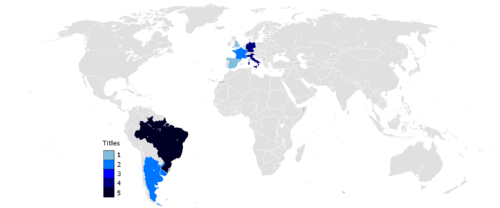
Geographical spread of Soccer World Cup winners

Another Soccer World Cup, another champion from Europe. Everyone is waxing lyrical at the moment about how wonderful the Soccer World Cup is, and how it bring all nations together in harmony with a common goal. The truth, as this essay will demonstrate, is that cricket is more of a global sport than soccer by at least three major measures.

Geographic representation

As can be seen by the quarterfinalists of the recently concluded Soccer World Cup, soccer is still very much a European sport. Six of the eight quarterfinalists came from this one continent that contains less than 10% of the world’s population.

Over the last three FIFA World Cups, 23 of the 24 quarterfinalists have come from either Europe or Latin America. The single exception was Ghana, back in 2010. So only two continents are ever really represented by the finalists in Soccer World Cups. Asia, Africa, Anglo America, Australia and Oceania don’t feature – a group of countries that includes the world’s five most populous.

For the most part, only Europeans and South Americans really play soccer, but they are capable of getting an extremely high level of performance out of Africans that have been integrated into European structures. Sufficient evidence for this comes from the fact that France won the 2018 World Cup just now.

Since World War Two, only one team from outside Europe and Latin America has ever made a Soccer World Cup semifinal: South Korea in 2002, and they only advanced that far thanks to some extremely questionable refereeing decisions. Every single other semifinalist has been from one of two continents. This is hardly befitting of “the world sport”.

The Cricket World Cup, by contrast, brings the entire world together. The last Cricket World Cup, in 2015, featured teams from four different continents at the semifinal stage: Asia, Africa, Australia and Oceania. Teams from North America and Europe have previously contested finals, meaning the overall reach of the sport is greater than that of soccer.

Population

Some people object to the statement made in the first section of this essay. Although most are willing to concede that the geographical representation of soccer is not great, many will nevertheless insist that Europe is a great population centre and therefore can’t merely be counted as one continent. This may have been true a century ago, but no longer is.

The population of Europe is 741,000,000. The population of Latin America is 640,000,000. This means that virtually all of the Soccer World Cup quarterfinalists throughout history come from a bloc of 1,381,000,000 people, roughly 20% of the world’s population.

The remaining 80% of the world’s population – comprising China, India, Africa, Indonesia and Pakistan – essentially never get representation among the final eight teams of Soccer World Cups. India and Pakistan have both won Cricket World Cups, by contrast, and are perennial quarterfinalists along with Bangladesh, South Africa and Sri Lanka.

The population of India, where cricket is the only game in town, is 1,325,000,000, essentially the same as the combined populations of Europe and Latin America. This is a fact that needs repeating for those who think that soccer is the global game: the combined populations of the only places capable of competing at the top level of soccer only just equals the population of India alone.

Measuring population properly requires that we add, to the cricket-fanatic side of the ledger, Pakistan (pop. 208,000,000), Bangladesh (pop. 163,000,000), Sri Lanka and Australia (c. 60,000,000), plus several million others in England, South Africa, New Zealand, Ireland and the West Indies, where cricket might not be the national sport but is still one of the major ones.

Against this, soccer has much less overall market share in the countries in which it is popular than cricket does. In Europe and Latin America, soccer has to compete with volleyball, basketball, tennis, handball and golf; in India, Pakistan, Bangladesh, Sri Lanka and Afghanistan, cricket is completely dominant. Therefore, it must have more total fans in the world than soccer does.

Appeal within nations

Possibly the most crucial of the three difference between the sports is this one. Soccer mostly appeals to a lower socioeconomic demographic, for who the sport is an escape from the drudgery of everyday life, akin to a circus. Cricket, by contrast, appeals to a higher socioeconomic demographic, for who the sport is the complete test of mental and physical strength and skill and more akin to improvisational theatre.

Soccer players are frequently crude, brutal, thuggish. They cheat so shamelessly that many consider it part of the game. Cricket is a sharp contrast. Men like Rahul Dravid, Ross Taylor and AB de Villiers are complete gentlemen: gracious in victory and defeat, magnanimous, charismatic, serene. Former Indian captain Mahendra Singh Dhoni is literally a prince. He is the upper class of the upper class, an aristocrat by any measure.

If any doubt remains that soccer fans are inherently more base than cricket fans, simply examine the writings of former cricketers like Martin Crowe and Kumar Sangakkara on CricInfo. There is no soccer equivalent.

What soccer is – and this is the cornerstone of its apparent popularity – is the McDonald’s of world sports. It’s a corporatised appeal to the dopamine-deprived brains of society’s lowest common denominator, which is all it can really be on account of its simplistic and luck-based nature. Soccer fans like to tout the ease of understanding the sport as one of its drawcards, but it reality this simply makes it boring to anyone with an IQ over 110 or so.

Over a billion people watched the final of the 2018 FIFA World Cup, according to FIFA themselves. However, more people saw the India vs. Pakistan match during the 2015 Cricket World Cup. The world record for concurrent viewers to a live-streaming platform was set at 10,700,000 earlier this year, not by the final of a European soccer league but by the Indian Premier League of T20 cricket.

What does it mean that more people watch a group match in the Cricket World Cup than the final of the hypefest that is the Soccer World Cup? What does it mean that more people watch the final of an Indian cricket league than the final of any European soccer league? It can only mean that cricket appeals to more human beings than soccer does.

In summary, the delusion that soccer is the “global game”, simply because it’s played in Europe, Latin America and Africa, has to end. Europe is now less than 10% of the world’s population, barely more than half of the population of India alone. If those Indians are to be considered people of equal value to the Europeans, it must be conceded that their passions are of equal value. If so, cricket is a more passionately-followed sport than soccer, measured on a global basis.

*

If you enjoyed reading this essay, you can get a compilation of the Best VJMP Essays and Articles of 2017 from Amazon for Kindle or Amazon for CreateSpace (for international readers), or TradeMe (for Kiwis).
VJMP Reads: David Seymour’s Own Your Future VII

A Liberal Vision for New Zealand in 2017

This reading carries on from here.

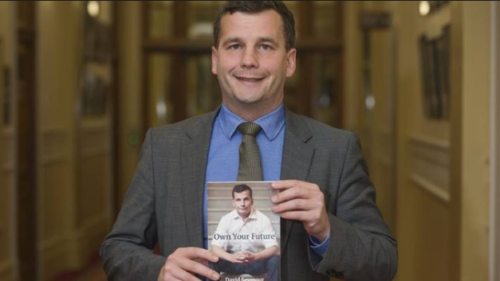
The sixth chapter in Own Your Future is ‘Immigration’. It starts with an attack on Winston Peters’s “twenty year racist dogwhistling campaign”, in which Seymour takes the opportunity to position himself as a crusader against racism and bigotry. This is a wise strategic move on Seymour’s part, considering that his party gets more votes from the foreign-born than any other. The Greens are also accused of racism for wanting to lower immigration levels.

Astonishingly, Seymour makes a passionate appeal to New Zealand’s moral obligation to help displaced refugees – but at no point in this book so far has he made any appeal to New Zealand’s moral obligation to help its own people, especially its poorest and most disadvantaged. Here Seymour comes across as the out-of-touch, highly privileged urban dweller who is horrified by a tennis ball to the head.

Ironically, Seymour pillories those who cry “racist” at everyone who claims that we need some immigration restrictions, despite doing the same thing himself on the previous page. This he does in an attempt to position himself as the supporter of a “smart” immigration policy, pointing out that no-one wants no immigration and no-one wants open borders.

He lists at length what he perceives to be the good things about New Zealand, as a way of explaining why so many people want to come here. He claims that New Zealand has a “generous” welfare system, no doubt by way of comparison to Samoa or India. Noting that New Zealand would be swamped tomorrow if we decided to throw open our borders, he seems to think it’s good enough for New Zealand to be doing better than the global average. No word about our domestic violence, child abuse or teen suicide rates.

He also makes some fair criticisms of the current immigration system, such as the absurdity of getting an investment visa from buying and holding for a few years a couple of million dollars’ worth of Government bonds. He laments the shortage of workers at tech companies and hospitals, but manages to resist the temptation of arguing that we need to attract them through lower tax rates.

New Zealand First comes in for special criticism here, with Seymour going as far as to claim that their “poisonousness” is “intended to hurt those who want to bring their skills and settle in New Zealand”. Seymour might not be aware that Maoris vote New Zealand First much more often than white people, so one wonders what he makes of this. Are Maoris racist for not wanting mass immigration? No-one knows.

There are many contradictions in this essay, many of them glaring. Possibly the most grievous encountered so far is when he complains that previous Governments have failed to make sure that the immigrants coming there are those who will integrate and contribute to economic growth, but in the very next sentence complains that those Governments only “reluctantly and begrudgingly” increase the refugee quota when concern about overseas suffering becomes “overwhelming”.

Anyone with the most passing familiarity with the situation in Europe knows that refugees are precisely the sort of person who are least likely to integrate, and who will offer negative economic growth. This contradiction is so glaringly incredible that it’s unclear if Seymour is being dishonest here or if this essay is simply poorly written.

Hilariously, Seymour is willing to grit his teeth and write that New Zealand doesn’t need “upper middle class foreign citizens flashing their bank accounts at us on their way through customs to get to a beach house” – when those people make up most of ACT’s voters. Also, we don’t need more Pacific Islanders “taking the piss” by using family migration to get their extended family “to come and live and take advantage of our generous welfare system”. Seymour writes this, apparently completely unaware that, earlier in the chapter, he pilloried New Zealand First and called them racist for saying much the same thing.

Seymour concludes this chapter with some virtue signalling about how our refugee quota is an “embarrassment”. He doesn’t appear to understand that keeping the number of Muslims and Africans low is the only way that the New Zealand population will remain favourable to immigration in general – this has been the lesson of the last twenty years in Europe. This contradiction is typical of what has so far been the most poorly written and argued essay in this book so far.

*

If you enjoyed reading this essay, you can get a compilation of the Best VJMP Essays and Articles of 2017 from Amazon for Kindle or Amazon for CreateSpace (for international readers), or TradeMe (for Kiwis).
Writing Post Traumatic Stress Disorder

Post Traumatic Stress Disorder (PTSD) is an unusual condition in that almost everyone has it to a greater or lesser degree, but few realise the impact that it has had on their lives. As the name implies, the condition describes when a person’s stress levels or reactions don’t go back to normal after a major traumatic experience. This article looks at how to write believable characters and situations involving PTSD.

PTSD is caused by exposure to a traumatic event, usually one in which a person thinks they are going to die. The classic examples are exposure to warfare, traffic accidents, sexual assault or physical assault. Experiences like these cause the brain to flood with fear, which can form long-term associations with the other stimuli present. This means that future exposure to those stimuli can trigger that deep fear again.

The classic symptom of PTSD is becoming full of adrenaline and going into combat mode when exposed to a loud noise or a touch to the head. In the former case, the loud noise might remind a character of the explosions of grenades and shellfire in combat; in the latter case, the touch to the head might remind of early childhood abuse at the hands of a parent. In either case, powerful memories of immense fear can quickly come flooding back.

The effects of PTSD are what could be expected from a close brush with gruesome physical death: adrenaline and cortisol prime the character for either combat or running. A character with the condition might easily become stirred into fight-or-flight mode as a response to the trauma. Here it can be seen that PTSD has considerable overlap with other psychiatric disorders, in particular Panic Disorder, Avoidant Personality Disorder and Generalised Anxiety Disorder.

Other effects are an increased propensity for self-harm. After all, one of the natural consequences of having a massively traumatic experience is that a person comes to realise that the world is much nastier or more dangerous than they thought it was. Some people with PTSD might decide that this world is actually pretty shit and not worth living in, given the horrors it contains.

In the case of violent crime or rape, a person might also come to lose all trust in a major societal demographic, which entails everyday difficulties. If a woman comes to distrust all men or a robbery victim comes to distrust all blacks, their life might become a lot harder and quickly, for no real fault of their own. Like children who have had bad experiences with dogs, a person with PTSD might come to dislike anything associated with their initial trauma.

Because PTSD is frequently portrayed in dramatic fiction, care must be taken not to write in cliches. The example of a nightmare leading to someone waking up in the middle of the night screaming, only to realise that the object of their terror is no longer present, is a striking one but also very heavily used. So too is the man staring into the distance, reliving a traumatic experience, not hearing someone calling to them.

A protagonist who suffers from PTSD might be aware of their condition or unaware.

If they are aware that they have PTSD, they might be a deep and sensitive character. They could be directly aware that a particular early life event has damaged them irreparably. This might be the reason for their unusual levels of compassion – the character knows what it feels like to be scared to death and commiserates with others who also do.

A story featuring such a character might be one about how they overcame their psychic damage and managed to find a way to engage joyfully with life. Often this involves healing oneself, the shamanic path. An extremely wise character may have attained their insight through having overcome an equally extreme trauma earlier in their life. Perhaps this experience caused them to understand what another character is going through.

It’s common to have PTSD and to be unaware of it. This is especially plausible on account of that people who incur severe psychological trauma might not show signs of it until many years later. A person might grow into early adulthood with a particularly surly or nasty character because of some heavy trauma incurred while a child. They might also show other signs of being strongly emotional, reckless or impulsive.

Just because a character with PTSD is not aware that they have PTSD, doesn’t mean that other characters will not be aware. In some cases it will be very obvious, because they will observe the first character go into kill mode for what seems like an insufficiently grave provocation. The character with PTSD might soon find that their condition is part of their reputation – they seem “damaged” in the eyes of others.

A combination of the two can also tell a story, such as the case of a protagonist who gradually becomes aware that they have PTSD or something like it. Perhaps they are perceptive enough to realise that a prior event has damaged their psyche – for example, they observe that they feel intense anxiety when presented with a stimulus that reminds them of a particular traumatic event.

If your protagonist encounters a character with PTSD, how that protagonist behaves might depend on their naivety and openness. A naive character might think that simply by being nice to someone with PTSD they can get them to behave normally. Although this is sometimes true up to a point, the reality is that PTSD often carries with it sinister undertones of bitterness and resentment.

It’s common for people who have PTSD for similar reasons to bond strongly over the fact. This is especially true in the case of soldiers, emergency personnel and survivors of abusive relationships. For one thing, misery loves company, but for another, severe trauma is often the kind of experience that deeply shapes a person and their conception of life and reality, so people who share the trauma often share an entire worldview that’s based on it.

C-PTSD (Complex Post Traumatic Stress Disorder) isn’t actually in the DSM-V, but it’s worth covering here for the sake of completeness. Essentially it’s a similar condition, only brought about by repeated exposure to a traumatic person or stimulus, as opposed to one single, horrifying event as is usually the case with regular PTSD.

The major difference with C-PTSD is the loss of a sense of self. One’s boundaries are violated with such consistency that it becomes hard to say where one ends and the outside world begins. This can be related to Depersonalisation Disorder and frequently coincides with a deep sense of distrust about other people.

*

This article is an excerpt from Writing With The DSM-V (Writing With Psychology Book 5), edited by Vince McLeod and due for release by VJM Publishing in the summer of 2018/19.

Te Reo With Mnemonics: Rugby Words

Hooker – kaikape

A gorilla stands over a fry pan and stovetop. He is the cook ape. Someone calls out for him so he puts on a number 2 jersey and joins a scrum as hooker.

Fullback – haika

A team is waiting to receive a kick off, when suddenly the fullback breaks into a haka.

Scrum – kakari

A bunch of schoolboys form a scrum to break their way into a classroom. On the door of the classroom it says “Cookery”.

Drop goal (verb) – whana whakapiro

A player drop kicks a ball, and it goes through the goal but hits a row of fans and they all fall over. The drop goal was a fan fuckup.

Penalty goal (noun) – hāmene whakapiro

A player successfully kicks a penalty goal while a choir sings behind the goal posts. They try to sing in harmony, but they sound terrible – the penalty goal was a harmony fuckup.

Penalty kick (verb) – whana whiu

A player kicks a penalty goal, but the touchjudge is busy fanning himself as if it was too hot to pay attention. He says “I thought I’d just fan a few (minutes)”.

The Māori word for ‘penalty’ – hāmene – shares a h-m-n-e sound with the English word ‘harmony’

Penalty kick (noun) – whana hāmene

The kicker lines up a penalty kick while a choir sings behind the goalposts. Dancing girls come and fan the choir – they fan a harmony.

Referee – kaiwawao

A fight breaks out on the pitch and the referee runs in, blowing his whistle and shouting “Okay, whoa, whoa!”

Lineout – whakarārangi

A Maori boy runs through a carpark. His friend yells, “To the far car, rangi!” and throws a ball as if into a lineout. The Maori boy, when reaching the far car, leaps in the air to catch it as if a lineout.

Kickoff – tīmata

A player stands waiting to kick off, and an old lady yells at him to hurry up. The player says “I can’t kick off until I get the tee. Mother.”

Penalty – hāmene

The referee awards a penalty, and the crowd starts singing in perfect harmony.

Try – piro

A player scores a try and celebrates with a pirouette that a ballet dancer would be proud of.

*

The above is an excerpt from the upcoming Learn Maori Vocabulary With Mnemonics, by Jeff Ngatai, due to be published by VJM Publishing in the summer of 2018/19.