
Writing Panic Disorder

Panic Disorder (PD) is a kind of anxiety disorder that is characterised by reoccurring, sudden attacks of intense fear without any obvious cause. These attacks, called panic attacks, involve a number of unpleasant psychological and physical sensations, including shortness of breath, dizziness, heart palpitations and sweaty hands. This article looks at how to believably portray Panic Disorder in your creative fiction.

A panic attack usually lasts for about ten minutes. The first sign is usually a wave of adrenaline and noradrenaline that surges through the bloodstream in preparation for the fight or flight response. It’s common for sufferers to feel a panic attack even in their bowels. Despite the absence of an obvious threat, the panic can be equally as intense as if one was confronted with a terrorist mass shooter.

One unpleasant feature of these attacks is that they can stir many different kinds of fears. Some panic attacks make the victim afraid of dying, whereas others make them afraid that they will lose control and become a screaming mess (even though this is extremely rare). In some ways the experience is like a tour de force of terror.

Perhaps the most difficult thing about this condition is that panic attacks are so unpleasant that they can be traumatising, and this creates fear of future panic attacks, which is often enough to itself cause a panic attack. So a person with the condition can end up learning to fear situations which may cause panic, and this can lead to social isolation in a similar fashion to agoraphobia.

If the protagonist of your story has panic disorder, it is likely that they have to live a life somewhat on the outside. Panic Disorder makes it difficult to socialise, especially when a person starts to become afraid of future panic attacks. This can lead to an everyday experience of constant misery, as the protagonist starts to twist themselves up in knots of over-thinking and anxiety.

An interesting story can be told about a normal life that starts to break down because of Panic Disorder. It’s common for a sufferer of the condition, at least in the initial stages, to be unaware that they are suffering from a recognised psychiatric condition. The panic attacks can be embarrassing, on account of that they have no obvious cause, and it’s easy for a person who suffers them to consider themselves mentally weak rather than sick. They can seem to come out of the blue.

People with Panic Disorder tend to develop a fear of the places in which they have had panic attacks, by way of association. This is one of things that makes the condition so disruptive. Even something as simple as going shopping can become an ordeal if a person is afraid that the experience will trigger a panic attack. Because much of the suffering of the condition is caused by fear of the next attack, certain places can themselves become intimidating.

If a character in your story encounters another character with Panic Disorder, how the first character reacts will tell the reader a great deal about their level of compassion. Because panic attacks can be set off without any obvious cause, the suffering is in the mind. This means that people who need help and reassurance from others can usually only get it from especially empathetic people. A character who helps out another one suffering a panic attack might demonstrate their nature to the reader.

A character with Panic Disorder might have a very complicated relationship with drugs. Many people with the condition have found that alcohol, cannabis, tobacco etc. has a short-term, immediate effect of quelling the panic, but have also found that using these substances makes a panic attack more likely once they have worn off. A character taking drugs to treat their anxiety might not have figured the second point out yet.

In contrast with Generalised Anxiety Disorder (GAD), Panic Disorder tends to come in sharp spikes or groups of attacks. GAD is an ever-present background hum of anxiety, whereas people with Panic Disorder can often live entirely normal lives until the panic kicks in. When people with Panic Disorder are anxious, it is usually because of a particular fear of another panic attack rather than anything general.

Mass Panic Disorder is not a condition in the DSM, but the author might still like to use the phenomenon in their creative fiction. A contagious panic attack might be the event that leads to mass destruction of part of your story world, leading to the disruption of the life of one of your characters. An explosion might cause a mob reaction that a character gets caught up in.

The Government Religion

God was dead, but God has returned to life in the form of government. This essay examines a terrifying proposition: taken together, the number of people who are willing to do violence to others on behalf of their government greatly exceeds the number of people willing to do violence to others on behalf on any other mentality or ideology. Worship of government is its own religion.

For those who follow the Government religion, any pronouncement from the government is the same as if the clouds have parted and the voice of God had boomed from the heavens. The government simply cannot lie – its size and power makes it both omnipresent and omnibenevolent. Therefore, every law and decree passed by government is regarded by its followers as if it was written in holy scripture.

If all the available scientific and medical evidence says, for example, that cannabis is medicinal and can be used to treat nausea and insomnia, but the government says that cannabis is not medicinal, then the followers of the Government religion will say that cannabis is not medicinal. The scientific literature and all the evidence be damned – the government says it’s not medicinal, therefore it isn’t.

Before any decision can be made, the question has to be asked: does the government approve of this? This is the government-worshipper’s equivalent of the Christian question “What would Jesus do?”. All actions must be viewed through the prism of whether they serve government objectives. If not, those actions are sinful and must be discouraged.

Police officers are usually fanatical followers of the Government religion, which offers a ready excuse for them to discharge their baser, sadistic instincts on members of the public. Without the Government religion, Police officers would not have the authority to physically abuse people without punishment. The Government religion raises these people, who would otherwise mostly be criminals, into a position of prestige, and they return the favour with obedience.

Mental health workers are another. The job of a mental health worker is to determine when a person has lost touch with reality and to guide them back to it. The problem with this is that they have no natural or philosophical explanation of the nature of reality and so they rely on the government to provide one. This means that the government literally decides what reality is for mental health workers. They are consequently hopelessly mired in the religion.

Bureaucrats are a third, and arguably the worst of all three. Bureaucrats are to the Government religion what the cardinals are to Catholicism. They are the ones that seek to organise the world so that their religion might be dominant. In the case of the bureaucrat, the objective is to use Police officers and mental health workers to destroy those who oppose the religion.

If one reasons by analogy to dogs, we can see why government workers behave the way they do. Dogs are completely loyal to the people that feed them, on account of the gratitude created from that dog no longer having to worry about where its daily food comes from. In a state of Nature, the majority of creatures must live in a state of extreme anxiety on account of the pressure to acquire sufficient food resources to live. Anyone feeding a dog takes all that anxiety away, and the resulting gratitude leads to loyalty.

By the same token, the natural stress of finding enough money to live on has been alleviated, in the life of the government worker, by the government. Therefore, the government worker regards the government with the same undying, arse-licking loyalty that a dog regards its owner with. The government provides food and shelter like God provides manna from Heaven, and in exchange the government worker obeys the orders they are given.

Because Government-worshippers treat the desire of their government as if it was the Will of God, they are capable of causing immense destruction and human suffering. All of the death camp guards on both the Nazi and Soviet side were Government-worshippers, as were the Chinese mandarins responsible for the mass starvation of the Great Leap Forward. Those responsible for destroying their own young people through conducting the War on Drugs on them also commit their crimes out of a sense of the holiness of government directives.

Because Government-worshippers are responsible for most of the crimes against humanity committed throughout history, the rest of us need to oppose the spread of the cult and the fanaticism of its followers, for our own good. The best way to do this is to cause the Government-worshipper to realise that the authority they worship is fallible. This is why they are extremely reluctant to consider the possibility, much like any religious person.

The discovery that the government may have actually been wrong about something is enough to shatter the life of the government-worshipper. This will cause them to have a crisis of faith, which, like the crises of faith suffered by followers of other religions, can lead to the complete rejection of the Government religion.

The more doubt a government worker has in the infallibility of their paymaster, the less likely it is that that worker will commit a human rights abuse. Therefore, causing people to lose faith in their government is essential to keeping the rest of us safe. Making Government-worshippers realise that the authority they worship is fallible is the key to undermining the Government religion.

*

If you enjoyed reading this essay, you can get a compilation of the Best VJMP Essays and Articles of 2017 from Amazon for Kindle or Amazon for CreateSpace (for international readers), or TradeMe (for Kiwis).

The True Eternal Struggle

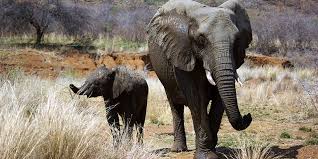
Elephants have traditionally been seen as noble animals

Most people intuitively feel that life is a never-ending struggle between two opposing forces. Some call them good and evil, some call them darkness and light, some have even called them Aryan and Jew. As this essay will examine, the true eternal struggle is none of those things, but rather the struggle between the K and r-selected.

R/K selection theory is a theory within the biological sciences that seeks to explain the various reproductive strategies of different species and subspecies. According to this theory, the selective pressures of the environment drive organisms towards either an r strategy of producing as many offspring as possible in the hope that some survive, or a K strategy of producing few offspring but investing heavily in them so that they have the best chance of survival.

These are other factors involved, such as gestation time and overall life length, but the essential division is a matter of parental investment. Among r-selected species are insects, fish, crocodiles and rodents, who are known for spawning huge numbers of offspring who are mostly left to their own fate. Among K-selected species are whales, horses, elephants and humans, who are known for long gestation times.

R/K selection theory can tell us a lot about the different strategies used by various subspecies. Crucially, they can help explain some of the behaviour of different human subspecies. For instance, a human group that is more K-selected will have fewer children and will invest more time and resources in them while growing up. Among this group, rates of paternal abandonment and child abuse will be lower than among the r-selected.

Developmental psychology tells us a few things about how children will turn out based on differing levels of parental investment in their upbringing. R-selected groups of humans, like their biological analogues, will produce larger numbers of offspring without a great concern for whether they live or die, a strategy which the K-selected groups eschew in favour of heavy parental investment.

If one takes the extreme example of being orphaned, one can observe the deleterious effects of parental neglect on the psychology of the child. Orphans are often hard, cruel people. They are often angry, bitter and resentful. These personal qualities bode extremely poorly for success in the modern industrial world, where people need to work together prosocially to solve complicated goals.

Conversely, it’s apparent from looking at people from stable, happy family environments that they themselves are much more stable and happy. For them, stability and happiness have been normalised; they expect people to treat them well, and they usually treat other people well. These people naturally have a much easier time meeting the challenges of the workforce.

One thing is immediately apparent from following this reasoning – the economic outcomes of the r-selected must necessarily be worse. All other factors being equal, children whose parents were following a strategy of r-selection will produce offspring with less human capital, and they will consequently be less able to lever it into financial capital. These children will find it harder to get jobs, and to keep them, than the children of the K-selected.

A curiosity that becomes evident after a bit more thinking is that these differing reproductive strategies must necessarily lead to differing political outcomes. K-selected people don’t tend to use much in the way of government resources, because their parents tend to invest a lot in them and this tends to lead to economic independence. This naturally tends towards a kind of right-wing, frontiersman’s thinking because economically independent people lose out from greater resource distribution.

By contrast, r-selected people will naturally tend towards the left. Because they have had less investment made in them on average, they are less able to achieve financial independence, and therefore win from greater resource distribution. As far as the interests of the r-selected are concerned, voting for a political ideology that taxes the K-selected then seems like an obvious move.

Evolutionary game theory tells us that this situation cannot last indefinitely. If one thinks about the mathematics of resource distribution, it can be seen immediately that a society cannot function if it contains only r-selected people: if everyone is r-selected, they will keep breeding to the point of ecological collapse. There must be at least some K-selected people for a society to be viable, otherwise there is no-one making an investment in the future.

However, an oversupply of r-selected groups is the inevitable result of a political system that distributes wealth from the K-selected to the r-selected. There comes a level of taxation that will cause K-selected people to abstain from reproducing on account of not being able to provide a sufficiently decent life for their offspring. R-selected people have no such qualms, and will continue to breed under any circumstances. So high taxation, within a society, shifts the reproductive advantage to the r-selected.

It’s impossible to maintain a society where the K-selected are taxed so heavily to pay for the offspring of the r-selected that they cannot afford to have children themselves. Such an arrangement is essentially a form of biological parasitism, and can only lead to an increase in the numbers of r-selected at the expense of the K-selected. Sooner or later, the K-selected will either rebel or become subsumed in the teeming masses of the r-selected.

The fact that such a society is what we have right now means simply that the current situation cannot continue to exist for long. The K-selected, being more capable of long-term thought, are becoming aware that they have essentially been enslaved through the tax-welfare system to subsidise the breeding of r-selected individuals. This can only continue up to a point, because beyond that point society starts losing cohesion, and then the r-selected and K-selected must fight each other for territory.

This is the true eternal struggle, which will run as long as humanity itself does.

*

If you enjoyed reading this essay, you can get a compilation of the Best VJMP Essays and Articles of 2017 from Amazon for Kindle or Amazon for CreateSpace (for international readers), or TradeMe (for Kiwis).

VJMP Reads: David Seymour’s Own Your Future VIII

A Liberal Vision for New Zealand in 2017

This reading carries on from here.

The seventh chapter in Own Your Future is ‘Public Safety’. Here Seymour opens the chapter with one of the non-sequiturs that seems to be characteristic of his style. He talks about visiting a prison, and seeing the downcast faces on the prisoners there. For some reason he lurches directly from this to stating his belief in deterrence being the primary solution to the crime problem.

It’s hard to believe that Seymour is writing this chapter with a straight face. He claims to be tough on the causes of crime – yet his party supports National every step of the way in ripping down the social welfare that people need to get out of the poverty that causes crime.

Indeed, the facade soon slips, and he openly admits that ACT Policy is based around “making the consequences of committing crimes sufficiently bad that people will decide not to do it in the first place.” Within the space of a few sentences he goes from complaining about the cost of prisons to crowing about ACT success in keeping people in prison for longer through their three strikes policy.

From there, Seymour launches into a rant against burglary. Fittingly for a party that values property more highly than people, he wants to add burglary to the list of crimes that involve the three strikes law, the third offence being punished by a minimum three years without parole. Helpfully, he informs us that “The aim [of burglary] is getting more money or goods without working for them or being given them.”

At this point, Seymour serves up a genuinely good idea. Prisoners often find it difficult to return to civilian life after their sentence on account of poor literacy and numeracy, so Seymour proposes that they can get time knocked off their sentences by completing adult reading and maths courses while in prison. Any prisoner who is already educated can get time off for helping to tutor the other prisoners.

This is actually a really good policy, but it’s incredible that Seymour, as a supposedly principled libertarian, doesn’t mention cannabis law reform here. If it costs $105,000 a year to keep a person in jail, we could save tens of millions immediately just by letting cannabis growers and dealers out. He doesn’t suggest this, even though it seems like such an obvious thing for a principled, libertarian party to suggest at this juncture.

This newspaper wondered some time ago if perhaps David Seymour is the biggest coward in the New Zealand Parliament. It’s astonishing that ACT, who barely get more votes than the Aotearoa Legalise Cannabis Party, aren’t willing to support cannabis law reform as their libertarian counterparts everywhere else have done, when the entire country is crying out for it. They could take votes off the Greens and the Opportunity Party simply by offering a right-wing alternative to how to legalise cannabis.

*

If you enjoyed reading this essay, you can get a compilation of the Best VJMP Essays and Articles of 2017 from Amazon for Kindle or Amazon for CreateSpace (for international readers), or TradeMe (for Kiwis).