
The Case For Cannabis: Prohibition Harms Respect for the Law and for the Police

“Fuck the Police, comin’ straight from the underground,” go the lyrics. Many young Westerners can commiserate with the sentiment that the Police are not there to protect and serve them, but rather to harass and abuse them. But why should it be this way? This article examines the corrosive effect that cannabis prohibition has had on respect for the law and for the Police.

In the Netherlands, the occupation of Police officer doesn’t carry anywhere near the same stigma that it does among cannabis users in other Western countries. Not enforcing cannabis prohibition against the will of the people means that Police officers are seen as allies with a shared interest in the peaceful functioning of the community. Dutch people are not afraid to approach Police officers to ask for help or directions.

In other Western countries, by contrast, many young people see the Police as the enemy. It’s hard to have sympathy for someone “just doing their jobs” when doing their job involves conducting a war against their own people on behalf of their paymasters in the Government. Actions taken by Police officers in arresting people for using cannabis, such as the ones described here and here, are acts of evil in the eyes of most people, and certainly so in the eyes of cannabis users.

The first thought of many people, when they get high for the first time, is to immediately realise that they have been lied to about cannabis. It is not a substance that causes psychosis, but the contrary: it’s a medicine that removes it (although it arguably causes psychosis in non-users). Cannabis users gain the ability to go over previous traumatic memories and view them with new, happier eyes. In other words, it’s a healing herb.

This means that the Police are happy to carry out the task of imprisoning people for using a medicine, and for no other reason than that they were told to by their paymasters in Government. This is inherently disreputable conduct. Standing in the way of any sick person accessing their medicine is an act of evil, and if the Police willingly do this for money then it’s inevitable that the populace come to disrespect them for doing so.

There are knock-on effects of this which form a positive feedback loop. Cannabis prohibition deters decent people from joining the Police, because they know that if they do join they will have to enforce an immoral law against innocent people. So the quality of the average Police officer goes down on account of that the most moral and empathetic individuals disqualify themselves from service.

Another effect of cannabis prohibition is that people come to lose respect for the law. Many people, upon realising that cannabis is medicinal, ask themselves: if the government is willing to pass a law as stupid and counter-productive as the prohibition of cannabis, who’s to say that they put any real amount of honest thought into any of the other laws they passed?

This effect is certainly responsible for much of the hard drug use that people engage in. Many people who use cannabis and realise that the law against it is illegitimate come to think that laws against other drugs must also be illegitimate. This leads to them experimenting with those other drugs out of disdain for the law. When those people discover that the other drugs are much less kind than cannabis, it’s too late.

This process needs not stop there either: it can lead to disrespecting other laws, or even the concept of laws. If the Government is capable of passing a law as blatantly crooked and immoral as cannabis prohibition, why assume that any of their other laws are based on reason and logic?

The major undesirable effect of losing respect for the law is that social cohesion falls. After all, the vast majority of laws exist for good reason: violating them causes human suffering. Murder, rape, theft, assault – all of these cause unnecessary misery to other human beings. Cannabis does not, so if there is a law against that, then the law can’t be based on preventing suffering. It must be based on something else (such as corporate control etc.).

There are a large number of medicinal cannabis users, and they are an ever-growing number. Possibly they will continue to grow for some time yet as the medicinal qualities of cannabis become apparent to more and more people. If the Police continue to attack people for using medicinal cannabis, then the level of respect that average people have for the law and for the Police will continue to fall.

Comprehensive cannabis law reform, so that ordinary people were never persecuted for using or cultivating cannabis, is necessary so that the Police and the law can regain the respect of the public.

*

This article is an excerpt from The Case For Cannabis Law Reform, compiled by Vince McLeod and due for release by VJM Publishing in the summer of 2018/19.
Why Science, Correctly Performed, Will Lead To A Belief In God

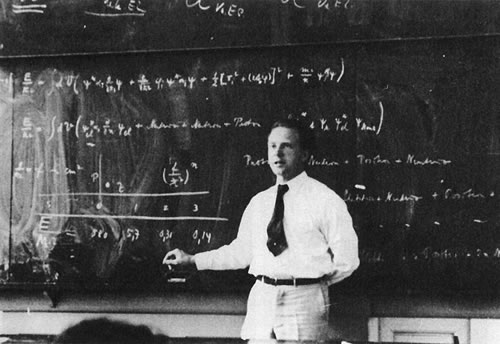
Nobel Physics Prize laureate Werner Heisenberg once said “The first gulp from the glass of natural sciences will turn you into an atheist, but at the bottom of the glass God is waiting for you.” Something that Heisenberg understood, but which most lesser scientists do not, is that a belief in God will arise from doing science correctly. As this essay will examine, atheism is not necessarily the correct attitude to take into the natural sciences.

The scientific method begins with determining what we know for sure, and from there reaching out to what else can be stated with some degree of certainty. For instance, if a particular chemical reaction has transpired in a particular way a hundred times, we can predict with a high level of certainty that it will transpire that way one more time. From there, we can make alterations to our methodology in order to learn more.

What do we know for sure?

As it turns out, there is only one thing that a person can know 100% for sure: that they are conscious. Everything else is necessarily a matter of faith. Every belief, apart from the belief that one is conscious, is a matter of faith, because it is a statement about the material world.

All phenomena within the material world are known to be transitory, and therefore they contain an element of chaos that precludes total understanding of them. One might declare with certitude that “The Sun will rise tomorrow,” but even this is an article of faith – the Earth could be struck overnight by a gigantic comet that reduced the planet to cosmic rubble, thereby proving one wrong.

Although one might be 99.9999% sure about such predictions, one can never truly be certain, in the way that one can be certain that one is conscious. No prediction that depended on the permanence of some aspect of the material world could ever be made with 100% certainty – Heisenberg himself expressed this understanding with his Uncertainty Principle. It is certainly possible to predict that things will change (i.e. that you will die), but it is seldom possible to predict precisely when.

If one doesn’t know for sure that the material world exists, but one knows for sure that consciousness exists, then it doesn’t make logical sense to assume that the material world is the basis of reality. Consciousness can easily create the impression of a material world – it does so every night in our dreams. But there is no scientific explanation, no plausible explanation, that can demonstrate how the material world might develop consciousness. All talk of “emergent properties” is merely materialist dogma, special pleading.

Ockham’s Razor tells us that it’s more likely that consciousness dreamed up the material world and Planet Earth, in much the same way that it dreams worlds at night (an explanation that requires one step), than that the material world spawned from nowhere and evolved to be conscious (an explanation that requires hundreds, if not thousands of steps).

Therefore, there is no reason to assume that the death of the physical body ought to affect consciousness. If the material world is simply a set of phenomena that are dreamed up by consciousness, then there is no reason to assume that the death of one’s physical body ought to affect that consciousness. Therefore, there is no reason to assume that consciousness “disappears” or “dies” or even so much as changes form when the physical body dies.

The real question, then, is: of what does one become conscious upon the cessation of the temporal patterns that corresponded to one’s physical body? It isn’t easy to speculate about such things, because it depends on how laws from this world translate to the next. One thing can be said for certain though: of the next world, one will be conscious.

Ockham’s Razor can also be applied to the realm of biology to support the contention that consciousness is the prime materia.

Evolutionary science tells us very clearly that organisms do not evolve unnecessary appendages. None of limbs, organs, or parts of the brain will come into existence unless there is an evolutionary pressure that favours them. This will only be the case if those limbs, organs or parts of the brain (or early forms of them, at least) confer some kind of selective advantage. Without this advantage, there will be no selective pressure in favour of that appendage, and without that pressure it will not come to exist.

Consciousness confers no survival advantage. The human animal does not need to be aware in order to carry out any of its survival functions. All of the thoughts and calculations that the human brain performs over the course of a human life could just as well be made without consciousness. After all, a computer or android could be programmed to scan its physical environment for the sign of predators or food sources. It wouldn’t need to be conscious to do so.

If consciousness confers no survival advantage, then it cannot have been selected for by natural selection (i.e. by biological or material means). If it was not selected for by natural selection then it cannot be biological and attached to, or arising from, any part of the brain. To the contrary – the material world, including the brain, arises from consciousness.

If consciousness can dream up this world, and if it can dream up the fantastic nightscapes of our dreams, then it can dream up an infinitude of other world, realms and dimensions. And indeed it has – the entire rest of the Great Fractal is currently being explored by consciousness, in an infinitude of realms that you cannot even hope to perceive (yet).

Anything within the Great Fractal (i.e. everything that it is possible to perceive) can be dreamed up and explored by consciousness. Consciousness is infinitely creative. Consciousness can find a way to perceive anything that is perceivable. If it’s perceivable, then there’s a path to it through the Great Fractal from where consciousness currently is.

This effectively means that consciousness is omnipotent: after all, it is capable of conjuring anything from all the permutations of what’s possible.

It is often said that belief in God is a question of faith. Indeed it is. There is no possible way to prove that any being apart from oneself is conscious. All other beings could be conscious like you, or they could be programmable meatbags – and you have no way to prove otherwise. If they are conscious, that consciousness cannot be observed or measured. There is no instrument that will detect its presence or absence.

If consciousness is eternal, has the power to create anything possible, and whose presence in others is necessarily a question of faith, then consciousness is therefore God. It fulfills all of the criteria commonly attributed to God by Epicurus and others. This understanding can be arrived at scientifically, by logic, without need for faith.

*

If you enjoyed reading this essay, you can get a compilation of the Best VJMP Essays and Articles of 2017 from Amazon for Kindle or Amazon for CreateSpace (for international readers), or TradeMe (for Kiwis).

Will the Sixth Labour Government be a One-Term Affair?

The Sixth Labour Government has already made one colossal error in its short time in power, and it looks like it’s set up to make another. Considering that their grip on power was already slim, and that they are relying on the infamously treacherous Winston Peters to maintain it, there’s every chance that the Sixth Labour Government ends up being a one-term affair. This essay discusses the possibility.

There are many forces that threaten to tear apart every party in every Parliament, but within the New Zealand Labour Party some gigantic fissures are starting to become particularly prominent. The decision to raise the refugee quota was a slap in the face to the poorer voters within Labour, and can be counted as a colossal error. The other error will be forced by the referendum to legalise cannabis.

Make no mistake – raising the refugee quota was an error of profound magnitude. The reality of the situation is this: European governments have, for a couple of decades now, placed the needs of foreign “asylum seekers” above those of their own working classes, and the consequences of doing so are clear. Doing so will lead to a return of authoritarian populists, as has been shown with the rise of the Sweden Democrats in Sweden, the AfD in Germany and Matteo Salvini in Italy.

If you are a poor New Zealander, then you are probably a natural Labour voter, but it’s extremely galling to see Labour spending the money that could have helped you on refugees instead. Adding insult to injury, these refugees are usually dumped in working class areas because that’s where the cheapest housing is. The cherry on the top is that any working-class person who protests their demotion in favour of foreign chancers will be denounced by Labour supporters as a racist.

The decision to double the refugee quota will drive a thick wedge deeply between the working-class faction of Labour, who are dependent on a limited pool of government largesse for their personal well-being and who resent more people claiming a piece of it, and the champagne socialist faction, whose primary concern is virtue signalling for the sake of social status and advancement.

This is the current rupture. It’s unlikely that a populist worker’s movement will arise merely on the basis of this, but it will cause some Labour voters to switch to New Zealand First in 2020 and some to abstain.

The inevitable future rupture comes with the cannabis referendum that will likely be held near the end of 2019. Labour will not admit this, but the referendum has the potential to tear the Labour Party right down the centre, for demographic reasons. This is not a concern for either the Green, New Zealand First or National Parties, because the demographic equation does not apply in their cases.

Maori voters are massively in favour of cannabis law reform – this is one of the strongest relationships in all of New Zealand politics. The correlation between being Maori and voting for the Aotearoa Legalise Cannabis Party in 2017 was 0.91. This is much stronger than all of the other well-accepted relationships in New Zealand society, and is immediately apparent if one observes the fact that the ALCP gets twice as many votes in Maori electorates as it does in General ones.

Pacific Islanders, by contrast, are much more lukewarm on the issue. The correlation between being a Pacific Islander and voting ALCP in 2017 was -0.00 (i.e. perfectly uncorrelated), much weaker than the correlation between being Maori and voting ALCP. The reason for this is clear if one looks at the general demographic profile of Pacific Islanders: they tend to be religious, and the religious tend to be prejudiced against cannabis.

Therefore, the Labour Party cannot avoid being divided when the cannabis referendum comes around, and they cannot avoid losing a large swathe of voters because someone will inevitably feel betrayed. Either Maori voters will punish them for being too strict on cannabis, or Pacific Islander voters will punish them for being too loose. So Labour is damned if they do campaign for change and damned if they don’t.

These two errors need to be viewed in their correct context. Many political commentators assume (incorrectly) that, because all political parties generally fall on a left-right spectrum, if a given voter doesn’t like the government of the day then they will move leftward or rightward to cast their vote next election.

The truth, as Dan McGlashan demonstrated in Understanding New Zealand, is that for many Kiwis, the alternative to voting Labour is not voting at all. If you are a working-class New Zealander, and therefore a natural Labour voter, the preferred option when Labour is too right-wing is not voting Greens but abstaining from voting.

As the article linked immediately above describes, the correlation between voting for Labour in 2017 and turnout rate in 2017 was a very strong -0.72. That tells us that as many as half of all natural Labour supporters actually don’t vote. The real challenge for the Labour Party is not convincing the masses that National is bad or even that Labour would be better, but convincing them that Labour would be better enough to make it worthwhile to vote for them, and to not rather abstain by way of protest.

The two major errors discussed in this article might collectively have the effect of significantly reducing support for the Labour Party. They have already greatly disappointed their voters who are dependent on social assistance, and the cannabis referendum will force them to either greatly disappoint Maoris (who will then abstain from voting in 2020) or greatly disappoint Pacific Islanders (who will then abstain or switch to National in 2020). This disappointment might be enough to tip the balance back towards National in 2020.

*

If you enjoyed reading this essay, you can get a compilation of the Best VJMP Essays and Articles of 2017 from Amazon for Kindle or Amazon for CreateSpace (for international readers), or TradeMe (for Kiwis).