
Category: new zealand
Should New Zealand Legalise Cannibalism Out of Respect For Maori Culture?
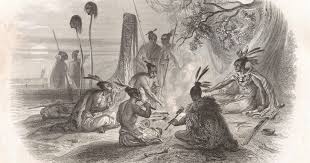
In recent years, people have been asking hard questions about the effects of Western colonisation on the New World. Many moral values that were taken to be universal are now being re-evaluated in the new light of Western oppression. Eventually, New Zealand will need to ask itself: were the British wrong to abolish cannibalism?
In British culture, there is a massive taboo around cannibalism. The act is considered even lower than barbaric, more befitting of an animal than of a human being. Famous cases such as the Sawney Bean family horrify British people even to this day. The taboo can be traced back at least as far as Homer and is universal in the West.
In Maori culture, before British contact, there was no such taboo. Cannibalism was rife. The act of cannibalism was, as it has been all around the world, an extremely effective black magic ritual, in which the cannibal convinced themselves that they had absorbed the power of their victim. This ritual is effective for the simple reason that it increases the ego of the cannibal and makes them more formidable in the realm of iron magic. Moral considerations didn’t come into it.
So a couple of questions have to be asked: if cannibalism was an accepted part of Maori culture (in that it was practiced by many tribes over the whole country), did the British really have the right to suppress that particular cultural expression? And, if they didn’t have that right, are we obligated to re-legalise cannibalism out of respect for Maori culture?
After all, cannibalism may have been an effective method for keeping the tribe strong. Because it was mostly the old, children and those defeated in battle who got eaten, it could be argued that this practice served to keep the Maori genepool free of weakness. If so, who are white people to impose their own moral framework over a useful practice?
The major objection to cannibalism is that it is almost never consensual, and arguably could not ever be with someone of right mind, for the simple reason that it goes against basic self-preservation instincts. Getting cannibalised in New Zealand usually meant that one’s brains were first dashed out with a patu or taiaha, and it’s hard to legalise this for obvious reasons.
Another major objection is that many Maori tribes actually opposed the practice of cannibalism, and were happy to welcome the British settlers, who not only also opposed it but who had muskets to make their opposition count. The Ngati Porou of the author of this piece is one such example. Thus is could be argued that cannibalism was never a universal Maori practice and therefore not an integral part of the culture.
However, these objections have to be considered in the context of modern technology. As Sir Apirana Ngata said: “Ko to ringa ki ngā rakau a te Pāhekā” (“Your hands to the tools of the Pakeha”). Well, now ngā rakau a te Pāhekā include machines that can grow animal flesh in laboratories, and cheaply enough so that a lab-grown steak can be produced for $20. It won’t be long until we can cheaply grow human flesh in a lab.
If human flesh can be grown in a laboratory, this would get around the problem of people having to be killed into order for cannibalism to be possible. This would get around the moral objections so far presented against the legalisation of cannibalism. If there are then no remaining objections to legalising cannibalism, one is forced to conclude that the balance of liberty ought to fall on the side of established precedent.
Because cannibalism has been practiced in these isles for much longer than English has been spoken, it seems natural to conclude that it ought to take precedent over British settler values like not practicing cannibalism. Therefore, the New Zealand Government ought to take action that clearly demonstrates its respect for Maori culture, and make the practice of cannibalism legal.
*
If you enjoyed reading this essay, you can get a compilation of the Best VJMP Essays and Articles of 2017 from Amazon for Kindle or Amazon for CreateSpace (for international readers), or TradeMe (for Kiwis).
Understanding New Zealand: Turnout Rate in 2017

The turnout rate in the 2014 General Election was 77.9%, and at the time of the 2017 General Election this had climbed to 79.3%. This is not a huge change, but care must be taken not to be misled. Just because the overall turnout rate was about the same does not mean that the turnout rates of the various demographics within New Zealand society all remained the same. This article examines the deeper trends.
The most striking thing about the turnout rates in the 2017 General Election is that, despite the alarm about the huge numbers of immigrants New Zealand has absorbed in recent years, the election marked a sharp increase in turnout rate among the New Zealand-born.
The correlation between being New Zealand-born and turnout rate became much more positive from 2014 to 2017, from a significantly negative -0.24 to -0.10. This is arguably the story of the election and explains how we ended up with a nationalist party holding the balance of power.
Among the four major parties, the correlation with turnout rate and voting for a particular party remained very similar from 2014 to 2017 for National (0.76 to 0.75), Labour (-0.70 to -0.72) and the Greens (0.28 to 0.27). These slight falls were balanced by a fairly strong increase for New Zealand First (-0.09 to -0.02).
This doesn’t necessarily mean that there was a swing towards New Zealand First – it just means that the sort of person who is a New Zealand First supporter was more likely to vote this time around. Who they actually voted for requires further analysis.
If we look at the ethnic demographics, we can see that the correlation between being of a certain race and turnout rate between 2014 and 2017 strengthened for Kiwis of European descent (from 0.71 to 0.81) and for Maoris (from -0.75 to -0.68). These are the two ethnic groups most likely to support New Zealand First.
Pacific Islanders and Asians, who were more likely to be born overseas, were less likely to turn out to vote. The correlation between being a Pacific Islander and turnout rate was -0.58 in 2017, out from -0.44 in 2014, which makes them now almost as disenfranchised as Maoris. The correlation between being Asian and turnout rate was -0.22 in 2017, out from -0.10.
One reason for this is that even though large numbers of immigrants have turned up in New Zealand recently, many of these newcomers don’t seem to feel much of a connection with the country and so are not motivated to vote.
Where it gets complicated is that the correlation between median age and turnout rate increased from 2014 to 2017, from 0.77 to 0.79. This means that the people who voted this time around were older, and older people tend to vote National – but these voters did not vote National.
The correlation between being aged 20-29 and turnout rate became a lot more negative from 2014 to 2017, from -0.21 to -0.26. The correlation between being aged 30-49 and turnout rate followed a similar pattern, weakening from 0.21 to 0.13. The predictable result of this is older people voting more, and indeed we can see that the correlation between being aged 50-64 and turnout rate increased from 0.70 in 2014 to 0.73 in 2017, while the correlation between being aged 65+ and turnout rate increased from 0.64 in 2014 to 0.67 in 2017.
Unsurprisingly, then, the correlation between being on the pension and turnout rate increased from 2014 to 2017 (from 0.50 to 0.56). In fact, all of the benefit types apart from the student allowance also strengthened. The correlation between being on the invalid’s benefit and turnout rate strengthened from -0.53 in 2014 to -0.43 in 2017, and the correlation between being on the unemployment benefit and turnout rate strengthened from -0.76 in 2014 to -0.72 in 2017.
This is supported by the fact that voters were more likely to be New Zealand-born in 2017, because there is a significant correlation between being New Zealand-born and being on a benefit.
More information comes from noting that several correlations between belonging to privileged demographic categories and turnout rate decreased from 2014 to 2017. This applied to people working in information media and telecommunications (0.06 to -0.01), financial and insurance services (0.08 to 0.01) and professional and scientific services (0.28 to 0.23). Also, the correlation between having never smoked tobacco and turnout rate fell from 0.35 in 2014 to 0.25 in 2017.
On the other hand, the correlations between more working-class occupations and turnout rate increased, most strikingly so in the occupations that involved the most personal contact. The correlation between working in a particular occupation and turnout rate increased from 2014 to 2017 in the case of education and training (-0.10 to -0.03), healthcare and social assistance (-0.04 to 0.05), arts and recreation services (0.04 to 0.09) and hospitality (-0.09 to -0.01).
A poorer cross-section of the population turned out to vote in 2017, which is another clue as to where Labour won. All of the correlations between being in an income band below $70K and turnout rate strengthened from 2014 to 2017, and all of the correlations between being in an income band above $100K and turnout rate weakened from 2014 to 2017. The correlation between being in the $70-100K income bracket and turnout rate remained exactly the same, at 0.38.
Another striking correlation is that between being part-time employed and turnout rate, which rose sharply from 0.45 to 0.58 between 2014 and 2017. This, coupled with what we know about income brackets and turnout rate, suggests that it was the people on the margins between doing well and doing poorly who shifted from National to Labour. It may be that these people saw the promise of the country being lost, or felt that they missed out on all the loot of the last nine years.
Perhaps the clearest sign of where National lost the election comes from the correlations with the flag referendum. The correlation between voting National in 2017 and voting to change the flag in the second flag referendum was an extremely strong 0.93, which tells us that it was pretty much only National voters to wanted to change the flag to the National Party version.
These National Party supporters, being generally well enfranchised, have very high turnout rates. The correlation between turnout rate in 2014 and voting to change the flag was 0.75, exactly the same as the one between turnout rate in 2017 and voting to change the flag. However, the correlation between turnout rate in the second flag referendum and turnout rate in the general election increased from 2014 (0.86) to 2017 (0.92).
This suggests that many of the new people who voted in the 2017 General Election but did not vote in the 2014 one were Labour supporters who came from generally National-supporting demographics (i.e. wealthy but not too wealthy, old but not quite a pensioner, white, employed and part-time employed, male). Had they been National supporters, the correlation between turnout rate and voting to change the flag would have increased from 2014 to 2017, because the vast bulk of people who wanted to change the flag were National supporters.
We can say that it was here that the centre, and thereby the 2017 General Election, was lost by the National Party.
*
The second edition of Understanding New Zealand, by Dan McGlashan, was published by VJM Publishing in the summer of 2017/18. It contains all the analysis of Kiwi voting patterns and demographics you could ever want!
New Zealand First Risks Destruction If It Opposes Medicinal Cannabis Reform
The New Zealand First Party won 8.7% of the votes in the 2014 General Election, which entitled them to 11 Parliamentary seats. Strategic blunders saw them fall to 7.2% of the vote in 2017, still above the 5% threshold but precariously so. New Zealand First is at risk of committing another strategic blunder by opposing Chloe Swarbrick’s Medicinal Cannabis Bill, and this article will explain why.
Dan McGlashan’s Understanding New Zealand provides us with an explanation for what happened here. We can see that the correlation between being Maori and voting New Zealand First was initially very strong, at 0.66 in 2014, when they did very well in the Maori seats. By 2017 the strength of this correlation had fallen to 0.38, as a large proportion of that Maori support abandoned the party.
Between 2014 and the 2017 General Election, New Zealand First came out in opposition to those same Maori seats in which they had done so well. This was a massive error because Maori people are extremely reluctant to cede any kind of political power to the Crown, for the understandable reason that when they have done so in the past, they ended up losing heavily from it.
New Zealand First were punished at the ballot box in 2017, losing 1.5% of their vote, mostly from Maoris who switched back to to Labour.
Between 2017 and the 2020 General Election, we may see another fall in New Zealand First support, and for similar reasons, only this time it may be catastrophic. The difficulty is that Winston Peters risks betraying the wishes of many of the people who support their party by opposing Swarbrick’s Bill.
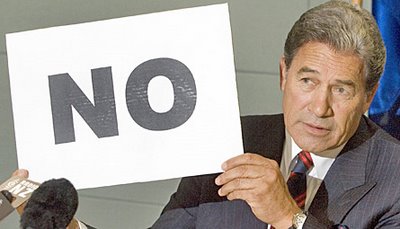
On the Bill, Peters is quoted as saying “It goes far too far. There’s no restrictions at all, it’s random, it’s haphazard, it’s free for all.” Whether this means New Zealand First will support the Bill through its first reading or not is unclear, but if they vote to dismiss the Bill they run the risk of self-destruction, because they will alienate many of their core supporters.
Invalid’s beneficiaries are heavy supporters of New Zealand First – the correlation between being on an invalid’s benefit and voting New Zealand First in 2017 was 0.47, which is moderately strong. Many of these invalids have found medicinal relief in cannabis, which is reflected in the strong correlation of 0.79 between being on an invalid’s benefit and voting Aotearoa Legalise Cannabis Party in 2017.
These stats suggest that there are a large number of cannabis-using invalids who voted New Zealand First at the last election, and further New Zealand First opposition to cannabis law reform risks alienating these people further.
Although New Zealand First does get more support from older people than younger ones, this is nowhere near as pronounced as most people think it is. The correlation between median age and voting New Zealand First in 2017 was only 0.26, in comparison to the correlation of 0.78 between median age and voting National in 2017.
Therefore, concern about the opinions of elderly Boomers with regard to cannabis ought not factor too heavily in New Zealand First’s calculus. The vast majority of young people support proper cannabis law reform, and New Zealand First risks tarnishing their image among these voters through their conservatism on this issue.
Perhaps the biggest risk that New Zealand First runs by opposing this medicinal cannabis bill is through losing the support of the New Zealand-born, who are not only the biggest New Zealand First supporters by far but also the biggest cannabis law reform supporters by far. The correlation between being New Zealand-born and voting for New Zealand First in 2017 was 0.54, which is moderately strong, but the correlation between being New Zealand-born and voting for the Aotearoa Legalise Cannabis Party in 2017 was 0.73.
Cannabis use is an intrinsic part of Kiwi culture, and it’s not going anywhere. If the New Zealand First Party really wants to make good on its pretensions to represent Kiwis and our culture, they need to accept the fact that we really enjoy using cannabis and are going to keep doing it.
New Zealand First might be tempted by conservative instincts to oppose this bill, but you can’t piss directly in the face of your own supporters in that way and expect that they will turn out to support you when you ask for it at election time. Maoris, young people and invalids are all heavily impacted by our ludicrous cannabis laws, and young Maoris doubly so. They have been crying out for relief, and a recreational alternative to alcohol, for decades.
New Zealand is already 22 years behind California on the medicinal cannabis issue, and New Zealand First is causing this country to fall further and further behind, mostly at the expense of their own long-term voters. If they don’t keep up with the state of play and research in other jurisdictions they risk destruction at the hands of the voters.
*
If you enjoyed reading this essay, you can get a compilation of the Best VJMP Essays and Articles of 2017 from Amazon for Kindle or Amazon for CreateSpace (for international readers), or TradeMe (for Kiwis).