Kieran Read Quits Rugby For Cricket, Citing Head Injury Concerns

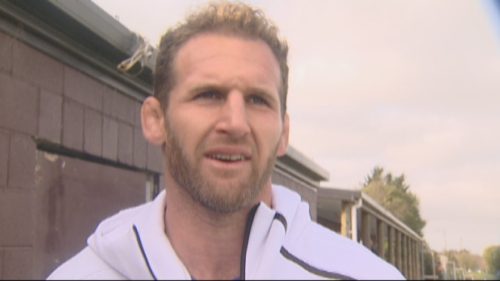
Kieran Read speaks to the media outside his Papakura home this morning

New Zealand and the rugby world have been shocked this morning by the announcement that Kieran Read is retiring from rugby union effective immediately, and has set his sights on making the Black Caps squad “within the next 18-24 months”. Read, who has 108 caps for the All Blacks, told the nation this morning that several years of minor knocks to the head have made him decide that enough is enough, and he has been forced to make decisions with his long-term wellbeing in mind.

Read, who played for the Crusaders as well as the All Blacks, is convalescing from back surgery for a slipped disc. Spending this time with his family, including his two young children, gave him an appreciation for the long-term risks of brain damage from repeated blunt force trauma to the head.

“Rugby is a great game and always will be a great game, and I have had a great career,” Read explained to a media scrum outside his home this morning. “But I have also had a very long career, and a career in an age where rugby players are heavier and faster than ever before. I’ve taken a number of blows to the head in my dozen years as a professional rugby player, and the past few weeks have made me realise the importance of being there for my own kids, in the future, in good mental health.”

Reading from a prepared statement, Read mentioned the recent news coming out of the NFL about the long-term effects of repeated head trauma, and how this, along with increased attention being given to the issue by way of Head Injury Assessment protocols, changed his previously casual attitude. Recent research appears to be suggesting that up to 40% of former NFL players suffer from brain damage – and they have helmets. Rugby players don’t tackle with the head, but rugby is still a collision sport.

“Spending time playing with my kids, and feeling headaches like I do, forced me to ask whether it was necessary to risk further brain injury. I have given my all for the All Blacks and for the various teams I have been involved with, and on balance have decided that it’s time to put my family and my head first.”

Speaking exclusively to VJM Publishing’s Dan McGlashan, Read says that he’s put out the feelers to New Zealand Cricket but isn’t expecting miracles. “I’ve spoken to Hess [Black Caps coach Mike Hesson] and he’s made clear to me that there are no guarantees about selection. I’ll be judged on my merits, primarily as a batsman and initially for my Papakura club side, and we’ll take it from there. No guarantee about any ‘X-Factor’ weighing in my favour like Jeff Wilson got.”

Read was a useful cricketer in his high school days, going as far as representing New Zealand in Under-17 cricket, but felt forced to make the decision to focus solely on rugby as a demanding professional career loomed. In an age of cricket where the importance of defence is minimised in favour of massive hits, the 6’4″, 111kg Read stands in the same category as Chris Gayle and Kevin Pietersen as a man who can swing the willow extremely hard.

It’s not yet known who will replace Read as All Blacks captain, but the front runners are believed to be Crusaders captain Sam Whitelock, who has taken more of a leadership role in recent years, and openside Sam Cane, who captained the All Blacks during their 2015 Rugby World Cup match against Namibia.

*

Dan McGlashan is a regular contributor to VJM Publishing and is the author of Understanding New Zealand.


Should There Be A Ministry of Men’s Affairs?

Life is so much harder for men in New Zealand that they kill themselves at almost three times the rate of women

Many people were shocked, and many were not, by Julie Anne Genter’s comments this week about old white men. Speaking to Cobham Intermediate School pupils, Genter made the point that some of these old white men “need to move on and allow for diversity and new talent.” These statements were made in her capacity as Minister for Women, but if you look at the statistics, it seems like there’s more need for a Minister for Men.

The reason for a Ministry of Women’s Affairs was ostensibly to close the gaps between the well-being of women and men. Since the advent of Abrahamic religion in the West, women have been forced into a subservient role, being forced to take the blame for the fall of man as well as for invoking the horror of Nature. Biblical passages such as Timothy 2:12 instructed Christendom that “I do not permit a woman to teach or exercise authority over a man; she is to remain quiet.”

Ever since these male supremacist religious cults invaded the West, our women have been forced to endure structural abuse. Divorce was banned, forcing women to endure permanent relationships with violent men. Prostitution was banned, denying women natural opportunity for economic advancement. Abortion was banned, forcing women to carry unwanted children to term or else risk a back-alley abortion from a “doctor” with no licence.

By any objective measurement, women had the worst of it for a very long time, and, when we realised this, we tried to make up for it with things like feminism and Ministries for Women’s Affairs. What we’ve been slow to realise is that, now that advantage is mostly a matter of obedience to the political, educational and commerical authorities, women have it better than men in many regards.

Most obviously, women have a much easier time of things in academic settings. Page 38 of the document linked in this paragraph demonstrates that women get better grades in literacy, and page 42 shows that they also get better grades in numeracy. This disparity is even worse for men at university level, which New Zealand women are 40% more likely to participate in.

When men had higher university participation rates than women, the media couldn’t keep quiet about how sexist and evil this state of affairs was. Indeed, this was one of the stated reasons for bringing in a Ministry of Women’s Affairs in the first place. An inequality of outcome in terms of education and gender was simply impermissible, immoral, outrageous.

In 2015, 527 New Zealanders killed themselves, of who 384 were men (72.8%). That means for every Kiwi woman who feels so rejected by society that she is compelled to take her own life, there are almost three Kiwi men who feel the same way. This is greater than the gap between Maori and non-Maori suicide rates, which is itself considered a large enough gap to be a national tragedy that demands immediate action (indeed, there is a Ministry of Maori Development).

So if society is so bad for Maori people that they need their own Ministry, as evidenced by suicide rates, and if society was so bad for women that they needed their own Ministry, as evidenced by tertiary participation rates, then surely there is sufficient cause to say that New Zealand men need someone looking out for them as well?

It’s absurd to claim that women are disadvantaged compared to men because men earn 20% more, when at the same time men are killing themselves at almost 300% the rate of women. It’s doubly absurd when it’s considered that women are benefitting immensely from the way that the pension system is set up, at the expense of predominantly male workers.

If the experience of being a man in New Zealand is so much less pleasant than the experience of being a woman that it carries triple the risk of suicide, it’s time to take steps to redress the balance by instituting a Ministry of Men’s Affairs to make up for all the privilege that women hold.

*

If you enjoyed reading this essay, you can get a compilation of the Best VJMP Essays and Articles of 2017 from Amazon for Kindle or Amazon for CreateSpace (for international readers), or TradeMe (for Kiwis).

Henry Nicholls is Legitimately Good – Time to Accept It

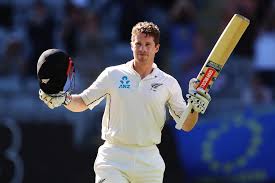
Hammerin’ Hank Nicholls is inviting comparisons to Andrew Jones with his bulldog tenacity, scoring solid runs despite an ungainly style

Fewer Black Caps players in recent times have come in for more stick than Henry Nicholls. Frequently derided as a passenger, many commentators have been calling for Hesson to get rid of him for good. This article will argue that not only is Nicholls a legitimately good batsman already, but we ought to accept that he’ll be in the Black Caps for a very long time.

Black Caps supporters have been spoiled rotten in recent years. We have Kane Williamson averaging 51, Ross Taylor averaging 47, and a bunch of players like Tom Latham, Jeet Raval and BJ Watling averaging around 40. It’s probably our best ever batting lineup, even surpassing the Wright-Jones-Crowe one of the late 1980s and early 1990s.

It’s so good that we’ve failed to appreciate the quality record that’s slowly being established by our incumbent No. 5, Canterbury’s Henry Nicholls. After 17 Tests, Nicholls has 837 runs at 38.04 – not spectacular on the face of things, but if we look deeper there are some very encouraging trends in those numbers, not least an average of 49.25 over his last ten Tests.

The vast majority of quality international batsmen don’t hit the ground running, as it takes a while to adapt to the top level of the game. Let’s contrast Nicholls’s returns after 17 Tests to the great Kiwi batsmen: Kane Williamson, Ross Taylor, Martin Crowe et al. After 17 Tests, Williamson averaged a mere 29.80; Crowe 24.88. Taylor did not get thrown in the deep end as young as Williamson and Crowe, but after 17 Tests he was barely ahead of Nicholls, at 39.46.

Tom Latham’s average after 17 Tests was also 39. All this tells us that, even by way of comparison to New Zealand’s best, Nicholls stacks up pretty good. Some might criticise his style, but he’s scoring the runs. Leaving aside the overall numbers, Nicholls has succeeded in playing a number of excellent innings in tough conditions.

His first excellent innings may have been the 116 he scored in the Second Test of South Africa’s 2017 tour to New Zealand. Nicholls came in at 21/3 after the dismissal of Neil Broom and scored a counter-attacking 116. The Black Caps still lost, but Nicholls’s maiden Test century came against incredibly skilled bowling that had already done early damage.

Less heralded is Nicholls’s 76 in this Test against South Africa in South Africa. The Black Caps lost heavily – the reason why Nicholls’s effort is not feted – but it would have been a humiliating loss were it not for the 76 he scored in the Black Caps’ second innings, coming in at 7/4 after Williamson had edged a cut to slip. 76 runs might not be many, but coming in on a tricky wicket against superb bowling when his team’s top order had been obliterated, it was an innings of exquisite skill.

The crowning work was of course this week’s 145* against James Anderson and Stuart Broad, on a pitch where England had been dismissed for 58 and no other batsman had passed 33 aside from Kane Williamson. Anderson came into the match as the world’s No. 1 Test bowler and with conditions expected to suit him, but neither he nor Stuart Broad succeeded in dismissing the Black Caps No. 5.

If one considers these innings in tough conditions alongside Nicholls’s generally excellent shot selection, it seems like he has all the tools, including the most important one – the right mind for the game. His numbers might not be outstanding, and no-one’s claiming that he’s going to be another Williamson, but if he keeps improving at this rate he could fashion an excellent career.

It’s time for Black Caps fans to accept that Henry Nicholls belongs alongside Williamson, Taylor, Latham and BJ Watling as an established batsman in this Black Caps Test side.

*

If you enjoyed reading this essay, you can get a compilation of the Best VJMP Essays and Articles of 2017 from Amazon for Kindle or Amazon for CreateSpace (for international readers), or TradeMe (for Kiwis).