
How Mass Immigration Leads to The Loss of Freedom

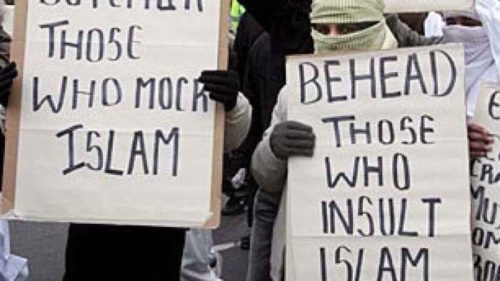
The right to free expression is not a universally held cultural value, and can only be maintained as long as a sufficient proportion of the population support it

Historically speaking, the main reason why people have resisted mass immigration into their territories is because it usually leads to a loss of freedoms, in particular freedom to practice one’s culture. In recent decades, Westerners have been told that mass immigration to the West would not cause them to lose freedoms, but this turned out to be lies. This essay will examine how immigration, especially from undeveloped countries, leads to a loss of freedoms for the host population.

For people to have any freedoms at all they have to value those freedoms highly enough to assert them. If they cannot assert them, the ruling class will take them away. It can be seen in every society that, in order for people to value those freedoms highly enough to assert them in the faces of the ruling class, they have to share them in common, enough so to call it a culture.

Without a shared belief in the value of certain freedoms, they cannot be maintained. If only part of a population believes in a freedom, then the ruling class can ban it and not enough of the population will believe in it to assert it. Therefore, it will be lost. We can see, then, that freedoms are lost as soon as the proportion of the population that supports them falls below a certain level.

For example, naturally speaking, people are free to walk the land. There is no private property in a state of Nature, and originally there were no prohibitions on where one could go. Over the past 5,000 years, as something called civilisation got invented, this freedom was eventually stripped from the people by rulers who commanded men of iron able to use violence to drive undesired people away from certain territories.

The Swedes, possibly on account of the hard-won lessons of solidarity learned by their Viking forebears, were not willing to lose their right to walk the land freely. Thus, they asserted that right in the face of enclosures, and won what they call the allemansrätt (this was known as the Freedom to Roam back when Anglos used to assert this right). This means that Swedish people have the right to walk through property owned by other people as long as they do not come within sight of the main house (and some other restrictions).

Immigration is not likely to threaten allemansrätt anytime soon, but it is threatening (or has already destroyed) other freedoms, all over the West.

New Zealand Federation of Islam Associations president Hazim Arafeh voiced his opposition to a talk by journalist Lauren Southern in Auckland earlier this month, leading to it effectively getting banned by Auckland mayor Phil Goff’s refusal to approve a venue for it. Arafeh, in his attempt to get the talk banned, stated that “I don’t think insulting Muslims comes under free speech, that’s an abuse of freedom of speech.”

As everyone who actually values free speech knows, free speech is precisely what that is. The cultural value of free speech entails that the responsibility is on the listener to not chimp out when they hear something provoking. The reason why this is important is that it makes it possible to talk about things like rational human beings instead of keeping quiet out of fear, because this leads to resentment and then violence.

Satire, windups and pisstaking necessarily come under this umbrella, as do insults and criticisms of governments and religions.

Free speech acts as a safety valve that releases political pressure when the ruling class starts veering off path. An incompetent ruling class will always try to crack down on criticism rather than accept that they have been incompetent, and for this reason free speech must be ardently defended. The alternative is that ruling class corruption and incompetence becomes entrenched.

It is because the Anglosphere values free speech that we have never had a fascist or communist dictatorship come to power in any of our countries. None of Britain, America, Canada, Australia or New Zealand have ever had a totalitarian government, for the reason that our right to free expression enables us to criticise the bastards, and thereby to organise opposition, before they fuck everything up. Thus, no Hitlers, no Stalins, no Pol Pots, no mass starvation of tens of millions.

Arafeh, not being a Kiwi, doesn’t understand any of this. It’s not important to him. He will not defend it.

Islamic culture forces women to cover up because it considers those women responsible for the urges that their appearance might induce in men. The onus of responsibility is not on the Muslims, but on women, who are inferior, to moderate themselves. By the same token, the culture forces people whose speech it disapproves of to keep their mouths shut because it considers those people responsible for the violent urges that their speech might induce in Muslims.

The onus of responsibility is on us Westerners, as inferior, to moderate ourselves. We can see from what happened with Lauren Southern that Muslims are forcing us to shut our mouths in the same way they force their women to cover up – under the implicit threat of violence.

It’s obvious that if we had not allowed any Muslims to immigrate to this country, Arafeh could not have written a letter to Goff “on behalf of 50,000 to 60,000 Muslims in New Zealand”. It’s equally obvious that if we let in another 50,000 to 60,000 Muslims, we will lose even more rights, because we can see this happening in other countries that have made the mistake of opening themselves to mass Muslim immigration.

Multiculturalism necessarily means that the only freedoms that remain are universal values that are supported by all people. What Westerners have failed to understand is that free speech is not a universal value. Most people on this planet are pathetic slave-creatures, not educated citizen-orators that can be expected to assert their rights through reasoned debate.

In short, we’re losing our freedom to speak freely because we’ve let in a lot of people who do not value free speech, and this is just one example. As shown by Europe, if we continue to let these people in, our rights to free expression will be further curtailed, and then the rights of people to walk certain neighbourhoods free of molestation will be curtailed, and then the rights of women to walk in public without covering up will be curtailed.

As long as banks continue to demand mass immigration for the sake of propping up house prices, gutless politicians will continue to placate those making the threats of violence for the sake of appearing to maintain order. We need to take care that our immigration policies don’t end up robbing us of our hard-won rights of free expression.

*

If you enjoyed reading this essay, you can get a compilation of the Best VJMP Essays and Articles of 2017 from Amazon for Kindle or Amazon for CreateSpace (for international readers), or TradeMe (for Kiwis).

VJMP Reads: David Seymour’s Own Your Future VI

A Liberal Vision for New Zealand in 2017

This reading carries on from here.

The fifth chapter in Own Your Future is ‘Welfare’. Here Seymour opens with what appears to be sympathy for the disadvantaged, telling a story about the children without shoes or food at Raumanga Middle School, before white flight took all the pakeha kids (including him) elsewhere. This doesn’t last long. Within a few paragraphs, he’s fuming about how welfare “saps the will to live”.

Seymour then tells a story about how Michael Joseph Savage, when he carried a table through the front door of the first state house in New Zealand, put that table down immediately after passing through that door. It’s not clear why this story is told here, because it doesn’t fit the rest of the section. It seems to simply fit Seymour’s narrative that anything done to help people is bad.

Like a 21st-century echo of Ebenezer Scrooge, Seymour decries the entire welfare system, going all the way back to 1937. The problem isn’t so much the usual right-wing canards of welfare queens and benefit fraudsters, the problem is that the welfare system is designed to “allow the disadvantaged to live full lives participating in equal footing in the community”.

In this section, the brutal and dishonest reasoning at the heart of neoliberalism is laid bare. Seymour makes a list of all of the problems in society and then blames them all on welfare, without providing any evidence or even so much as an argument that the two are connected. He lists a number of statistics about people on welfare, but provides no comparison to other times and places so that we can judge if those numbers are angstworthy.

Without a hint of irony, Seymour writes that “A Treasury report on life outcomes showed that at every stage of life, having parents relying on benefits predicted worse outcomes for children.” The fact that he conflates being on a benefit, rather than poverty, with being the cause of these poor outcomes, is the central error in Seymour’s reasoning, in the ACT Party’s reasoning, and is why the party can never and will never succeed electorally.

He talks about being on welfare as if it was a simple choice, and the man writing that is every bit the man writing about the horror of getting a tennis ball to the head. Seymour comes across as so out of touch that it’s almost comical, such as when he argues against the idea that “welfare is good for the people receiving it”.

The idea that welfare is bad because it makes people lazy is a fringe belief of the American Republican Party, considered gauche even by them, but it’s front-and-centre here. “Being out of work harms people, and more importantly it harms their children,” Seymour wails, crocodile tears spurting. One can easily imagine him as the overseer of a cotton plantation in the antebellum South, cracking the whip for his wealthy employers.

In an outburst of raw neoliberalism, Seymour quotes John Key when it comes to describing Working For Families as an example of “Communism by stealth”. Seymour goes as far as suggesting that not offering tax cuts when possible is equivalent to totalitarianism by stealth. Not ashamed of absurdity, he even accuses National, who slashed the welfare system so badly that we now have the developed world’s highest youth suicide rate, of not being opposed to Communism.

Laughably, Seymour claims here that ACT supports greater access to mental health care. Anyone who has been a mental health patient for long will know that the Fifth National Government slashed funding and access to mental health care, going as far as cutting benefits to severely mentally ill people – and the ACT Party supported them every step of the way. This is why there was a very strong correlation of -0.66 between voting ACT in 2017 and being on the invalid’s benefit (c.f. Dan McGlashan’s Understanding New Zealand).

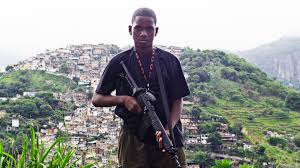
It’s most notable that nowhere in this essay does Seymour mention the supply side of the welfare question. At no point does he touch on the poor wages in New Zealand, and at no point does he suggest that Kiwi employers ought to do their bit by offering a fair wage. Employers are completely exempt from playing any role in motivating workers to work by offering them a wage that they can live on or buy a house with.

*

If you enjoyed reading this essay, you can get a compilation of the Best VJMP Essays and Articles of 2017 from Amazon for Kindle or Amazon for CreateSpace (for international readers), or TradeMe (for Kiwis).
The Six Stages of Societal Collapse

Coming to a society near you: Brazilianisation

As Plato wrote over 2,300 years ago, societies tend to follow a predictable arc of decline after they are established. After being founded by philosopher-kings, states tend to degenerate as ever-greedier, stupider and baser people come to power. This essay charts the collapse of societies into six stages, each stage represented by a society from the world of 2018 A.D.

These six stages can be chunked into three larger stages when viewed on another level. In the first of these, the people help the Government and the wealthy and are helped in return. In the second two stages, the people are indifferent to the Government and the wealthy, and receive indifference in return. In the latter two stages, the people and the Government and the wealthy actively fight each other.

The initial stage of society can be called the Japan stage. South Korea is also here. In this stage, there are extremely high levels of solidarity. For a member of such a society, the entire nation might feel like one large extended family, where every new person you meet is like a cousin. Here there are no nations-within-nations made up of foreigners.

When a population is at this level, they will not vote for extremist parties, and the average citizen will hold a lot of faith in what they read in the newspapers and in the proclamations of Government. Political discussion is widely conducted without violence. People in these societies tend to walk around with smiles on their faces, unafraid of the future.

Europe was at this level until the turn of the century, when a combination of pressure from business interests looking for cheap labour and Marxist ideologues looking to destroy the nation state for the sake of a global command structure led to mass importation of Africans and Muslims. Many European states did not need minimum wage laws then, because solidarity was so high.

The first stage of collapse can be called the New Zealand stage. At this stage there are so many minorities and competing interests that social cohesion is beginning to falter. Big cities no longer feel like part of the nation but more like a patchwork of racial ghettoes. There is no longer a typical appearance for someone from this society, because in order to have typical anything you have to have common bonds, and those have been lost.

‘Solidarity’ as a concept is starting to be forgotten. People start to forget what it was that led to high levels of solidarity in the first place, and it’s simply assumed that the current levels will continue indefinitely. Europe is now at this stage. Major cities such as Paris and London are now so diverse that there are areas where natives cannot freely walk without being harassed, sometimes violently.

The population in this stage is split between those who benefit from the small amount of corruption and those who do not. Usually this split happens along generational lines, with an elderly group who were raised in good times thinking things are still good, versus a young group who are more aware of the state of decline. When this younger, more cynical group grows up to take power, this usually leads to the next stage of collapse.

The second stage of collapse is the America stage. At this stage, not only are there a lot of minorities but there is a waning sense of everybody being on the same team. People care more about money, and about making money, than about the nation. Actions that benefit the tribe, or the self, at the expense of the nation are taken without a second thought. Nations-within-nations are common, the “average American” merely a good-natured rube to be exploited.

At this stage, it’s possible for large moneyed interests to import millions of cheap labourers and to have the population accept it under the assumption that it’s “good for business”. It’s inevitable that the national myth will get changed at this point, from being a nation tied to an ethnicity to “a nation of immigrants”, or something else that suggests an extreme level of egalitarianism (and even fewer common bonds).

Here, people are aware of the lack of solidarity but feel powerless to do anything about it, because the term ‘solidarity’ has itself taken connotations of Communism and totalitarianism. The seeds for the next stage of collapse are sown when people stop even pretending that they belong to a coherent society, and it starts to become tacitly accepted that it’s every race, ethnicity or tribe for itself.

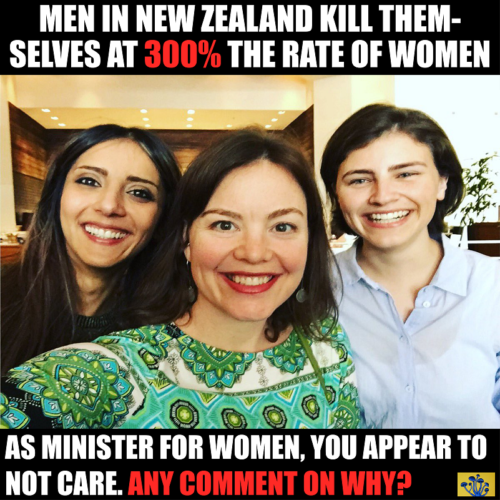
The third stage of collapse is the Brazil stage. This is where severe racial ghettoisation starts to begin, and solidarity starts breaking down completely, leading to an “urban jungle”. If life started to become cheap in some places in the America stage, by the Brazil stage this is a widespread sentiment. Robbery deaths from people being shot dead over a pair of shoes or a phone become common.

No-one thinks about the nation at this stage of collapse. Most people have degenerated so far that even the most enlightened can only think in terms of tribe. For most people it’s family at the most, and pure self-aggrandisement is standard practice. Greed is now the major motivating principle, with power and status closely following.

At this stage, pretenses to higher values are still made. People in general have long since stopped believing in God, but they still go through the motions; they still have hope. They just don’t have very much hope, because priests and policemen and politicians are happy to demonstrate every day that life has very little value. Many people are seen as superfluous at this stage, fit to be eliminated.

The fourth stage of collapse is the South Africa stage. Racial rhetoric is now openly antagonistic, with themes of revenge frequent. Things have gone well beyond the race-baiting of the America stage – here, politicians openly sing songs about killing members of the opposition. Many people talk openly of civil war, some looking forward to it.

Here there are no pretenses to higher values. It is accepted that God has forsaken the people. An atmosphere of hate pervades everyday relations, although this paradoxically can lead to increased solidarity among members of persecuted or beleaguered groups. Many people at this stage will be stocking up on guns and ammunition in preparation for some climactic final battle.

At this stage there is a pronounced exodus of the most productive and capable groups, who can see the writing on the wall. This immigration pattern – of the productive people leaving while more unproductive people join the society at the bottom – will trigger a positive feedback loop until the society ends up disintegrating entirely.

The final stage of collapse can be called the Haiti stage. At this stage the poor actively band together to destroy the wealthy. Here there is widespread violence, not for resources but simply out of savagery. Revenge or simple bloodlust are the motivating factors here. A society at this stage of collapse can be said to have utterly failed; a state at this level is a “failed state”.

The Haiti stage references the 1804 Haiti massacre, in which a slave revolt led to the slaughter of 5,000 men, women and children. In the total absence of interpersonal solidarity, murder and rape become standard. Any noticeable difference between groups is liable to trigger violence at a moment’s notice. A society that collapses this far will produce horrors that will be remembered for centuries.

This is, after all, the path that South Africa is on, and which Brazil will sooner or later fall into. One could even make the argument that America was on this path, and that collapsing in this manner may be inevitable. However, it might also be possible that collapse can be averted at any stage by a philosophical revolution that introduces a new paradigm and which leads to an increase in solidarity between groups in the society.

*

If you enjoyed reading this essay, you can get a compilation of the Best VJMP Essays and Articles of 2017 from Amazon for Kindle or Amazon for CreateSpace (for international readers), or TradeMe (for Kiwis).