

Black Caps in the United Arab Emirates 2018, Second ODI Preview

The BetFair odds have narrowed since the Black Caps’ emphatic 47-run win in the first ODI, a win that included a Trent Boult hat trick. Surprisingly, though, they are still the underdogs, paying $2.26 on BetFair in the second ODI starting midnight tonight in Abu Dhabi. History suggests that this is an excellent bet – New Zealand have won their last 12 ODIs against Pakistan and won the last one with comfort.

The Black Caps will see little reason to tinker with what was a solid and effective side in the first ODI.

The core batting axis of Munro-Williamson-Taylor-Latham did the job for New Zealand, scoring 204 of the team’s 266 runs. Ross Taylor averages 61 against Pakistan and is a rock at No. 4, while Tom Latham averages 45 from his last 20 ODI matches. He struck at 106 over the course of his 68 in the first ODI, and will look to be positive again because of the expected need for high scoring from the middle order in next year’s Cricket World Cup in England.

However, the junior batsmen were poor. George Worker, Henry Nicholls and Colin de Grandhomme contributed one run between them, which meant that the bowlers had to finish the job of getting them over the line.

Worker is in the side as an injury replacement for Martin Guptill, and so the problem of weakness at opener will solve itself, but Black Caps coach Gary Stead will be concerned about that middle-order weakness as well. The balance of the side might demand that the Black Caps choose a batsman at 6 who is a more accomplished hitter than Nicholls.

Glenn Phillips is a major contender for this role, but his returns in the T20 series and in the A series before that were poor. Corey Anderson is another option, and he was excellent here for the Black Caps in the 2015 Cricket World Cup, but has been unfortunate with injury.

As far as the bowling is concerned, far too much is riding on Trent Boult.

Questions must continue to be asked about Tim Southee’s place as the opening bowler of the ODI side. Since the 2015 Cricket World Cup, Southee has averaged 43.34 with the ball, taking 43 wickets from 38 games. He neither swings nor seams the ball to any real extent, and neither is he fast or accurate. By contrast, Trent Boult has averaged 24.70, taking 79 wickets from 40 games.

Matt Henry has taken 39 wickets from his last 20 games at an average of 23.82. Incredibly, Henry only played 4 ODIs in the whole of 2017, which makes his lack of gametime seem like an appalling waste on the part of the Black Caps coaches. Dropping Southee and replacing him with Henry seems like a slam-dunk decision that would give the Black Caps the most dangerous new ball pair outside of India.

The Black Caps appear extremely vulnerable if Trent Boult doesn’t knock the top off the opposition batting order. Lockie Ferguson is a gun bowler and is improving steadily (16 wickets at 23.56 from his last 10 games), but doesn’t yet have the ability to threaten that even Henry has, much less Boult.

With Southee ineffective and de Grandhomme a true part-timer, this means that the only other attacking option is Ish Sodhi. Sodhi is a good bowler and is improving steadily – he has taken 17 wickets at 30.00 from his last 10 ODI matches. The question is whether he can pose enough of a threat with the ball for the Black Caps to not always lose the middle overs.

The big risk is that Pakistan will easily be able to consolidate once Boult finishes his first spell, because there is little threat from the rest of the bowlers. Pakistan had a century stand for the 7th wicket, and the Black Caps should rightly be worried about their ability to finish a game off.

Black Caps (probable):

1. George Worker
2. Colin Munro
3. Kane Williamson (c)
4. Ross Taylor
5. Tom Latham (wk)
6. Henry Nicholls
7. Colin de Grandhomme
8. Tim Southee
9. Ish Sodhi
10. Lockie Ferguson
11. Trent Boult

*

Dan McGlashan is the man with his finger on the statistical pulse of New Zealand. His magnum opus, Understanding New Zealand, is the complete demographic analysis of the Kiwi people.
Black Caps in the United Arab Emirates 2018, First ODI Preview

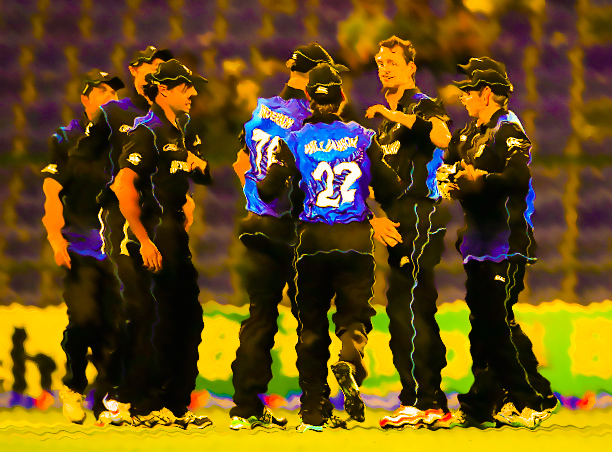
The Black Caps will be looking to register their first win under the new coaching regime of Gary Stead when they play the first ODI against Pakistan in Abu Dhabi tonight (12am NZT). Returning to a more preferred format, they will be keen to show that they were not deserving of a 3-0 scoreline in the T20s. Having pushed Pakistan very closely in the first two matches of the T20 series, they will back themselves to get a win tonight.

Pakistan are the favourites on BetFair, paying $1.64 to New Zealand’s $2.54. This reflects a large degree of home advantage, because Pakistan have lost the last 11 ODIs in a row to New Zealand, and are ranked 5th on the ODI table compared to New Zealand’s 3rd. It may also reflect some of Pakistan’s red-hot T20 form, although New Zealand would back themselves to win any 50-over contest against a side they have beaten the last 11 times.

The Black Caps will be frustrated that there are some injuries, because they will force some difficult selection decisions. Martin Guptill will not participate in the ODI series on account of still being injured. Neither will Corey Anderson play any further role in the tour on account of a heel injury, which means that Colin de Grandhomme is all but guaranteed a spot in the ODI middle order. Todd Astle will miss this ODI because of knee irritation, which opens a spot at No. 8.

However, the core of the first-choice Black Caps side will be present. Indeed, new Black Caps coach Gary Stead is spoilt for choice in some areas.

For one thing, most of the top order is nailed-on in the form of captain Kane Williamson, Ross Taylor and Tom Latham. The first two are arguably New Zealand’s two finest ODI batsmen ever and Latham, although he might be the junior partner here, averages 42 from his last 20 ODI innings. Ross Taylor averages 62 from his last 50 ODI innings and is essentially now Martin Crowe reincarnate.

Colin Munro, who was very good in the T20 series with a 58 and a 44, will probably be continued with as the white-ball opener despite his lack of success there in the ODI setup. The plan is for him to replicate what Brendon McCullum used to offer and his T20 feats show that he is capable of it. Henry Nicholls has probably done enough to hang on to the No. 6 spot, with Colin de Grandhomme at 7.

The difficult choice comes when it comes to replacing Guptill. George Worker is the favourite, having opened the batting in both 4-day and 50-over formats in the recent New Zealand A tour matches in the UAE. A less likely option is a reshuffle that moves Latham back to opener and brings Mark Chapman or BJ Watling into the middle order, and even less likely (but still possible) is going for two hitters, England-style, and partnering Munro with Glenn Phillips at the top.

There is plenty of choice in the fast bowling stocks as well. Trent Boult returns from paternity leave, which means that Williamson can count on ten overs from New Zealand’s premiere bowler. The other opening bowler will be either the incumbent Tim Southee, who has been poor in ODIs in recent years, or Matt Henry, who was excellent over the winter in England country cricket.

The third seamer, if one is chosen, could be the other one of the two mentioned just now, or the ever-improving Lockie Ferguson, or even Adam Milne, who was arguably the first-choice third seamer at the time of the 2015 Cricket World Cup. Then again, there might not be a third seamer if the Black Caps decide to go with two spinners and to get 10 overs out of de Grandhomme, Munro and Williamson.

In any case, Stead will be forced to leave at least one excellent seam bowler out of the starting XI.

The Black Caps might play only the one spinner, but will probably play two on account of the slowness of the UAE wickets. The first choice is Ish Sodhi, who has become much more consistent with the white ball recently and who is the incumbent, but we are also likely to see Ajaz Patel feature.

New Zealand (probable):

1. George Worker
2. Colin Munro
3. Kane Williamson (c)
4. Ross Taylor
5. Tom Latham (wk)
6. Henry Nicholls
7. Colin de Grandhomme
8. Matt Henry
9. Ish Sodhi
10. Ajaz Patel
11. Trent Boult

*

Dan McGlashan is the man with his finger on the statistical pulse of New Zealand. His magnum opus, Understanding New Zealand, is the complete demographic analysis of the Kiwi people.
Do We Need A National White Guilt Day?

Pressure on white people to acknowledge their collective racial guilt continues to grow. Various people in New World countries are agitating for their respective nations to have a day of remembrance for settler massacres or other colonial atrocities that took place in their nations. Suggestions like the one to ditch Columbus Day for Indigenous People’s Day in America or to mark a Parihaka Day in New Zealand are becoming more common. This essay suggests a more radical solution: that we institute a national White Guilt Day to take place once a year.

There is a large, and growing, ethnomasochistic sentiment in the modern West. Many leftist Westerners derive an almost sexual pleasure from heaping crap on other people on account of their supposed complicity in racial crimes – a kind of non-consensual symbolic salirophilia. Mostly this movement is driven by the same people whose sexual frustration morphs into other mass expressions of hatred, such as those behind alcohol, cannabis and speech prohibitions. Let’s acknowledge this, and agree to get it out of our systems with an orgiastic celebration of it once per year.

National White Guilt Day can be the day in which all white people are reminded of their collective racial guilt, which they carry on account of that white people are racist. On this day, all white people are to be reminded of their collective guilt in all of the crimes of slavery and colonialism, up to and including the Holocaust. Schools and government offices will have special ceremonies to mark the crimes of white people and how white people have failed to pull their weight in making a contribution to humanity.

It doesn’t matter if any white person’s ancestors also fought to stop those things. On White Guilt Day, white people will be told that their ancestors didn’t do enough. If you are white, you are guilty for slavery, even if you have ancestors who died opposing it. If you are white, you are guilty for colonisation, even if your ancestors brought prosperity, medicine and an end to tribal warfare to the places they settled. If you are white, you are guilty for the Holocaust, again even if you have ancestors who died opposing it, because they should have died sooner by opposing it harder.

On White Guilt Day, the white side of the narrative is not permitted to be heard.

No-one is permitted to mention that the life expectancy among Maoris is now forty years higher than it was pre-colonisation, or that the average Maori is five times wealthier than the average Tongan, whose nation was not colonised. No-one will be permitted to mention the proportion of Jews among the Bolshevik leaders who starved to death ten million people in the Ukraine. No-one will be permitted to mention the Musket Wars, or the the Holodomor, or Unit 731, or the fact that Black Americans commit murder at four times the rate of others, or any other atrocity that was or is being committed by non-white people.

On this day, the television will be forced to recount a litany of white crimes, perhaps going all the way back to Alexander. The narrative will leave listeners in no doubt that the white race has conducted a sustained campaign of hatred against all the other peoples of the world, who were purely innocent and lived non-violently in a state of harmony with all other living beings. All the evils in the world, on White Guilt Day, will be blamed on the scheming of the white race.

Perhaps we could even go as far as having street parades to mark particularly terrible acts of white evil. Willing white people can march in the street flagellating themselves with jumper cables, while onlookers pelt them with rotten eggs and excrement. Local churches will no doubt choose to march and be seen in such a parade. At the end of this day, all the people who worked themselves up into a saliromaniacal frenzy by going on about how evil white people are can go home and jerk themselves off, and then we can all continue as normal until next year.

Of course, White Guilt Day will have to take various forms based on the location. So as to not create resentment it will be necessary to minimise the free speech restrictions, so that no-one in America is allowed to mention that American slavery was stopped by white people, but people in other countries are. Likewise, Kiwis will not be allowed to mention that Parihaka was used as a base to conduct raids on nearby settlers, but people in other countries will be.

The most important objective is to have a day to signal to all humanity that white people are uniquely evil, among all the races of the world, on account of the unprecedented level of racism upon which all of their all-gotten gains have been made, and that all of their innovations and advancements would have been made by other races anyway so they deserve no credit. Then we can get all the resentment, envy and displaced class hatred out of our systems and spend the rest of the year being polite and normal.

*

If you enjoyed reading this essay, you can get a compilation of the Best VJMP Essays and Articles of 2017 from Amazon for Kindle or Amazon for CreateSpace (for international readers), or TradeMe (for Kiwis).

How A New Zealand Nazi Party Could Eliminate All Competition Through Existing Mechanisms

Suprisingly few understand that Adolf Hitler’s Nazi Party came to power by winning democratic elections. Fewer still understand that the subsequent march from liberty to totalitarianism was made in a small number of entirely legal steps. This essay suggests something original: that a New Zealand equivalent of the German Nazi Party could assume dictatorial powers by exploiting current New Zealand law.

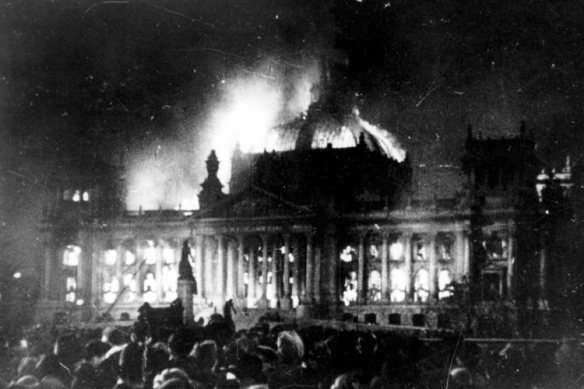
The German National Socialist Worker’s Party won 33% of the party vote in the November 1932 federal elections, which was eventually enough to get Hitler, the leader, appointed German Chancellor. From there, the Nazis succeeded in having all opposition banned by means of the Reichstag Fire Decree and then, later, the Enabling Act. The effect of these two pieces of legislation was to make Germany into a one-party state, with all political power held in the Nazi Party.

But wait! you cry. The New Zealand system is different to the Weimar Republic. Our Mixed Member Proportional system is designed to prevent extremists from taking power, by making it impossible for parties to get representation unless they get a proportion of votes above a predetermined threshold. This is true – but there’s a catch. The fact is, this threshold is both a precedent and a mechanism for totalitarianism.

A party needs to get at least 5% of the party vote before it is allowed to have any seats in Parliament. Any party that gets less than 5% of the vote gets no seats at all (unless they also win an electorate seat). The logic is that if you cannot command at least 5% of the vote, then it is best to exclude you (and your voters) from Parliament entirely, on the grounds that you represent a radical extremist movement.

This logic is essentially the same logic that Hitler used to ban the Communists, only wrapped up in prettier packaging.

A hypothetical New Zealand Nazi Party that knew that they were going to get, for example, 33%+ of the vote, could simply raise the MMP threshold to 30%. This would mean that a party needed 30% of the total party votes in order to be allowed to have democratic representation. This New Zealand Nazi Party would then be the only party that got over the threshold, and consequently be the only party allowed to have a seat in Parliament.

Some might object this would be undemocratic, on the grounds that it would exclude too many people from having a say. But there are already enormous numbers of people who are excluded from having a say. It is an obscenity that a party can currently get 4% of the party vote and not be allowed any representation, especially when a slimebag like David Seymour can get in with a little over 10,000 votes.

After all, if it’s permissible for a hundred thousand people to have their democratic voice silenced because of some arbitrary threshold set by anti-democratic forces, then what does it matter if that threshold is raised a bit by slightly less democratic forces? The precedent has been set, by the status quo, that such conduct is acceptable. The only question, then, is what proportion of people are to be silenced.

Raising the threshold to 30% would only change the degree of disenfranchisement. There would be no categorical change.

Effectively, those parties that could get over 5% now have colluded, and they have made it impossible for anyone who can’t get over 5% to get into Parliament. It has been decreed that any movement with fewer than 120,000 or so members will have no voice at the table. This is borderline criminal, as it makes it impossible to oppose the political class through the democratic system. If your problem is with neoliberalism, then there’s no point in voting, because the entire political class is neoliberal.

A party has to be neoliberal to get enough attention from the neoliberal mass media to get 5% of the vote in the first place, because electoral financing is doled out in proportion to how many votes a party received in the previous general election, so without already being big enough to get over the 5% threshold it’s impossible to get enough media coverage to get there. The game is completely sewn up.

The major parties can’t even point to the relatively small “wasted vote” count and say that the small size of this voting bloc is evidence that few people are dissatisfied with the system. The fact is that many, many more people might vote for alternative parties if the threshold was low enough for them to have any chance of being allowed to have representation. But when even 100,000 votes isn’t enough to get a single seat in Parliament, the will to start new parties is massively, and artificially, suppressed. So we don’t know how many voters would vote for the National-Labour-New Zealand First-Green Establishment if there was a fair threshold.

The way to get around this is simple. Not only should the 5% threshold be removed, but it should be clearly stated that the presence of such thresholds is undemocratic. As such, not only will there no longer be one but precedent is set for there never to be one in the future. Even better, we could scrap the farce that is democracy entirely – but that’s a topic for another essay.

*

If you enjoyed reading this essay, you can get a compilation of the Best VJMP Essays and Articles of 2017 from Amazon for Kindle or Amazon for CreateSpace (for international readers), or TradeMe (for Kiwis).