
Can We Euthanise Parliament, And Start Again?

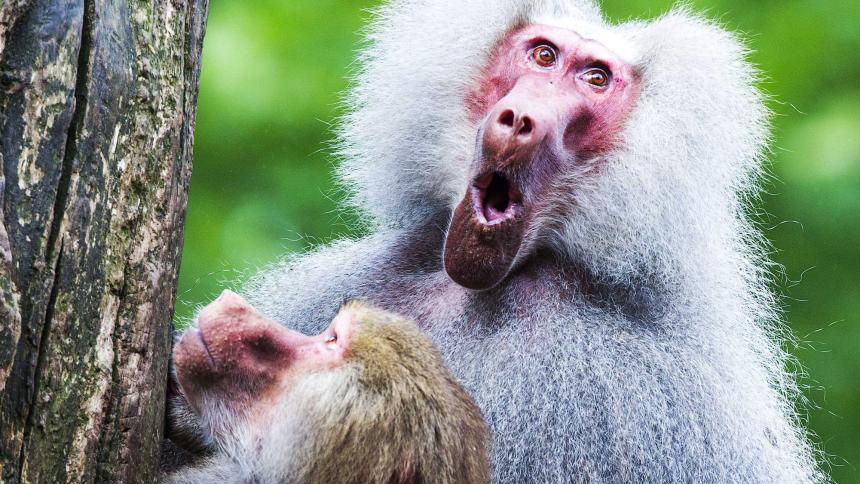
Animal lovers and ethologists in New Zealand were dealt a blow yesterday by the news that four baboons at Wellington Zoo had to be put down, on account of that their social structure had collapsed. This social collapse had led to increased interpersonal aggression, and it was decided that it would be cruel to allow it to continue. As this essay will examine, the baboons were not the only group of primates in Wellington whose social structure has broken down.

Not all animals take well to captivity, and so the type of fighting that the Wellington baboons fell into is far from unique. It’s common for zoo animals to feel depression, anxiety and elevated levels of aggression. The reason why is described in the linked article, by the CEO of animal rights group SAFE, Debra Ashton:

“Social structures suffer in enclosed environments and could be attributed to fighting and anxiety for animals. When these social systems break down and there is fighting, vulnerable animals are not in a position to be able to escape as they would in the wild.”

People find this easy to accept in the case of baboons, but all of these facts are equally true of the human species. Individual human animals can fail to adapt to captivity in much the same way that the baboons in the story above did. Our society is equally as much a closed, prison-like space with no opportunity of escape – in fact, we arguably have even less opportunity to escape, with the advent of our 24/7 social media culture.

Nowhere is this more true than Parliament.

It’s clear from what happened between Jami-Lee Ross and the rest of the National Party, in particular Simon Bridges and Sarah Dowie, that the social structure there has broken down, leading to elevated levels of interpersonal aggression. These people are supposed to be colleagues, and yet they psychologically abuse each other to the point of openly wishing that the other would commit suicide. They are causing each other horrific amounts of harm, and it might be humane to intervene.

The problem is that many Parliamentarians have become demented. It’s apparent from observing individuals like Jacinda Ardern and Judith Collins that all the humanity has long since been lost from these people. They are twisted creatures of hate, willing to cause any amount of suffering to their own people if it furthers their ambitions. Any amount of suffering caused is acceptable if it makes you wealthier, or increases your standing in the eyes of the United Nations.

All of this raises a question: would it be more humane of us to accept that the social environment of Parliament has disintegrated, that this is causing great pain, and to euthanise all our MPs to prevent further suffering to them?

We don’t have to do it in a bloody manner. It can be done dispassionately and without prejudice. We just have to line our MPs up and march them into a veterinary office, where they are held down and given a lethal injection, one by one, and the bodies disposed of. We could even model our approach on that taken towards the four baboons at Wellington Zoo.

Once the humane thing has been done, Parliament would be empty. The New Zealand people would then be free to fill it with individuals who represented them, and who could co-operate in order to solve the challenges facing us as a people. Euthanising all of our current MPs would allow us to dissolve the rotten culture of abuse and hatred that defines our current Parliamentary system, and to replace it with something that worked for the people it’s supposed to represent.

Some might say that this proposal sounds cruel. The reality is that it would be cruel to continue to allow our Parliamentarians to suffer inside a completely failed social system. The individuals inside the Beehive are in deep emotional pain, and nothing will be able to prevent this, apart from starting again. This is apparent from the months off work that Jami-Lee Ross had taken in order to deal with the stress-related damage of the constant abuse he received from the others.

Therefore, euthanising them all is the most humane option.

One popular proposal is for the New Zealand people to come together and to agree on a list of inalienable rights that any future Parliament would be forced to accept, else run the risk of being euthanised again. This would start with the creation of a mission statement, which would declare that the objective of the New Zealand Parliament was to eliminate the suffering of the New Zealand people.

This means that the euthanisation of Parliament would not have to lead to chaos and disarray. If the correct approach was taken, and sufficient preparations made beforehand, it could lead to a drastic decrease in suffering among the New Zealand people.

*

If you enjoyed reading this essay, you can get a compilation of the Best VJMP Essays and Articles of 2018 from Amazon for Kindle or Amazon for CreateSpace (for international readers), or TradeMe (for Kiwis). A compilation of the Best VJMP Essays and Articles of 2017 is also available.


Government Action on Housing Crisis Missing-In-Action

by MARTIN GRONBACH

I stare wide eyed at my phone and let loose a snort of equal parts disgust and derision.

The listing on TradeMe for my neighbour’s house has revealed their asking price.

$540,000.

This probably won’t be terribly offensive to those of you battling to buy your own home considering the average house price in New Zealand reached an eye watering $645,250 as of last year, but let me put my outrage in context.

This is the asking price for a reasonable 3-bedroom house in Carterton, Wairarapa.

Over half a million for a house in Cartervegas, with me as a neighbour? Get the fuck outta here.

If this what politicians put forward as the “affordable provinces” then any young person aspiring to one day own their own home is pretty damn screwed. Trust fund babies need not consider themselves applicable.

Last year I decided to ask the three local councils as to what actions they were taking to address the housing crisis and housing affordability.

The responses ranged from “We can’t do anything”, “It’s not our problem to solve”, “Define affordable” to “We are waiting on direction and leadership on the issue from central government”.

Local governments are not interested in taking a leading role in solving the housing crisis. Maybe this is due to the nearly non-existent representation of young people in local body politics, but that’s a topic for another time.

If not local government, surely our transformative coalition government could surely be trusted to be kicking arse for the long-suffering Kiwi first home buyer?

Brace yourself for crushing disappointment as the salvation of Generation Rent won’t be found with this current government – at least not this term.

Kiwibuild has been flogged by Labour as the band-aid to fix the housing crisis booboo as far back as 2012. However once in a position to actually implement the policy in 2017, it was quickly revealed just how little thought had gone into it.

The reality was that Labour’s fix for the housing crisis was over-hyped and under-cooked, inaccessible for anyone earning the average wage, that had school age children, or any number of the realities New Zealanders face. With the additional restrictions on selling the property within three years, designed to stop property speculation, people considering Kiwibuild are better off not using the scheme if possible, as buying on the open market doesn’t have any such restrictions and, in the end, any difference in the final price paid was negligible.

It’s a sad state of affairs that even with the supposed singleness of purpose and financial backing of the tax payer, Kiwibuild has completely failed to deliver for the majority of people that voted for it.

With numerous New Zealand based kit-set home manufacturers, even houses built by robots in Wellington, building houses isn’t the bottleneck. Land supply, and the price of ticking the boxes before building, however, is.

Reforming the Resource Management Act to allow for faster development of land should be one of the more obvious issues to deal with if the Government was actually serious about tackling the housing crisis. Likewise, opening up the building materials market to some international competition by way of reforming the New Zealand Building Code could potentially topple the monopoly enjoyed by a select few manufacturers price gouging the currently captive New Zealand market and further decrease building costs.

Another touted solution in the build up to the election was the so-called foreign ownership ban. Put forward by both Labour and New Zealand First, this would stop overseas investment in our domestic housing market. However, this did not mean ALL foreign ownership as Australians, who make up a third of all foreign owners of New Zealand property alone, as well as Singaporean nationals in the pursuit of a YET ANOTHER free-trade agreement, are still able to buy New Zealand property.

Again, this was found to be a relative non-issue as measly three percent of all property sold was to foreign buyers and that three percent was mostly made up of large-scale farms and stations, life-style blocks and shares in new-build apartment blocks. While I don’t agree with any foreign ownership of New Zealand land, in the context of the housing crisis, this is, and continues to be, an outlying issue, if not entirely separate from the housing crisis.

Generation Rent isn’t, and never was, in the market for a thousand acres of pristine South Island sheep country, so the foreign ownership ban had little real impact in this regard.

The main influencers of the housing crisis are two issues. The first was, and continues to be, New Zealand’s high levels of immigration. That contentious issue both Labour AND New Zealand First made a huge deal about during the opposition years and during the 2017 election, which our coalition government now seems reluctant to firmly act on, apart from putting the boot into low hanging fruit like the dodgy export education industry.

Ironically the fallout following the banning of Huawei from supplying equipment for the upcoming 5G rollout, the responsive drop in tourists and wealthy international students from China may end up having more of a tangible impact on addressing housing affordability that anything the Government has intentionally done to date.

The second genuine influencer is the rife accumulation, hoarding and speculation of housing by fellow, and now extremely wealthy, New Zealanders. The final word on cause of the housing crisis is that it is a mess of our own making. Kiwis ripping off Kiwis. Ever heard of a cap or outright ban on the number of investment properties? Me neither, and so long as we keep voting for the same four political parties, you never will.

With Generation Rent’s patience starting to wear thin and half their term over already, the coalition government can’t afford to continue to wear the kiddie gloves for fear of threatening the entitlement culture of wealthy New Zealand nor the construction sector lobbyists whilst avoiding the real causes of our housing crisis. 2019 will either make or break this government and younger people’s trust in it.

At the end of the day I don’t want or need 20 rental properties. No reasonable New Zealander does.

I just want the safety and security of providing a home for my wife and children that won’t be put up for sale as soon as the market conditions are favourable.

But not for over half a million in bloody Carterton, thanks.

*

Martin Gronbach is an unashamed nationalist, self-aware 30-year-old boomer, active political shitposter, father, husband, engineering student and full member of Generation Rent who lives in the Wairarapa.

Almost All Cases of Growing Cannabis Are Altruistic

New Zealand cannabis law reform supporters were overjoyed on Monday by the news that Rose Renton was discharged without conviction in her case at the Nelson District Court. Charged with the cultivation of 58 plants, she could have been facing seven years’ imprisonment. As this essay will examine, the logic used to exonerate her could be used to exonerate almost any other cannabis grower, and should lead to a change in the cannabis law.

Renton was discharged without conviction on the grounds that her offending was “altrustic” in nature, according to Judge David Ruth, who was quoted as saying: “This was effectively an altruistic endeavour on your behalf to help those for whom that help wasn’t otherwise possible.” This is an entirely fair point, and it’s about time a judge said so, but it goes further than this.

She had been growing cannabis to supply medicine to a variety of people, a job that has been given the title “green fairy”. The ‘green’ refers to cannabis medicine and the ‘fairy’ refers to the fact that this medicine doesn’t come regularly but simply shows up whenever the fairy can make it happen. Renton was supplying clones of a CBD-rich strain to people who then grew the medicine themselves.

A Police officer who came to Renton’s home noticed a cannabis plant there. Instead of ignoring it, the officer made the decision to enforce Parliament’s law against cannabis by arresting her. This decision led to 18 months of suffering on Renton’s part, until discharged without conviction on Monday, for the reasons mentioned above.

Cannabis is a medicine. The main reason why people use it is to escape the suffering caused by either physical or psychological pain. There are several effective substitutes for the effect that cannabis has on physical pain, but there is little that can stop psychological suffering as quickly and efficiently. Countless people have found that a bout of rage, depression or despair can be stopped cold by a dose of cannabis.

It’s rarely admitted to, but there is a lot of suffering in our society. Not just the tedium of the drudge-work that we endure, and the anxiety over our uncertain futures, but the stress of encountering new strangers all the time and the alienation of having no community or political representation all combine to create an existence that is wretched for many. This can be measured by our increasing suicide rate, which hit a record level last year.

Almost all the cannabis that is grown, by anyone, ever, is grown with the intent of reducing some of this suffering. There’s no point to it otherwise. No-one grows cannabis with the intent to cause suffering. Anyone who believes this is simply not in touch with the reality of cannabis use. Everyone who grows it does so with the intent that using the end product will alleviate suffering in some way.

So the concept of non-altruistic cannabis growing makes as much sense as the idea of non-altruistic insulin production.

People who aren’t interested in the medicinal effects of cannabis might still be using it for that reason, even if they smoke it in joints. Even casual joint smokers are often motivated by the decrease in anxiety, stress, nausea or insomnia that comes with using it. This means that the vast majority of cannabis that anyone is growing, anywhere, is for altruistic reasons, much the same as with Rose Renton.

Many people are unwilling to accept this, for the reason that this makes the current law seem extremely cruel. The hard facts are, however, that the current law is extremely cruel. It’s possible that the law prevented Alex from getting hold of a medicine that would have saved his life. We’ll never know.

It’s possible that Rose Renton had to watch her son die for no other reason than that New Zealand politicians were too stupid and cowardly to address the need to repeal cannabis prohibition in time. That might seem unreasonably cruel, perhaps even so cruel that it’s hard to admit to, but that’s what we did. We’ve been doing it for decades, to Kiwi families up and down the country.

We have to face up to the fact that cannabis is a medicine, and that the law withholding it from people is killing those who need its medicinal qualities. It’s time for us to accept that the vast majority of people who are growing cannabis are doing so with the ultimate intent of alleviating human suffering, so we should repeal cannabis prohibition and make it legal.

*

If you enjoyed reading this essay, you can get a compilation of the Best VJMP Essays and Articles of 2018 from Amazon for Kindle or Amazon for CreateSpace (for international readers), or TradeMe (for Kiwis). A compilation of the Best VJMP Essays and Articles of 2017 is also available.

VJMP Waitangi Day Address 2019

The only power that scares the Establishment is the unity of the people. Only when Maoris and white people come together, with strong bonds based on mutual appreciation of each other’s talents, do the ruling classes of this country sit up and take notice. Only then do they become afraid of us, instead of the other way around.

There are two very popular, and yet very false, narratives explaining why our society is the way it is. Both of these false narratives serve to divide the nation into two competing blocs, at each others throats. The first is the Imperialist narrative, the second is the Marxist narrative.

The Imperialist narrative has it that Maoris lived in a state of depravity and constant terror. Intertribal warfare and cannibalism were rife; life expectancy was 30 years if you were lucky. According to the Imperialist narrative, Maoris were rescued from this state by the benevolence of the British Empire, which made slavery illegal, and kindly dished out medicine, technology and an end to the Musket Wars.

The Marxist narrative has it that Maoris lived in a state of perfect peace and harmony with Nature. There was no violence and no hunger until the white man turned up. Then the Maoris were driven from their land under musket and cannon fire, into the wilderness to die. The British came here for no other reason than greed, and never saw the Maoris as proper human beings.

Both of these narratives are horseshit. Both have been designed to sow discord and hatred. Both are aggressive, supremacist ideologies, and both are supported by aggressive, low intelligence, egotistical people. Neither has a place in the New Zealand of the new century.

There is a lot of pressure for us to take on one of the false narratives. Many people find it gratifying to blame someone else for their problems, especially an entire group. Many people have chosen a side, not as a Kiwi, but as either a Maori or as a white person, and many of these see the other side of the divide as the enemy who seeks to steal from them.

The British did made slavery illegal, and they did bring technology and medicine here, that is true. They also did some bad things, especially with regards to swindling land from the Maoris, and with creating a society in which money and plastic was valued highly than social and spiritual connections. This is also true.

The Maoris might have problems with violence and abuse and neglect of children, this is true. They have also done outstandingly well compared to other indigenous peoples. Their intelligence and tenacity has enabled them to adapt to the tools of the white man in a way that the others never could. They are much wealthier than Tongans, who were never colonised. This is also true.

We need a new narrative, one that takes us forwards as brothers in arms. Not one that keeps us squabbling in the dirt. Esoteric Aotearoanism can serve as that narrative.

New Zealand society, for the majority of its existence, has been a co-operative enterprise between Maoris and white people. For better or worse, we’re stuck with each other. Neither group of people is going anywhere, and rates of intermarriage are so high that the time will come when there are not only no pure-blooded Maoris left but also no pure-blooded whites apart from immigrants. This is inevitable unless we are divided and conquered by outside forces.

Because of these immensely high rates of interbreeding, and because of the close, sometimes imperceptible, cultural exchange that we have had, Maoris and white people cannot be spoken of as two separate groups. They must be understood as the two major contributing factors to something that is greater than either of them: the Kiwi nation.

There are none of us who are pure Maori, unaffected by the white man’s influence, and neither are there any of us who are pure white people, the same as what can be found in Europe. We are now the yin and the yang of something greater than either of us. Both love rugby, live music, cannabis and exploring the wilderness just as much as the other.

It doesn’t matter what once was.

Co-operation is the only way forward. This demands that we reject the false narratives that cause us to fight each other, and adopt a new narrative that allows each of us to contribute to the greater good in their own way. It doesn’t matter what proportion of Maori blood you have, or what languages you speak, or even what your political attitudes are. There is a niche for you to contribute to the Kiwi nation.

*

If you enjoyed reading this essay, you can get a compilation of the Best VJMP Essays and Articles of 2018 from Amazon for Kindle or Amazon for CreateSpace (for international readers), or TradeMe (for Kiwis). A compilation of the Best VJMP Essays and Articles of 2017 is also available.