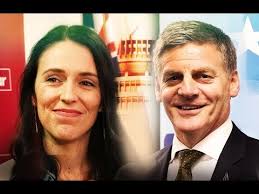
Where Did the National Party Lose Their Majority?

Elections are won and lost by slim margins nowadays and subtle shifts have weakened National’s position compared to 2014

The drama may not be over, but we can eliminate one outcome even before negotiations begin: it is now clear that the National Party failed to get enough seats to govern alone or with support partners as suppliant as ACT, United Future and the Maori Party (the last two of whom were eliminated last night). If they are to govern, it must be with New Zealand First, which is a significant weakening of their position compared to the previous election. This article looks at where National lost support from 2014.

First of all, it’s apparent that the people who voted National last night were basically the same sort of person who always votes National. The correlation between voting National in 2017 and voting National in 2014 was 0.989. So the differences between the people who voted for them last night and who voted for them in 2014 are subtle.

The National Party did worse with white people this time around, although white people were still the overwhelming bulk of National voters. The correlation between being of European descent and voting National in 2017 was 0.51, down from 0.60 in 2014, balanced by an increase in the correlation between being Asian and voting National in 2017 (up to 0.17 from 0.09 in 2014) and between being a Pacific Islander and voting National in 2017 (up to -0.38 from -0.46 in 2014).

This is suggestive of a fairly large segment of both Asian and Pacific Islander people who have managed to rise above their previous economic situation. It also reflects the increase in correlation between working in wholesale trade and voting National in 2014 (0.19) compared to voting National in 2017 (0.26), because wholesale trade is itself an industry with a large proportion of Asian workers.

Because Asians and Pacific Islanders are more likely to be born overseas than Maoris and white people, this has led to a strengthening of the correlation between being born overseas and voting National, which was already moderately significant at 0.33 in 2014 but has since then increased to 0.39 in 2017.

South Islanders still support the National Party more than North Islanders, but the correlation between living on the South Island and voting National went down from 0.13 in 2014 to 0.07 in 2017. This is probably a reflection of the fact that National increased their support among recent immigrants at the expense of Kiwi-born voters, because a relatively higher proportion of recent immigrants live on the North Island.

The correlation between working in a particular industry and voting National in 2017 increased from 2014 in the case of manufacturing (up to -0.19 from -0.23), wholesale trade (up to 0.26 from 0.19) and transport, postal and warehousing (up to -0.47 from -0.51), and decreased from 2014 in the case of mining (down to -0.05 from 0.00), hospitality (down to -0.23 from -0.18), professional, scientific and technical services (down to 0.15 from 0.18), public administration and safety (down to -0.30 from -0.26), education and training (down to -0.31 from -0.27), healthcare and social assistance (down to -0.23 from -0.18) and recreation and arts services (down to -0.22 from -0.17).

This is perhaps interesting because it suggests that people are more likely to go from voting National to voting Labour if they have a social job, compared to being even more likely to vote National if they have a relatively unsocial job.

Related to this is that social occupations tended to leak support for National compared to unsocial ones. Although managers continued to strongly support National in 2017, as the correlation between working as a manager and voting National in 2017 was 0.52, this was weaker than with voting National in 2014, which was 0.56. A similar drop was seen in community and personal services workers, whose correlation with voting National in 2017 dropped to -0.58 from -0.53 in 2014.

Taken together, these correlations show that people whose jobs bring them into contact with the most people are the most likely to feel that the country needs a change in direction, perhaps suggesting that they have observed an increase in human misery to intolerable levels.

Some won’t be surprised to note that the correlation between living in a mortgaged house and voting National in 2017 increased to 0.05 from 0.01 in 2014 – perhaps an indication that people in this group are afraid of the market crashing and leaving them with negative equity. Tellingly, this group became much less willing to vote New Zealand First – the correlation between living in a mortgaged house and voting New Zealand First in 2017 dropped to 0.06 from 0.12 in 2014.

Taken together, those numbers suggest that a lot of people want the game of hot potato being played with house prices and immigrants to continue for a while yet.

Where the election seemed to be lost for National, at least in terms of their hopes of governing alone or with ACT only, is when the real elite class, despite still mostly supporting National, did so less overwhelmingly than in 2014.

The correlations between being in any of the four highest income brackets and voting National all weakened from 2014 to 2017. These were those earning $60-70K (down to 0.21 from 0.24), those earning $70-100K (down to 0.32 from 0.36), those earning $100-150K (down to 0.31 from 0.34) and those earning $150K+ (down to 0.31 from 0.35).

They also weakened noticeably among holders of postgraduate degrees. Voters with an Honours degree had a correlation of 0.22 with voting National in 2014 but only one of 0.17 with voting National in 2017. Holders of Master’s degrees (down from 0.20 in 2014 to 0.17 in 2017) and doctorates (down from 0.20 to 2014 to 0.14 in 2017) followed the same pattern.

The cohort of National voters is also younger this year compared to 2014. The correlation between median age and voting National decreased to 0.77 in 2017 from 0.81 in 2014.

What all this tells us is that there were three major trends in play last night.

The first one is that Labour won votes off the Greens, New Zealand First and National. Labour won a huge number of Maori voters from New Zealand First and the Greens – the correlation between being Maori and voting Labour in 2014 was only 0.42, but in 2017 it was 0.58.

The second is that National won a lot of votes from people who were educated and young and Green-voting in 2014, but who grew up to be wealthy, middle-class and incentivised to vote with their wealth interests in 2017. The Greens dominated this segment of the population in 2014 and lost most of them by 2017, chiefly to TOP and to National.

The third is that National lost a lot of votes from the sort of person who is the real power elite of the country. Although the rich, the employers, the owners of freehold land, Anglicans and educated people all still preferred National to Labour, they were markedly less keen in 2017 than 2014. Many of these people switched to TOP, which is ironic because they now won’t be represented at all (at least not directly).

*

This article is an excerpt from the 2nd Edition of Understanding New Zealand, which Dan McGlashan and VJM Publishing will have ready for sale at the end of October 2017. This will contain statistics calculated according to the official final vote counts and will be freshly updated with data from the 2017 General Election.
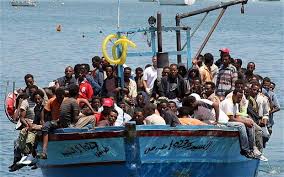
The Best Argument For Taking Thousands Of “Refugees”

If we let in a hundred of these a year, we’d soon forget about our petty differences

Ronald Reagan gave a very strange speech at the United Nations once. He spoke about how the nations of the world would settle their differences and come together if faced with an extraterrestrial threat. This is actually a reference to a law of human psychology, and this same law provides the best argument for increasing our refugee quota.

There no denying that social solidarity has steeply declined in New Zealand over the past 25 years. Ever since the Mother of all Budgets, as a consequence of which the rich and the poor learned to truly hate each other, we have seen a Labour Government open the borders to Pacific Island immigration, and then a National Government open the borders to Asian immigration.

After all this, New Zealand citizenship has been devalued so much that hardly anyone really feels like a Kiwi anymore, apart from in the most superficial ways.

There’s no longer any cultural value that defines us as unique among the cultures of the world. Some say we are “multicultural” but that’s just another way of saying that we have nothing in common with each other. Some say we have the All Blacks but for the majority of immigrants, who could just as happily have ended up in Australia, this is little more than a flag of convenience.

Seeing what’s happened in Europe in recent decades, however, gives us a clue as to how we can strengthen our national bonds.

For the vast majority of its history, the kings and tyrants who wished to unite Europe faced a particular problem. Europe is an extremely culturally diverse continent, and the vast majority of Europeans hate basically everyone else. So they have never been inclined to unite under the banner of “European” because they identify with their village above all and then their shire and maybe at a stretch with the idea of a nation.

The idea of a “European race” is really a New World idea, applied retrospectively by American, South American and British Empire thinkers to the old continent, to describe how it appeared in contrast to their own racially heterogenous societies. Europeans aren’t fond of it.

However, the rulers of the European Union know one thing about the fundamental laws of human psychology: nothing brings a disparate group of people together faster than a common enemy. To that end, the last twenty years of mass Muslim immigration has been a godsend.

It’s inevitable, given the tenets of the faith that they follow, that if large numbers of Muslims immigrate to a particular locale, they will end up clashing with the incumbents. There’s simply no way that an ideology that commands its followers to seek out non-believers and kill them can co-exist with its neighbours, any more peacefully than Nazism could.

So now, a curious phenomenon has arisen in Europe. Any two Europeans (or Western Europeans at least) can meet and share a common story of how much they hate Muslims. Every European now has a story about being robbed or beaten, or their car set on fire, or their girlfriends sexually harassed, by a Muslim.

This has led to bonds of intra-European solidarity first starting to appear all across the continent, and now – as more stories are shared – starting to strengthen. An astute observer of history can see the battle-lines being drawn already.

If New Zealand lets in a large number of Muslim refugees, such as the 5,000 per year that the Greens and The Opportunities Party are proposing, then it’s only a matter of time until the first Truck of Peace attack kills a significant number of Kiwis. The terrorists, when they make their move, will not discriminate between types of Kiwi: we will all be infidel.

It is then that we all – Maori, Pakeha, Islander and Asian alike – will have, for the first time since World War Two, a mutual enemy. Therefore, it may be that the country needs mass Muslim immigration so that Kiwis – as the Europeans have been forced to do – can come together in mutual rejection of the hate ideology of Islam, as we once did against the hate ideology of Nazism.

However, this is also very close to the worst argument for taking in thousands of refugees.

Over a century ago, it was prophecised by high-ranking Freemason Albert Pike that World War Three would involve the mutual annihilation of Israel and the Muslim world, leaving the Christians in charge of the planet.

If one looks at the mass Muslim immigration that Western political leaders have pushed on us over the last twenty years, it’s possible that the West is being conditioned to hate Muslims with the intent of making Westerners psychologically ready to wipe them out if they should annihilate Israel. If this is the case, it might not matter what we do.

However, taking in a large number of Muslims may, in the short term, bring Kiwis of all races together in mutual rejection of infant genital mutilation, abuse of women, abuse of homosexuals, hatred of Jews and hatred of outsiders. We should keep in mind, however, that doing so is truly to play with fire.

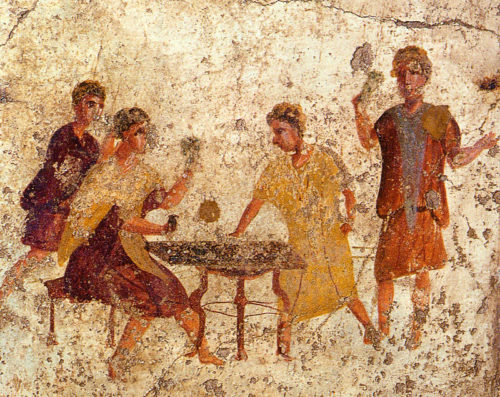
A General Election is to Our Culture What Saturnalia Was to The Romans

The Saturnalia was celebrated with role reversals and an atmosphere of free speech as slaves chastised their masters

New Zealand has lost touch with the natural origins of most of our traditions – we celebrate Christmas in summer, Easter in autumn and Halloween in spring. However, in much the same way that Anzac Day has become the autumn festival that naturally serves to remember the dead as the leaves fall, so has our General Election become what Saturnalia was to the Romans.

The Saturnalia was a festival of lights that took place in Ancient Rome in the weeks leading up to the winter solstice. Like most Northern cultures, the Romans made a point of celebrating their major festival leading up to the winter solstice, for the reason that this occasion marked the lowest levels of light at any point of the year (i.e. it marks the point at which the days start to become brighter and longer).

Characteristic of the Saturnalia was an atmosphere of behavioural licence and role reversal. It was generally accepted during these weeks that a range of behaviours that were normally unconscionable were accepted as part of the general revelry. During the Saturnalia it was understood that slaves could censure their masters without fear of retribution.

Being a Southern Hemisphere country with a weak, derivative culture, New Zealanders have long since forgotten why we have the festival schedule we do. Instead of celebrating the return of the invincible sun, we celebrate a meaningless Christmas ritual in the middle of summer. In other words, we hold our celebrations at the same time that the days start to become darker and shorter, which makes no sense at all.

But just like Halloween, which has spiritually been replaced with Anzac Day on account of that it doesn’t make sense to remember the dead at the end of October in the Southern Hemisphere, so too has Saturnalia/Christmas been spiritually replaced – by the General Election circus.

In ancient Rome, slaves were given licence to criticise the conduct of their masters once a year during the Saturnalia. The festival was known as a time for free speech, without the usual social reprisals. In our culture, the slaves are given licence to criticise the conduct of their masters once every three years during the General Election campaign.

The usual state of affairs is that, like any other time in history, the ruling class taxes the shit out of us while also putting us in cages for arbitrary “crimes” such as using medicinal cannabis without permission. In other words, they leave us in no doubt whatsoever who is in charge and who isn’t.

The degree of sadism necessary to withhold an effective medicine from a dying person is the equal of anything meted out in ancient Rome, and indeed it was less than two years ago that Peter Dunne dismissed as “emotional nonsense” the application of a terminally ill woman, Helen Kelly, to use medicinal cannabis to alleviate the suffering of dying from lung cancer.

During the General Election campaign, however, the slaves are allowed to tell their masters what they think of their leadership. The masters appear before the slaves on television and radio and face questioning, with the slaves even being allowed to go as far as suggesting that a different faction of the ruling class be given the reins.

In the Roman Saturnalia, it was understood by all that there were limits to how far the slaves could push things – after all, everyone knew that the festival was going to end and that the normal social hierarchy would therefore reassert itself. This is how we know that men like Peter Dunne will never be held to account for the deaths he has caused, as this column has previously suggested. The Saturnalia didn’t mean justice, merely respite from injustice.

Australian banks will keep sucking billions out of the economy every year, you still won’t be able to afford to live where you grew up and you still won’t be allowed to grow medicinal cannabis at home. Nothing ever really changes as a result of a General Election – it’s all just a show to allow the plebs to vent some of their resentment before it boils over.

Although it might be possible to suggest such a thing and have it taken seriously during the General Election circus, we all know that normal order will soon reassert itself and the New Zealand populace will return to being submissive sheep who can be led to slaughter without the slightest protest.

The Closer the Election Gets, the More Degraded Political Discourse Becomes

We’re fortunate that no campaigning is allowed on Election Day – if there was, it would just be the candidates throwing feces at each other

There’s a psychological heuristic about the effectiveness of logical arguments compared to emotional ones. In essence, rational arguments weigh more heavily in the long term, often producing permanent changes, but emotional arguments weigh more heavily in the short term, often producing immediate action. This simple rule explains why the quality of political discourse has degraded so sharply in recent weeks, and why it will degrade further in the next two.

This human tendency was demonstrated with a study that examined tooth brushing habits. Two groups listened to two different lectures from dental health professionals. The first lecture used calm, reasonable, logical arguments to explain why people should brush their teeth, the second used fire and brimstone and tried to scare the listeners into doing so.

Although people who heard the first lecture only made a small increase in how regularly they brushed their teeth, the change in behaviour lasted for a long time. This was in stark contrast to the emotional lecture. People who heard this one made a sharp increase in tooth-brushing behaviour immediately after the lecture but, over the long term, this then fell away to much lower levels than the people who had heard the logical arguments in the first lecture.

Our political class and their advisers, highly sophisticated in the art of psychological persuasion, know all of this and are using this knowledge against the plebs right now. The rule they are operating by is: the closer we get to the day of the election, the less effective logical arguments become, and the more effective emotional arguments become.

One year out from an election, there’s no real reason to get emotional. The voters themselves have not yet been whipped into hysteria by the mainstream media, and so any politician that noticeably becomes emotional will look unstable and lose support.

That far out, it’s much better to focus on calm, logical arguments that a potential voter can ruminate over at their leisure before making a solid commitment to a party on the basis of reason. This is because, as with the toothbrush study, this influence will be minor but permanent.

The day before an election, by contrast, is not the time for calm and logical arguments. It doesn’t make psychological sense to aim for a moderate but long-term gain when the election is the next day and the preferences of voters in one year’s time doesn’t count for shit. At this point, it only makes sense to appeal to the heart (and almost always to fear), in the hope that this wave of raw emotion will not have subsided by the next day.

Right now, two weeks out from Election Day, fewer logical arguments are being made. “Let’s Do This!” is not a logical argument, and that is why we have seen expressions of it much more often over the past week. Neither is whipping up fears about being taxed into the poorhouse.

Here the political discourse can already be seen to have degraded, but things will only get worse over the next two weeks as the miserable calculus of persuasion shifts the balance ever-further towards whipping up hysteria and fear.

In two weeks’ time, the discourse will have degraded so far that National supporters will simply be yelling “COMMUNISM!!!”, Labour supporters will be screaming “SOLD DOWN THE RIVER!!!”, New Zealand First supporters will be bellowing “NEOLIBERALISM!!!” and Greens supporters will be shrieking “POO IN THE WATER!!!”

And it will take us three years to get over the shame of how low we all stooped before we can do it again.