New Zealand in India ODI Series 2017, First ODI Preview

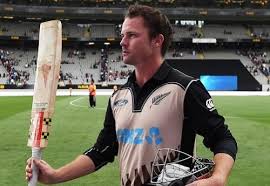
Colin Munro’s T20 form has seen him elevated to open for the ODI side in the hope that he can replicate Brendon McCullum

A lot of things are going against the Black Caps before their One Day International series against India in India starts tonight (Sunday) at 9p.m. NZT. Ominously, India sit atop the ICC ODI team rankings table, equal to South Africa with 120 ratings points, while the Black Caps are currently a mid-table side at 5th. Worse, the matches are in India, where India just demolished the world champion Australia side 4-1.

On the other hand, a lot is going in their favour. New Zealand scored 343/9 in their last warm-up match against an Indian Board President’s XI, with centuries to Ross Taylor and Tom Latham, who in all likelihood will comprise the 4-5 axis over the series. Considering that Kane Williamson will bat at three, this suggests that India might have difficulty bowling the Black Caps out.

Colin Munro is expected to open the batting with Martin Guptill, which is an experimental measure intended to fill the gap left by Brendon McCullum at the top of the order. McCullum’s explosive starts made it possible for Williamson and Taylor to build innings without risk, and Munro has a T20 strike rate of close to 150 – close to what McCullum was striking at for the last 2 years of his ODI career.

It looks as though Williamson will try and get 10 overs out of Colin de Grandhomme, who will bat 7, and with Latham at 5 doing the wicketkeeping this leaves a spot for a pure batsman at 6. This spot might get filled by Henry Nicholls, as it was during the final warm-up match, or the Black Caps might start playing hitters from there, which would probably mean Glenn Phillips.

The other question mark is whether or not Tim Southee is still good enough to command a starting spot in this ODI squad. Although he has been a first-choice seamer for a handful of years, his ODI bowling average over the past three years – which includes the great run at the 2015 Cricket World Cup – is 36.47, which is only good enough for 33rd place on the official ODI bowling rankings.

Damningly, there are four players from Afghanistan alone higher than Southee on the official rankings, which is probably not good enough for a Black Caps side that made the final of the last Cricket World Cup and is aiming to go one better in England in 2019.

It’s very possible that the Black Caps play two spinners on the slow Indian decks, which means they take both Mitchell Santner and Ish Sodhi. Assuming then that they still need de Grandhomme at 7 for the sake of the batting, and that Trent Boult is undroppable, that means Southee will be competing with Adam Milne and Matt Henry for that second seamer’s position.

India, for their part, have two extremely crafty bowlers. With the new ball is Jasprit Bumrah, who isn’t quick but has a Nathan Bracken-style range of subtle variations that make him hard to hit off the square, and with the older ball is Axar Patel, whose wily orthodox is also a difficult proposition on Indian surfaces.

The likely winning of the game, however, will be in India’s power-packed top order. They have four batsmen ranked in the top 14 in the world, with two of them – Virat Kohli and Rohit Sharma – ranked higher than Kane Williamson. Kohli averages a monstrous 55.13 from almost 200 matches, and getting rid of him early is simply a necessity if the Black Caps are to win.

Alongside them are the silky skillful Ajinkya Rahane and the brutal Shikhar Dhawan at the top and MS Dhoni with his 50+ average down the order. India have also found a genuine allrounder in Hardik Pandya so have no obvious weaknesses anywhere.

The Black Caps are only playing three ODIs and they are paying $3.80 on BetFair to win the first one, compared to India’s $1.35. This suggests that the market is expecting a 2-1 or 3-0 win to India.
Cannabis Law Reform Appears Imminent Under The New “Afghanistan” Government

The Afghanistan flag is black, red and green, like the alliance supporting the Sixth Labour Government

A black-red-green “Afghanistan” coalition has replaced National in the halls of New Zealand power, and so the absolute, mindless refusal of the outgoing National Government to countenance any kind of cannabis law reform is now no longer relevant. This means that the wasted decade might be at an end. This article looks at the prospects for cannabis law reform over the next three years.

Labour had already pledged to introduce medicinal cannabis within the first 100 days of taking power, at least to “people with terminal illnesses or in chronic pain”, but questions remain.

It isn’t yet clear what definition of medicinal cannabis Labour intends to use when they change the law. What constitutes “medicinal” use of cannabis is a subject of considerable debate, not least among medical and mental health professionals. That it could be prescribed to people with terminal illnesses seems straightforward enough, but what qualifies as “chronic pain” could vary from a small number of acute conditions on the one hand, to a California-style wide range of ailments on the other (California has had legal medicinal cannabis since 1996).

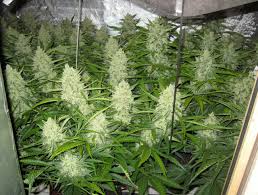
The best outcome for cannabis users would be that the Labour Party adopts the same definition of cannabis, and treats cannabis the same way, as in Julie Anne Genter’s medicinal cannabis bill, currently before Parliament. This bill contains a very broad conception of medicinal cannabis and provides for users to grow their own medicine at home if they have approval from a doctor who believes that cannabis would prevent suffering.

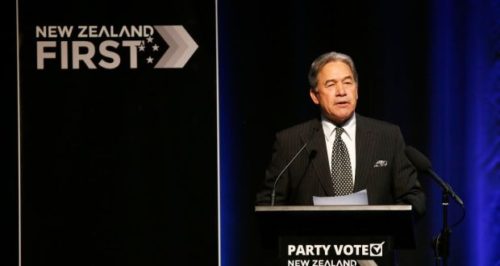
A jackpot outcome for medicinal cannabis users would be for the home grow provisions of Julie Anne Genter’s bill to be made legal within the first hundred days of the Sixth Labour Government. Although we can be sure that all of the Green MPs and most of the Labour MPs would support this, Winston Peters and New Zealand First might prefer a narrower definition of medicinal cannabis in the first hundred days with a broader definition put to referendum as part of the deal with the Greens.

Recently it was learned that the Green Party had successfully negotiated to hold a referendum on personal use of cannabis at or before the 2020 General Election. Although it isn’t clear at this stage whether this will be similar to the referendum that successfully legalised recreational cannabis in Colorado in 2012, or if it will be some watered-down offer of decriminalisation, the very fact that a referendum is happening is excellent news for New Zealand cannabis users.

Although James Shaw is maintaining the lie that the Greens have supported legalising cannabis for 20 years, rather than tell the truth that they abandoned cannabis users for many years in an effort to appeal to the middle class, the fact that he feels the desire to take credit for the change in public perception regarding cannabis is a sign that he is sure that the wind has changed.

This column pointed out some years ago that it would be possible to tell when the public perception of cannabis had definitively shifted because politicians would start publicly claiming to have always supported a law change. Shaw is lying when he says that the Greens have had cannabis law reform as part of their policy for the past 20 years, because cannabis law reform activists have been challenging the Greens that whole time to update their cannabis policy to something similar to that of the Aotearoa Legalise Cannabis Party, and they have only done so in the past year.

But that doesn’t matter any more. The important thing is that a lot of cannabis law reform should be happening in the next three years, under a governing alliance that does not suffer from the fear-based myopia of the National Party around the substance. It appears that the efforts of cannabis law reform activists to persuade the centre-left parties of the merits of reform have been broadly successful, and that the ruling powers are now of a mind to make change to the laws.

*

Vince McLeod is a former Membership Secretary of the Aotearoa Legalise Cannabis Party and author of the Cannabis Activist’s Handbook.

Who Voted for the Ban 1080 Party?

Of all the smaller parties in the 2017 election, the Ban 1080 Party might be the strangest of them. There are other small single-issue parties – the Aotearoa Legalise Cannabis Party being foremost of these – but even these other parties have equivalents overseas. Who are the Ban 1080 Party, and what do we know about their 3,005 voters?

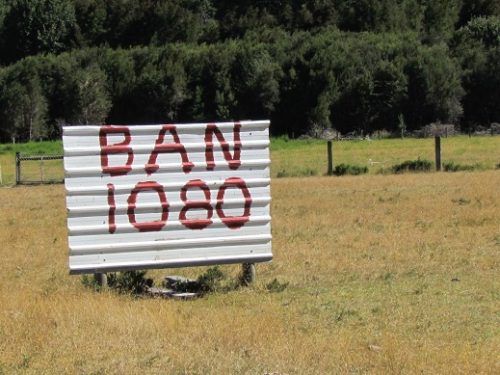
The Ban 1080 Party website argues for the need to stop making aerial poison drops that use sodium monofluoroacetate (1080) in New Zealand’s national parks and forests. The website’s tagline is “Protect our native birds” and they believe that aerial 1080 drops are a risk to the wellbeing of New Zealand’s birdlife.

A strong South Island focus was evident from the correlation matrix – the correlation between voting Ban 1080 Party in 2017 and living on the South Island was 0.37. The reason for this is probably because a greater proportion of South Islanders will live in the vicinity of a national park or a forest than North Islanders, who are much more urban on the whole, and it’s these people who access the outdoors who are most concerned about things like aerial poison drops.

This explain why the Ban 1080 Party also correlates strongly with other demographics that are well-represented on the South Island. The correlations between voting Ban 1080 in 2017 and other demographic categories were 0.34 for being a Kiwi of European descent, and 0.22 with median age. The only age bracket with a significant positive correlation with voting for the Ban 1080 Party was the 50-64 age bracket – the correlation here was 0.38.

If we examine measures of class we can see that Ban 1080 Party voters are poorer and less educated than the national average, which is especially striking if one considers that they otherwise belong to demographics that are positively correlated with wealth.

The correlation between voting Ban 1080 Party in 2017 and median personal income was -0.23, and the correlation between voting Ban 1080 Party in 2017 and having no NZQA qualifications was 0.44. Related to this is a correlation of 0.30 between voting Ban 1080 Party in 2017 and being a regular tobacco smoker. This paints a picture of a section of the community who are relatively simple people and who perhaps have been taken in by the hysteria a bit.

The rural nature of Ban 1080 Party voters is demonstrated starkly when it comes to the correlations between voting for them in 2017 and working in the agriculture, fishing and forestry (0.67) or mining (0.69) industries. There was also a significant positive correlation of 0.35 between voting for Ban 1080 Party in 2017 and working in the hospitality industry.

These three correlations reflect the high proportion of Ban 1080 Party voters who were enrolled in either the West Coast-Tasman or Clutha-Southland electorates.

Underlying that Ban 1080 Party voters are comprised of the outdoorsy kind of person who spends a lot of time in national parks and forests, there are significant positive correlations between voting Ban 1080 Party in 2017 and both being born in New Zealand (0.46) and being male (0.35).

Ironically, given their heavy conservation focus, the Ban 1080 Party does not attract followers who are like the Green followers. The correlation between voting Ban 1080 Party in 2017 and voting Green in 2017 was -0.09.

People who voted Ban 1080 Party tended to overlap with those who voted New Zealand First and, oddly, Aotearoa Legalise Cannabis Party. Voting for the Ban 1080 Party in 2017 had a positive correlation with voting for either of these parties: 0.41 for New Zealand First and 0.28 for the ALCP.

Part of the reason for this is the high level of Maori support for the party. This might sound contradictory, given that most Maoris live on the North Island, but a couple of statistics make this association clear. The first is the correlation between voting Ban 1080 Party and being Maori, which was 0.16, and the correlation between living on the South Island and being Maori, which was -0.26.

This tells us that South Island Maori were proportionately big supporters of the Ban 1080 Party, which is fitting considering that this demographic is extremely active in the outdoors with hunting and food gathering.

Who Voted New Zealand First in 2017

New Zealand First voters are generally drawn from the hard-done-by segments of the population

A previous article in this column examined the differences between New Zealand First voters and the voters of both National and Labour. It turns out that New Zealand First is almost equidistant from the two major parties if measured demographically. This article, however, looks more closely at who voted for New Zealand First in particular.

Despite being considerably whiter than it was in 2014, New Zealand First is not a particularly white party. In 2014 there was a correlation of 0.00 between voting New Zealand First and being a Kiwi of European descent. By 2017 this had climbed to 0.21, which was still not significant.

The strongest correlation between being of a particular ethnicity and voting New Zealand First was with being Maori, which was 0.38. The correlations between voting New Zealand First in 2017 and being a Pacific Islander (-0.21) or being Asian (-0.52) were much more negative.

Tellingly, for a nationalist party, their strongest support was from Maoris, who have the strongest roots in the country as essentially none of them are immigrants. Their next strongest level of support was from Kiwis of European descent, who have the second-deepest roots in the country, and their weakest level of support was from Asians, who have the shallowest.

As in 2014, New Zealand First voters in 2017 were some of the least educated out of any voting bloc. The correlation between having no NZQA qualifications and voting New Zealand First in 2017 was 0.67, and the correlation between having a doctorate and voting New Zealand First in 2017 was -0.60. This tells us that New Zealand First voters are decidedly working-class.

True to stereotype, there was a strong positive correlation of 0.58 between voting New Zealand First in 2017 and being on the pension, but there was also a strong positive correlation of 0.47 between voting New Zealand First in 2017 and being on the invalid’s benefit.

All of this suggests that the easy story of New Zealand First being an old racist’s party is somewhat misguided – it’s true that they do get many votes from poorly educated old white people, but that’s more because New Zealand First gets a lot of votes from hard-done-by people in general and poorly educated old people tend to be limited to their pension and therefore hard-done-by.

Gareth Morgan’s personal antipathy towards Winston Peters was reflected in the correlation of -0.31 between voting The Opportunities Party in 2017 and voting New Zealand First in 2017. This put TOP in a band with United Future (-0.27), ACT (-0.34) and the Greens (-0.48) as parties whose voters did not correlate highly in a general demographic sense with the voters of New Zealand First.

All four of those parties are particularly Pakeha-heavy parties, and ACT, the Greens and TOP appealed heavily both to young and educated people. So there is plenty of reason for these reasonably strong negative correlations.

There were positive correlations between voting New Zealand First in 2017 and voting for any of the Maori-heavy parties in 2017. These were Maori Party (0.11), MANA (0.24) and Aotearoa Legalise Cannabis Party (0.40).

Many will be surprised that there is a moderately strong positive correlation between voting New Zealand First in 2017 and voting Conservative Party in 2017 – this was 0.38. The reason for this is that both parties appeal to the large faction of poorly-educated old white voters mentioned above.

Despite the shared appeal to old white people, however, the correlation between voting National in 2017 and voting New Zealand First in 2017 was only 0.04, far from being significant. The reason for this is the class difference – the National Party appeals to people who are doing well economically (and most of these people are old), whereas New Zealand First appeals to people at the bottom of the ladder (and poor old people with no realistic way of becoming wealthier are definitely near the bottom).

*

This article is an excerpt from the 2nd Edition of Understanding New Zealand, which Dan McGlashan and VJM Publishing will have ready for sale at the end of October 2017. This will contain statistics calculated according to the official final vote counts and will be freshly updated with data from the 2017 General Election.