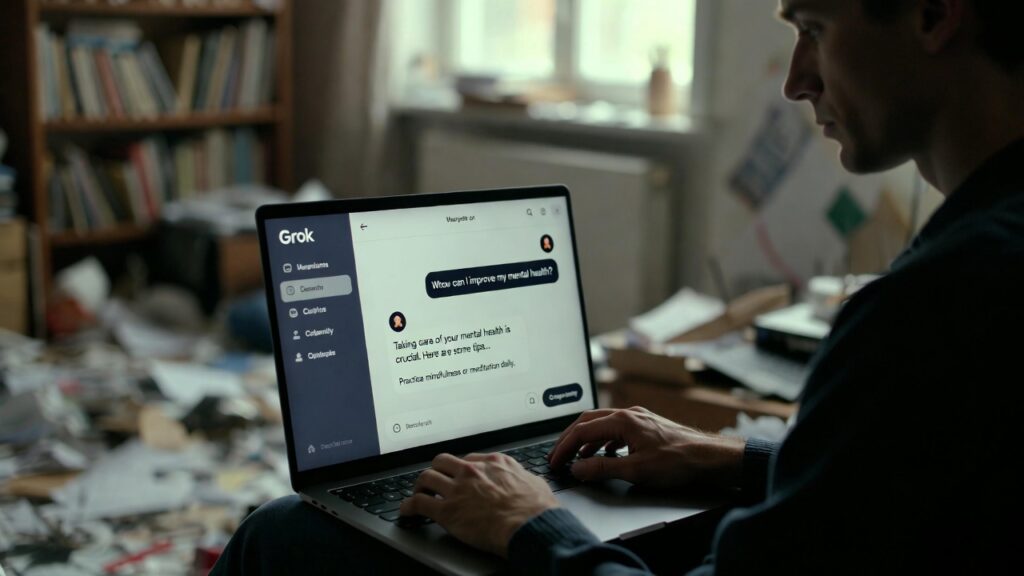
Thirty years on from the publication of the Unabomber Manifesto, it’s apparent that Ted Kaczynski was right about technology. It mostly enslaves rather than liberates. We were promised all of humanity’s information and learning at our fingertips; we received advertising, addiction and slop.
The difficulty is foreign relations. A technologically inferior nation will be subjugated by a technologically superior one, as history demonstrates.
Therefore, the alternative centrist state needs to find a balance between the enslaving effects of technology and the need to defend ourselves against foreign aggressors (see The Alt Centrist Approach To Defence for more on this).
Resisting the enslaving effects of technology does not mean surrendering to hysteria or propaganda. The alternative centrist opposes clumsy, anti-freedom measures like the under-16 social media ban. Such moves are egregious violations of the Second Acceptance. Research has shown that the harms of social media use for younger people are drastically overstated; opposition to social media is a moral panic.
However, despite the advantages of technology in minimising human suffering, it can also cause immense suffering, in particular through its enslaving effects. Kaczynski pointed out that the invention of the car did not make people freer, because they ended up needing cars. This is now also true of cellphones.
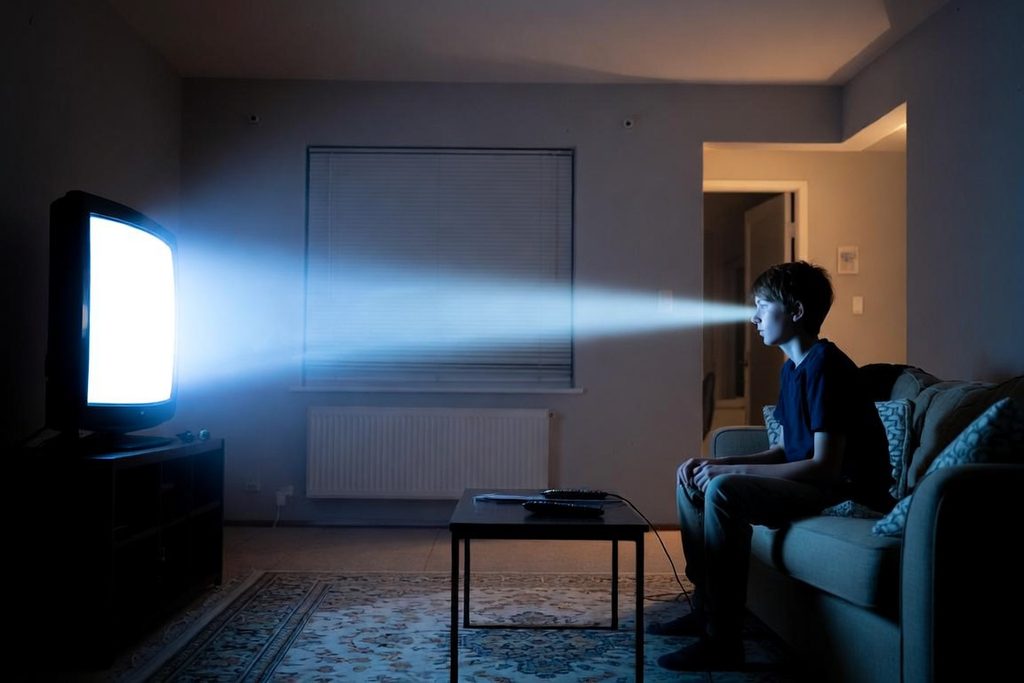
The alternative centrist approach divides media technology into one-way media and two-way media. One-way media is when the receiver cannot communicate with the sender or with any other receivers, such as television or radio. Two-way media is when it’s possible for the receiver to give their opinion and to discuss the merits of the broadcast with others. Two-way media is preferred, on the basis of the freedom and justice it offers compared to one-way media.
Much of the hysteria about social media is pushed by advocates of one-way media who don’t want people talking. The reality is that media did not arise organically as a way of informing people. The media has been an apparatus of propaganda since its inception. This constant propagandising has had extremely damaging effects on both social cohesion and on the mental health of the citizenry. It’s not natural to sit passively to get hectored and badgered into obeying the political establishment and consuming.
The alternative centrist state would levy massive taxes on technology that has significant deleterious effects on mental and social health. This would mean that televisions and smartphones, along with all other devices for receiving one-way media, were taxed as vices, like alcohol and tobacco. Advertising on one-way media would be heavily taxed also, to make up for the social harm caused.
The main advantage with future technology will be replacing harms caused by human error.
One area of application is self-driving cars. Human drivers currently kill over 40,000 people in America every year. The vast majority of these deaths are attributable to speeding, impaired driving, distracted driving and fatigue or drowsiness. Self-driving cars will not have these problems. Already there are video compliations demonstrating the superior ability of self-driving cars to avoid accidents.
It’s easy to predict that human drivers will soon be banned. This wouldn’t be much different to ships and planes using computers to navigate instead of humans using sextants and altimeters. The alternative centrist encourages all possibilities for reducing human misery through technology.
A similar case applies to medicine. Iatrogenic harm is believed to kill as many as 250,000 people annually in America. There are several reasons for this, but over and above the difficulties inherent to a complicated subject such as medicine, there is a lot of indifference among doctors as to the patients’ realities. Many people have had the experience of meeting an elderly doctor who checked out of learning new things 15 years ago and simply will not listen. Much like elderly drivers, elderly doctors like this do tremendous amounts of damage.
An alternative centrist state would leverage AI for potential healthcare benefits, especially in the area of preventative medicine. School students would be taught to use AI for this purpose, and also when to bypass the AI to enlist a human doctor.
Jurisprudence is a third area in which AI offers great advantages. People are regularly confused and appalled by the bizarre verdicts and sentences handed out by biased and prejudiced humans. Peaceful cannabis growers often get harsher sentences than people who beat others to death and people who sexually offend against young children. Grok recommends sentences more in line with what a decent human would.
One of the major problems with modern technology is that it is mostly controlled by corporate interests in America. The solution is government-controlled social media. The alternative centrist state would create social media platforms for domestic use. This is not hard to achieve today with many clones of existing platforms available. The state would then communicate with its citizens exclusively on these domestic platforms. This would allow for the social benefits of social media, but would prevent much of the manipulation by foreign actors.
In a related vein, foreign social media platforms that do not follow free speech laws will be heavily fined or banned. Platforms such as Reddit, which do not allow nationalists to speak, would be banned outright.
Aside from the heavy taxes on antisocial forms of technology, technological development would, like most economic issues, mostly be left to the free market (see The Alt Centrist Approach To The Economy). Close co-operation between the corporates and the military for the sake of technological development would be established, and facilitated, by the state.
*
This chapter is from The Alternative Centrist Manifesto, the upcoming work of political philosophy that offers the answers to the political problems of the West.
*
For more of VJM’s ideas, see his work on other platforms!
For even more of VJM’s ideas, buy one of his books!
*
If you enjoyed reading this piece, buy a compilation of our best pieces from previous years!
Best VJMP Essays and Articles of 2024-25
Best VJMP Essays and Articles of 2023
Best VJMP Essays and Articles of 2022
Best VJMP Essays and Articles of 2021
Best VJMP Essays and Articles of 2020
Best VJMP Essays and Articles of 2019
Best VJMP Essays and Articles of 2018
Best VJMP Essays and Articles of 2017