Not Kiwi Enough? If You Don’t Have Roots Here You’re Not a Kiwi At All

Very few New Zealanders would have the arrogance to move to another country and then lecture those people about who they are, and we shouldn’t accept it when it’s done to us

Three years as an immigrant in Europe taught me a lot about the concept of roots. This is a familiar concept to Maori people, who for a couple of centuries have had to tell the difference between Pakeha who were loyal to New Zealand and Pakeha who weren’t. The short of it is that one’s degree of belonging to a nation is a function of the roots that you have there.

In Sweden, like almost everywhere in the Old World, there is little question about who counts as a Swede. If you are Swedish then you have Swedish ancestors going back to the dawn of time, like all other Swedes. This is the common bond that gives rise to the Swedish nation.

If you do not have these roots you are not Swedish. This is a very simple and near-universally accepted belief. You can get a Swedish passport and become a ‘paper Swede’, and if you also speak Swedish this will entitle you to be treated with full dignity and as if your presence has as much value as anyone else – but you still won’t be Swedish.

Maoris in New Zealand have a similar concept. The depth of your roots tell you whether or not you can be trusted to stick around, or if you’re the sort of person who just wants to make a quick buck and then disappear (for obvious historical reasons, Maoris tend to be exceptionally wary of the latter sort of person).

The only real way to determine if a person is a Kiwi or not is whether or not they would stick by other Kiwis should a calamity befall the nation. This is a measure of the amount of solidarity that person has with other Kiwis. Would they stay to defend the country if it was attacked by foreign military forces? Or would they run away and leave Kiwis to their fate?

Fundamentally this is a question of solidarity. People with roots in New Zealand have cousins here, they have family friends in other cities, they have stories of how their great-great-grandparents or earlier descendants tamed the land, and this naturally leads to solidarity with other people who have similar roots and similar stories.

Golriz Ghahraman, who made the headlines today for lecturing Kiwis about our “internalised self-hate”, has no roots in New Zealand in any case, which is part of the explanation for the lack of solidarity she feels that she has received. Everything suggests that if the Kiwi people were ever truly in danger, she would rather move to another country than to stay and help out. If things got tough here, she would rather abandon us than face personal disadvantage by remaining here.

After all, she and her family have already done this once, so they have a track record of it.

She has no moral right to turn up in New Zealand as a migrant and then start lecturing us about what a Kiwi is or isn’t. The thought of a Kiwi moving to Iran and then presuming to tell the Iranians what’s what about who they are is ludicrous – so why do we accept the same in reverse? For someone with no roots in the country to act as if their verdict about our true nature has any weight represents an incredible arrogance and sense of entitlement.

Moreover, her implication that a refusal to allow New Zealand to become a dumping ground for the world’s human refuse is “race supremacy” is disgusting in light of the strong bonds of solidarity that exist between the descendants of British colonists and Maoris. These two groups get along as well as they do because they have shared roots in the country – it has nothing to do with race.

Obviously Ghahraman has spoken to very few Maoris in her lifetime, for if she had she would be aware that the strongest nationalist and anti-refugee sentiments in the country are harboured by them.

None of this is to argue that the National Front are correct or that they represent an appealing face of New Zealand. A New Zealand identity must not be based on a hatred of the other.

But for a Kiwi identity to exist, a certain degree of exclusivity is necessary. There is no other way of achieving this but to declare that people without roots in New Zealand are not Kiwis.

To make the argument that Kiwis with hundreds of years of roots in New Zealand are in the same category as people who just stepped off a plane and got a passport is preposterous. For one thing, it presumes to decide for those long-established New Zealanders who they are permitted to feel solidarity with. For another, it ignores the fact that almost every other culture in the world does the opposite.

Kiwis who are either Maoris or descended from colonists have a couple of centuries of family lore that relates to New Zealand that newcomers simply cannot have. They can tell you stories about how their great-grandmother cut her thumb off with an axe here, or how their grandmother broke her arm falling off a bicycle here, or how their grandfather used to go pig hunting here. Newcomers do not and cannot represent this culture.

At the end of the day, if people with deep roots in New Zealand want to exclude those who don’t, that’s their prerogative, and Iranian social justice warriors admonishing us to hate ourselves for it won’t make a mouseshit of difference.

Everything is a Matter of “Muh Feels”

It’s common for one side of an argument to demand from the other side a cold, logical, rational reason to justify their position, while at the same time decrying all appeals to emotion as fallacious. The problem with this line of reasoning is that there are no truly objective reasons to make moral judgments about anything. As this essay will investigate, all political motivations are based on emotion.

Usually the person dismissing an argument as emotional is the sort of person who is a bit autistic, perhaps themselves not really in touch with their own emotions. This sort of person has a tendency to dismiss the genuine outrage, horror or disgust of other people as illegitimate motivators. They also have a striking tendency to not realise how emotional their own arguments are.

For instance, on the question of taxation for the sake of paying for social services, many people on the left make the argument that the right are without emotion when it comes to child poverty, mental health services, rape crisis centres and the like. The usual rightist counter to this is to claim that them keeping the maximum amount of their own income is a moral imperative to oppose communism or the likes, and that left-wing “feels” about starving children etc. do not and cannot ever justify the government levying taxation upon people.

What these rightists usually miss when it comes to this line of reasoning are their own emotions that are tied up in the issue.

The government levying taxation upon people is not wrong by dint of some decree from God. It is usually only opposed by those who believe that their personal net return of government services received from this taxation is negative. For these people, a sense of anger arises from feelings of having one’s energy parasitised; a similar sort of anger arises in cases of property theft or gross disrespect.

It can thus be seen that the right wing opposes taxation for emotional reasons. In other words, “muh feels”.

Political questions, when it comes down to it, are all a matter of “muh feels”. Feelings of injustice motivate most of them, and for many people such feelings are unavoidable. After all, the feelings of the population about what is the optimum level of taxation fall along a bell curve with no taxation at one end and full communism at the other, but the actual overall level of taxation must fall on a point on that curve, meaning that many above it will be outraged that it isn’t higher and many below it will be outraged that it isn’t lower.

Even murder fulfills this criteria. After all, what’s wrong with murder other than that it makes us feel bad? If it wasn’t for the fact that a person likely feels terrified when they’re being murdered, or the fact that the people left behind feel bereaved when someone they love is murdered, or the fact that the people in the neighbourhood feel afraid by murders in case they are next, or the fact that other citizens feel disgusted by murder because they consider it a bestial act of brutality, then there would be no reason to even make murder illegal, much less anything else.

Indeed, it could even be argued that, without feels, none of us would be capable of feeling motivated to do anything, and we would simply lie about until we died of metabolic failure.

Although it’s often true that a person does not examine their own emotional impulses and makes political decisions by just lurching from one burst of neurotransmitters to the next, this does not by itself mean that emotional input into decision making is necessarily undesirable, or that a line of reasoning appealing to an emotion is necessarily fallacious.

It could even be that, for a social species, correct decisions cannot be made without some accounting for how people will emotionally react to them. If one drills deep enough, there may not be much more to life than “muh feels”.

VJMP Reads: Anders Breivik’s Manifesto XIV

This reading carries on from here.

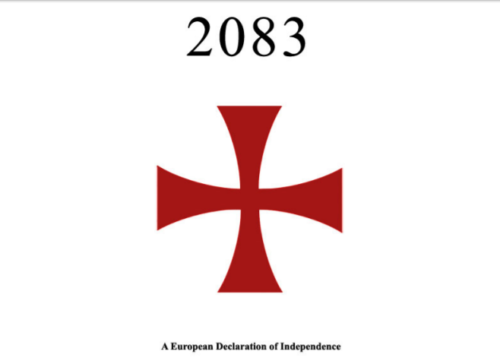
In this section (pages 1153-1234), Breivik gives his thoughts on the Knights Templar and ethnocentricism. The ultimate goal appears to be the institution of a cultural conservative society akin to that of Japan or South Korea, or what Breivik believes Europe to have been like in the 1950s.

Again, an element of paranoia comes through in Breivik’s writings, evidenced through extremely cynical conclusions to otherwise intelligent paths of reasoning. He correctly notes that the Nazi loss in World War II made any nationalist or racial conservative sentiments start to look a bit dangerous, and that this gave the initiative in the culture wars to the Marxists, but it’s not necessarily true that what happened to the West was due to some nefarious master plan.

It’s more likely to be simple superstition – such a thing happens to the ideology of the losers of every war.

Despite the paranoia, Breivik’s cold Nordic honesty shines through as some points, such as when he concedes that the Marxists have up until now been better propagandists than the cultural conservatives.

Although Breivik decries Nazism as a hate ideology at many points in this document, this section, if read in isolation, could easily give the reader the impression he was a racial supremacist. He decries what he believes to be an attempt by the cultural Marxists to cause the extinction of the Nordic genotype on the grounds that this genotype is evil, and he justifies an ethnostate on the basis that one would preserve the indigenous rights of the European people in the face of high Muslim breeding rates.

At some points, Breivik’s argument shows a distinct lack of deeper coherence. At one point he correctly points out that women like Pamela Anderson, Gwyneth Paltrow, Scarlett Johansson and Taylor Swift attained fame due to their distinctively Nordic appearance, but the fact that this is true is evidence against a global media conspiracy to exterminate the Nordic genotype. Why would a media conspiracy put forward the Nordic genotype as a beauty standard when they could put forward an Asian or an African genotype and convince white men to ignore their women?

If the media puts the Nordic look forward as a beauty ideal this will simply shift the pressure of sexual selection to favour Nordic people, which means that the Nordic genotype would reproduce at a higher rate than it otherwise would have done.

The Nordic genotype is not really faced with extinction. People of Nordic genotypes control 30 million square kilometres of territory across Europe, North America and Australia and number close to 400 million (USA 180 million, Germany 75 million, Britain 55 million, Canada 20 million, Low Countries 25 million, Scandinavia 20 million, Australia and New Zealand 20 million). Their combined economic output is three times the closest competitor (either the Japanese or the Han Chinese).

Any idea that Breivik is a neo-Nazi can be decisively put to bed when he writes that “If there is one historical figure and past Germanic leader I hate it is Adolf Hitler.” However, he concedes that there is a 60% overlap between his ideal policy and that of the Nazis.

In a passage about sexual morality, Breivik writes “Approximately 50% of my female friends end up under the definition/category; promiscuous (female sluts) as they have engaged in sexual activity with more than 20 partners…” This sort of lifestyle was not for him, however, despite that “I could easily have chosen the same path if I wanted to, due to my looks, status, resourcefulness and charm.” This invites one to wonder how Breivik would have turned out if someone had given him some MDMA at age 18 or so.

Curiously, there is a passage where Breivik writes about the need to use “reprogenetics” to create a race of humans free from hereditary diseases in which he sounds very similar to the megalomaniacal Sigurd Mastersen in The Verity Key. Breivik wants to use women in third-world countries as surrogate mothers for embryos engineered to create a child of the Nordic genotype.

Further underlying Breivik’s inability to comprehend irony, he writes in one passage about the dangers of hip hop and how the lyrics can easily lead to a destructive and anti-authoritarian attitude. Well, it’s apparent that Breivik himself fulfills the criteria of having a destructive and anti-authoritarian attitude.

Notably, Breivik writes that “I never tried drugs myself as I never wanted to break that threshold.” Perhaps if he had been willing to try some drugs he would have broken out of the paranoid, obsessive, repetitive thought-loops of vengeance and justice that led him to kill over 70 people.

We Don’t Need a Cannabis Referendum – Just Legalise It

Conducting a referendum about a liberty that should already be guaranteed by human rights legislation has proven to be highly divisive in Australia

Kiwi cannabis users have been buoyed by the demise of the Fifth National Government. It is already clear from the change in rhetoric that the incoming Sixth Labour Government will approach the issue with honesty, in contrast to the John Key/Bill English/Peter Dunne approach. However, honesty doesn’t prevent one from making errors – and the decision to hold a referendum about legalising the personal use of cannabis is one such error.

It’s widely accepted that the actions of the New Zealand Parliament in passing gay marriage legislation was a wiser, less divisive move than the actions of the Australian Parliament in holding a referendum on the subject. The Australian experience of having a referendum on such an emotive subject was that the country tore itself in two, with many people eventually choosing to vote against gay marriage out of sheer bitterness and resentment.

The New Zealand experience of making it legal by Parliamentary decree gave the country an opportunity to come together in mutual desire to right the wrongs of the past. Even conservatives like Maurice Williamson saw the need to give a passionate speech in favour of a law change, and the Parliament itself went as far as singing a song out of a will to demonstrate that the old days of hate were over.

It’s also widely acknowledged – by the New Zealand people, if not by the New Zealand ruling classes – that withholding cannabis medicine from sick people who need it is an extremely cruel thing to do, and something only done because of hate. Certainly it’s much crueler than withholding marriage rights from people, which, while inconvenient, are hardly a matter of life and death or daily suffering and misery.

Moreover, it’s obvious from the experience of the half a dozen American states that have already legalised the recreational use of cannabis that the downsides of doing so have been massively overstated for decades. The predicted crime explosion and spates of suicides never eventuated – indeed, some research suggests that suicide rates can drop by almost 5% in the wake of legalising medicinal cannabis, and this rises to almost 10% in the cases of young males.

So why not just do the obvious thing, acknowledge the evident truth, stop lying and just make the personal use of cannabis legal by Parliamentary decree, as the Labour Government intends to do with medicinal cannabis?

This way we can avoid giving a platform to moronic bigots like Bob McCroskie to further divide our society with fearmongering and lies. The Australian equivalents to McCroskie have polluted media space with hysterical predictions of doom, further alienating gay people from the mainstream, and the same will happen in New Zealand if we also put a question of basic human rights to referendum.

Ultimately, no-one has the right to prevent anyone else from using cannabis. No-one has the right to take this freedom away from other people, any more than they have the right to prevent them from watching cricket or eating parmesan. Therefore, there is no good reason to have a referendum about whether it should be legal or not, because there’s ultimately no good reason to obey any law prohibiting the use of cannabis.

Our law should simply reflect this reality and make it legal.

*

Vince McLeod is a former Membership Secretary of the Aotearoa Legalise Cannabis Party and author of the Cannabis Activist’s Handbook.