

The Ethnonationalism Spectrum

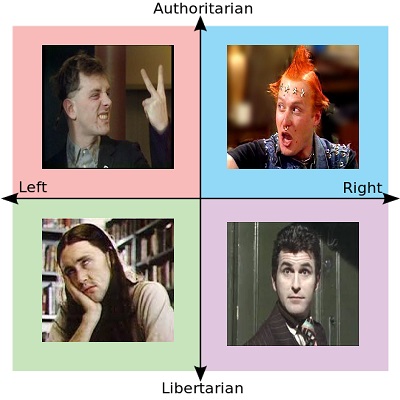
The ethnonationalism spectrum varies from ethnosupremacism (top) and ethnomasochism (bottom)

Despite being an accurate description of the way that human societies organised themselves for ten thousand years, the word ‘ethnostate’ has become taboo recently. Although the debate is usually dominated by arguments between insane Nazis and insane Marxists, there is a fascinating variety of opinions on the question of how wide and/or porous the group borders should be. This essay attempts to put them on a spectrum.

The two poles of the ethnonationalism spectrum are ethnosupremacism and ethnomasochism.

Ethnosupremacism found its apogee in the racial supremacist doctrines of Adolf Hitler’s Nazi Party in the 1940s, under which the Eastern Europeans were declared subhuman and therefore less worthy of existing in the lands of Poland and Ukraine than the German soldiers to who the land was promised. This pole of the spectrum fell out of favour, understandably, when the German “Drang nach Osten” ended up causing the deaths of over 25 million people.

There are two aspects to ethnosupremacism (see: The Three Definitions of Racism) and one is much more dangerous than the other. The first can be considered a sort of pride in the achievements of one’s kin and is little different to individual self-esteem raised to the group level, whereas the second is the belief that other ethnicities are categorically lesser and perhaps even ought to be exterminated.

The first step from ethnosupremacism towards sanity could be called ethnoconservatism. This is the “fuck you, I’ve got mine” of the ethnonationalist spectrum. This position is similar to regular conservatism on the class spectrum. Essentially it says that, because one’s own kind are doing well from the way that society is structured, there is nothing wrong with the way society is structured and it should therefore stay the same.

This is different to ethnosupremacism in the sense that the ethnosupremacist doesn’t believe that any amount of money can help the lesser races overcome their inherently base nature, whereas the ethnoconservative doesn’t care, they just don’t want to pay for it. Likewise, the ethnoconservative doesn’t despise other races, they just don’t think it’s right to mix with them, for whatever reasons.

This is a common position in the New World, on account of that the remnants of the native population are often much poorer than the descendants of the settlers. If an individual feels that the Government shouldn’t charge them taxes in order to fund social programs etc. intended to reduce income inequality, they are likely to take this position.

Ethnomasochism has found its apogee today, in the anti-white SJW culture that represents the furthest swing of the Great Pendulum away from the ethnosupremacism of the Nazis. Ethnomasochism is discussed at length here but could be summarised as a belief that one’s own kind were worthy of particular disgrace on account of some past political misdeeds. Very often, ethnomasochism is the result of a low self-esteem, whereby the individual’s self-hatred is projected onto the race as a defence mechanism.

The first step from ethnomasochism towards sanity is a realisation that individuals do not inherit sin from their forefathers, and that even if they did, it would be impossible to determine how much blame one’s forefathers had caused one to inherit. However, if one is more intelligent than the average person one might come to perceive that gross pride in one’s race is considered vulgar by most cultured people and that a modicum of racial humility ought to be adopted, on occasion, for the sake of politeness.

A white person here might not possess any self-hatred but might make a joke about how a high proportion of child sex offenders are white people. An Asian might make a joke about how he’s shit at driving, and a black person might make a joke about how he feels tempted to steal something. This is not genuine self-hatred but a kind of self-deprecation for the sake of social utility. Indeed, a person needs to have genuine self-esteem before they can joke about themselves in this manner.

This is the position most commonly associated with sanguine cosmopolitanism and could be described as ethnocurious. Many people who are university educated or who identify with the left-libertarian quadrant (of the common political model) are here, especially if they are the sort of person who does a lot of international travel. Ethnocurious people often have foreign girlfriends or boyfriends, and can prefer other races on account of that interactions with their own kind lack novelty.

In the middle of the spectrum is a point of reason. Here it is acknowledged that each person is an individual, and therefore neither responsible for the crimes of their race nor able to take credit for its accomplishments, and yet that each person has genetic characteristics that have shaped the way that their environment has treated them, and which have thereby shaped their life story.

Here one believes that the most logical thing to do, therefore, is to treat everyone else as equal partners in a grand human project to minimise the amount of suffering endured by conscious beings in this world. Other people are to be understood but their resentments are not to be encouraged.

Unfortunately for us, this point of reason conflicts with all the other positions. Ethnosupremacists will shun you for being a weakling who is unwilling to stand up for his own kind. Ethnoconservatives will shun you for being a suspected Marxist. The ethnocurious feel like this position wilfully misses out of much of the flavour that life has to offer, and ethnomasochists will despise you for not adopting their quasi-religious narrative that their particular race is guilty.

Even more unfortunately, this point of reason conflicts with neoliberal ideology (the prevailing ideology of our age), and so a combination of state and corporate power has colluded to obscure the truth about it. Neoliberal ideology demands that any desire on the part of big business for cheap labour can be met by simply opening the borders to mass Third World immigration, and so any problems that might be caused on account of mixing together people of genotypes that never previously mixed can be dismissed as racism.

The dumber a person is, the more likely they are to pick an unsophisticated position at either pole of the ethnonationalist spectrum. If they are sadistic they will choose ethnosupremacism where everyone else is subhuman, if they are masochistic they will choose ethnomasochism where everyone else is an immoral oppressor. If they are intelligent they will have a nuanced position somewhere centrist.

*

If you enjoyed reading this essay, you can get a compilation of the Best VJMP Essays and Articles of 2017 from Amazon for Kindle or Amazon for CreateSpace (for international readers), or TradeMe (for Kiwis).
Phil Goff’s Denial of Council Venues to Canadian Speakers Violated the Human Rights Act

People in New Zealand have a set of human rights, enshrined in law. These include the right not to be discriminated against for unjust reasons. As this essay will show, Phil Goff violated the human rights of New Zealanders and of Lauren Southern and Stefan Molyneux when he decreed that the Canadian duo were banned from all Auckland council venues because of their political opinions.

Section 21 of the Human Rights Act 1993 lays out the prohibited grounds for discrimination in New Zealand. These are the usual reasons, considered necessary to the functioning of a modern society: race, marital status, gender, age, disability etc. The logic is that we cannot have a functioning society if people are allowed to deny goods and services to others because of spurious and unfair reasons, therefore to do so is criminal.

So you can’t refuse to serve a person at a bar, for example, simply because they are Maori. Neither can you refuse to give a job to a person for the reason that they are homosexual. These are considered acts of discrimination, and are unlawful.

One of these prohibited grounds for discrimination is “political opinion, which includes the lack of a particular political opinion or any political opinion”. This is a verbatim quote of Section 21(j).

So it’s prohibited to refuse a service to someone on the grounds of their political attitudes. Not even if they are Communists or Nazis may one do so. It doesn’t matter, for example, if the proprietor of a hotel thinks that open borders will lead to the ethnic cleansing of his people through the irreversible dilution of his culture – he is still not allowed to refuse service to other people simply because they believe in open borders.

Section 44 of the Human Rights Act states the following:

It shall be unlawful for any person who supplies goods, facilities, or services to the public or to any section of the public—

(a) to refuse or fail on demand to provide any other person with those goods, facilities, or services; or
(b) to treat any other person less favourably in connection with the provision of those goods, facilities, or services than would otherwise be the case,—

by reason of any of the prohibited grounds of discrimination.

So it is not lawful to deny the provision of a facility, such as a council venue, to a speaker based on the political opinions of that speaker. If a speaker wishes to hire a venue – even if it’s a private one – the owner may not refuse service to them simply because of their political opinions.

Phil Goff refused to provide use of council venues to Southern and Molyneux on account of their political opinions. He said that the two have views that “divide rather than unite”, and claimed that this was justification enough. This is unlawful in New Zealand. You cannot deny the provision of a venue to another person merely because you have declared their political opinions “repugnant”.

Phil Goff is a criminal and a human rights violator. If there was justice in New Zealand, he would stand trial.

*

If you enjoyed reading this essay, you can get a compilation of the Best VJMP Essays and Articles of 2017 from Amazon for Kindle or Amazon for CreateSpace (for international readers), or TradeMe (for Kiwis).

When You’re Not Allowed to Talk, It’s Time to Pick Up a Rifle

American President John F Kennedy once said “Those who make peaceful revolution impossible make violent revolution inevitable.” Peaceful revolution is dependent on free speech, because we have to be able to talk about what’s going wrong in our society before we can change anything. Absent that free speech, as this essay will examine, we might as well pick up rifles and get ready to fight.

When things are going wrong in your society, you have to talk about the problems if you’re going to fix them. This is why the principle of free speech was enshrined as the first amendment to the American Constitution. In order for people to be aware that there is a problem, it needs to be discussed reasonably, so that people can change their opinions when presented with new information, and thereby arrive at more accurate perceptions.

Once you’re no longer able to talk about your society’s problems openly, people will still talk about them (of course) only privately. Instead of being hopeful and confident, they will become bitter and suspicious. Resentment at not being able to speak openly will creep in, and this will turn to anger directed at those considered responsible. Eventually this anger turns to hate, which can only find expression in violence.

The West has made a massive strategic error over the past 40 years, in opening themselves up to mass Muslim and African immigration. The logic appears to have been that, because employers don’t want to pay fair wages for work in the West, we can simply open the borders to the poor countries of the world, whose members will be so grateful for the opportunity to come here that they won’t ask for the same wages that a Westerner would.

However, the example of real life showed that this logic doesn’t hold. Gratitude is not a universal human value. Muslims didn’t come to integrate and to contribute; they came to conquer, as directed by their holy scripture. Africans mostly came for the welfare – the unemployment rate among Africans in the West is well over 50%. The total cost to Western societies for letting these people in has been tremendous, in both financial and social terms.

Far from leading to a successful multicultural paradise, this mass immigration has caused the social fabric of Europe to disintegrate. Paris, which was once known as the City of Lights and Love, is now so shockingly decrepit that it’s responsible for a new mental disorder, called Paris Syndrome. This refers to the sense of derealisation that tourists feel when they come to Paris and, instead of finding what they expected, discover an almost Third-World environment with soldiers on the streets.

New Zealand has recently discovered that you’re not allowed to talk about such things. Auckland Mayor Phil Goff recently banned speakers Lauren Southern and Stefan Molyneux from giving a talk at the Auckland Town Hall, and the corporate media supported him by calling the duo “far-right”, “white supremacists” and “extremists”.

Southern and Molyneux wanted to talk about such taboo subjects as the consequences of mass Muslim and African immigration to the West on social cohesion and trust, and the correlations between race and IQ. Goff calculated that, as a globalist, such discussion didn’t serve his political agenda so he shut the talk down. This has had the effect of sending the entire discussion underground – where it is discussed, as mentioned above, with resentment and hate.

Unfortunately, there is no easy solution to the problem of a tyrannical government that is cracking down on freedom of expression. The historical record tells us what will happen: we will get pushed further and further into a state of subjugation as the Government takes ever more aggressive steps to repress discussion of its failures, until the resentment and anger reaches a critical mass. Beyond this point, people will look for revenge first and foremost, and potential future harm to themselves will not weigh as heavily.

In such a case, the only reasonable action is to pick up a rifle. Once you’re not allowed to talk, you’re a slave. You’re a slave to those who set the agenda and the talking points (in this case, the globalist corporatist media). With a rifle, however, you can still assert the right to speak and to be heard. If the government and media are colluding to take your right to speak away, then it’s the only way to assert a right to be heard.

*

If you enjoyed reading this essay, you can get a compilation of the Best VJMP Essays and Articles of 2017 from Amazon for Kindle or Amazon for CreateSpace (for international readers), or TradeMe (for Kiwis).