
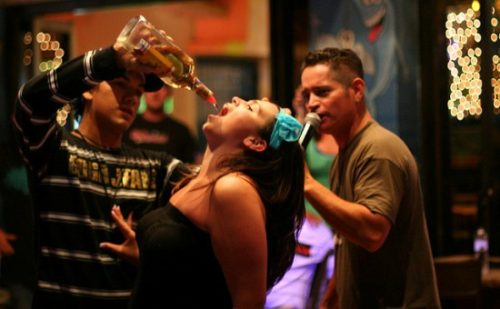
Will Drinking Alcohol Still Be Popular In 50 Years?

Booze: it’s kind of crap, and it’s time we moved on to better drugs

A lot of really stupid things have fallen out of fashion in recent decades, and for good reason. Smoking tobacco is now uncommon, because we’re now much more aware of the deleterious effects than we used to be, and seeing someone riding a motorcycle without a helmet is rare too. This article asks the question: will drinking alcohol still form the basis of Western social interaction in half a century?

Let’s face it: the only reason we drink a lot is habit. It’s not because alcohol is good, and it’s not because alcohol is safe. Alcohol isn’t really good because there are plenty of other common drugs that are better: MDMA is a better entactogen, cannabis is more relaxing, opium is better for getting wasted with. It’s also not safe, for reasons that are obvious to anyone who has spent time around drunks.

No – the reason why we drink a lot is because our parents did, and they drank because their parents did, and so on, and in every case it’s true that people drank alcohol because that’s just what people did. For thousands of years, the ancestors of Westerners knocked back the booze – they didn’t know about the relationship between alcohol and heart disease, liver failure or cancer, because people seldom lived long enough to be affected by such things.

Moreover, there are large capital interests that are tied up in alcohol manufacture and sales. The alcohol industry is easily big enough to buy off politicians at the national level – and they do. These politicians have been more than happy to stop any competitor to alcohol getting established, which is why our recreational drug scene is soaked with booze (and thereby with the violence, sluttiness, vomiting and hangovers that inevitably accompany the alcohol experience).

These factors might very soon stop having an impact. The changing drug market scene has smashed the duopoly over the recreational drug market that alcohol once enjoyed along with tobacco. Not only are there now over a dozen territories where cannabis is properly legal, but the rise of dark markets on the Internet has made it possible for people anywhere to access a wide variety of drugs without needing anything more than a postal address.

There have also been more sinister undertones to the historical promotion of alcohol use.

From the earliest days of the Age of Colonialism, European traders were aware of the destructive effect that alcohol (usually in the form of rum) had on the natives of the New World. There was no need to shoot them when you could simply trade them some booze and watch them destroy themselves. Although it was not appreciated at the time, alcohol was effectively able to be used as a bioweapon by the Europeans.

This was because they had developed a genetic resistance to alcohol over thousands of years of exposure, while the natives had not. Over the past several thousand years, because Europeans were getting drunk much of the time, there was a selective pressure against those who misbehaved while drunk. Anyone who became excessively violent or stupid while drunk was liable to delete themselves, and their genes, from the gene pool. Over time, therefore, Europeans adapted to behave relatively tamely when intoxicated.

So when the European traders introduced alcohol to the delicate psychobiological balance of the New World, it had a similar effect to a hand grenade. Alcoholism has destroyed the native peoples of North America, South America, Australia and Polynesia. If European complicity in this was widely accepted and owned up to, the need to legalise recreational alternatives to alcohol would become obvious.

Given all of these factors, it has to be asked whether the widespread consumption of alcohol is something that will continue much further into the future. It can already be observed that the youngest generation is abandoning alcohol en masse, usually for cannabis but sometimes for other substances that can be easily be obtained: MDMA or research chemicals are popular alternatives.

Global recreational drug culture this century is more likely to revolve around cannabis for the reasons described. Cannabis is something that people of all nations and races can enjoy equally without any sense of cultural advantage, unlike alcohol, which is really the white man’s drug. It can already be seen (in the few places they exist) that cannabis cafes serve as places where people of many cultures come together in harmony and good cheer.

As awareness of the harms of alcohol spreads, as recreational alternatives become increasingly available and as world culture moves further away from a Eurocentric model, it’s possible that the prominence of alcohol in our culture diminishes in the same way tobacco did. It’s hard to imagine now, but there are good reasons to think that hardly anyone will still be regularly drinking alcohol in 50 years’ time.

*

If you enjoyed reading this essay, you can get a compilation of the Best VJMP Essays and Articles of 2017 from Amazon for Kindle or Amazon for CreateSpace (for international readers), or TradeMe (for Kiwis).
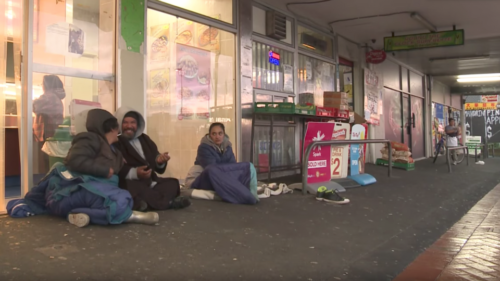
Is It Time to Nationalise Empty, Foreign-Owned Houses in New Zealand?

It isn’t fair that Kiwis sleep on the streets while houses sit empty because their foreign owners are gambling on the New Zealand housing market

As seen by its climbdowns on the TPPA, on medicinal cannabis and on immigration, the Sixth Labour Government lacks courage. This means that the time has come to make some truly bold suggestions. Given that our homelessness crisis has long ago reached critical status, it’s time for a bold solution to the housing shortage. This essay proposes that we nationalise all empty, foreign-owned houses to provide shelter for our own people.

The state of homelessness can be summed up by the fact that there are believed to be 24,000 homeless in Auckland alone. This gives New Zealand by far the worst homelessness rate in the OECD, a list which includes much warmer and poorer countries like Mexico.

Per capita, our homelessness rate is far worse than the second-placed Czech Republic and around twice that of Australia, despite that it’s much easier to be homeless in the Australian climate. It’s gone beyond being a national disgrace, to the point where it is threatening our status as a developed country with a functioning society. It’s time to consider extreme measures.

It’s hard to get an accurate figure on the number of New Zealand homes owned by foreigners. The people making most of the profit off selling them have a vested interest in restricting awareness of, and information about, their activities. However, we can make educated guesses.

A 2016 census revealed that over 8% of Vancouver homes are unoccupied. From the same link, we can see that slightly fewer than 6% of Vancouver homes are both unoccupied and owned by foreigners. So roughly two-thirds of empty homes in Vancouver are also owned by foreign residents.

There are believed to be 33,000 empty houses in Auckland, with others saying 35,000. If two-thirds of those houses are both empty and owned by foreigners, that makes for 22,000 homes – about the same number as there are homeless people in Auckland.

The Vancouver solution so far is to charge a 1% property tax on an annual basis for every Vancouver property left unoccupied. This amounts to $10,000 in taxes for a million-dollar property. Vancouver is infamous for its overheated housing market and perhaps represents an extreme case, but the basic principle is the same as in Auckland: most of these foreigners are speculators who have parked money in real estate for the capital gains, and they have no interest whatsoever in the ability of the locals to find affordable housing.

The question naturally arises: if there are so many foreign residents who are keeping houses empty purely for the sake of making a profit, and so many Kiwis who are going homeless because of the shortage of available housing, why be satisfied with a tiny bit of tax as compensation for the damage done? Why not nationalise empty houses that are owned by foreign residents?

Nationalisation could proceed on the grounds that owning a house in New Zealand and deliberately keeping it empty is a crime, in much the same way as owning a business and refusing to serve a customer on the basis of their race is already a crime.

Deliberately keeping a house empty when there is a housing shortage would therefore be declared to be a crime equivalent to refusing to stop to ascertain injury at the site of a motor vehicle accident. In other words, it would be an action that represented a criminal level of disregard for the well-being of the people of this nation.

The logical punishment would be forfeiture of the property.

After nationalisation, the houses would simply be added to the existing Housing New Zealand stock as an asset on the balance sheet. From there, Housing New Zealand would proceed to treat them as regular state houses, and they would be rented out or apportioned to the needy as was necessary to meet their needs for shelter.

*

If you enjoyed reading this essay, you can get a compilation of the Best VJMP Essays and Articles of 2017 from Amazon for Kindle or Amazon for CreateSpace (for international readers), or TradeMe (for Kiwis).
The Northcote By-Election Result is Fraudulent and Illegitimate

Northcote by-election candidate Dan Bidois was crowned the winner, despite only getting the support of 21% of eligible voters

The reason why our ruling class have the right to rule, so they claim, is because they have the consent of the masses. But the winner of yesterday’s Northcote by-election and newly crowned Member of Parliament, Dan Bidois, did not have the consent of the masses. Therefore, the Northcote by-election result is fraudulent and illegitimate.

19,900 people cast a vote in the Northcote by-election. According to the Northcote Electoral Profile on the Parliamentary Profiles page, there are 49,569 eligible voters in that electorate. This tells us that barely more than 40% of eligible voters chose to participate in the democratic process – something like 30,000 people abstained.

The question then has to be asked: how is the election of Bidois to the House of Representatives legitimate, when fewer than half of eligible voters took part in the election process? If so few people believed that the democratic process was worth participating in, isn’t that sufficient evidence that it has failed, that its claims of legitimacy are fraudulent?

Bidois himself won 10,147 votes in the by-election, which amounts to almost 21% of the eligible voters in Northcote. If no-one cares about the election, how can the winner of it legitimately claim to have any power to rule anyone? Any reasonable person can see that this is absurd. We can’t possibly know what the electorate wants unless we canvas the non-voters.

One candidate, Liam Walsh of Not A Party, ran specifically on the non-vote. His platform was that democracy has failed and is inherently corrupt (hard to deny) and that it would be better for us to scrap it entirely and work together instead of using the democratic system to try and fuck each other over.

After all, as a National MP, Dan Bidois will immediately work towards the further enslavement of the young, the Maori and the working class. Walsh notes that Bidois came second to an empty seat.

One wonders what would happen if those 60% of adults in Northcote who do not feel represented by New Zealand’s peculiar imitation of democracy gave their allegiance to Walsh instead of to the central government.

What if, instead of paying taxes to the IRD to piss up the wall on flag referendums, yacht races, imprisoning medicinal cannabis growers and importing Somali rapists, people paid no taxes, and we had neither flag referendums nor a justice system putting people in cages for growing medicinal plants?

Some might respond that having no democratic government will leave the community unable to solve problems that require collective solutions, but Dan Bidois, with his 21% support, sure as fuck isn’t going to be solving them either. He, like the majority of backbenchers, will stick his nose straight up the arsehole of his party’s leader, in this case Simon Bridges, and he will keep it wedged there as long as the National Party hierarchy is responsible for his meal ticket. As a consequence he will vote to enforce National Party policy and dogma – not the will of the Northcote electorate.

A democratic election that gets 40% turnout cannot claim to return a legitimate ruler. The vast majority of the Northcote electorate did not consent to being represented by Bidois; therefore, his being in the House of Representatives is no more legitimate than it would have been if the CIA had helped him raise an army that seized power through force.

After all, a foreign-backed dictatorship might even gain the consent of more than 21% of the population – assuming it put a sufficiently enlightened person on the throne – which would make it no less legitimate than yesterday’s by-election.

If the democratic process is rejected by a majority of the people, then it’s time to get together and to think up a new political philosophy that adequately represents them. It’s apparent from the fact that New Zealand clings to cannabis prohibition, a policy supported by almost no-one, that the will of the people is not represented by the law enacted by their rulers. This failure to represent the people’s will is evidence that democracy has failed and needs to be superceded.

*

If you enjoyed reading this essay, you can get a compilation of the Best VJMP Essays and Articles of 2017 from Amazon for Kindle or Amazon for CreateSpace (for international readers), or TradeMe (for Kiwis).

What Would the Average Hourly Wage Be in New Zealand If Wages Had Kept Up With House Prices?

New Zealand is torn by inter-generational tension right now. The young have no hope of finding houses they can afford and the old simply blame them for being too lazy to work hard enough to afford one. However, the numbers show that workers today get a much worse deal than they did 30 years ago. This article looks at what the average wage in New Zealand would be if it had kept pace with the price of houses since the late 1980s.

This graph from the Trading Economics website tracks the increase in the New Zealand Average Hourly Wage over the past 30 years. We can see that the average hourly wage in New Zealand, as of the beginning of 2018, is $31.03. The Reserve Bank of New Zealand website contains many interesting statistics and graphs, many of which can be downloaded from this link. This article will combine both sources.

In March of 2001, the House Price Index (from the RBNZ link above) stood at 700.2. At this time, the average hourly wage was $17.70. So if a person wished to purchase a $300,000 house, suitable for a growing family, they would have to have capital equal to 16,949 hours of work at the average wage.

According to this article by Human Resources Director, Kiwis work an average of 1,762 hours a year (this figure was for 2014, but for cultural reasons this figure does not change much over time). This means that, in March of 2001, buying a house suitable for raising a family in required capital equal to 9.62 years of full-time work at the average wage.

How does that compare to today?

After seventeen years of red-hot growth, the House Price Index now stands at 2480.8. This represents an increase of 254% over those seventeen years, and it means that a $300,000 house in March 2001 now costs $1,062,000 (all growth factors assumed equal). As mentioned above, the average hourly wage in New Zealand has increased from $17.70 in that time to $31.03, which represents an increase of 75%.

In other words, in January of 2018, buying a $1,062,000 house, suitable for raising a family in, requires capital equal to 34,224 hours of working at the average hourly wage. This is equivalent to 19.42 years of work at the average hourly wage.

We can see, then, that when measured in terms of a person’s ability to purchase a house suitable for raising a family in, the average New Zealander is less than half as wealthy as they were only 17 years ago. To have the same house buying power that it had in 2001, an average wage in New Zealand would now have to be $62.65 per hour.

People working in 1989 – when the majority of Baby Boomers would have been in the workforce – had it even better still. In December of 1989 the House Price Index stood at 453.5; the average hourly wage stood at $13.07 in the first quarter of that year.

So our standard family home that cost $300,000 in 2001 cost a mere 64.8% of that price in 1989, whereas the average wage in 1989 was 73.8% of what it was in 2001. Put another way, the average house suitable for raising a family in cost $194,400 in 1989, which represented capital equal to 14,873 hours of labour at the average wage. This was equivalent to a mere 8.44 years of saved labour.

The average house price has gone up 447% over the past 30 years in New Zealand; the average hourly wage has gone up 137% in that time. So to have the same house-buying power as the average New Zealand worker in 1989, a Kiwi in 2018 would have to get paid $71.50 an hour. This would allow them to buy a decent house after saving around 14,000 hours of the average wage, which is the standard of living that the average worker had in 1989.

In summary, the average New Zealand worker has lost almost 60% of the house-buying power of their wage over the past 30 years.

Buying a decent house in 2018 costs savings equal to 19.42 years of work at the average wage; 30 years ago buying an equivalent quality of housing cost savings equal to 8.44 years of work. So if a Kiwi left home at age 18 in 1970 and saved half of their income on the average wage they could own a house by age 35; a Kiwi who left home at age 18 in the year 2000 and saved half of their income on the average wage can’t expect to own one before they turn 57.

Despite tiny relative savings on consumer electronics, it’s obvious that the standard of living for young people is much lower nowadays than it was 30 years ago. The fact that wages haven’t come close to keeping up with housing costs is the main culprit.

*

Dan McGlashan is the man with his finger on the statistical pulse of New Zealand. His magnum opus, Understanding New Zealand, is the complete demographic analysis of the Kiwi people. Available on TradeMe for $35.60.