
Our Problem Isn’t Too Much Masculinity – It’s Too Little

Our culture is so fucked up that it has a number of things completely backwards. It’s easier to find a doctor willing to tell you about the benefits of male infant genital mutilation than it is to find one willing to tell you about the benefits of medicinal cannabis. As this essay will examine, one of the things we currently have backwards is blaming a lack of masculinity on an excess of it.

The phrase “toxic masculinity” is bandied about, ever more frequently nowadays, as if it described an established phenomenon in psychological science. Ostensibly, the term is limited to the description of particular behaviours, performed by men, that are toxic to others or to society at large. In reality, the term is only ever used in the attempt to belittle men – or masculinity in general.

People frequently use the term with the implication that the toxicity comes from an excess of masculinity. But we live in the least masculine age in the history of Planet Earth. In New Zealand at the time of the 2013 Census, around 14% of children were raised by single mothers. When they are at primary school, 88% of their teachers will be women.

This means that most of the adult influence on boys in their formative years is female. Some boys will get to school having never seen a positive male role model or perhaps any at all. If these children are growing up to cause problems because they don’t recognise other people’s physical boundaries, it’s not the sort of problem that more femininity will fix.

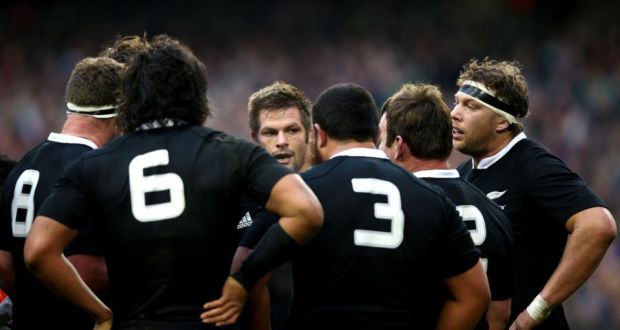
The phrase “toxic masculinity” is often used to attack participatory sports, especially under the guise that these sports teach men to be aggressive, domineering and invasive of other people’s personal space.

The reality is – as everyone who has played sport knows – the rules of every game force you to channel aggression into goal-directed activity that does not harm anyone without their consent. You can’t just punch someone on a sporting field, or you’ll be sent off and possibly kicked out of your team. In this regard, the older men (usually) act as models of composure for the younger ones to follow.

Moreover, participatory sports have done more than any government initiative to break down barriers between different race and class groups and encourage them to all meet on the level. On a cricket field, a three doesn’t become a four just because the batsman was brown or middle-class or for any other reason. Masculine energy can therefore be used as a leveller in the interests of horizontalisation just as much as feminine energy can.

Our time in history is so completely feminised, and so confused, that hardly anyone even knows what masculinity is any more. It’s little wonder that some people can call it toxic with a straight face, when they have such a confused conception of it.

We’re so confused nowadays, that we have to go right back. Way, way, way back before even Jesus and even Socrates and Plato, back to the real ancients, who told us: masculinity is the ability to impose order upon chaos. Fundamentally the world is made of a feminine yin-chaos and a masculine yang-order, and in much the same way that the feminine makes chaos out of order, so too does the masculine make order out of chaos.

There are several ways that a person can impose order upon chaos, but correct conduct means that you impose order upon yourself first. This is something that is understood by every actual man, and is not understood by boys or by boys masquerading as men. They go out to impose order upon the world first, and do not realise that the strongest influence is the most subtle.

Socrates, perhaps the foremost Western example of manhood, taught that happiness came from making peace with death. Esoterically, one might describe this as imposing order upon one’s own spirit. As a previous article here has discussed, a failure to impose order upon one’s own spirit by making peace with death is akin to labouring under chains of gold, such that one becomes the slave of anyone who can credibly promise absolution.

A person who has imposed order upon their own spirit is able to impose order upon their mind also. Not being afraid of death means to not be in a state of constant panic at the inevitability of it, which means that it becomes possible to use one’s time on low-intensity pursuits such as reading. They will also be much more able to behave appropriately, on account of having imposed order upon their emotions.

It can be seen here that the common modern conception of masculinity is completely arse about face.

A properly masculine man will not sexually harass women for the simple reason that he has imposed order upon his reproductive instincts and, as such, can discharge them when appropriate, as a matter of will. His animal instincts don’t lead him – that would be an example of chaos being in control.

Likewise, a properly masculine man doesn’t feel the need to dominate everyone, or to boss them around, or to avenge minor insults with violence. He has imposed order upon his own ego, and as such does not have the same insecurities that a less masculine man would have. A truly masculine man has imposed such order upon his emotions that others can not easily knock him off balance. He is in charge of himself.

As such, a properly masculine man attracts the feminine not through force and aggression, but through attracting its freely-willed devotion. Rapists and molesters are not examples of too much masculinity but too little. A real man will have imposed such order upon his life, his behaviour and his appearance, that women will naturally want to be devoted to him, and therefore he doesn’t feel impelled to move on them without their consent.

Men who act on their impulses without consideration for the well-being of others are not “toxic males” – they are shitheads. What our society needs is more masculinity, so that young men can see examples of the correct imposition of order upon chaos. If young males are shown older males being rewarded for correctly imposing order upon themselves, they will imitate it. Thus, what we need is more masculinity, not less.

*

If you enjoyed reading this essay, you can get a compilation of the Best VJMP Essays and Articles of 2018 from Amazon for Kindle or Amazon for CreateSpace (for international readers), or TradeMe (for Kiwis). A compilation of the Best VJMP Essays and Articles of 2017 is also available.


Why Intelligence Can Never Be a Fixed Concept

Intelligence is something that everyone appears to understand, but no-one can agree on a definition. Despite this, people are pretty sure that it can be measured. Although tests that measure IQ have been shown to have a lot of predictive value, a precise definition of term remains elusive. But as this essay will examine, intelligence can never be a fixed concept anyway.

What is intelligence? A common definition of intelligence is “ability to recognise patterns and avoid dangers”. Another is “the ability to apply knowledge and skills”, which assumes that intelligence is an entirely different thing to instinct. Other definitions involve a capacity for learning, logic, reasoning, self-awareness etc. Despite this variety, most people think they know it when they see it.

A previous essay here discussed how there are at least two different spectrums of intelligence, and how both of them might appear to be intelligent in some situations and not in others. Another essay suggested that there is both a masculine and a feminine intelligence and stupidity. What’s apparent from all of these different definitions is that some behaviours are intelligent in some circumstances, and unintelligent in other circumstances, depending on how adaptive they are to the environment.

For example, being able to faithfully repeat what you are told is a sign of intelligence when a student has a good teacher who educates them honestly. When the student is a political cadre being indoctrinated into a dangerous ideology, it’s not a sign of intelligence. However, the underlying neurological and psychological attributes that enable either are roughly the same.

Most people can also accept that intelligence is something that evolved, controversial as that may be when one gets into the specifics of it. The reasons for this evolution are presumably because intelligence provided a selective advantage in either staying alive or finding mates and reproducing.

The first one of these points seems pretty obvious: if you are smart you are better able to avoid the dangers that the natural world has created. Intelligence is highly correlated with pattern recognition, and recognising patterns is the key to recognising dangers. If you notice that the last person who did something died, you are less likely to do it. Therefore, you are more likely to survive to reproductive age yourself.

The second point is more subtle, but equally clear if one thinks about it. The more intelligent a creature is the better shape it will keep itself in, therefore the healthier it will be, and the more attractive a mate it will seem to others of its kind. This greater attractiveness will lead to more mating opportunities, and therefore more offspring (all other things being equal).

However, there’s a hidden paradox in this simple biological definition. If intelligence is biological, then it cannot be a fixed concept, because if it’s an adaptation to the environment it will change along with that environment.

Aside from the odd species like crocodiles, who have found one evolutionary niche and just stayed there, animal species tend to be opportunistic. They tend to range across a number of niches and take food, water and reproductive opportunities when they arise. The most excellent example of this is the human being, who has adapted to many environments and who is capable of anything.

As the environment keeps changing, so too will the optimal behaviours within each environment change.

For instance, much of the behaviour that we currently associate with intelligence has much to do with avoiding impulsive behaviours. Someone who stops and thinks before taking action will be almost universally considered more intelligent than someone who does not. Likewise, someone who saves money will be considered more intelligent than someone who wastes it, and someone who reads books will be considered more intelligent than someone who parties.

This is all well and good in a civilised, industrial society like ours. But if society should break down, then the equilibrium point will shift back from cautious deliberation towards opportunism. If there is no law and order, then there’s no advantage in taking one’s time to consider things. The advantage shifts towards those with the propensity to hit and run before the opportunity is lost. Intelligence would then become a matter of understanding the importance of not hesitating.

Another problem is that the kind of skills and aptitudes that made a person become considered intelligent by their peers in the ancient past are not necessarily the same today. Human survival in the past had a lot to do with astrology, animal husbandry and swordsmanship – all skills that are now only practiced by small minorities. A person might have been considered highly intelligent in the past on account of that their brain made them good at animal husbandry, but the same person might be considered low intelligence today if they can’t find a technological skill.

It might even go the other way. Society might continue to become more and more technological, so that the selective advantage wasn’t in favour of impulsivity but in favour of the kind of semi-autistic gadgetry obsession that distinguishes people who are today considered nerds. Such a society might no longer have any need for social intelligence but would rather operate on computer science aptitude.

In all of these cases, the society that results after massive environmental change will define intelligence as adaptation to it, not as adaptation to some other time and place. Neither will they define intelligence as an adaptation to the natural world in which we evolved, because such a thing no longer exists.

In the end, the concept of intelligence is a biological one, and therefore can only be understood relative to a specific environment, or set of environments. Because the natural world keeps changing – and our social world even faster – the concept of intelligence will keep evolving as humans do. It can therefore never be a fixed and clearly defined concept.

*

If you enjoyed reading this essay, you can get a compilation of the Best VJMP Essays and Articles of 2018 from Amazon for Kindle or Amazon for CreateSpace (for international readers), or TradeMe (for Kiwis). A compilation of the Best VJMP Essays and Articles of 2017 is also available.
The Two Fundamental Political Questions

There are a myriad of political questions under discussion, and every day that goes by there are more. All of these questions have contributed to a state of confusion. This essay seeks to cut through it, by arguing that all of those questions fundamentally boil down to two interdependent ones: Who and How Much?

Politics exists in other mammals, in particular primates, and could be said to be a cultural method of minimising violence in the distribution of resources. It’s a way of deciding who gets what, and who goes without. The first fundamental question of politics, then, is: “Who is part of the ingroup?”

All political arrangements are a way of reaching the most satisfying arrangement for the group. In cases where it’s clear who is in the group and who isn’t, such arrangements are simple. The practical reality, however, is that it’s very difficult to draw clear and distinct lines between who belongs and who does not.

It’s an easy question to answer when the subject is a family. This group derives from the strongest bond of solidarity that exists: that between mother and child. The members of the group are therefore the mother and children, plus the father, plus the parents (especially the maternal grandmother).

When it’s an extended family, or a village, it’s also easy to answer. It’s when the group size starts to exceed Dunbar’s Number that problems start to arise. Dunbar’s Number is an ethological rule of thumb that posits the breakdown of social structure once the size of the group exceeds about 150. This number is an estimation of the number of meaningful social connections a person can maintain.

Once you have a group that exceeds this, like a town, city-state or kingdom, then it becomes impossible for individuals to remember enough social connections for them to recognise every person they meet. This means that individuals start to encounter strangers. This is an everyday concept for us, but only because we are civilised – in the biological past, encounters between strangers frequently resulted in violence.

To circumvent this violence, lines were drawn to clearly delineate who was part of the ingroup and who was not. Another way to ask the first of the two fundamental political questions is, therefore: “Who counts as ‘us’, and who counts as ‘them’?”. As will be shown, this question is interdependent with the second.

The second fundamental political question is: “What does it mean to be ‘us’ and ‘them’?” Once you have a group, it then becomes a matter of what the members of the group are willing to do for each other. Are they willing to die for each other, or do they merely extend a slight favouritism sometimes?

Viewed another way, the second fundamental political question is one of solidarity. How much solidarity do members of this group have for one another? If they have high levels of solidarity, the group could be a fearsome political or military force in their region, or upon the world stage. If they have low levels of solidarity, then the name of the group might be something of a joke.

From looking at the consequences of the various ways of answering these two questions, two laws of group psychology become evident.

The first is: the larger the ingroup, the weaker the bonds of solidarity. As mentioned above, the strongest bonds are between mother and child, followed by the wider family bonds. Tribal bonds are also very strong, but once the group becomes larger than 150, bonds begin to weaken appreciably. When the group becomes too big, ingroup members start being treated as strangers. Then, new ingroups form.

The second law is: the more diversity within the ingroup, the weaker the bonds of solidarity. At one extreme is the example of a family. Such a group will co-operate so closely that individuals are happy to make extreme sacrifices for each other. At the other extreme would be a group that was comprised of one half Nazis and the other half Communists. Such a group will tear itself apart in short order.

The inverse relationship between diversity and wealth within a nation is established: the more diverse a nation, the poorer it tends to be. The reason why is clear if one considers that the most important factor in national wealth is the human capital of the workers. It costs money to make an investment in the human capital of the young, and people are less willing to pay to make that investment the less they have in common with those young people.

A loss of solidarity with increasing diversity can also be observed by comparing the nature of society in Scandinavia or Japan with society in America or Brazil. In the former countries, people are generally happy to pay taxes because they believe those taxes will help people like them. Their answer to the second fundamental political question is that there ought to be strong bonds of solidarity within a nation, like an extended family, and their answer to the first is that who constitutes ‘us’ needs to be tightly controlled.

The two fundamental political questions are therefore interrelated. The first question determines the answers to the second question, and vice-versa. It is impossible to decide how much solidarity one should have for other group members until you know who is in the group, and it’s impossible to decide who should be in the group until you decide how much solidarity is expected of each member.

But until those questions are answered, it’s impossible to decide any other question. A person’s position on issues such as how much tax to pay, what social services should be covered, immigration, defence and more, are all functions of their positions on these two fundamental political questions. Until you know who counts as ‘us’ and what that entails, it’s impossible to decide anything else.

*

If you enjoyed reading this essay, you can get a compilation of the Best VJMP Essays and Articles of 2017 from Amazon for Kindle or Amazon for CreateSpace (for international readers), or TradeMe (for Kiwis).

Reverse McCarthyism

A terrible and pathetic social phenomenon occurred in the United States of the 1950s. In the shadow of the Cold War, a large number of people lost their jobs and faced social persecution after being accused of Communist ties or sympathies, a phenomenon known as McCarthyism. Our society today is wracked with a similar, but different phenomenon – this essay calls it “Reverse McCarthyism”.

Senator Joe McCarthy was the man who gave the name to the phenomenon, otherwise known as the “Red Scare“. He started it by making the claim to a Republican Women’s Club that he had “a list of names that were made known to the Secretary of State as being members of the Communist Party and who nevertheless are still working and shaping policy in the State Department.” The implication was that Communist traitors had infiltrated the US Government.

The ensuing mania to root out suspected Communist sympathisers led to a large number of innocent people getting harassed, interrogated and fired or rendered unemployable. This had the effect of chilling all discussion about left-wing topics, for fear of being accused of being Communist. People would openly declare their contempt for “Pinks” and for labour movements in general, leading to the normalisation of extremely conservative attitudes.

Our culture nowadays has a very similar phenomenon occurring. Now that the Great Pendulum has swung back in the other direction, as it does every 50-60 years, today’s form of McCarthyism takes aim at the bogeymen of the left. We can call this phenomenon ‘Reverse McCarthyism’.

Reverse McCarthyism is a witchhunt against suspected supporters of Nazism.

Original McCarthyism was marked by a fear of saying anything that sounded even vaguely Communist. Reverse McCarthyism is identical, except about Nazism. In the same way that Original McCarthyism scared people into silence about left-wing ideas, Reverse McCarthyism scares people into silence over nationalist ideas.

It’s fair to say that open declarations of racial supremacy do not contribute towards the common peace – but the truth is above all, and without the freedom to express the truth we have nothing.

The idea that a Western country could realistically be improved by importing millions of Muslims and Africans is insane. Reverse McCarthyists, however, make out that to oppose it means that you must hate non-white people and desire to see them expelled for the sake of racial purity. Opposition to Third World immigration is genocide. Much like other moral panics, Reverse McCarthyism is leading to people making terrible decisions out of a fear of being persecuted for wrongthink.

The most boneheaded example of Reverse McCarthyism has been the FaceBook witchhunts of recent years. It’s now possible to get ratted out to the FaceBook admins, and banned, for even the vaguest allusion to something that the Nazis might have supported. You don’t have to support genocide or even ethnic purity – the mere suggestion that a nation ought to have the choice to decide what sort of person comes through its borders is enough. Even laugh reacting the wrong post can be taken as support for Nazism.

Hitler jokes are right out. The famous meme of Hitler strumming a banjo is completely verboten, as is the Hitler dancing with glowsticks gif and the Hitler-fighting-the-Satanic-banking-cartel meme. Posting any of these will get you blocked and banned. No mercy can be had because, under the rules of Reverse McCarthyism, any lenience shown towards Nazi jokes makes a person morally complicit in all the crimes of World War II (as well as European imperialism).

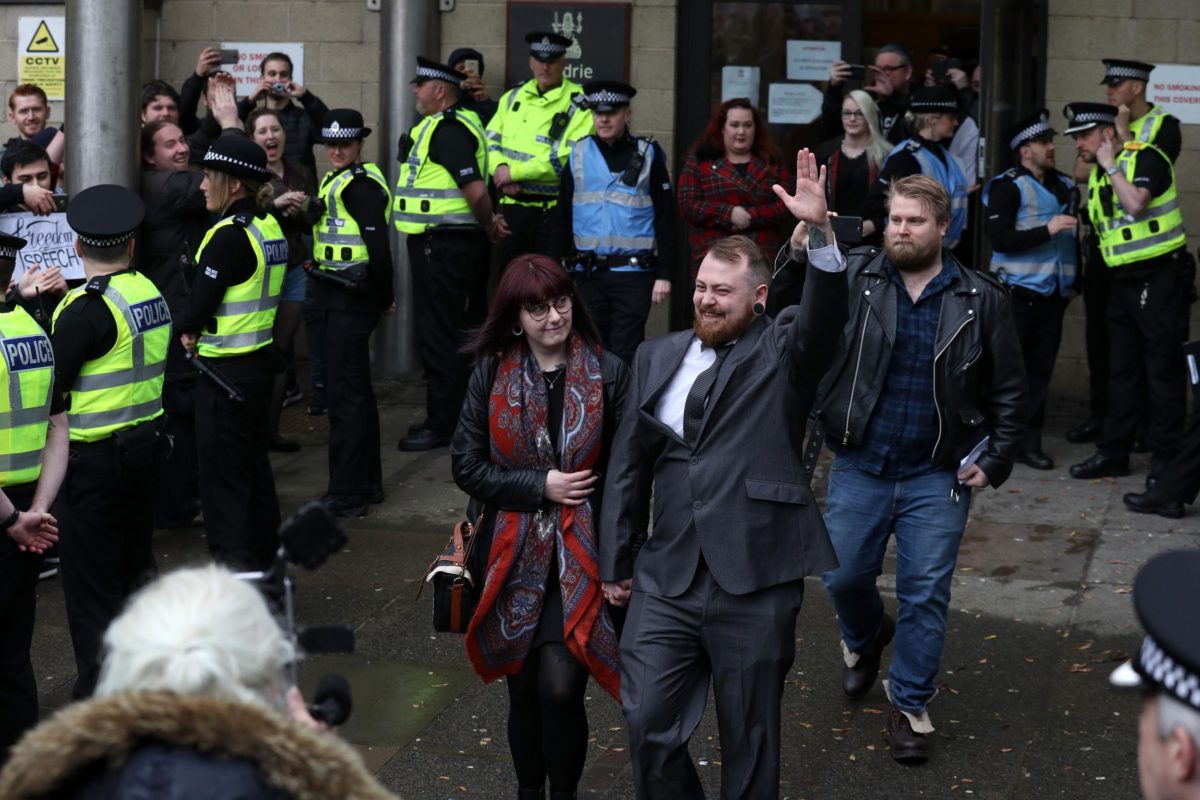
The most pathetic example of all – which showed that Reverse McCarthyism has gone just as far as the original did – was when Scottish comedian Count Dankula was convicted of a hate crime and fined £800 for teaching his girlfriend’s dog to do a Nazi salute as a joke. In this case the moral hysteria had reached such a degree of intensity that a mere shitpost was judged worthy of being branded a criminal.

There is an overlap between Reverse McCarthyism and the Holocaust religion. Both of these ideologies benefit from pushing the myth that the Nazis were a uniquely monstrous evil, somehow categorically greater than any that has gone before. In the case of the Holocaust religion, this sentiment is used to justify the conquest of the Palestinians; in the case of Reverse McCarthyism it is used to justify more globalism.

Reverse McCarthyism is pushed by a different sort of person. Although many Reverse McCarthyists are Jews seeking revenge for the original Red Scare, the majority are just the same bog-standard capitalist parasite that used the original as an excuse to bust unions (ironically, simply pointing out the fact that many Reverse McCarthyists are Jews is enough to get Nazism accusations from other Reverse McCarthyists). These people oppose nationalism because they want to import cheap labour to make money today.

The phenomenon has led to some strange bedfellows, notably Israeli Jews and actual Nazis, who both oppose globalisation on account of that it weakens the borders of their particular desired ethnic enclave. This has led to the common but bizarre sight of Western leftists calling Israeli Jews ‘Nazis’ on account of their desire for a strong border wall and immigration policies that favour a particular race.

*

If you enjoyed reading this essay, you can get a compilation of the Best VJMP Essays and Articles of 2017 from Amazon for Kindle or Amazon for CreateSpace (for international readers), or TradeMe (for Kiwis).