
The Third Tenet Of Elementalism

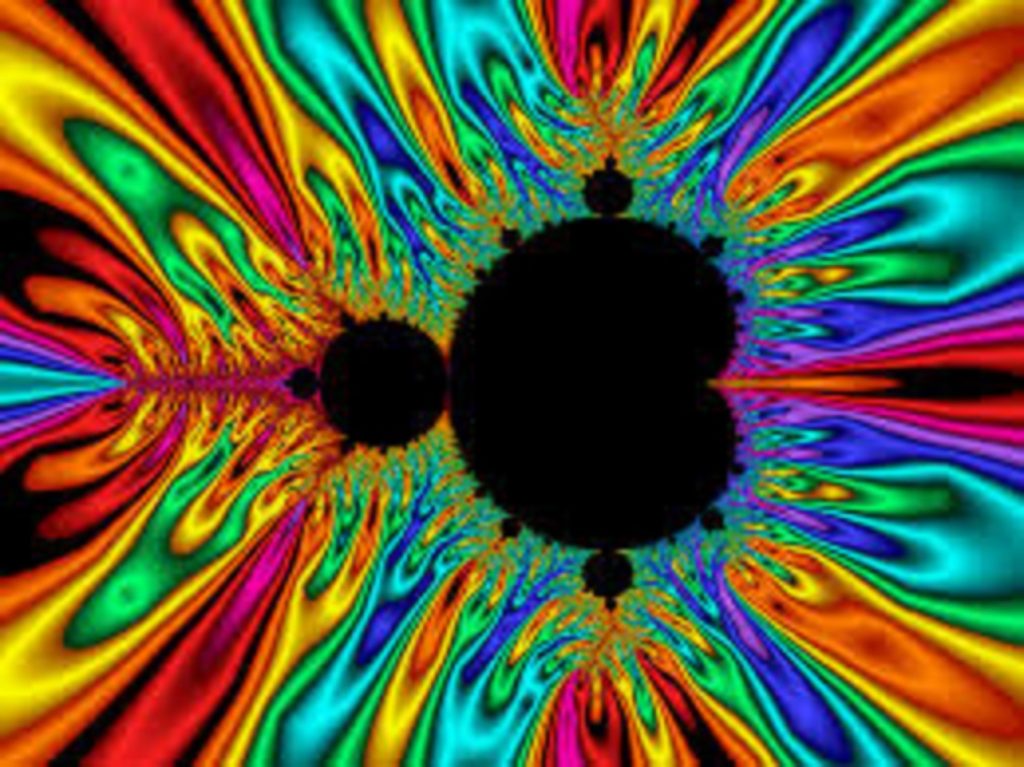
1. The Great Fractal is the eternal and infinite interplay of the dance between masculine and feminine and the war between good and evil.

2. This is the Third and Expansive Tenet of Elementalism.

3. The Great Fractal is eternal because it is more fundamental than time.

4. Time is the illusion created by the movement of a fragment of consciousness through The Great Fractal.

5. The Great Fractal is infinite because it contains all of the possible contents of consciousness. Every perception, every emotion, every thought and every frequency are all contained therein.

6. The Great Fractal is an interplay, because its purpose is to entertain the gods throughout eternity. As such, its primary purpose is to offer somewhere for the gods to play.

7. The masculine and the feminine principles are engaged in an eternal dance. This dance sees one side take control, then the other, in a consensual exchange.

8. The good and evil principles are engaged in an eternal war. This war sees one side take control, then the other, in a non-consensual exchange.

9. The experience of the Great Fractal is one of consensual and non-consensual exchange of energies.

10. Everything that it is possible to perceive, to sense or to think is somewhere in the Great Fractal. Anyone wishing to perceive, sense or think that thing need only travel to the part of the Great Fractal where it is perceived, sensed or thought.

11. The life each of us is currently experiencing is merely a streak of consciousness through the Great Fractal, as a shooting star is a streak of light through the constellations.

12. The Great Fractal offers all to all.

13. The Great Fractal contains everything that any conscious being could desire to experience.

14. The Great Fractal contains everything that any conscious being could desire not to experience.

15. Each subfractal of the Great Fractal has its own unique frequency. This means that every perception, every sensation and every thought has its own unique frequency.

16. Each subfractal of the Great Fractal is populated by beings of a similar frequency.

17. The Great Fractal is eternally and infinitely alive, as every part of it is experienced, in every moment, by some fragment of consciousness.

18. Everything that can be known is known by at least one fragment of consciousness. Thus, consciousness is omniscient.

19. All subfractals of the Great Fractal are interdependent with all other subfractals. This is true of both worlds and dimensions.

20. The Great Fractal is formed by consciousness forgetting itself, which it does according to a pattern. This pattern is repeated across all planes: material, emotional, intellectual and spiritual.

21. Consciousness forgetting itself creates the distinction between yang and yin, and thereby creates masculine and feminine and good and evil, and thereby creates earth and water and air and fire and clay and iron and silver and gold.

22. The proportions of these elements in any subfractal of the Great Fractal determines the frequency of that subfractal.

23. Earth is a subfractal of the Great Fractal, as is the Solar System, as is the Milky Way Galaxy, as is the Observable Universe.

24. Understanding the Third Tenet leads naturally to the Fourth Tenet.

*

This chapter is an excerpt from Elemental Elementalism, the foundational scripture of the new religion of the Age of Aquarius.

*

If you enjoyed reading this essay/article, you can get a compilation of the Best VJMP Essays and Articles of 2020 from Amazon for Kindle or Amazon for CreateSpace (for international readers), or TradeMe (for Kiwis). A compilation of the Best VJMP Essays and Articles of 2019, the Best VJMP Essays and Articles of 2018 and the Best VJMP Essays and Articles of 2017 are also available.

*

If you would like to support our work in other ways, please consider subscribing to our SubscribeStar fund. Even better, buy any one of our books!
The Second Tenet Of Elementalism

1. The Conceivable Universe is divided into consciousness and the Great Fractal.

2. This is the Second and Divisional Tenet of Elementalism.

3. The First Tenet of Elementalism is that consciousness is the prima materia. The Second Tenet relates to the Division of the One, which is the division of consciousness into consciousness and the Great Fractal.

4. In the beginning, consciousness is only conscious of itself. But by willingly choosing to forget parts of itself, it can cause itself to become conscious of other things.

5. All of these other things, whether physical or metaphysical, make up the Great Fractal, which itself is everything that it is possible for consciousness to perceive or to conceive.

6. The Conceivable Universe, then, is this twofold division between consciousness and the contents of consciousness.

7. Existence is nothing more than consciousness exploring the Great Fractal. This is understood by contemplating the Second Tenet.

8. Except for when consciousness is in a pure form, existence cannot be anything else. All lives, in all realms and dimensions, are experienced as a fragment of consciousness exploring the Great Fractal.

9. Everything that is conceivable falls into either the category of consciousness or the category of the contents of consciousness.

10. In contrast to consciousness, the contents of consciousness are ever-changing. Also in contrast to consciousness, the contents of consciousness are multifarious.

11. The Conceivable Universe, then, has a static component akin to the Sun, and a dynamic component akin to the Moon. The Sun-like component is consciousness, which radiates like the Sun, and the Moon-like component is the Great Fractal, which reflects all of the moods of the divine.

12. The individual conscious being experiences the Conceivable Universe as an ever-changing set of perceptions that pass through their consciousness. This is always true, no matter which dimension they’re in. It’s true before life, it’s true during life, it’s true after death.

13. Every individual being experiences reality this way: as a fragment of the divine consciousness exploring the Great Fractal, in eternity, through countless lives and countless deaths.

14. The intensity with which consciousness explores the Great Fractal is experienced as time. A low intensity will be experienced as time passing slowly. A high intensity will be experienced as time passing rapidly.

15. The higher the intensity with which consciousness explores the Great Fractal, the greater the emotional pressure. If this emotional pressure becomes too great, it is experienced as trauma.

16. The higher the frequency of a consciousness, the more rapidly it can explore the Great Fractal without incurring emotional damage. Dramatic changes in the contents of consciousness can cause suffering to lower-frequency minds.

17. Understanding the Second Tenet leads naturally to the Third Tenet.

*

This chapter is an excerpt from Elemental Elementalism, the foundational scripture of the new religion of the Age of Aquarius.

*

If you enjoyed reading this essay/article, you can get a compilation of the Best VJMP Essays and Articles of 2020 from Amazon for Kindle or Amazon for CreateSpace (for international readers), or TradeMe (for Kiwis). A compilation of the Best VJMP Essays and Articles of 2019, the Best VJMP Essays and Articles of 2018 and the Best VJMP Essays and Articles of 2017 are also available.

*

If you would like to support our work in other ways, please consider subscribing to our SubscribeStar fund. Even better, buy any one of our books!
The First Tenet Of Elementalism

The First Tenet of Elementalism: consciousness is the prima materia.

Consciousness is the original source from which all else manifests. Consciousness is eternal and immutable, being outside of time and space. As such, it is the one thing whose existence needs no explanation. Those asking where consciousness came from have based their question on illogical premises.

This is the first teaching of Elementalism, because it needs to be understood before anything else can be understood. Consciousness came first, before language, before thought, even before the division into masculine and feminine.

The mystery of consciousness is much simpler than most people today, lost in materialism, could hope to realise. The truth is that consciousness is more fundamental than the material world. It existed for an eternity before the material world first manifested, and will exist for an eternity after the material world unmanifests.

Because consciousness is more fundamental than language, it cannot be described in language. As such, there are no definitions of consciousness that make any sense. Anyone who is conscious knows what consciousness is, and therefore doesn’t need to have it defined. The Elementalist doesn’t try to define consciousness. The assumption is that anyone trying to define it doesn’t understand it.

Elementalism teaches that materialism is to ontology what Flat Earth Theory is to astronomy. It’s a nonsense theory that was only believed because an illusion was apparent. Every Elementalist understands that materialism is a primitive theory for those who don’t get it.

The idea that consciousness evolved from biological processes of natural and sexual selection will, one enlightened day, be categorised alongside the idea that the Moon is made of cheese. It’s an absurdity that was only accepted thanks to a profound collective misdirection.

Consciousness has always existed, since before there were even bacteria on Earth, because consciousness dreamed up the Earth, and not the other way around. The Elementalist knows that consciousness is the primary element of all those that exist. All else is dependent upon it. This is the First Tenet.

Consciousness, then, in its creative infinity, is the same thing as God. The consciousness possessed by the individual is an infinitely small fragment of the total glory possessed by God. All of us that are conscious (which is all of us) are God.

Accepting the First Tenet will require a radical shift in mindset for most people. The average Westerner is conditioned to believe that physical matter is the prima materia, and that their own consciousness is something that evolved out of ever-complexifying self-reproducing organic forms.

Knowing consciousness to be the prima materia, the Elementalist is unafraid of death, recognising the death of one’s body to merely be a change of physical form. Because consciousness is the prima materia, all else is mere perception, which rises and falls like the wind. That which perceives remains resolute in eternity.

Anyone who understands the First Tenet also understands the Good News of Elementalism, which is that consciousness, being the prima materia, necessarily survives the death of one’s physical body. This is called the Good News of Elementalism because it means that all suffering is transient, even the anxiety of death.

An Elementalist can immediately overcome any death anxiety by recalling the First Tenet. Meditating regularly upon the First Tenet will build a spiritual armour that defends from any fears grounded in biology. The one who meditates regularly upon the First Tenet will know that all of the horrors of this world are nothing more than the illusion of threat, and their combined power is nothing more than the ability to alter perception.

Understanding the First Tenet leads naturally to the Second Tenet, which describes what one is conscious of.

*

This chapter is an excerpt from Elemental Elementalism, the foundational scripture of the new religion of the Age of Aquarius.

*

If you enjoyed reading this essay/article, you can get a compilation of the Best VJMP Essays and Articles of 2020 from Amazon for Kindle or Amazon for CreateSpace (for international readers), or TradeMe (for Kiwis). A compilation of the Best VJMP Essays and Articles of 2019, the Best VJMP Essays and Articles of 2018 and the Best VJMP Essays and Articles of 2017 are also available.

*

If you would like to support our work in other ways, please consider subscribing to our SubscribeStar fund. Even better, buy any one of our books!

The Major Aspiration

In Elementalist philosophy, there are two meanings to life. The lesser of the two, the Minor Aspiration, is personal. The greater of the two, the Major Aspiration, is superpersonal. This Major Aspiration applies to every person, no matter whether or not they accept it.

The Major Aspiration reflects the ultimate Will of God: to be entertained. Not knowing suffering or ignorance, God experienced boredom in God’s natural state, and it was to alleviate this boredom that God dreamed up the Great Fractal.

God dreamed up the Great Fractal and, so as to best explore it, split Godself up into an infinite number of fragments. Each of these fragments is an individual consciousness. You, the reader, is one of these fragments of consciousness. The contents of your consciousness are the roadmap of your journey through the Great Fractal.

In accordance with the Third Tenet of Elementalism, the Great Fractal is understood to be the eternal and infinite interplay of the dance between masculine and feminine and the battle between good and evil. This is, in the simplest possible terms, the formula for the entertainment of the gods.

In much the same way that we humans are fascinated and entertained by the dramas of others, so too are the gods entertained by our travails. There’s little difference between a human being reading a book such as Anna Karenina and a higher-dimensional being observing the family dramas of a group of humans on Earth.

The ultimate reason for anyone to do anything is to entertain the gods. Therefore, any person who has lived in such a manner to have caused the gods to look upon them is esteemed. It’s never clear precisely how the gods can best be entertained, but it’s not supposed to be clear, because that would be boring. Every person must learn to determine the will of the gods for themselves. It’s more interesting that way.

It is, however, possible to make some guesses. If the Major Aspiration is to entertain the gods, and if the gods are like us but greater, it follows that the gods are best entertained by godlike heroism. This heroism is best expressed in the overcoming of challenges and obstacles.

Some of the most heroic actions one can undertake are those in service of one’s Minor Aspiration. If a person’s Minor Aspiration is to get rich, they might be willing to overcome some tremendous challenges and obstacles to get there. Likewise if a person’s Minor Aspiration is to start a family, or to become famous. A wholehearted attempt to achieve one’s Minor Aspiration has a good chance of also achieving one’s Major Aspiration.

A common cliche suggests that the most boring thing possible is to watch grass grow, or paint dry. This is because both grass and paint are bound to develop within extremely limited bounds. It is much more entertaining to observe that which overcomes its apparent limitations, especially that which surprises as it does so.

A child born crippled is not born into any shame in the eyes of the gods, as long as it overcomes. The gods are more impressed by a cripple who overcomes than by a prince who wastes his position. The gods are more impressed by those who unexpectedly overcome than by any amount of grandeur or wealth.

Ultimately, the gods are most entertained by will, which is one reason why will is represented by mercury as the element immediately below the divine gold. Sometimes it seems as if a sufficient concentration of will sends a signal that passes through space and time, and which the gods perceive like a frequency of sound in dimensions above, calling them to pay attention.

This is why it is said that “Fortune favours the brave”. In reality, the gods favour the willing.

A person can reject the Major Aspiration if they like – they have the freedom to do so. They can elevate the Minor Aspiration to a position higher than the Major Aspiration any time they wish to. But the beauty of the Major Aspiration is that it applies even to people who explicitly reject it. A person can explicitly declare that the favour of the gods is meaningless – and the gods will be just as well entertained by that person’s life. Perhaps even more so.

Insofar as it’s possible to judge other people for behaving correctly or otherwise, it’s best to compare them to the Major Aspiration. It’s usually pointless to ask if a person is behaving morally, because morality depends on the fashions of the time, and is ever-changing depending on who seized power last. The imperative to entertain the gods, however, is eternal.

The Aspirations exist to guide the thoughts and behaviours of the Elementalist. Biological motivations exist and personal intentions exist, but both fall under the subtle influence of spiritual aspirations. The Major Aspiration is an imperative that transcends not only times and places but also dimensions. All Elementalists aspire to entertain the gods, and to that end aspire to overcome.

*

This chapter is an excerpt from Elemental Elementalism, the foundational scripture of the new religion of the Age of Aquarius.

*

If you enjoyed reading this essay/article, you can get a compilation of the Best VJMP Essays and Articles of 2019 from Amazon for Kindle or Amazon for CreateSpace (for international readers), or TradeMe (for Kiwis). A compilation of the Best VJMP Essays and Articles of 2018 and the Best VJMP Essays and Articles of 2017 are also available.

*

If you would like to support our work in other ways, please consider subscribing to our SubscribeStar fund. Even better, buy any one of our books!