Hierarchies of Silver Versus Hierarchies of Gold

There is a lot of discussion about power dynamics, and whether the people who end up at the top of them have got there through competence or by machination. A person’s position on this question will correlate extremely strongly with their level of revolutionary zeal. This essay seeks to illuminate the subject from an esoteric perspective.

There are three ways for a person to dominate another one. They can do so physically, in a manner akin to the effect iron has on clay; they can do so with trickery, in a manner akin to the effect silver has on clay; they can do so by offering up an example of behaviour that ought to be emulated and allow the clay to imitate it, in a manner akin to the effect gold has on clay.

For the most part, people can generally agree that hierarchies of iron are illegitimate, except for the odd occasion when they are entered into legitimately, such as an army volunteer or a consensual BDSM participant. In nature, the effect of iron upon the clay is necessarily coercive and non-consensual, and the majority of people find this sort of thing unpleasant, so hierarchies of iron are generally discouraged.

Everyone generally agrees that hierarchies of gold are ideal. The ideal form of hierarchy is for an excellent person to behave excellently and for people who aspire to a similar excellence to support that first person on account of their great deeds. This is identical to the philosopher-king model proposed by Plato in The Republic and most people can immediately see the merits in it.

The difficulty arises when a hierarchy of silver is formed in imitation of the hierarchy of gold. To some extent this is unavoidable because almost all hierarchies of silver are – in the human world at least – imitations of the hierarchy of gold.

For example, a man might arise who is crafty enough to swindle the people around him into believing whatever he said. He might then, as many men have previously chosen to do, take advantage of this opportunity and tell them all that he’s a living god and that his every word is infallible and that his will cannot be questioned.

This is an ancient trick – it worked 10,000 years ago and the Pope is still running it now. It works because the hierarchy of silver built by the swindler is sufficiently close to the ideal hierarchy (assuming a sufficient level of stupidity among the peasantry) that the dull cannot tell the difference, and those who do can be silenced by swift application of sharp iron.

Hierarchies of silver have a multitude of forms, as numerous as there are opportunities to cheat others. They all have in common, however, the property of illegitimately acquiring and concentrating power.

Either they put the power into the wrong hands or they put it in the right hands but in the wrong amounts. The hierarchies of silver share this quality with the hierarchies of iron, but unlike the iron they do not do so by acquiring powerful weapons, but rather by controlling the minds of the men who control the weapons.

In other words, a hierarchy of silver will misdirect the men of iron. This means that the men of silver will make laws that are unjust, such as levying unfair taxes, or banning certain luxuries that should remain freely available. The men of silver will not be able to adjust their system to reflect accurate criticism because, not being of gold, their hierarchy is not intended to represent correct rule.

Hierarchies of gold are when the right people have the power in the right amounts, and usually result in Golden Ages for the people within them. However, they are more fragile than the others, in the same way that gold is the softest of all metals. The proximate challenge for the philosopher-king is usually keeping the men of silver from hatching some plot to steal the loyalty of the men of iron.

What Would The West Do Without Third-World Immigrants?

Next stop: your daughter’s bedroom

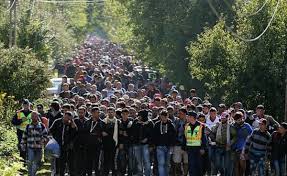
Recently, an unthinkable thing has started to happen. The people of the Western World are starting to question whether letting tens of millions of illiterate savages from cultures that glorify violence, rape and conquest into our communities is really all it’s cracked up to be. This essay argues that we ought to continue the policy of the last 20 years, which is to socially destroy anyone who questions the mass immigration narrative.

Who will work the unskilled jobs? We know from 5th form economics that without a regular supply of cheap labour, employers would be forced to pay higher wages, and we can’t have that. We can’t have the employer class being forced at gunpoint to share the production they have legitimately stolen off the workers.

Without a regular supply of semi-literate foreigners who have no conception of labour rights, our employer class would be forced to pay living wages in order to attract and retain staff. Mass immigration is therefore necessary so that the employer class can continue to keep the peasants under the heel.

Who will buy the property? Lowering the supply of immigration necessary means lowering the demand for housing, which necessarily means lowering the price of housing. This will mean that the wealthy Baby Boomers who are creaming it from mass immigration will be forced to cream it slightly less.

Currently we have a situation where a large proportion of young Westerners have given up on the idea of ever owning a house, resigning themselves to paying rent to Baby Boomers until they die. If we cut immigration, then this would free up housing that young Western families could afford to live in. And that would be a disaster.

Who would commit the crimes? No immigrants means a high-trust, high-solidarity community where everyone speaks the same language, understands and looks after each other. This sort of society leaves very little opportunity for the criminal class to exploit and prey on the people, which causes it to diminish. Who wants that?

The peasant class needs to have wolves among them that prey on them and cause them to fear, because without this they will start questioning the government. Also, without an active criminal class, it’s extremely difficult for the good old boys in the law enforcement community to find employment.

Letting in third world immigrants also has the benefit of helping to keep women down by forcing them to be ever vigilant against the threat of rape and sexual assault. The Sweden of 20 years ago had the lowest rates of sexual violence against women ever recorded in a Western country, so mass third world immigration had the benefit of putting those uppity bitches back in their place.

Finally, who would pollute the countryside? There is a direct link between the levels of population in any given area and the density of garbage and pollution in that area, for the obvious reason that every person has to consume a certain amount of the environment no matter how efficient they are.

No matter how efficient someone is, they have to eat food, they have to drive to work, they have to consume the products of the industry and agriculture that consumes our countryside and free space. So the more third world immigrants we let in, the more crowded and polluted our country becomes. Win win.

In summary, there are at least four good reasons to continue to destroy the reputation of anyone who questions the globalist open borders narrative.

The Four Kinds of Dark Age

The four types of Dark Age are the Age of Poverty, the Age of Violence, the Age of Ignorance, and the Age of Cowardice. There can be more than one of these ages occurring at any one time, and there can be none, but the invariable is that people suffer in a Dark Age for reasons outside of themselves. These four ages also correspond closely to the four masculine elements of clay, iron, silver and gold.

Humanity seems to have been cast into a world in which all four Dark Ages were in operation simultaneously and when we were little more than animals. One by one, we rose out of these Dark Ages and into a Golden Age, but most would argue that we have since degenerated again.

The Dark Age corresponding to the element of clay is the Age of Poverty. This is when people are unhappy because the basic necessities are hard to come by. A famine would be the typical example of an Age of Poverty, as would a depression. The natural state of humanity in the biological past – i.e. as some kind of ape-thing – could be described as an Age of Poverty.

In an Age of Poverty, children suffer from hunger and basic disease, clothing and housing is shabby and falling apart and getting through every day is a question of making the right sacrifices. There is no surplus, and everything keeps getting harder.

Corresponding to the element of iron is the Age of Violence. The obvious example of this is a war, where people are actively trying to kill each other for whatever reason. In an Age of Violence, people are unhappy because their basic physical security is under threat and this leads to immense anxiety and suffering.

The Ages of Poverty and Violence are related in that the elements that represent them are the two base elements. This suggests that these ages are dark for immediate physical reasons.

The element of silver corresponds to the Age of Ignorance. As silver is brilliant, shines and is reflective, so are those qualities lost in an Age of Ignorance.

Brilliant people become rare; the sort of mind necessary to make original scientific advancements or to produce great works of art, architecture or engineering become impossible to find. No-one shines creatively, instead being possessed of a zombie-like dullness that finds expression in anti-intellectualism and a kind of moronic pride in not reading or being educated.

In a real Age of Ignorance, all aspects of silver are mistaken for signs of either foppishness, passivity and faggotry (from the perspective of iron) or a cruel, detached, insectoid lack of emotional warmth (from the perspective of clay). The real benefits to the quality of life that intelligence brings are either not appreciated or actively despised.

Gold corresponds to an Age of Cowardice. The essence of this age is when men and women lose the Will to confront and to face up to the truth.

That silver and gold are valuable tell us that getting out of an Age of Violence is the most we can expect as a decency. Ages of Ignorance and Ages of Cowardice are ever-present threats owing to the valuable nature of the metaphysical elements that keeps them away.

Generally speaking, human culture devolves from the highest stage down to the lowest, a phenomenon that Plato observed in The Republic. One begins in an aristocracy, which might correspond to an absence of a Dark Age, with the various steps down the ladder of correct rule reflecting a Dark Age corresponding to rule without the next element down. Then comes an Age of Cowardice, when the philosopher kings no longer have the courage to assert their right to rule.

This Age of Cowardice leads to the high-spirited and assertive person taking over, which Plato referred to as a timocracy. This degenerates into an Age of Ignorance, when the rulers ignore the philosophers for so long that the importance of learning and knowledge is forgotten.

Inevitably this leads to poor political decisions being made, which leads to an Age of Violence as the frustration of the people reaches a boiling point. This can either clear out the incorrect rulers and replace them with a new aristocracy of philosopher-kings, or destroy all semblance of civilisation and return humanity to a truly primitive state – the Age of Poverty.

Fixing Toxic Masculinity Is A Two-Way Street

It’s not accurate to dump all the responsibility for toxic masculinity on males

The mainstream media has been full of stories about toxic masculinity recently, especially the hand-wringing, moralising, finger-pointing style, such as this effort by Lee Suckling in the New Zealand Herald. Leaving aside that the whole issue of toxic masculinity is mostly overblown, there are some things that men really ought to do better for the sake of universally reducing suffering in the world.

Also leaving aside the fact that the media never mentions toxic femininity, which is an equally large problem, the solution presented to fixing this problem of toxic masculinity is to dump responsibility for it entirely on men. Suckling laments that “We are forced to like blue not pink; trucks not Barbies; rugby not netball; muscles, strength, and brute force not intellectualism, thoughts, and feelings,” but blames men exclusively for all of this.

The human species is not a machine, but in many psychological ways it behaves exactly like a machine, especially in regards to conditioning. Behaviour is more or less likely to happen in the future if it was rewarded or punished, respectively, in the present. This has been known for a century and has been codified into what’s known as the Law of Effect.

In other words, changing the behaviour of men requires that they are rewarded sufficiently for the desired new behaviour. This means that they have to be treated correctly for it – and not just by other men.

One crucial detail that Suckling completely overlooks in blaming Kiwi men for everything is that women are equally as complicit as men, if not more so, when it comes to enforcing the standards of toxic masculinity. Proving this is a simple matter of observing which male behaviour gets rewarded with access to sexual resources.

It isn’t the men who are into “intellectualism, thoughts, and feelings” that get the chicks. Although it might be true that high-class women are attracted to those things, and although it might be true that men who are into these things get the cream of the women, there are so few of these women that the behaviour of males is not significantly altered.

For every woman turned on by intellectualism, thoughts, and feelings, there are fifty who are turned on by crass, vulgar displays of wealth and physical power. Driving a big, loud car, verbally abusing or bullying someone or punching another man in the face are the sort of behaviours that make the majority of women see a man as alpha, dominant and worth breeding with.

The Law of Effect explains another oft-observed phenomenon: that men tend to repeat the behaviours that first got them laid for the rest of their lives. So if they lose their virginity at age 17 by getting drunk and acting boorishly around some girl who has nothing but crude primate instincts to guide her mating decisions, then they will often act the boor while trying to get laid for the rest of their lives.

If this is to change, more women have to realise that intellectualism, thoughts and feelings are better predictors of long-term happiness and start rewarding men on that basis. This is necessary because men will respond to this a million times more strongly than they will to getting lectured by homosexuals in the mainstream media.

Cynics might say that it’s not destined to happen. It may be that powers beyond our influence have decided that New Zealand is to be a military outpost of a certain world order, and so our population must be encouraged to be aggressive and abusive in case such qualities are needed to win some future war.

That might not even be a bad thing. Suckling uses the European male as an example of how to be correctly masculine, but neglects to point out that the femininity of the European male has led directly to that continent’s streets and inner cities being conquered by males of foreign cultures.

As ever, the correct approach lies in finding the correct balance between masculine and feminine, but if young Kiwi men are to stop killing themselves at the highest rate in the world, Kiwi women are going to have to help make the change.