Dear FaceBook: A Break-Up Letter

Dear FaceBook,

we’ve had 15 years together and I feel that this is enough. It’s time to go our separate ways. I feel that a separation is the true desire of both of us. The way I see it is, I’m going up, and you’re going down, and the tension is too great to keep us together any longer.

When I opened my FaceBook account, in 2007, you were the coolest thing out there. One big problem with life before then: you could make great friends through, say, a mutual acquaintance, and then those friends would go back overseas and you’d lose contact with them. A network that a person could use to stay in touch with these people was the perfect thing for a then-university student.

I can still remember how much fun those early days were. Back then, everyone I met through you was cool. You seemed to only know cool and interesting people: the talented and the educated. In 2007, if some random commented on a friend’s post, that random was probably someone worth knowing too. A FaceBook account was a gateway to a world of great people.

But over the years, I saw your standards fall and fall.

The first sign was the televisionisation. The prospect of money from the advertising guys seemed like a drug for you – you were hooked instantly. Suddenly there were ads everywhere, in between the quality posts from intelligent people. Ads, ads, ads, ads. Everywhere.

Then the quality pages started to get throttled. The great awakening/conspiracy pages started to reach far fewer readers. And then the mainstream media started to muscle in. Soon there were “Recommended” posts that were all mainstream media content. Just the same mainstream media content that I stopped watching television in order to avoid!

The worst thing, though, was the bannings. Why ban me for making Hitler jokes? Were you worried about losing advertisers? Eventually a person could get banned for anything on FaceBook. It was a simple matter of making a joke that the Filipino moderators on $1/hr didn’t approve of, and wham – banned.

It seems to me like you care more about money now than information quality, which is the exact opposite of the spirit of the Internet. The old FaceBook, which was full of groups of subject matter enthusiasts sharing expert knowledge, is gone. The great meme pages have been censored into oblivion. Now it’s just ads and low-IQ drivel.

Now, every pissed-off loser is on FaceBook, crying about stupid shit that I don’t care about. All the scientists and philosophers are long gone. By today, 2022, you are filled up with trash, worse than television ever was. I’m more likely to get death threats through FaceBook than invites to a good party.

In fact, many of the worst people I know I have met through you.

This is a complete turnaround from 15 years ago. Back then, it was the people in my physical environment who were rough and trashy, and online life gave me a chance to get away from them, and to meet a higher quality of person. But now that I’m getting older, getting more accomplished, earning more respect, the people in my physical environment are fairly decent. The people I meet through you though… ‘rough and trashy’ only begins to describe it.

It seems like all the quality people no longer have FaceBook accounts and spend time elsewhere. And it’s not just me who thinks this. Your reputation is in tatters. People now call you ‘FaecesBook’ without any irony, and, worst of all, you show no sign of any intention to change the direction in which you’re going. That’s what tells me that we now have to go our separate ways.

I’ve enjoyed the entertainment you have given me. I have had some good laughs over the years, winding up tards and debating politics with normies. But you’ve shown me that you’re going downwards and have no wish to change course. So this letter is to give you notice that I am deleting my FaceBook account. Best of luck to you in sorting yourself out.

*

If you enjoyed reading this essay/article, you can get a compilation of the Best VJMP Essays and Articles from 2021 from Amazon for Kindle or Amazon for CreateSpace (for international readers), or TradeMe (for Kiwis). Compilations of the Best VJMP Essays and Articles of 2020, the Best VJMP Essays and Articles of 2019, the Best VJMP Essays and Articles of 2018 and the Best VJMP Essays and Articles of 2017 are also available.

*

If you would like to support our work in other ways, subscribe to our SubscribeStar fund, or make a donation to our Paypal! Even better, buy any one of our books!
Why Parliament Is Full Of Abusers

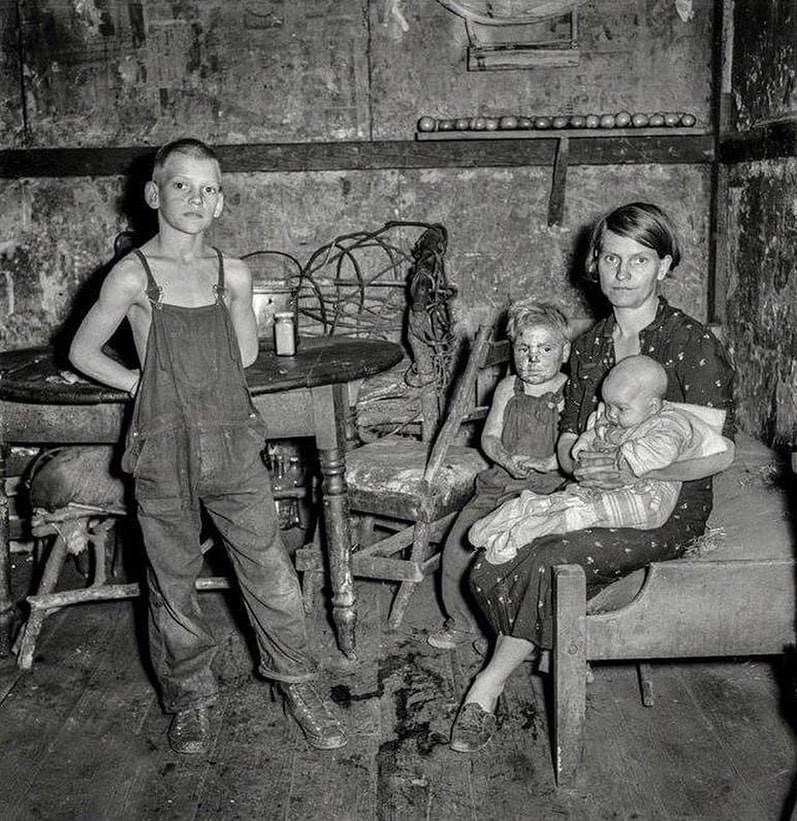
This week the New Zealand mass consciousness has been obsessed with the issue of Parliamentary bullying. The cases of Sam Uffindell and Gaurav Sharma have revealed that there are some deeply abusive and sadistic people among our Parliamentarians. This essay explains why this is, and why we would be foolish to expect anything else.

Parliament is the top of the social dominance hierarchy in New Zealand. The people in there get to decide what the rest of us are allowed to do, and if we defy them they can set the Police onto us. Parliament are above laws. They can lie, they can slander, they can cheat, and no-one can touch them. This great power creates a great incentive for people to fight their way into Parliament, to the top of the social dominance hierarchy.

There are two ways to get to the top of any dominance hierarchy, whether it’s a family, tribe, country or empire: intimidation or inspiration.

In a state of Nature, there is only intimidation. The alpha chimpanzee is invariably the one with the greatest combination of strength and aggression. He rules by fear. Anyone who challenges him is liable to have his scrotum torn off or his eyes gouged out. A wide range of submissive behaviours evolved so that non-alphas could demonstrate their lack of threat, and thereby earn the alpha’s mercy.

Pre-civilisational human life was not much different to chimpanzee life today. The one at the top of the dominance hierarchy was also the one with the greatest combination of strength and aggression. But the advent of civilisation changed everything. Civilisation transformed the human being from a wild animal into something else.

In a state of civilisation, there is inspiration. It’s possible for individuals in possession of a divine spark to gain the allegiance of their fellows not through cruelty and fear, but through the promise of leading them to greatness. The greater the civilisation, the more inspirational the leaders are. The greatest of all civilisations give us leaders like Alexander, Marcus Aurelius and George Washington.

Inspiration is by far the best way to lead, because it provokes the least amount of blowback. Rule by intimidation makes people feel fear, which often calcifies into resentment. This resentment, as Machiavelli observed, is liable to spill over into unrest and violence. Much better, he concluded, to be loved than to be feared.

Intimidation is easy. It’s mostly a matter of what’s called social dominance orientation, or SDO. The will to dominate is the main quality that intimidates other people. Research has found that “higher SDO was associated with pursuit of hierarchy-enhancing jobs”. For the reasons mentioned above, politician is one of those jobs. So people who are naturally intimidating often strive to become politicians, creating a selection bias.

Inspiration is hard. No-one is really sure how to do it, or what’s necessary. A belief in God might be necessary in order to truly inspire, or fearlessness in the face of death, or high intelligence, great wealth or a favourable birth. No-one really knows. Good leaders don’t need to know the specifics, because they can intuit the way forwards.

It’s fair to say that good leaders rule by inspiration and bad leaders rule by intimidation.

Unfortunately, New Zealand is beset by bad leadership. Not only are we near the bottom of a historical nadir, but we are also crippled by democracy, the remnants of cultural Christianity and a peculiar resentment-fuelled anti-elitism, all of which combine to keep our best people down.

The end result is that there are no real leaders in Parliament. All they’ve been since the Third National Government is just a pack of scum-sucking grifters doing the bidding of international banking and finance interests. That doesn’t inspire anyone. So our Parliament is full of abusers because there are no good leaders to inspire people to follow them, leaving abusers to battle their way into the top positions.

Our political system selects for psychopaths because any dominance hierarchy without one or more psychopaths at the top of it is inherently unstable. If the person at the top of a dominance hierarchy is not a psychopath themselves, they are liable to get dislodged by more aggressive underlings. So, from the point of view of the Establishment, putting abusers into top positions promotes stability.

Almost everyone in Parliament is an abuser, and that goes triple for those at the top of Parliament. Can anyone listen to Jacinda Ardern or Andrew Little justify their continuation of cannabis prohibition, and not realise they are psychopaths? Can anyone listen to Christopher Luxon or Brooke van Velden bay for cutting the benefits of the poor, and not think likewise?

Given all this, it’s not hard to understand why National selected Sam Uffindell as a candidate despite his history of bullying: a history of bullying is a qualification for a job that requires grinding five million other people into submission. This is why National never disavowed Nick Smith, even though Smith regularly turned up to meetings drunk and abused his staff, or any of the countless other alcoholics, narcissists and sex pests that have floated through National’s ranks over the years.

In summary, our political system is full of abusers because we have no leaders good enough to inspire people to follow them.

*

If you enjoyed reading this essay/article, you can get a compilation of the Best VJMP Essays and Articles from 2021 from Amazon for Kindle or Amazon for CreateSpace (for international readers), or TradeMe (for Kiwis). Compilations of the Best VJMP Essays and Articles of 2020, the Best VJMP Essays and Articles of 2019, the Best VJMP Essays and Articles of 2018 and the Best VJMP Essays and Articles of 2017 are also available.

*

If you would like to support our work in other ways, subscribe to our SubscribeStar fund, or make a donation to our Paypal! Even better, buy any one of our books!
Equatorial Mentality Vs. Polar Mentality

There are many different ways of dividing the people of the world into two groups. Men vs. women, East vs. West, K-selected vs. r-selected, industrialised vs. developing, whores vs. gangsters. This essay introduces another: equatorial mentality vs. polar mentality.

Equatorial climes, as anyone who has been to the tropics will know, are hot. Sunlight beats down directly from above. Near the Equator, it’s often above 20 degrees Celcius even at night. Sometimes living there can feel like living in a greenhouse.

Polar climes, by contrast, are cold. Sunlight strikes the surface of the Earth from the side. In wintertime, cities above the Arctic Circle have days where the Sun does not rise above the horizon at all (the “Polar Night”). This is where the real tundra begins, where the climate can only support small trees and bushes.

Contrary to popular belief, there’s more to the global temperature gradient than the simple fact that polar climes tend to be less sunny. For example, some cities in the Congo and Equitorial Guinea get only 1,500 yearly sunshine hours, whereas even Stockholm gets 1,800. The intensity of the sunlight is more important, particularly the intensity of sunlight per square metre.

Not every latitude of the surface of the Earth receives the same intensity of sunlight. Near the Equator, where the rays of the Sun strike the surface of the Earth at right angles, the sunlight is the most intense. The further one goes from the Equator to the poles, the more obtusely the sunlight strikes the surface, and the less intense it becomes.

The fact that the intensity of sunlight varies depending on latitude has immense ecological consequences – and, thereby, ethological consequences.

Because the sunlight is more intense at the Equator, and because the food chain is based on sunlight, the intensity of life is also greater there. Strong sunlight and warm temperatures are the most conducive to life, and so the Equator tends to feature jungles and rainforests that are teeming with insects and animals. This life must compete against other life for space to live.

At the Equator, therefore, the immediate challenge for anything living is against other living beings. Nearer the poles, by contrast, the immediate challenge is against the environment. There is much less life per square metre, and so much less danger from predators and parasites. The main dangers there are the cold and lack of easy food supplies.

This means that a different set of behaviour patterns had to evolve to meet the challenges of equatorial climates, as compared to polar climates. These behavioural patterns evolved alongside particular mindsets. There is an equatorial mindset that is more compatible with equatorial behaviour patterns, and there is a polar mindset that is more compatible with polar behaviour patterns.

The equatorial mindset doesn’t think ahead. There are no winters near the Equator, so there is no possibility of freezing to death. As such, there is no need to stack firewood for the winter, or to build a solid, warm, airtight house. Fruit is plentiful all year round in the tropics, so there’s no need to plan for the long-term storage of it. As such, there is no evolutionary pressure selecting for long-term thinking.

The polar mindset, by contrast, is always thinking ahead. It has to. Polar winters will kill everything not prepared for them. It’s common for Northern Europe, parts of North America and parts of Northern Asia to experience winter temperatures below -30 Celcius. What’s worse, winters in such places can last for six months. Anyone who doesn’t plan adequately for such weather will die.

These contrasting mindsets explain the contrasting impressions that some people make on each other.

The equatorial mindset is that, if there’s nothing to do, just chill out. Tomorrow will be much like today so, if there are no pressing matters, one should just take it easy and not risk overexertion. This is why people in Equatorial countries are often found sleeping during the middle of the day.

This is often interpreted as lazy by the polar mindset. The reality, however, is that when it’s hot, it can be dangerous to use too much energy. Heatstroke is an ever-present threat in tropical regions. Anyone who pushes themselves too hard is liable to pass out. So taking it easy whenever possible makes sense near the Equator.

The polar mindset, by contrast, is to always keep oneself busy. Sooner or later, winter will come, so if there are no pressing matters, one should prepare. Chop firewood, fix the house, gather food – and do it now because it will soon be too cold and dark. This is why people in Europe, North America and Northern Asia work long hours. The polar mindset doesn’t feel comfortable unless it’s working.

This is often interpreted as neurosis by the equatorial mindset. ‘We only have one life, so why not relax and enjoy it?’ reasons the equatorial mind, which doesn’t understand why the polar mind works so hard when the final reward for all of us is death. The hunger of the polar mind to achieve things and to impose order upon the world seems inhuman to the equatorial mind.

Like feminine and masculine, the equatorial mindset and the polar mindset will often clash. The polar mindset tends to accumulate more money, and this provokes resentment in the equatorial mindset. The equatorial mindset has a tendency to act impulsively, and the violence and theft that results provokes resentment in the polar mindset.

The equatorial mindset vs. the polar mindset is one of the great divisions in the human species, and understanding it goes a long way to understanding human behaviour.

*

If you enjoyed reading this essay/article, you can get a compilation of the Best VJMP Essays and Articles from 2021 from Amazon for Kindle or Amazon for CreateSpace (for international readers), or TradeMe (for Kiwis). Compilations of the Best VJMP Essays and Articles of 2020, the Best VJMP Essays and Articles of 2019, the Best VJMP Essays and Articles of 2018 and the Best VJMP Essays and Articles of 2017 are also available.

*

If you would like to support our work in other ways, subscribe to our SubscribeStar fund, or make a donation to our Paypal! Even better, buy any one of our books!
Diversity Fatigue

A new psychiatric condition has befallen Clown World: diversity fatigue. Diversity fatigue is believed to affect the majority of Westerners at time of writing, but is especially strong in major metropolitan centres like London, New York, Paris and Los Angeles. It’s also strong in consumers of mainstream corporate media. This essay explains.

The simple way to understand diversity fatigue is that it’s like future shock but for demographics. Like future shock, it’s a state of becoming mentally and physiologically overwhelmed by reactions to undesired change. The difference is that diversity fatigue is caused by long-term exposure to high levels of tension brought about by diversity.

Diversity of races and cultures means diversity of moral values. This demands greater energy expenditure as each individual has to remain aware of a multiplicity of different ways of doing things. Instead of being able to relax and assume that the person one is interacting with is on the same wavelength, one must constantly expend energy on determining what might offend them.

The major symptom of diversity fatigue is withdrawal.

This initially manifests as a kind of learned helplessness. This occurs when people realise that they can no longer escape diversity. After years of seeing one’s social environment become more diverse and, at the same time, become more violent, insecure and chaotic, people start to tire of new diversity initiatives, and of seeing diverse faces in public areas.

The most acute form of learned helplessness occurs when people realise that diversity is being pushed on them by powerful forces that can barely be comprehended, let alone resisted. People become NEETs, or unhinged conspiracy theorists, when they realise that diversity is a weapon wielded against advanced societies by globohomo.

Understanding the truth, but not being able to speak it, people surrender. Not knowing what sort of humour is still politically correct, people stop making jokes. On a micro level, the individual begins to withdraw from their immediate environment, and retreats into their own heads. This process is often accompanied by intense dissociation.

Withdrawal also occurs on the macro level, with people physically moving away from diversity (usually by moving from an urban to a rural area). Some describe this as ‘white flight’, but it isn’t so much a race-based pattern as a wealth-based one. Wealthy browns and blacks tend to get out of the ghetto as fast as they can, whereas working-class whites tend to get stuck there themselves.

There are several major causes of diversity fatigue.

One of the most obvious is the increased demand on mental energy from being exposed to foreign languages, cultures and moral schedules, sometimes multiple such. A person has to strain their attention in order to determine which language is being spoken, or which cultural or moral values are currently prevailing, which costs energy.

This process is amplified when the fashionable classes invent new words, or moral imperatives, that everyone has to keep up with or be shunned from society. The New Zealand ruling classes are doing this right now by turning the local dialect of English into an English-Maori creole, and then ostracising anyone who can’t or won’t speak it, inevitably accusing them of racism first.

Related to this are the increased mental energy demands from exposure to all manner of novel threats. Some of these threats are physical, in the form of violence or theft, but others are social, such as threats to one’s reputation if one doesn’t keep up with the latest moral fashions. Because diversity usually brings with it higher levels of violence or property crimes, people in diverse societies are forced to spend extra energy maintaining vigilance.

Other energy drains come from demoralisation.

The major source of demoralisation in Clown World today comes from constantly being called racist by authority figures. In this regard, racism serves the same niche that sexual desire served 500 years ago – an excuse that authority figures use to browbeat us into submission. Where the medieval priest told everyone they were evil because they had sexual thoughts, now our moral leaders tell everyone they are evil because they believe in racial differences.

This relates to the other major source of demoralisation: all the lies one is asked to accept. Every honest person knows that different races have different gene frequencies, and that human behaviour patterns are mostly genetic, and therefore different races naturally have different behaviour patterns. It’s humiliating to have people constantly demand that one ignore the evidence of one’s own eyes, and pretend that human biodiversity isn’t real.

Physiological exhaustion and demoralisation combine to give us the ever-present “It’s all so tiresome” mindset that is true diversity fatigue.

Unfortunately for us, our rulers appear to have understood that diversity makes the populace fatigued and thereby less willing and able to come together to resist exploitation and injustice. Amazon understands that diverse workplaces are less likely to unionise, and by a similar logic, diverse electorates are less likely to oppose their ruling classes.

*

If you enjoyed reading this essay/article, you can get a compilation of the Best VJMP Essays and Articles from 2021 from Amazon for Kindle or Amazon for CreateSpace (for international readers), or TradeMe (for Kiwis). Compilations of the Best VJMP Essays and Articles of 2020, the Best VJMP Essays and Articles of 2019, the Best VJMP Essays and Articles of 2018 and the Best VJMP Essays and Articles of 2017 are also available.

*

If you would like to support our work in other ways, subscribe to our SubscribeStar fund, or make a donation to our Paypal! Even better, buy any one of our books!