
VJMP Waitangi Day Address 2019

The only power that scares the Establishment is the unity of the people. Only when Maoris and white people come together, with strong bonds based on mutual appreciation of each other’s talents, do the ruling classes of this country sit up and take notice. Only then do they become afraid of us, instead of the other way around.

There are two very popular, and yet very false, narratives explaining why our society is the way it is. Both of these false narratives serve to divide the nation into two competing blocs, at each others throats. The first is the Imperialist narrative, the second is the Marxist narrative.

The Imperialist narrative has it that Maoris lived in a state of depravity and constant terror. Intertribal warfare and cannibalism were rife; life expectancy was 30 years if you were lucky. According to the Imperialist narrative, Maoris were rescued from this state by the benevolence of the British Empire, which made slavery illegal, and kindly dished out medicine, technology and an end to the Musket Wars.

The Marxist narrative has it that Maoris lived in a state of perfect peace and harmony with Nature. There was no violence and no hunger until the white man turned up. Then the Maoris were driven from their land under musket and cannon fire, into the wilderness to die. The British came here for no other reason than greed, and never saw the Maoris as proper human beings.

Both of these narratives are horseshit. Both have been designed to sow discord and hatred. Both are aggressive, supremacist ideologies, and both are supported by aggressive, low intelligence, egotistical people. Neither has a place in the New Zealand of the new century.

There is a lot of pressure for us to take on one of the false narratives. Many people find it gratifying to blame someone else for their problems, especially an entire group. Many people have chosen a side, not as a Kiwi, but as either a Maori or as a white person, and many of these see the other side of the divide as the enemy who seeks to steal from them.

The British did made slavery illegal, and they did bring technology and medicine here, that is true. They also did some bad things, especially with regards to swindling land from the Maoris, and with creating a society in which money and plastic was valued highly than social and spiritual connections. This is also true.

The Maoris might have problems with violence and abuse and neglect of children, this is true. They have also done outstandingly well compared to other indigenous peoples. Their intelligence and tenacity has enabled them to adapt to the tools of the white man in a way that the others never could. They are much wealthier than Tongans, who were never colonised. This is also true.

We need a new narrative, one that takes us forwards as brothers in arms. Not one that keeps us squabbling in the dirt. Esoteric Aotearoanism can serve as that narrative.

New Zealand society, for the majority of its existence, has been a co-operative enterprise between Maoris and white people. For better or worse, we’re stuck with each other. Neither group of people is going anywhere, and rates of intermarriage are so high that the time will come when there are not only no pure-blooded Maoris left but also no pure-blooded whites apart from immigrants. This is inevitable unless we are divided and conquered by outside forces.

Because of these immensely high rates of interbreeding, and because of the close, sometimes imperceptible, cultural exchange that we have had, Maoris and white people cannot be spoken of as two separate groups. They must be understood as the two major contributing factors to something that is greater than either of them: the Kiwi nation.

There are none of us who are pure Maori, unaffected by the white man’s influence, and neither are there any of us who are pure white people, the same as what can be found in Europe. We are now the yin and the yang of something greater than either of us. Both love rugby, live music, cannabis and exploring the wilderness just as much as the other.

It doesn’t matter what once was.

Co-operation is the only way forward. This demands that we reject the false narratives that cause us to fight each other, and adopt a new narrative that allows each of us to contribute to the greater good in their own way. It doesn’t matter what proportion of Maori blood you have, or what languages you speak, or even what your political attitudes are. There is a niche for you to contribute to the Kiwi nation.

*

If you enjoyed reading this essay, you can get a compilation of the Best VJMP Essays and Articles of 2018 from Amazon for Kindle or Amazon for CreateSpace (for international readers), or TradeMe (for Kiwis). A compilation of the Best VJMP Essays and Articles of 2017 is also available.

How The People Are Divided and Conquered

The ruling classes, faced with the fact that they are outnumbered by thousands to one, have refined an array of techniques to divide the people into groups and set them at each other’s throats. This array covers all of the different aspects of human life, so that individuals are made enemies of each other at every turn. This essay describes how the people are divided and conquered across the entire spectrum of life.

Human life covers the complete spectrum from purely physical concerns to purely spiritual concerns. Physical concerns such as blood and soil are different to matters of class and education, and these are in their turn different to religious and spiritual matters. By means of propaganda, people are divided at each part of the spectrum, and made to believe that someone else has stolen from them.

This stealing is how the other side of the spectrum (any spectrum) is characterised as the bad guys, the stealers, the takers. The mouthpieces of the ruling class will tell their listeners that all of the suffering those listeners feel is because those at the other end of the spectrum have stolen from them. The natural result is that the listeners come to hate those others, and in doing so become divided and conquered.

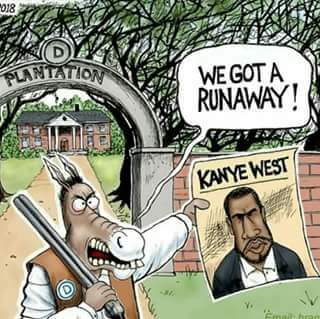
At the physical end, people belonging to any racial group have been led, by way of propaganda, to feel that other races have collectively worked to steal from them. In America, blacks are made to feel that whites have stolen from them through slavery, and owe them compensation; whites are made to feel that blacks have stolen from them through taxation to fund welfare.

The story is the same all over the West. There was a time when New Zealanders considered themselves Kiwis first and their particular ethnic makeup was a secondary thing. But after decades of rhetoric, many Maoris have come to be convinced that colonisation was an act of evil for which they are owed compensation. White people were convinced, at the same time, that Maoris had stolen from them through taxation-funded welfare and crime, and the end result was to split the Kiwi people down the centre.

Less physical issues do not make people less vulnerable to being divided and conquered. Even if everyone was the same race, it is still possible to divide people along class or religious differences.

The most obvious example is of Communist agitation in a factory. The Communist begins by persuading the workers that they are being stolen from because their wages are not equal to the value of their production. If the worker is not intelligent enough to understand the basics of how a business is run, and does not understand that operating a business requires competencies that he does not necessarily have, he may be persuaded that his boss is stealing from him, and that restitution is owed.

Communist agitation in Rhodesia is an example that combines both race and class. Local blacks were convinced that white settlers had stolen land from them and were trying to enslave them. The blacks were told that everything the whites had was stolen from them, and this theft was why they didn’t have it. This led to rising resentment which eventually tore the entire country in two, a blueprint since repeated all across the world.

Education is another spectrum upon which people are divided. The poorly educated are led to believe that the well educated have arrived at their greater position of wealth through sneakery and trickery, not through study and applied competence. As with the other examples, the poorly educated are then made to become resentful, and so come to fight the well educated instead of co-operating with them as yin and yang.

All of this dividing and conquering works because of the state of spiritual ignorance that we have fallen into. People have forgotten that life is suffering, and that suffering is inherent to existence as a mortal being in this world. Because they have forgotten this, it is possible to convince them that their suffering is unnatural, and that someone else must be to blame. This is an example of chains of gold.

All that’s necessary to start it is to find a spectrum of wealth somewhere within society. It can be a spectrum of wealth along race lines, along class lines, along education lines – it doesn’t matter. As long as the people at both ends are told that the people at the other end have stolen from them or are looking to, both groups will dig themselves in and start hating the other.

From there, it’s a simple matter to point the finger at the other side of the national, racial, education or religious divide and say that all the suffering is because those people have stolen from us, and so individuals from that group are personally responsible for restitution. Once this has been achieved, it’s all but guaranteed that those so blamed will point the finger back, and at this point arguing and fighting begins.

Our ruling Establishment encourages divide and conquer logic, because the more effectively the people can be divided, the less able they are to mount a co-ordinated challenge against the will of that Establishment. This is why the media is daily full of propaganda about “injustice”. They don’t care about preventing injustice – they just want to fan the flames of it so that people are angry and blame each other, instead of the rulers.

Certain incompetent individuals also encourage divide and conquer logic, because they know that if the people were united and competent people promoted, those individuals would be left behind. Incompetent individuals, therefore, have an interest in dividing and conquering so that they can slice off their own little piece of turf and rule the smaller group present in it. They want to keep the group small so as to discourage more competent competition for places in the ruling hierarchy of that group.

In summary, people are divided and conquered because their own spiritual ignorance makes it possible for unscrupulous propagandists to blame the natural suffering of life on acts of theft committed by “others”. Blaming all the suffering inherent to life on others ensures that revenge will be sought, that grievances and vendettas will grow, that the cracks diving society will deepen and therefore that the suffering will never be overcome.

Anyone who denies that life is naturally suffering, and who insists that any suffering that exists is the fault of a particular group of people, is working to divide and conquer society. These people must be considered suspect, and their motives potentially malicious. This is true no matter how powerful, rich, numerous or oppressive the so-called bad guys might be.

*

If you enjoyed reading this essay, you can get a compilation of the Best VJMP Essays and Articles of 2018 from Amazon for Kindle or Amazon for CreateSpace (for international readers), or TradeMe (for Kiwis). A compilation of the Best VJMP Essays and Articles of 2017 is also available.
VJMP Reads: Edward Bernays’s Propaganda II

This reading carries on from here.

The second chapter of Propaganda is called ‘The New Propaganda’. Here, Bernays elucidates some of the differences between the original approach to propaganda that arose with the advent of mass media, and the “new” approach that was developed after the application of mass psychology techniques to making propaganda more effective.

The industrial revolution has made kings much less powerful than they once were, relative to the masses. It spread economic power, and, with that, political power. The old democrats used to believe that it was possible to educate everyone up to the level where they could participate in rulership – in reality, the average person falls well short of what is required.

Propaganda fills this gap, serving as the means by which the minority can still rule the majority. “Propaganda is the executive arm of the invisible Government.” The education of the common man, instead of teaching him to think freely, only conditioned him to become receptive to propaganda. Now his mind is receptive to propaganda of all sorts.

Using examples from a daily newspaper, Bernays explains how propaganda works in the mainstream media. Anything stated as true by an authority, such as the State Department, is taken as such. Here Bernays gives us a definition of propaganda: “Modern propaganda is a consistent, enduring effort to create or shape events to influence the relations of the public to an enterprise, idea or group.”

In practice, very little is done nowadays without some kind of propaganda campaign alongside it. Propaganda regiments the public mind every bit as much as the Army regiments the bodies of its soldiers. A group so regimented can be every bit as effective as an army.

Today, the approval of the public is necessary for any large undertaking. Therefore, propaganda is necessary for any large undertaking. Formerly, rulers could set the course of history simply by doing things. Today, the masses have control, so propaganda is needed to wrest that control back. As a consequence, propaganda is here to stay.

It was World War I, and the astonishing success of propaganda in that war to manipulate public opinion, that made people aware of what could be done. This was the first time that not only a multimedia approach was made to encourage people to support the national endeavour, but also key men were brought on board in a massive range of industries.

The new propaganda doesn’t just target the individual, but takes into consideration the structure of society and the way that information spreads through it. This is now a feature of society, because new proposals for reform must be clearly articulated before they will be influential. No-one can get anything done anymore without propaganda.

Bernays concludes this chapter by noting that “In the active proselytizing minorities in whom selfish interests and public interests coincide lie the progress and development of America.” The world is controlled by the small number of men that control propaganda, who make the rest of us think as they will, and society only progresses when their will is in accord with the collective good.

*

If you enjoyed reading this essay, you can get a compilation of the Best VJMP Essays and Articles of 2018 from Amazon for Kindle or Amazon for CreateSpace (for international readers), or TradeMe (for Kiwis). A compilation of the Best VJMP Essays and Articles of 2017 is also available.

VJMP Reads: Edward Bernays’s Propaganda I

Fittingly, the Propaganda Ministry turns its attention to the granddaddy of all propaganda literature, Propaganda by Edward Bernays. This short book was written by Bernays, a nephew of Sigmund Freud, by way of explaining his own prodigious insight into the manipulation of mass consciousness in the America of 1928.

He opens in the first chapter, “Organising Chaos”, with a stark declaration that the “organised habits and opinions” of the masses are formed according to the will of men who effectively form an unseen government. These men mold our minds and our tastes, mostly without us knowing who they even are.

Bernays contends that this is necessary, owing to the confusion ordinarily created by the democratic process, with its hundreds of different candidates. People would become confused if they were expected to understand the inner workings of all the issues that politicians are faced with. Therefore, the media narrows things down to a range that can be grasped.

Likewise, Bernays claims that society consents to have its choices relating to commercial products narrowed down by way of media propaganda. Because of reasons like these, there is a constant battle going on to capture the minds of individual people.

Bernays mentions that it may have been better to have had committees of wise men, who made decisions about the best way to do things. But we elected for the opposite of this. We have free competition of ideas, and in order for this to not lead to chaos we have to allow for leadership and propaganda to direct attention. This can be misused, but it is necessary nevertheless.

The advent of mass media has changed the way that the world is organised. At the time of the writing of the American Constitution, the village was the basic unit of society. Thanks to the mass media, it has become possible to be organised alongside people who live thousands of miles away.

Our society, instead of being divided by coherent geographical units, is now cleaved by all manner of social, political, ethnic, religious, racial or moral divisions. It is along the lines of these divisions that propaganda is spread. One influential group leader in any of these domains can soon have all the others in that domain following an idea.

Bernays labours the point that these cleavages are nonetheless comprised of individuals who exist in several groups, and therefore these groups are all interlaced. This is, in Bernays’s view, what society is. It is how democracy has chosen to simplify its decision making.

He summarises the book in the final paragraph of the first chapter. It is to explain how the minds of people are molded in modern democratic society, and how the manipulators of it go about their work.

*

If you enjoyed reading this essay, you can get a compilation of the Best VJMP Essays and Articles of 2018 from Amazon for Kindle or Amazon for CreateSpace (for international readers), or TradeMe (for Kiwis). A compilation of the Best VJMP Essays and Articles of 2017 is also available.