
Understanding New Zealand: Voting Patterns of Low-Skill Occupations

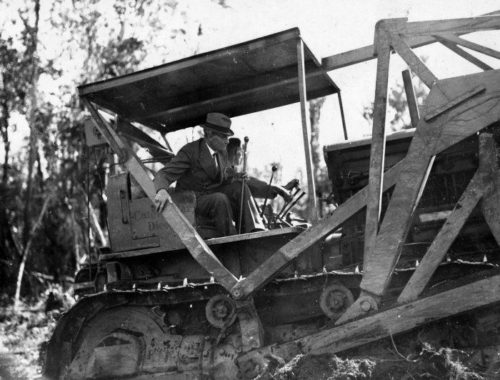
The low-skill occupations break down into machinery operators and drivers and labourers. These are generally occupations that can be taken up with a minimum of previous training.

Because people working in these occupations have a very high proportion of Maori, their voting patterns inevitably reflect positive sentiment towards the Maori-heavy parties. All four of these parties did better among people in this group than the Labour Party, except for the one case of voting Internet MANA in 2014 and working as a machinery operator and driver.

New Zealand First is the favoured party for those working in low-skill occupations. Voting New Zealand First in 2014 had a correlation of 0.64 with working as a machinery operator or driver, and a correlation of 0.60 with working as a labourer.

Voting Maori Party in 2014 had a correlation of 0.52 with working as a machinery operator or driver, and one of 0.49 with working as a labourer. It was slightly weaker for Internet MANA: voting for them had a correlation of 0.43 with working as a machinery operator or driver, and one of 0.34 with working as a labourer.

The strongest correlations with any party, however, were with the Aotearoa Legalise Cannabis Party. Working as a machinery operator or driver had a correlation of 0.65 with voting for the ALCP in 2014, and working as a labourer had a correlation of 0.71 with voting ALCP in 2014.

This is probably because cannabis use is characteristic of the societal outsider, and people who work low-skill occupations are very often outsiders for a variety of reasons, such as not being native English speakers, or being from families where education was not considered important, or because they have an illness that makes employment in an occupation of greater responsibility impossible.

It’s also at least partly because people in low-skill occupations are paid so poorly that it’s easy to decide to just not give a shit anymore.

Voting for the Labour Party in 2014 had a correlation of 0.51 with working as a machinery operator or driver, and this reflects the degree of union influence at the sort of workplaces likely to employ people in these occupations. This contrasted with the not signficant correlation of 0.13 between voting Labour in 2014 and working as a labourer.

Exposing the degree to which the Greens represent primarily middle-class urban elites, there was a moderately strong negative correlation of -0.42 with working as a machinery operator or driver and voting Green in 2014. This was not quite as strong for labourers, for who the correlation was -0.21.

Evidently, few people working in these occupations have an interest in environmentalism or international affairs.

These negative correlations for the Greens are striking because they are even stronger than those for the Conservative Party. The correlation between voting Conservative in 2014 and working as a machinery operator or driver is -0.25, and with working as a labourer it is only -0.09.

At first it might not be clear why a party with pretensions to stand for the poor and vulnerable gets less support from a major group of the poor and vulnerable than a party who openly does not care at all about either.

Those doing it hard are very rarely persuaded to vote National or ACT, and those working in low-skill occupations are not exceptions. Working as a machinery operator or driver had a correlation of -0.55 with voting National in 2014, and one of -0.52 with voting ACT in 2014. Working as a labourer had a correlation of -0.33 with voting National in 2014, and one of -0.61 with voting ACT in 2014.

Concomitant to the general disenfranchisement of people working in low-skill occupations is a low turnout rate. The correlation between working as a labourer and turnout rate in 2014 was -0.36, and between working as a machinery operator or driver it was a strong -0.65. This was probably because a much higher proportion of labourers are of European descent compared to machinery operators or drivers.

*

This article is an excerpt from Understanding New Zealand, by Dan McGlashan, published by VJM Publishing in the winter of 2017.
Cannabis Prohibition Kills 45 New Zealanders Every Year

If one assumes without the need for elaboration that withholding medicine from a sick person is a very cruel thing to do, then it’s incredible that so little attention is being given to the fact that medicinal cannabis is being withheld from sick Kiwis even today. This article tries to estimate how many of us this policy is killing.

One way that National Party cannabis policy is killing New Zealanders is by withholding from them a medical alternative to opioids. A 2015 Boston Herald article describes how doctors in more enlightened jurisdictions use cannabis as an exit drug for people struggling with opioid addiction.

A doctor in the report is quoted as saying “patients have decreased and even eliminated their opioids” when presented with an alternative in the form of cannabis.

A paper in the Journal of the American Medical Association showed that overdose deaths from prescription opioids decreased by 25% in states that legalised medicinal cannabis.

The reason was that patients who had access to medicinal cannabis used it either as a substitute or as a compliment to opioids, which had the effect of sharply reducing their overall opioid intake and thereby fatal outcomes.

According to the New Zealand Drug Foundation, 37 Kiwis die of opioid overdoses every year.

If medicinal cannabis would save a quarter of them, as it does in the USA, then Bill English’s refusal to legalise cannabis is killing about nine Kiwis every year simply on the basis of lost opportunity to prevent opioid deaths.

An article in the American Public Journal of Health found that legalising medicinal cannabis reduced suicide rates by 5%. The reasons for this are really obvious if you are one of the many people who has used cannabis to treat your own depression or suicidal ideation.

As a professional medical researcher would put it: “The negative relationship between legalization and suicides among young men is consistent with the hypothesis that marijuana can be used to cope with stressful life events.”

Most people who use cannabis do so to relax, to chill out – “to cope with stressful life events”. Given that, it’s obvious that withholding from people a medicine that helps them cope with stressful life events is going to kill them.

New Zealand is famous for our youth suicide rates, second highest in the OECD for both males and females.

So given what we know about the ability of cannabis to prevent anxiety and stress-based suicidal actions, it’s safe to say that Bill English is responsible for the deaths of 5% of New Zealand’s suicide toll, which is believed to be around 500 per year.

In other words, the National Party’s refusal to update New Zealand’s cannabis laws is arguably causing the deaths of around 25 Kiwis every year to preventable suicide.

The major way that cannabis prohibition is killing New Zealanders, however, is by withholding from us a recreational alternative to booze. A 2010 Coroner’s report found that alcohol directly killed 1,100 Kiwis in the preceding decade – or 110 a year.

This does not refer to deaths from complications caused by alcoholism or excessive drinking – this figure would be orders of magnitude larger. This figure of 110 is the average number of Kiwis who drink themselves to death in one session every year.

It’s unclear how many of these people would still be alive if they had been allowed an alternative to alcohol. A 2005 study referenced in a landmark MedScape paper suggested “most people use alcohol to achieve certain psychological effects, and that they will choose equally effective substitutes as long as they are available, legal and socially acceptable.”

Perhaps 10% of the 110 Kiwis who drink themselves to death every year would still be with us if they had had cannabis available and/or legal (the fact that it is already socially acceptable in New Zealand is unquestionable).

This gives us a grand total of 45 Kiwis killed every year from the refusal of Bill English and his National Party to update the medicinal cannabis laws (9 from opioid overdose, 25 from suicide and 11 from drinking themselves to death).

That means that the death of one New Zealander every eight days could be prevented at the stroke of a pen by tomorrow lunchtime.

It’s incredible that New Zealanders continue to accept that their ruling class is literally killing them with laws that starkly have no place in a compassionate and humane society.

Understanding New Zealand: Voting Patterns of Employment Status

With regard to employment status this analysis divides New Zealanders into those who work for a wage or salary, those who are self-employed, those who are self-employed with employees (i.e. employers) and those who do unpaid work in the family business. This does not consider the unemployed because this is discussed in the article about Labour Force Status.

The strongest correlations in this section are those that reflect the basic economic division of society, between owners and owned.

In particular, the correlation between being self-employed with employees and voting National in 2014 was an extremely strong 0.75. The converse – with voting Labour in 2014 – was even stronger at -0.83.

This is hardly surprising if one takes into account that the entire purpose of the National Party’s existence – at least theoretically – is to shift the balance of power towards the employer (and the bigger the employer the better) whereas the precise opposite is true for the Labour Party.

There were similar correlations for those who are self-employed without employees, only not quite as strong. People in this category had a correlation of 0.68 with voting National in 2014 and a correlation of -0.78 with voting Labour in 2014. These are no doubt strong for the same reason the ones above were strong.

As could be predicted from the general enfranchisement rule, people in the employer group have an extremely high turnout rate. For the self-employed with employees the correlation with turnout rate in 2014 was 0.57, and for the self-employed without employees it was 0.63.

This group was more or less indifferent to the two medium-sized parties. Those who were self-employed without employees had a small, not significant positive correlation with voting for the Greens in 2014 (0.14), and a small, not significant negative correlation with voting for New Zealand First (-0.23). This probably reflects the influence of the professional class, and the number of doctors, lawyers, psychologists etc. with their own practices.

One statistic that will surprise some is that the correlation with working for a wage or salary is much stronger for people who voted Green in 2014 (0.41) than it is for those who voted Labour in 2014 (0.11). The reason for this is the large proportion of beneficiaries among Labour voters.

This correlation between working for a wage or salary and voting Green in 2014 is the strongest of its kind. The next strongest correlations between working for a wage or salary and voting for a particular political party were 0.23 for the Aotearoa Legalise Cannabis Party, 0.18 for the Maori Party and 0.11 for Internet MANA.

There were two significantly negative correlations. Between working for a wage or salary and voting for New Zealand First in 2014 the correlation was -0.32, and with voting Conservative in 2014 it was -0.43. This probably reflects the fact that these two parties get a significant number of votes from people who are too old to be working for a wage or salary.

There was also a negative correlation between working for a wage or salary and turnout rate in 2014 (-0.08), but this was not significant.

A curiosity is that the correlation between working unpaid in the family business and voting New Zealand First in 2014 (0.34) is about the same as the correlation between working in this manner and voting National in 2014 (0.32). This is because most people in this group are the elderly who have left the running of the family business or farm to their offspring, and who contribute but do not need to take money out.

*

This article is an excerpt from Understanding New Zealand, by Dan McGlashan, published by VJM Publishing in the winter of 2017.

Understanding New Zealand: Voting Patterns of Medium-Skill Occupations

The demographic of medium-skill occupations breaks down into technicians and trade workers, community and personal service workers, and clerical and administrative workers.

The medium-skill occupations are characterised by a relative indifference to the two major parties. This makes sense if National and Labour are considered to represent opposite poles of the capital-labour spectrum, because the medium-skill occupations, falling in the middle, could be expected to be indifferent.

Working as a technician or trades worker had a correlation of -0.09 with voting National in 2014, and a correlation of -0.02 with voting Labour in 2014. This is not too surprising as neither of those parties aim to represent people in this occupation.

Technicians and trade workers had a significant positive correlation with voting New Zealand First in 2014 – this was 0.44. This can only partially be explained by the fact that this occupation has a significant positive correlation with being Maori, and Maoris love New Zealand First.

For all the other parties, besides ACT, they were indifferent. The correlation between working as a technician or trades worker and voting ACT in 2014 was -0.37.

The reason for these correlations might be that people who work as technicians and trade workers have a strong working-class sentiment but cannot find expression for it in the Labour Party, which more and more has come to represent middle class special interests.

The voting patterns of community and personal service workers reflected the fact that there was a correlation of 0.72 between working in this occupation and being Maori. In particular, there were strong correlations with all of the Maori-heavy parties.

The correlation between working as a community or personal service worker and voting New Zealand First in 2014 was 0.48; with Internet MANA it was 0.56; with voting Maori Party it was 0.64 and with voting Aotearoa Legalise Cannabis Party it was 0.76.

Consequently, the correlations between working in these profesions and voting for the parties that Maoris don’t like were all significantly negative. With voting Conservative in 2014 it was -0.41; with voting ACT it was -0.47 and with voting National it was -0.51.

These correlations also reflect the degree of compassion evidenced in the policies of the various parties. Because the sort of person who works as a community or personal service worker can be expected to have a higher than usual amount of compassion, it’s clear that their voting patterns reflect this.

The last group of medium-skill occupations is clerical and administrative workers. This class is perhaps better considered as somewhere on the high-skill end of the medium-skill occupations.

Their voting patterns are consequently much like that of the professional class (with whom they share a high income). The strongest positive correlation between working as a clerical and administrative worker and voting for a political party in 2014 was 0.22, with the Greens. The strongest negative one was -0.24, with the Conservative Party.

It’s not possible from that, however, to conclude that people in this group are particularly left-wing. The correlations with voting for Internet MANA in 2014 (0.14) and for the Maori Party in 2014 (0.12) were about as strong as the correlation with voting for ACT in 2014 (0.17). Likewise, the correlations with the three most established parties were all negative, if insignificant.

These patterns reflect the fact that most people working in this group are young adults with ambition, just not quite enough ambition to get a professional degree.

*

This article is an excerpt from Understanding New Zealand, by Dan McGlashan, published by VJM Publishing in the winter of 2017.