
Will the Sixth Labour Government be a One-Term Affair?

The Sixth Labour Government has already made one colossal error in its short time in power, and it looks like it’s set up to make another. Considering that their grip on power was already slim, and that they are relying on the infamously treacherous Winston Peters to maintain it, there’s every chance that the Sixth Labour Government ends up being a one-term affair. This essay discusses the possibility.

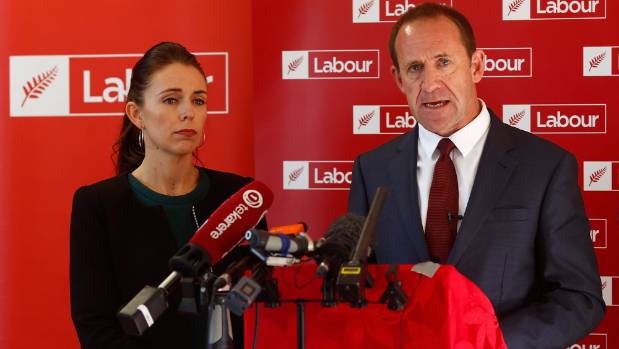
There are many forces that threaten to tear apart every party in every Parliament, but within the New Zealand Labour Party some gigantic fissures are starting to become particularly prominent. The decision to raise the refugee quota was a slap in the face to the poorer voters within Labour, and can be counted as a colossal error. The other error will be forced by the referendum to legalise cannabis.

Make no mistake – raising the refugee quota was an error of profound magnitude. The reality of the situation is this: European governments have, for a couple of decades now, placed the needs of foreign “asylum seekers” above those of their own working classes, and the consequences of doing so are clear. Doing so will lead to a return of authoritarian populists, as has been shown with the rise of the Sweden Democrats in Sweden, the AfD in Germany and Matteo Salvini in Italy.

If you are a poor New Zealander, then you are probably a natural Labour voter, but it’s extremely galling to see Labour spending the money that could have helped you on refugees instead. Adding insult to injury, these refugees are usually dumped in working class areas because that’s where the cheapest housing is. The cherry on the top is that any working-class person who protests their demotion in favour of foreign chancers will be denounced by Labour supporters as a racist.

The decision to double the refugee quota will drive a thick wedge deeply between the working-class faction of Labour, who are dependent on a limited pool of government largesse for their personal well-being and who resent more people claiming a piece of it, and the champagne socialist faction, whose primary concern is virtue signalling for the sake of social status and advancement.

This is the current rupture. It’s unlikely that a populist worker’s movement will arise merely on the basis of this, but it will cause some Labour voters to switch to New Zealand First in 2020 and some to abstain.

The inevitable future rupture comes with the cannabis referendum that will likely be held near the end of 2019. Labour will not admit this, but the referendum has the potential to tear the Labour Party right down the centre, for demographic reasons. This is not a concern for either the Green, New Zealand First or National Parties, because the demographic equation does not apply in their cases.

Maori voters are massively in favour of cannabis law reform – this is one of the strongest relationships in all of New Zealand politics. The correlation between being Maori and voting for the Aotearoa Legalise Cannabis Party in 2017 was 0.91. This is much stronger than all of the other well-accepted relationships in New Zealand society, and is immediately apparent if one observes the fact that the ALCP gets twice as many votes in Maori electorates as it does in General ones.

Pacific Islanders, by contrast, are much more lukewarm on the issue. The correlation between being a Pacific Islander and voting ALCP in 2017 was -0.00 (i.e. perfectly uncorrelated), much weaker than the correlation between being Maori and voting ALCP. The reason for this is clear if one looks at the general demographic profile of Pacific Islanders: they tend to be religious, and the religious tend to be prejudiced against cannabis.

Therefore, the Labour Party cannot avoid being divided when the cannabis referendum comes around, and they cannot avoid losing a large swathe of voters because someone will inevitably feel betrayed. Either Maori voters will punish them for being too strict on cannabis, or Pacific Islander voters will punish them for being too loose. So Labour is damned if they do campaign for change and damned if they don’t.

These two errors need to be viewed in their correct context. Many political commentators assume (incorrectly) that, because all political parties generally fall on a left-right spectrum, if a given voter doesn’t like the government of the day then they will move leftward or rightward to cast their vote next election.

The truth, as Dan McGlashan demonstrated in Understanding New Zealand, is that for many Kiwis, the alternative to voting Labour is not voting at all. If you are a working-class New Zealander, and therefore a natural Labour voter, the preferred option when Labour is too right-wing is not voting Greens but abstaining from voting.

As the article linked immediately above describes, the correlation between voting for Labour in 2017 and turnout rate in 2017 was a very strong -0.72. That tells us that as many as half of all natural Labour supporters actually don’t vote. The real challenge for the Labour Party is not convincing the masses that National is bad or even that Labour would be better, but convincing them that Labour would be better enough to make it worthwhile to vote for them, and to not rather abstain by way of protest.

The two major errors discussed in this article might collectively have the effect of significantly reducing support for the Labour Party. They have already greatly disappointed their voters who are dependent on social assistance, and the cannabis referendum will force them to either greatly disappoint Maoris (who will then abstain from voting in 2020) or greatly disappoint Pacific Islanders (who will then abstain or switch to National in 2020). This disappointment might be enough to tip the balance back towards National in 2020.

*

If you enjoyed reading this essay, you can get a compilation of the Best VJMP Essays and Articles of 2017 from Amazon for Kindle or Amazon for CreateSpace (for international readers), or TradeMe (for Kiwis).

The Five Rejections

It is not easy to say what the alt-centre is, but it is easy to say what it isn’t. The alt-centre is the sixth political position: the one that remains after the explicit rejection of the other five positions. This rejection is necessary because all five positions have evidently failed. This essay seeks to delineate the boundaries of alt-centrism by rejecting the flaws of the other positions.

The alt-centre rejects the position of the old right that the current system is the best system and that the status quo ought to be maintained.

The desire to always keep everything the same is an instinct born of fear of change and greed. Not everything has to stay the same as much as possible and for as long as possible. To fear change is to misorient oneself because everything changes; all of the contents of consciousness are temporary. Therefore, the alt-centre rejects conservatism for conservatism’s sake.

Much the same as all of the non-right-wing positions, the alt-centre is appalled by heavy concentrations of wealth and power in few hands. The alt-centre shares a sense with these other positions that gross inequalities of privilege are obscene, on account of that there is a limit to how much privilege can be earned. Compassion for those who are on the edges of poverty is paramount.

Verticalism is rejected by the alt-centre, for the reason that the majority of people in Western societies are educated to a decent level and can therefore be expected to be reasoned with. Reasoning with people, instead of bullying, mocking, coercing or abusing them, is how bonds of solidarity are formed, and so it ought to be encouraged where practicable.

The alt-centre rejects the position of the old left that the ruling class is inherently illegitimate and that anyone with wealth or power is bad.

Just because someone has wealth and power doesn’t make them evil. Trying to rip people down because of envy is not a behaviour that will lower the prevalence of human suffering on this planet – to the contrary. That sort of resentment-based aggression is precisely the sort of slave morality that the alt-centre rejects.

Horizontalism is therefore also rejected by the alt-centre. Instead, a premium is placed on scientific evidence. This tells us clearly that there are no two things in Nature that are precisely equal, and therefore a desire to equalise everything is a recipe for eternal conflict.

The correct way to get those born into unearned privilege to relinquish it is not by threats and violence and it isn’t by trashing the whole world. It is by reason. The alt-centre seeks to minimise the deleterious effects of unearned privilege by maintaining strong bonds of solidarity across all groups within society, so that none are incentivised to hoard wealth by an indifference to the poverty of others.

The alt-centre rejects the position of the old centre that an insipid compromise between the old left and the old right is the way forward.

You can’t have a compromise between people who seek to cling to power at all costs and people who just want to trash the whole world. This inevitably leads to short-term solutions that fail to meet the genuine long-term challenges of our political and economic climate. These short-term solutions end up causing more damage in the medium to long term.

Neoliberalism is an example of an insipid compromise. In the case of neoliberalism, we get a plastic corporate liberalism that seeks to McDonaldsise the whole planet for the sake of maximum profit and efficiency. Such compromises are considered categorically wrong by the alt-centrist, which abhors reducing things to their lowest common denominator.

In any case, the centre demands the perpetuation of the Establishment, and the alt-centre cannot accept this. The alt-centre cannot accept that the Establishment be allowed to remain on their throne. They have fucked up too badly. In any case, the challenges facing us are too massive, and our culture too sclerotic to adapt to meet them – they can only be overcome with a new paradigm of thought.

The alt-centre rejects the position of the alt-right that segregation and separation are the answers to the failures of the Establishment.

There are many competing ideologies in the world, and most of them have glaringly obvious flaws, it is true. But isolating oneself from these competing ideologies, like a monk hiding in some mountain retreat, is not a philosophy that can sustain an entire nation. Just because the Establishment has failed doesn’t mean we have to throw all of societal advancement and all culture out the window.

Just because the Western World has fallen into chaos, doesn’t mean that we should swing as far as possible in the direction of order. The lessons of the Hemoclysm are still relevant – absolute power still corrupts absolutely. All totalitarian ideas about controlling information or limiting freedom of expression – whether in cyberspace or meatspace – are rejected by the alt-centre.

Related to this, the alt-centre rejects all obsessions with degeneracy, purity and wholesomeness. Altering one’s consciousness for the sake of creativity or social interaction is not “degenerate”. The alt-centre argues that avoiding all drugs is saying no to life, and is therefore an anti-life philosophy. Likewise, the desire for an ethnostate is anti-life, because a diversity of human phenotypes is natural. The alt-centre rejects all anti-life philosophies.

The alt-centre rejects the position of the alt-left that diversity is strength.

It’s obvious that having some things in common is necessary for any group to function as a group. In order for the concept of a group to even be possible, the individuals that institute it have to have something in common. The more they have in common, the stronger the bonds of solidarity will be. These strong bonds of solidarity are necessarily for a society to function.

It’s also obvious that open borders are simply going to lead to a primitive, precarious and paranoid existence where nothing can be certain from one moment to the next. There is no moral imperative to make our societies more diverse just for the sake of it. Indeed, the alt-centre would argue that diversity allows the ruling classes to divide and conquer the masses more effectively. The correct balance between solidarity and diversity has to be struck.

Moreover, the alt-centre completely rejects the new anti-white narrative that is being promoted by the alt-left. The only real privilege is class privilege: a black man with money is more privileged than a poor white man. This remains the core of alt-centre philosophy. The moral imperative is not to God, or to the State, but to alleviate suffering in our fellows.

These five rejections are sufficient for the alt-centre to carve out its own niche in political space. It is one that will grow, and may well eventually come to power. Anyone who repudiates any one of these rejections cannot be an alt-centrist.

*

If you enjoyed reading this essay, you can get a compilation of the Best VJMP Essays and Articles of 2017 from Amazon for Kindle or Amazon for CreateSpace (for international readers), or TradeMe (for Kiwis).

Why the All Blacks Will Do Kapa O Pango Against Argentina

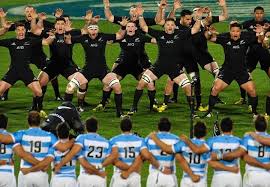
The All Blacks will play the Argentinian Pumas this Saturday night in Nelson. This is the first time the All Blacks have played in Sun City, and as a result it’s expected to be the biggest thing ever to happen here. Only one thing is more certain than an All Black win – and that’s the fact that the All Blacks will do Kapa O Pango and not Ka Mate on Saturday night.

As most people are aware, the All Blacks have two hakas: the traditional Ka Mate, composed by Te Rauparaha around 1820, and the modern Kapa O Pango, composed this century. A smaller number know that Te Rauparaha was some kind of warlord and that Kapa O Pango came in during Tana Umaga’s time as All Black captain.

Te Rauparaha was indeed a war hero – to some. To others, he was every bit the war criminal as other war leaders tend to be viewed as by the people they attacked. He played a leading role in the Musket Wars as a war chief of the Ngati Toa. Armed with musketry, Te Rauparaha’s forces swept all the way down to Kaiapoi, and along the way he carried out some of the most ruthless genocides ever seen in Polynesia.

As this article luridly describes, the existing residents of the South Island were exterminated in a campaign of brutality that would have appalled even the men who destroyed the Aztec Empire under Cortez. Mass murder followed by cannibalism and enslavement of any survivors was the standard practice of war parties in the New Zealand of the 1820s, and the forces under Te Rauparaha were not an exception.

By the early 1840s, the Northern South Island was almost completely depopulated, which made it ripe for European settlement. Nelson and Blenheim were early growth centres on account of this; the road between them, where the Maungatapu Murders took place, was once a relatively busy highway, even if it could only be traversed by horse and cart or by foot.

This is the reason why Nelson has the honour of many national firsts – such as the the location of the first rugby match ever played in New Zealand, an 18-a-side affair at the Botanical Gardens, near the Centre of New Zealand.

So to say that Te Rauparaha is not well thought of by the Maori tribes local to the Northern South Island, or what’s left of them, is an understatement, akin to saying that Adolf Hitler is not well thought of among Poles. For the All Blacks to perform a haka written by him, on the same grounds where he committed possibly the worst atrocities New Zealand has ever seen, would be too great an insult for the local Maori to bear.

Steve Hansen and Kieran Read, ever the master strategists and culturally acute on account of being in charge of New Zealand’s single most successful example of intercultural co-operation, are entirely aware of this, and will no doubt avoid performing the haka that has particular sinister connotations to the local Maoris of Nelson. No surprises: we will see Kapa O Pango this weekend.

*

If you enjoyed reading this essay, you can get a compilation of the Best VJMP Essays and Articles of 2017 from Amazon for Kindle or Amazon for CreateSpace (for international readers), or TradeMe (for Kiwis).

Who Are the Sweden Democrats?

“Keep Sweden Swedish” – a campaign poster for the Sweden Democrats

Shockwaves will go through the West in the aftermath of the Swedish General Election on the 9th September. Opinion polls are suggesting that the post-war Swedish consensus is about to be shattered, with it looking increasingly likely that the Sweden Democrats are going to win the most seats. This essay seeks to explain who the Sweden Democrats are and how they rose to prominence.

It’s the Swedish Summer of 2008. The country has been rocked by the news that the Sweden Democrats, considered by most to be neo-Nazis, have just come over the 4% threshold in latest opinion polls. If they can maintain this level, they will enter the Riksdag (Parliament) at the next election. I’m sitting at the waterfront, not far from the centre of Stockholm, discussing the situation with a politically engaged friend of mine, a member of the Social Democrats.

I had just spent the summer in the North of Sweden, a vast and rural area, long known as the heartland of the Social Democrats. The Far North has always been poorer than the Swedish South, for a variety of reasons, and therefore somewhat dependent on government assistance. Many people up there are unemployed and on benefits, and they were not happy about immigration.

Talking to these people and listening to their grievances, I got a sense that the bounds of solidarity had been extended too far in Sweden. These people had been raised to think of Sweden as a giant family, where the high levels of homogeneity meant that everyone had something in common, and so everyone looked out for each other. The mass importation of Muslim and African immigrants could only mean less solidarity for the rural Swedish poor, which was reflected in their poverty.

For whatever reason, this unhappiness with the state of the nation was not taken seriously by the ruling classes. Sweden Democrat voters are poorer and less educated than average (like nationalist voters elsewhere) and the attitude of the Swedish ruling classes seemed to be that these people could be dismissed as simple racists and hicks.

It was apparent from talking to my friend in Stockholm that this grievance movement was not being taken very seriously. Of course the Swedish poor are poor, the argument went, but the refugees are even poorer, so it’s fair that the Swedish poor are made to go to the back of the queue in favour of the refugees. If they didn’t like that, then they didn’t appreciate how good they had it in Sweden, which was of course the world’s best at everything.

In any case, the rural poor were usually just smygracister – a word that describes a person who makes decisions out of racism, but is too ashamed to admit it. I pointed out that calling these angry people who felt betrayed ‘racists’ was not going to help the situation. In fact, it would make them feel that their anger was justified and that the government and the ruling classes had truly betrayed the Swedish people.

But the denial persisted. The Muslims and Africans would “försvenskar sig” (make themselves Swedish) and they would then be exactly like us, and all of the grievances would disappear. Being a psychologist, and having a deep interest in history I knew that the immigrants didn’t give two shits about becoming Swedish, or about Sweden in general. Sweden was, to them, just a bitch to be exploited and used. The fact that she gave herself so willingly was ample justification.

Few agreed with my dire prognosis at the time, but having met and spoken to Sweden Democrats voters, I knew that their movement would only grow in strength. Because the grievances of their voters would not be met, their march to power was inexorable, and that would not be a good thing for a foreigner like myself. For that reason, I decided to leave Sweden in 2008.

Sweden Democrats voters are the disaffected poor, who have come to feel that they are not represented by the neoliberal tag-team of the Social Democrats and the Moderates. They are the people who have lost out from neoliberalism, and from the freedom of capital to drive down wages through strategies such as mass importation of incompatible Third Worlders. They are not just dumb hillbillies who have been aggravated by far-right wing rhetoric.

The way they felt about mass immigration was how I would feel if my parents gave my inheritance away to some random strangers because they felt kinder helping strangers than helping their own family.

Sweden Democrats supporters feel deeply, deeply betrayed by the decision of the Swedish ruling classes to open the borders to the Third World. If you are Swedish, and poor, and you need help from the state for the sake of a physical or mental illness but can’t get it because of a lack of funding, it’s extremely difficult, and galling, to watch the government spend money on refugees.

The heaviest concentration of Sweden Democrats voters is in the Far South, which is also the area with the heaviest concentration of Muslim and African immigrants. In some areas in Skåne, the Sweden Democrats are predicted to get over 40% of the vote – which will be most ethnic Swedes. These are the people who have seen first hand the effects of mass immigration, and they understand more than anyone else how much has been lost, and how bad things could get.

These people are not bad people, and they’re not stupid losers. They’re simply people who have been lied to and betrayed by their rulers, and are angry and trying to take action to prevent further losses and humiliations. They’re not necessarily nice people, and they’re not necessarily open-minded, but neither of those things will stop them from getting their will through.

It’s already apparent that the other parties will work together before they allow the Sweden Democrats into power. After all, the Social Democrats and the Moderates are both neoliberals, and mass immigration is one of the main policy planks of neoliberalism. This can only mean that the Sweden Democrats will continue to grow in strength until the day where they take power outright.

When that day comes, anything can happen. The Sweden Democrats, and their supporters, utterly despite both the Social Democrats and the Moderates, and will be more than happy to throw everything out the window in order to stop Sweden from disintegrating into a Third World country. Anyone who suffers from this, Swede or otherwise, will be considered merely collateral damage.

*

If you enjoyed reading this essay, you can get a compilation of the Best VJMP Essays and Articles of 2017 from Amazon for Kindle or Amazon for CreateSpace (for international readers), or TradeMe (for Kiwis).