Esoteric Aotearoanism

If the Spear of Destiny ever comes to New Zealand, we ought to be ready to receive it. To that end, we can act to attract it, by employing the Law of Attraction. We can do that by promoting a cultural movement that recognised the excellence of New Zealand and our future greatness. This essay describes a mystical tradition that could serve these ends: Esoteric Aotearoanism.

Elementary alchemy has it that if one combines masculine and feminine in the right manner, one achieves a combination that is greater than the mere sum of its parts. By combining the feminine clay and the masculine iron, it’s possible to get silver, an element neither feminine nor masculine but somehow both, and not just both but the correct proportion of both.

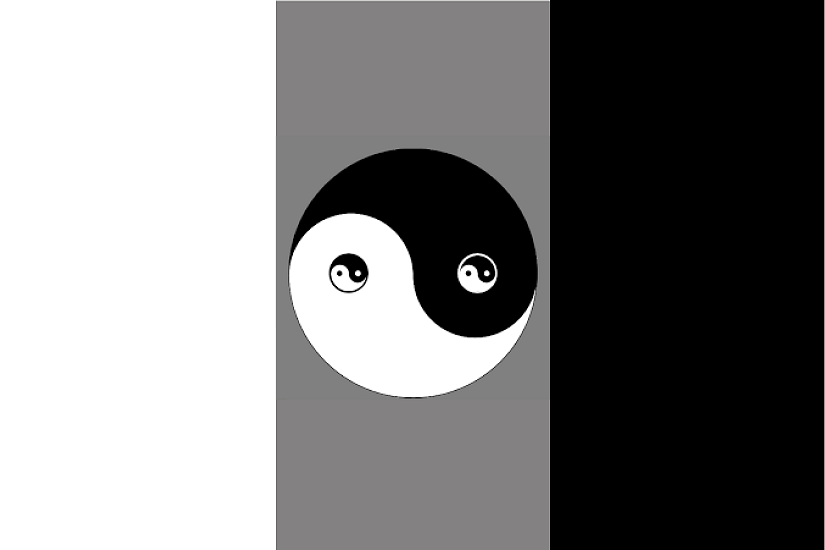
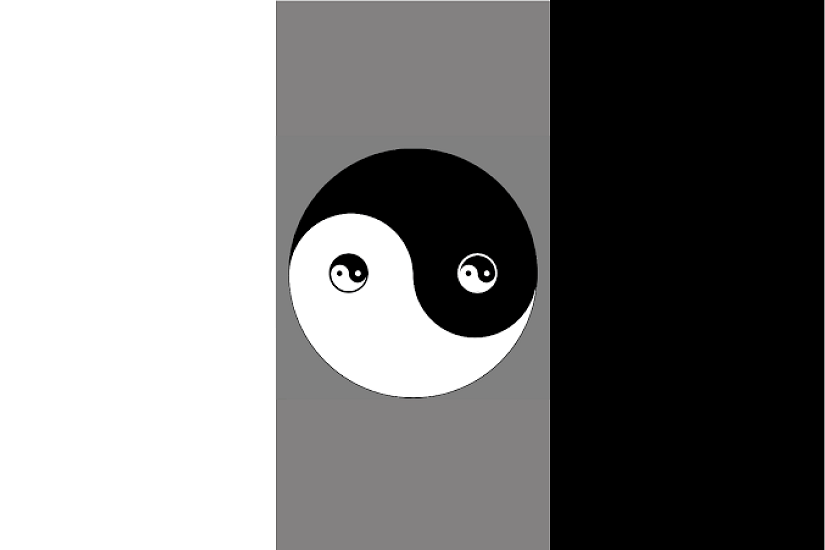
This is represented in Taoism by the Taijitu, which combines the white yang and the black yin to create a shape that has a life of its own, one that tells a story. The energy, light and life of the yang projects itself into the darkness of the yin, which in turn follows the yang in devotion. The result is a spiral that turns for eternity.

Esoteric Aotearoanism tells a similar story. This story is represented in the flag of Esoteric Aotearoanism, which consists of three vertical stripes: the leftmost white, the rightmost black, and the central one silver. It is crucial to note here that the central band is silver, and not grey, because the combination of the two parts has created something more valuable than their mere summation.

The opening degree of Esoteric Aotearoanism is that the Esoteric Aotearoan flag represents the nation of New Zealand in the Kiwi people. 

The white is yang, which represents the British. This is not just because the British are white, but also because they are orderly. The British came from the West and therefore the leftmost third of the flag is white. It is from there that the energy and organisation to create the institutions of New Zealand came.

The black is yin, which represents the Maoris. As with the British, this does not simply reflect skin colour, but rather a vital, invigorating passion. Because the Maoris come from the East, the black occupies the rightmost third of the flag. It is from there that the soul of the nation comes, and how we get direction to differentiate ourselves from the globohomo masses (and from Australia in particular).

The silver stripe represents New Zealand, the space where those two ingredients meet, and where they combine to become something more valuable than either. The yang is bright but unyielding; the yin is gentle but dull. Together they are colourful, and shine as silver. As silver is more valuable than either iron or clay, so too is the combination of British and Maori more valuable than either alone.

The silver stripe also represents those who have come together under the silver fern, because they have acted to create something that is greater than either the British or the Maori components. It signifies that what we have of greatest value is that which comes from the land here. It’s not what we imported from Britain or from Polynesia – it’s what we have created ourselves here, according to the direction of our own wills and of the spirit of the nation.

It’s also a reminder that our future lies in the unity of these two forces.

Sir Apirana Ngata hinted at Esoteric Aoteraroanism being the way forward when he said:

Ko to ringa ki ngā rakau a te Pākehā

Ko to ngakau ki nga taonga a o tipuna Māori

Ko tō wairua ki to Atua

In English this means “Your hands to the tools of the Pakeha, your heart to the treasures of your Maori ancestors, your spirit to God.” The sentiment behind this was that we ought to take the best of both worlds. Both the Maori and the European world brought things that were good and things that were bad. We can take the best of both, and leave the worst of both.

This leads naturally into the teaching of the second degree of Esoteric Aotearoanism, in which the various qualities contributed by the British and the Maori are mapped onto the four masculine elements.

The clay represents the Maori. This is because he is vital and passionate, but has a dark side of sometimes expressing unrestrained violence. He is soft and likes to share, but this can sometimes lead to a lack of discipline.

The iron represents the Briton. This is because he is hard and disciplined, but has a dark side of sometimes being cruel. He is orderly but can sometimes be hard-headed, unforgiving and pedantic.

The silver also represents the Briton (this conception of silver is related to, but separate from, the conception of silver in the first degree). This is because his scientific and technological prowess made it possible for New Zealand to become wealthy and prosperous, and for us to defend ourselves without need for submission.

The gold also represents the Maori. Like the clay, the Maori is soft, but he is also colourful. This represents spirituality and an understanding of the world beyond. The Briton is intelligent but he is spiritually ignorant. The realm of gold is where New Zealanders connect to God, and the Maoris, particularly those with an enthusiasm for cannabis or psilocybe wereroa, have a vital role to play here.

Esoteric Aotearoanism considers it a tragedy for a Kiwi to identify as either a white person or a Maori. This would be like denying one of your parents. It’s a small-minded and petty thing to do. That sort of solipsistic narcissism will lead to the nation tearing itself apart down the centre. To identify as one and repudiate the other is an idiocy that is promoted by the enemies of this nation.

In reality, Kiwis are already so intermixed that as many as a quarter of us are some kind of Northern European-Polynesian hybrid. It is this sort of person – not Maoris – that is unique to these isles, the true tangata whenua. There are Europeans in Europe and Polynesians in the Pacific, but only in New Zealand can those who are a mix of the two truly say that they have a home.

This leads onto the third degree of Esoteric Aotearoanism, which deals with the future of the two contributors to Aotearoa. The fact is that white people and Maoris are interbreeding at an extremely high rate, and therefore will eventually mix into one people, who are not separated by category but only by degree. Even then, it will not be a degree of value but simply a degree of proportion of yin or yang.

This people will be a true Kiwi people, and they will best be able to channel the best of the yang and the best of the yin to create something truly precious. Many of them will be among the most excellent individuals on Earth on account of hybrid vigour. There are already plenty of examples of this, such as Buck Shelford, Shane Bond, Michael Jones and (allegedly) Dan Carter.

In all, Esoteric Aotearoanism is a new narrative for a new century, one that repudiates the nation fighting against itself, and one that encourages the nation coming together to embellish the strengths and ameliorate the weaknesses of its constituent parts. This is a narrative that, if supported, can bring peace and prosperity to all Kiwis.

*

If you enjoyed reading this essay, you can get a compilation of the Best VJMP Essays and Articles of 2018 from Amazon for Kindle or Amazon for CreateSpace (for international readers), or TradeMe (for Kiwis). A compilation of the Best VJMP Essays and Articles of 2017 is also available.

Why the New Zealand Working Class is Destined to Turn to Fascism

With the signing of the UN Compact on Migration, the Sixth Labour Government all but assured that the New Zealand working class will turn to fascism. They won’t do so straight away, and many will claim that they won’t do so at all, but the snowball has been set in motion. This essay will explain why.

From the turn of the century in Europe, a new pattern started to emerge: the resurgence of anti-globalist sentiments. Globalism had dominated the world for the previous half-century. Nationalism was comprehensively defeated in World War II, and the next fifty years were characterised by anti-protectionist trade agreements that liberalised commerce and trade all over the world.

Western workers were promised that this liberalisation would lead to better living conditions, as their wages would be able to buy goods and services more cheaply and efficiently. The reality turned out to be the opposite. Western workers turned out to be the product, and trade liberalisation simply meant that international companies could play workers in different countries off against each other, bidding their wages down to the floor.

Eventually the globalist propaganda stopped being effective, as people started to see through it. They realised that they had been cheated – not only were they not richer, but they now had to live with the effects of the mass importation of cheap labour into their communities. This meant increased violence, increased property crimes and increased sex crimes, all of which the elite were safely inured from by virtue of living in wealthy neighbourhoods.

The European working class were brutalised by globalism. Their wages went down, their neighbourhoods became less safe, and on top of it all, they were regularly humiliated by the same political class who claimed to represent them. Leftists habitually dismissed working-class concerns as “bigoted” or “motivated by racism”, as if it were unreasonable to complain about the destruction of one’s community or of the possibility of raising a family on one wage.

This sentiment has found increasing expression in fascism. At the last Swedish General Election, the Sweden Democrats won 17.6% of the vote. The globalist parties refuse to co-operate with them, and as a consequence the country has been ungovernable for the last 100 days. In Germany, opinion polls are suggesting that the Alternative Fuer Deutschland now has as much support as the major social democratic party, which suggests that the government of Europe’s largest economy risks falling into a similar state of paralysis.

New Zealand is merely a few decades behind on this same miserable path of social decay.

You’d have to be insane to vote National as a working-class person. Not only do they want to cut all of your social assistance, but they also want to import the same hordes of cheap labour that has destroyed Europe over the last 40 years.

But you’d also have to be insane to vote for Labour. The New Zealand Labour Party has long ago replaced all of its working-class sentiments with bourgeois ones. As a result, they’re right behind the UN’s Global Compact on Migration. This follows in the same vein as the recent increase in the refugee quota, and is commensurate with Jacinda Ardern’s ambition to become a highly-ranked UN official.

As a working-class person, an increase in the refugee quota, and an liberalisation of the ability of cheap labour to move here, have a number of terrible consequences.

The first and most obvious is the destruction of the economic position of the working class. The economic position of those who sell their labour for a living is entirely dependent on the supply of that labour. Basic economics tells us that if the supply of cheap labour goes up, the wages go down. So the more people who are let into the country to compete with the working class, the lower the standard of living becomes.

Even worse is the destruction of the social position of the working class. Instead of being seen as economically disadvantaged individuals who might need extra social assistance, the working class (especially the white working class) are now seen as enjoying privilege that refugees don’t have. They now find themselves facing verbal abuse for defending their own class interests by opposing globalisation.

These consequences come on top of the changes brought by the last 30 years of neoliberalism, which has changed the position of the working class from an essential part of the nation to a disposable commodity to be bargained down to the cheapest possible price. The net result of it all is a deep sense of humiliation, rage and betrayal.

If the working class feels like the left has abandoned them (perhaps because the left has become captured by bourgeois interests), they will find an alternative from outside the right-left liberal democratic dichotomy. There is ample historical precedent for this – indeed, it was a deep sense of anger among the working class that led to Mussolini and Hitler taking power in their respective countries.

The Maori working class will be the most receptive to the fascist message. This is apparent from their existing high level of support for the (supposedly) nationalist New Zealand First party. This particular group has already lost their social position from colonisation, and are not at all keen to lose it again to what is effectively more colonisation. They will be among the strongest supporters of fascism in New Zealand.

If the left react to this intensifying sense of abandonment by lecturing the working class about how they are racist, and how they are selfish, and how they need to sacrifice more to do their share of helping out, then a fascist resurgence is all but guaranteed. As Emmanuel Macron recently proved in France, nothing will amplify the fury of the working class more than to inflict moral lecturing on top of their economic and social suffering.

The New Zealand working class will turn to fascism because the two mainstream parties are co-operating – and will continue to co-operate – to take measures that will destroy the economic and social position of that class. The inability of the working class to find expression within the liberal democratic system will lead to them destroying it by supporting a fascist alternative as soon as one arises. The New Zealand Establishment will not heed the lessons of history.

*

If you enjoyed reading this essay, you can get a compilation of the Best VJMP Essays and Articles of 2017 from Amazon for Kindle or Amazon for CreateSpace (for international readers), or TradeMe (for Kiwis).

The Case For Four Specialist Seamers in the Black Caps

A recent article argued that this is the best ever Black Caps Test side. Even so, there’s scope for the Black Caps to get even better. There is plenty of talent on the sideline as well, and finding a way to find some of it in the run-on XI might make the team stronger – as this article will examine.

The Black Caps have never had a batting foursome as good as Williamson-Taylor-Nicholls-Watling. The first two stand alongside Martin Crowe as the best the country has ever produced. Watling has been world-class as a wicketkeeper-bat and Nicholls has already broken into the top 10 Test batting rankings. Moreover, our two openers in Latham and Raval are as good as any since John Wright and Bruce Edgar.

The Black Caps aren’t lacking the ability to build big innings, and they already have Nicholls and Watling as batsmen capable enough to rebuild after a top order failure. There is therefore no need for an insurance batsman at 7, especially if this means that a good chunk of overs have to be bowled by a non-specialist.

With batting that good, we can afford to lose a bit of extra batting at 7 for the sake of strengthening the bowling. In other words, we could consider not playing an all-rounder in that role, but rather a bowling all-rounder like Mitchell Santner or Matt Henry.

The Black Caps could field a team of:

1. Raval
2. Latham
3. Williamson
4. Taylor
5. Nicholls
6. Watling
7. Santner
8. Henry
9. Southee
10. Wagner
11. Boult

This would allow us to field an outstanding pace battery without having a weak batting unit. Probably we would open with Boult and Henry in such a situation, with Wagner playing his usual role as third seamer. Southee’s bowling would be much more dangerous than the alternatives for fourth seamer.

Such a composition would make for an exceptionally pure Black Caps side. There would be five specialist batsmen, one wicketkeeper, and five specialist bowlers.

A critic might argue that choosing such a side will increase the chances of being bowled out cheaply. The counter argument to that is to say that a pace battery of Boult, Henry, Wagner and Southee would wreck opposition teams so regularly that we would get away with a tiny extra chance of a batting collapse if it meant more overs from a truly dangerous bowler.

In any case, all four of them can bat a bit. Henry (19), Southee (17), Boult (14) and Wagner (12) all average in the double figures. A tail with Mitchell Santner at 7, who averages 25 and has the promise to average 30, would be just as good batting-wise as one with an all-rounder at 7, Santner at 8 and one fewer specialist seamer. Bowling-wise, four seamers would be superpowered.

*

Dan McGlashan is the man with his finger on the statistical pulse of New Zealand. His magnum opus, Understanding New Zealand, is the complete demographic analysis of the Kiwi people.

VJMP Reads: Ted Kaczynski’s Unabomber Manifesto VI

This reading carries on from here.

The next chapter in Industrial Society and Its Future, beginning from paragraph 171, is ‘The Future’. Here, Kaczynski discusses the likely outcomes of the perpetuation of the techno-industrial system.

One potential outcome is that increasing technology and automation means that the vast majority of human labour becomes performed by machines instead. At this point, one must consider whether this machine workforce is to remain working under direct human supervision or if it is to work autonomously. It could be that our increasing dependence on the decisions made by these machines make us dependent on them, in the same way that we have become dependent on other technology.

The horror scenario, as Kaczynski sees it, is that automation will incentivise the extermination of the masses on the grounds that they are no longer needed for their labour. A more humane scenario is that the elite uses propaganda to reduce the birth rate of the masses so that natural deaths cause the population to decline. This may become necessary because of ecological considerations. The only alternative is to essentially domesticate humans like pets.

Kaczynski flat-out rejects the idea that work for the sake of the work is the solution to the problem. Makework will not lead to any kind of fulfillment. Even more of a worry is the fact that these problems will continue to get worse. The bourgeois sort of person who runs the machine will only become more and more a part of it, and the machine will grow to absorb all, barring the odd pocket of nature kept as reserve.

He concludes, “It would be better to dump the whole stinking system and take the consequences.”

The next section is titled ‘Strategy’. Here Kaczynski talks about what specifically can be done to oppose the techno-industrial system. Most people believe that the forwards march of the system is inevitable; Kaczynski disagrees. It can be meaningfully opposed in two ways: by increasing the stresses within it to hasten its collapse, and by developing an alternative ideology so that people can learn to live without it.

The French and Russian Revolutions provide an example of how this could be achieved. Ideologies must have both a positive and a negative ideal. Kaczynski proposes valuing wild, raw Nature as something that should prosper freely. This includes human nature. If the techno-industrial system collapses, people will come to live close to Nature again, on account of that they will be forced to.

Most people don’t like psychological conflict, and as a consequence they do like black-and-white thinking. Despite that, it’s important to target the ideology at intelligent and thoughtful people, because they will be most capable of influencing others. Even so, it’s necessary to have a simpler version of the ideology that even simple people can understand. Care must be taken so that propagandising towards this simpler version doesn’t put the more thoughtful people off.

The most important thing is building a committed core of good people. For this reason one needs to take care who one attacks and who one befriends. The general public should never be blamed, but focus should be placed on the ruling class. Care must be taken not to encourage conflict in the wrong places, because that will lead to more technology. It’s also a mistake for minorities to put members into high positions in government and business, because that will just hasten the absorption of that culture by the system.

For this reason, it’s better for revolutionaries to not try to win power in the democratic system. There is no way to change the system from within without getting co-opted. The collapse of the techno-industrial system will induce short-term suffering, and the politicians will get blamed for it, so best to stay out of the way until such a time as this suffering gets blamed on the shortcomings of the system.

The revolution will have to happen in all nations at the same time. For this reason, it’s better for the world to become interconnected – the hope is that if, for example, America collapses, it will take the rest of the world down with it.

People will not be aided by becoming more passive in the face of the system. Humans have a will to power; this is a fact. This will to power can be better satisfied in primitive conditions, because people will satisfy it by meeting their survival needs.

Technology can be freely employed by revolutionaries, but only if it is directly employed in the destruction of the techno-industrial system. Humans cannot be trusted with technology any more than any alcoholic can be trusted to babysit a bottle of wine. In any case, revolutionaries should have as many children as they can, because anti-technological attitudes will be in some way inherited.

*

If you enjoyed reading this essay, you can get a compilation of the Best VJMP Essays and Articles of 2017 from Amazon for Kindle or Amazon for CreateSpace (for international readers), or TradeMe (for Kiwis).