
The Elementalist Understanding Of Free Will

The question of free will is one of the classic philosophical dilemmas. Do we have any choice over over our own behaviour? Or are we fated to perform certain actions because of our genes and conditioning? Traditional philosophy has explored a variety of approaches to this question, but Elementalism provides a new one.

The questions above are the basis of what is known as the free will vs. determinism debate.

The free will argument contends that people can do whatever they want to. People have a choice between good and evil, between selfless acts and selfish ones, and if a person’s true will is good they will do good. As such, people who do good can be treated as if their will is good, and vice-versa.

The determinist argument contends that a person’s future actions are restricted to a range determined by, among other things, a person’s genes and their conditioning. People don’t really have a choice about what they do, because they can only motivate themselves to act if the wiring of their brain creates an impulse to action.

This is an important philosophical question because, as alluded to above, the resolution of it determines how certain miscreants are to be treated. If free will exists, then criminals can be punished harshly. If not, then they have to be guided into making the right decisions by behaviour modification.

The Elementalist perspective, as is often the case, is that mainstream philosophy has missed the point entirely.

Elementalists believe that all of us are, fundamentally, individuated consciousness, and that these individual consciousnesses traverse the Great Fractal by way of matching frequencies. To the Elementalist, there is no material world – every individuated consciousness is aware of a set of perceptions, and each set of perceptions exists somewhere in the Great Fractal.

These sets of perceptions change as the frequency of one’s individual consciousness changes. Therefore, to change the world to that which one desires, it’s only necessary to change the frequency of one’s consciousness. This can be done through repeated exertions of pure will.

Because there is no hard material world, there is nothing forcing a human being to behave in any pre-determined manner. There aren’t really any neurotransmitters, or any limbic system, or any instinctual response brain circuitry or anything else involved in decision-making. There is just consciousness and the contents of consciousness. Life is but a dream, through which consciousness passes, forever.

Elementalists believe that anyone can get anything they wish for, whether in this life or in one to come, by matching the frequency of one’s consciousness with the frequency of the part of the Great Fractal in which that thing exists or is happening. In fact, Elementalists go as far as to believe that one inevitably lives a life that matches the frequency of one’s consciousness, whether this is wanted or not.

Accordingly, a person has to be careful about what their true will is – because they will get it.

If a person’s true will is to assert themselves violently over others, they will gravitate to a part of the Great Fractal where the order of reality is the violent assertion of power over others. Sometimes they will benefit from that, and sometimes they won’t – that’s how it goes when you wish for such things.

If a person’s true will is order, then they will get order. They will end up in a part of the Great Fractal where chaos is minimised. A person who ends up in such a place might not like it on account of that they find the order suffocating. In such a case, this will be reflected by their true will, leading to a change in the frequency of that person’s consciousness, in turn leading them to another part of the Great Fractal.

If a person’s true will is peace, their frequency will come to reflect this as it comes to reflect the sum total of that person’s actions in their life. This will cause them to gravitate to a part of the Great Fractal populated by peaceful beings. An individuated consciousness might experience this as bliss – or hellishly boring.

In summary, Elementalists believe implicitly in free will, so implicitly that they strive to perfect their mastery over it. Mastery over one’s true will is mastery over how one navigates the Great Fractal – either one drifts ignorantly through existence or one dances skillfully through.

The Elementalist conception of reality teaches that we are individual fragments of consciousness experiencing the Great Fractal, which we are free to explore in perpetuity. As such, there is no reason to assume any kind of determinism beyond the Seventh Hermetic Principle, or the Law of Cause and Effect.

What that means, in practice, is that one can only move through the Great Fractal at a pace and manner determined by one’s previous actions. The more heavily one’s karma weighs, the more restricted one will be to certain pathways, and the less nimbly one will be able to change direction. One’s karma is, of course, a reflection of one’s previously expressed true will.

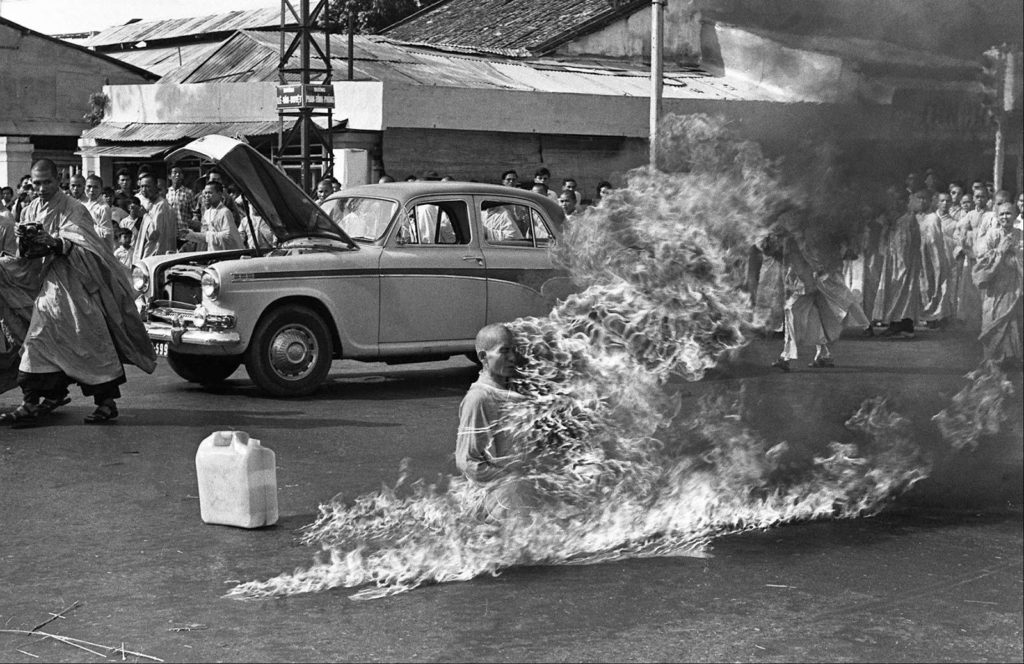
Such arguments were no doubt understood by the monk in the image at the top of this page. Although he was a Buddhist, and not an Elementalist, he would have been aware that the material world is illusory and therefore that all sensations are transitory. As such, he would have possessed a great deal of the wisdom that Elementalists aspire to.

*

If you enjoyed reading this essay, you can get a compilation of the Best VJMP Essays and Articles of 2019 from Amazon for Kindle or Amazon for CreateSpace (for international readers), or TradeMe (for Kiwis). A compilation of the Best VJMP Essays and Articles of 2018 and the Best VJMP Essays and Articles of 2017 are also available.

*

If you would like to support our work in other ways, please consider subscribing to our SubscribeStar fund. Even better, buy any one of our books!

Writing Characters of Tin

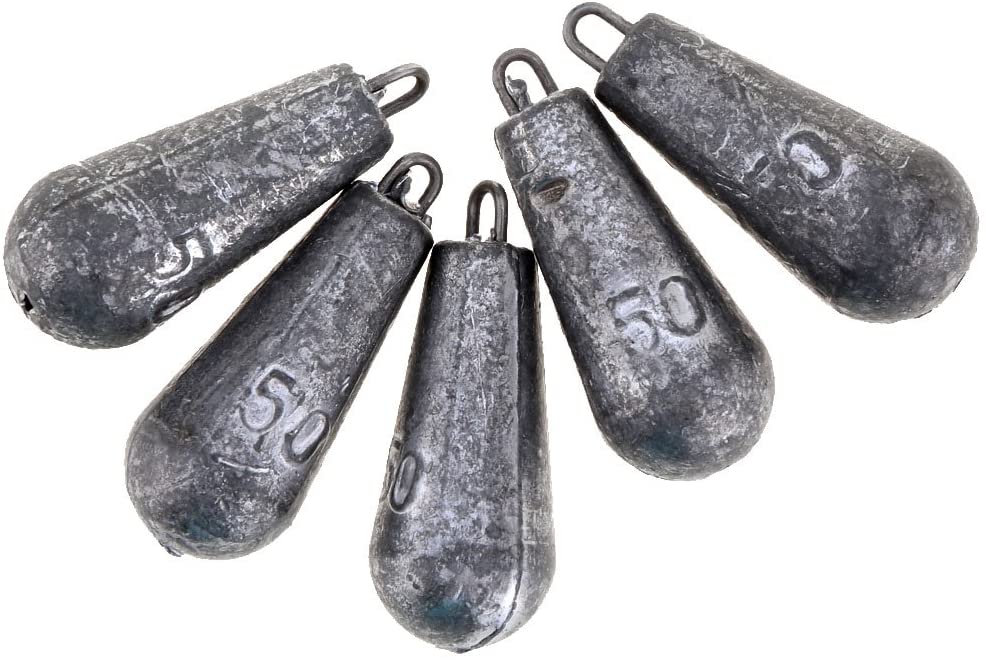
Once a character has a small amount of spiritual energy in them, they become a character of tin. This represents the next stage up the spiritual ladder from lead. As tin is brighter than lead, characters of tin are brighter than characters of lead. However, tin is still near the bottom of the vertical spectrum.

Tin is represented by the planet Jupiter. As such, it is typified by largeness. The typical character of tin is one that other people would describe as “larger than life”. In much the same way that characters of lead can be marked by being small, characters of tin can be marked by being large.

This largeness does not imply any of the other qualities typical of the higher elements. Characters of tin may be large, but they are seldom physically disciplined like the characters of iron. Rather, men of tin have big beer bellies and women of tin have gigantic breasts. The stereotypical jolly fat man is a man of tin.

Jupiter gives us the word jovial, which is the characteristic adjective of characters of tin. This joviality expresses itself as an uncomplicated sociability. Characters of tin, having advanced past the level of lead, understand that life must be enjoyed rather than merely survived. As such, they are all about the next party.

The archetypal emotion of a character of tin is joy. Whereas the character of lead is fearful and suspicious, the character of tin overflows with warmth – perhaps too much. They can be the sort of person whose good-natured naivety leads to them getting their pocket picked. They can also be the sort of person who gets a little bit too flirtatious with the waitress and so upsets their wife.

The flipside of this is guilt. Characters of tin frequently find themselves feeling guilty on account of overindulging in some passion or failing to resist some temptation. Although they’re not petty criminals like characters of lead can be, and they’re not sadistic brutes like characters of iron can be, their impulsive and passionate nature can induce them to commit practically any crime that characters of lead and iron are capable of.

The archetypal occupation for a character of tin is a publican or bartender. When surrounded by other people who are drinking booze and cutting loose, the character of tin is in their element. One can reckon their whereabouts by their booming laughter. Dancing and gambling are other favourite pastimes.

Where you won’t find them is in any occupation requiring long-term physical or intellectual discipline. The character of tin doesn’t consider themself ill-disciplined, however – they are likely to make the argument that their passions are too powerful to be readily controlled. For this reason they don’t necessarily look up to the characters of higher elements.

Characters of tin often have some rudimentary musical skills. Although they don’t have the refinement of characters of copper or the brilliance of characters of mercury, they have no shortage of passion. Sometimes they make more noise than music. A charcter of tin, then, feels right at home behind a set of drums or fronting a punk rock band.

Perhaps the greatest motivation of the character of tin is the prospect of a good hard shag. Being slightly illuminated, they are full of both passion and the lust for pleasure. As such, characters of tin fill the bordellos of the world, both as customer and vendor. Their idea of heaven is a pub full of drunk, loose, big-titted women or horse-cocked men. Concerns about class don’t really come up – characters of tin are in it for a good time, not a long time. They like to say “any hole’s a goal”.

Characters of tin tend to be more forgiving and less petty than characters of lead, but they do have a pronounced dark side. Not being illuminated to the level of iron, they don’t have any true sense of honour. As such, they are still prone to petty hatreds, only they are more likely to backstab someone socially through gossip or rumourmongering than by doing it literally.

Being emotional, characters of tin are also prone to sullenness. If there is nothing interesting happening, or if they don’t get their way for some reason, characters of tin tend to sulk. They also yield easily, although they aren’t as flighty as the characters of lead.

Most usefully from a story-telling point of view, characters of tin are vulnerable to letting their passions get on top of them. This relates not so much to violence (this is more the problem of characters of iron) but to gluttony and licentiousness. Characters of tin are often drug addicts. Much like the characters of lead, they are not particularly good at long-term thinking. So there are many of them who are alcoholics or junkies.

Characters of tin are great fun to be around when times are good, but when times get tough they tend to disappear. A character of tin, then, is the archetypal “fairweather friend”. Lacking the displine of the higher elements, the character of tin tends to cut and run. They also like to bludge.

The character of tin tends to look down on the characters of lead on account of that the latter aren’t much fun. Characters of tin might not be particularly illuminated, but they are smart enough to know that people with no moral refinement tend to cause bad times to those around them. This prejudice towards the less enlightened is a feature of all of the levels between lead and gold.

Characters of tin don’t make sophisticated distinctions between the characters of the higher elements. Although they may have a wary respect for the characters of iron on account of their fighting ability, the characters of copper, silver, mercury and gold all tend to blend together as “rich people”.

Other characters tend to look down on the character of tin for being degenerate. Because the character of tin cares about little beyond the next good time, they’re usually the sort of person who can neither impose order upon the environment around them nor upon themselves. As such, they are often physically out of shape and poorly educated, and so are not afforded great respect.

An underappreciated ability of tin is its capacity for balance. Because tin is the centrepoint between lead and iron on the spectrum of base elements, it can serve as a mediator between the base feminine and the base masculine. As such, characters of tin can be skilled at sorting out petty disagreements, usually with an appeal to have a drink and forget about it all.

Characters of tin can also be lucky. The expression ‘tinny’, to denote someone lucky, has an alchemical origin. It’s related to the idea that a gusto for life attracts Fortune to one’s side. This sentiment is the basis for the amor fati that is the essential attitude of the characters of iron.

*

This article is from Viktor Hellman’s The Alchemy of Character Development, the sixth book in VJM Publishing’s Writing With Psychology series. This book will show you how to use alchemy to create deep, realistic and engaging characters for your creative fiction.

*

If you enjoyed reading this essay, you can get a compilation of the Best VJMP Essays and Articles of 2019 from Amazon for Kindle or Amazon for CreateSpace (for international readers), or TradeMe (for Kiwis). A compilation of the Best VJMP Essays and Articles of 2018 and the Best VJMP Essays and Articles of 2017 are also available.

*

If you would like to support our work in other ways, please consider subscribing to our SubscribeStar fund. Even better, buy any one of our books!

Writing Characters of Lead

A character of lead is one who is yet to be affected by the energy of your story. They might be a peasant, or the son of a blacksmith, or the daughter of any random family. In principle, such a character could be practically anything as long as they are not in any way enlightened.

Lead is a metaphor for the base condition of man. In this sense, the lead represents the lowest possible spiritual level. A character at this level is yet to hear the call to adventure, and has no concept of it. They will not believe in God, or in anything spiritual (although they might claim to). They will be a human being in their natural, material state.

Going back to the metaphor of light, a character of lead could be considered entirely unilluminated. There is no higher order in them; their daily lives are characterised by fear. Lead is sometimes represented by the planet Saturn, this being the furthest from the light of the Sun. As such, it is sometimes represented by an old man with a wooden leg and a scythe, all three components suggesting death.

A character of lead has no higher calling, or even any idea of what that would feel like. They have no great battle to win, whether external or internal. Their lives tend to be a string of battles against whichever adversary appears in the moment. This is usually whoever is preventing them from gratifying whichever impulse is currently gripping them.

Three of the most salient features of lead are that it is soft, dark and dense.

Characters of lead are soft because they are passive. This softness is not physical but spiritual. Lead is extremely easy to bend, and this is also true of characters of lead. Men and women of lead are not the ones that will stand up and lead a rebellion against a tyrannical king. Instead, they yield.

This softness doesn’t prevent passive aggression. Characters of lead are capable of all kinds of passive aggression, but they lack a conception of honour. Therefore, they are not hard enough for direct assaults, and must slink about in the shadows looking for the backstab.

Characters of lead are dark in the sense that they are of the soil and live close to it. It’s likely that such a character will be dressed in blacks and browns, perhaps of sackcloth. Their facial expressions are commonly “leaden-faced”, and their manner of walking can be described as “leaden-footed”.

In many cases, the emotions of characters of lead will also be dark. Because of the absence of spiritual enlightenment, characters of lead take offence easily and hold bitter grudges for a long time. Sometimes their low frequency will make them stand out in a room of people. They regularly appear sinister to characters of higher frequencies.

Lead is also dense. This reflects the way that characters of lead are often described as not very intelligent. A character of lead is one that has extreme difficulty learning from adversity or changing their behaviour to avoid future suffering, at least in the long term.

On a metaphorical level, this density means that they are not easily affected by light. A character of lead might find themselves in the presence of a highly spiritual individual and not appreciate it. Spiritual insight is to characters of lead as pearls before swine.

Characters of lead might be noteworthy for an advanced sense of smell. Being of lead, they tend to be very close to nature, and to the soil. This can give them certain advantages. Whereas the more refined characters might be precious on occasion, the characters of lead are perfectly happy wallowing in the mud.

A character of lead can be motivated by anything, usually whatever instinct happens to flow through their veins at any moment. Typically this is fear – having no spiritual sense, the character of lead has no reason to be brave about anything. A fear of death is perhaps the most salient feature of their mentality.

Despite being passive, a character of lead can provide an impetus to your story. Their fear of death may cause them to take a cowardly action that sets off a chain of reactions. Someone else may have entrusted them with the responsibility of standing firm, only to have them yield.

Characters of lead tend to be young, because lead represents the earliest stage in development. A callow youth who is yet to learn any major life lessons, and as such does not respect his betters, is archetypal. A middle-aged character of lead might be pitifully immature, having failed to learn from their mistakes. An elderly character of lead might be on death’s door, life’s spirit leaving them.

Characters of lead tend to cause a lot of strife. Although they don’t have the outright fondness for violence that marks out characters of iron, their lack of spiritual refinement makes them unforgiving. As such, they are prone to petty feuds and grievances. The tendency is for them to leave destruction in their wake.

Because characters of lead don’t tend to have any spiritual sense at all, it’s very rare for them to think about life after death, or even further ahead than the next winter. If another character tries to speak to them about spiritual subjects, they’ll probably get a shrug. They don’t share the contempt for the spiritual possessed by the characters of iron and silver – they’re simply indifferent.

Piss and fart jokes, on the other hand, are greatly amusing to characters of lead. In fact, the more crass and vulgar the better, because that will more vigorously stick it to the snotty characters of silver and mercury. Toilet humour is the perfect accompaniment to characters of lead.

It’s common for characters of lead to serve as thieves or rogues. This is because they have very little in the way of moral compunctions – at least not when it comes to other people’s suffering. When it comes to their own suffering, on the other hand, they can be just as precious as anyone else.

In summary, characters of lead occupy the bottom rung of spiritual development. As such, they represent humans in their unrefined state. Characters of lead are not necessarily evil, although they are certainly capable of evil acts. This level is often where the protagonist of your story will start, and will only transform once the magic of your story begins.

*

This is an excerpt from The Alchemy of Character Development by Viktor Hellman, the sixth book in the Writing With Psychology series.

*

If you enjoyed reading this essay, you can get a compilation of the Best VJMP Essays and Articles of 2019 from Amazon for Kindle or Amazon for CreateSpace (for international readers), or TradeMe (for Kiwis). A compilation of the Best VJMP Essays and Articles of 2018 and the Best VJMP Essays and Articles of 2017 are also available.

*

If you would like to support our work in other ways, please consider subscribing to our SubscribeStar fund. Even better, buy any one of our books!

The Elementalist Exhortation Against Suicide

Camus wrote that humanity is constantly challenged by the ever-present prospect of suicide. To many people, it isn’t obvious why one should keep going in a world with as much suffering in it as this one. Elementalism exhorts people not to kill themselves, a position that is outlined in this essay.

The approach of many other ideologies is to say that committing suicide will cause you to go to Hell. There’s some truth to this, but it’s a crude and superstitious explanation, and as such is not convincing to most adults. Elementalism offers a much more persuasive admonition: to commit suicide is to cause oneself to be reincarnated in a world where people commit suicide.

At this point, a distinction needs to be drawn between tragic suicides and understandable suicides.

A tragic suicide is usually one where the suicide leaves behind people that cared for them. That is to say, the suicide increases the net amount of suffering in the world. The vast majority of suicides of young people are tragic ones, on account of that young people usually have a number of family and friends who care for them and who would be upset by their death.

An understandable suicide is one that does not increase the net amount of suffering in the world. An example might be when a person is so old that their remaining life is no longer worth living, but to continue is to suck up resources that could be used on someone else. If a person has outlived all their friends, their brothers and sisters, and their wife or husband, they might not be causing more suffering by ending their life.

Elementalists believe in the Law of Assortative Reincarnation. This is the belief that the consciousness of individuals and the consciousness of worlds are matched by a process of metaphysical assortment that occurs after the death of the physical body. A corollary of this is the belief that people incarnated into this world because they deserved to.

Fundamentally, it doesn’t really matter if a suicide is tragic or understandable, because one is not assorted into the next world based on categorical variables (such as suicide or natural death, believer or non-believer) but based on a continuous variable, namely one’s frequency of consciousness. Therefore, the assortment is much more precise than what most people think it is.

As stated above, a person reincarnates into the next world because the frequency of that person’s consciousness matches the frequency of that world. Thus, it can be stated that the actions of the beings in the next world will be reflective of your actions here in this one. If your actions here are violent, reckless and indifferent to human suffering, then the actions of the beings in the next world will reflect that.

So a suicide might well find that they reincarnate in the next world, and start to live a life in the hope and expectation that they can wring some joy out of it, only to have (for example) a child of theirs kill themselves at a vulnerable moment. Or perhaps they reincarnate in the next world and are left orphaned by a parent’s suicide. The extremely callous and violent nature of a tragic suicide means that being confronted with such things in the next life is all but inevitable.

Note that the above examples are only examples. It is not possible to say that simply because you do something in this world that it will get done to you in the next, therefore it’s not as simple as saying that suicide leads to suicide. But if you live a life on a frequency of murderous self-hatred that leads to suicide, you will manifest in the company of similar beings, and you might not like it.

More to the point, perhaps, someone who struggles with depression or despair and overcomes it will also find that their frequency of consciousness comes to reflect that. Therefore, the sort of people they will attract, both in this life and the next, will be the sort of person who suffers and then overcomes it. In other words, men and women of gold.

Gold is made by transmutation of energies. If a person can suffer and yet transmute that energy into something positive – so that the initial suffering eventually led to a net reduction of suffering – then they have successfully practised gold magic. The ability to transmute suffering into its opposite is the highest of all arts, and commensurately, the transmutation of suicidal suffering into its opposite is among the greatest of all achievements.

An Elementalist who properly understands these doctrines will be extremely disinclined to kill themselves, for these reasons. It would be much better to not kill oneself, and instead to take the opportunity presented by life in this place to raise one’s frequency of consciousness by transmuting suffering into joy. This is the true path of liberation.

Understanding the Law of Assortative Reincarnation is to understand that, in the next world, we will be enveloped in the very same energy that we expressed in this life. Therefore, the greatest imperative is to act to transmute suffering into its opposite, and the least imperative is to act to bring further suffering into the world.

*

If you enjoyed reading this essay, you can get a compilation of the Best VJMP Essays and Articles of 2019 from Amazon for Kindle or Amazon for CreateSpace (for international readers), or TradeMe (for Kiwis). A compilation of the Best VJMP Essays and Articles of 2018 and the Best VJMP Essays and Articles of 2017 are also available.

*

If you would like to support our work in other ways, please consider subscribing to our SubscribeStar fund. Even better, buy any one of our books!