
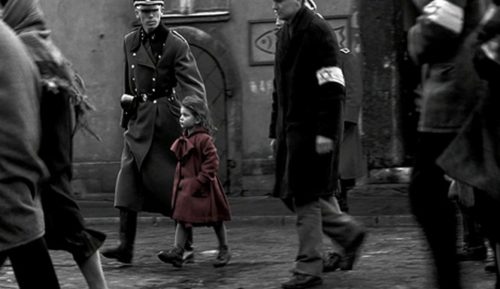
The Holocaust Religion

If this makes you upset like the depiction of no other historical event can, you might be a follower of the Holocaust religion

Most people think that, with the decline of Christianity, there is no longer a religion that unifies the Western world. These people are in error, because the forces and social phenomena that led to the rise of every previous religion still exist, and continue to give rise to new ones. Not only has the Holocaust been mythologised to the point of being an actual religion, but this religion, as this essay will examine, is now the one that unifies the West.

Where history becomes religion is when you aren’t allowed to question it without facing strict censure. In any society, whatever it is that you’re not allowed to question is the mainstream religion, which has to be respected otherwise the transgressor will face the wrath of God.

Back in the day, you couldn’t question God or the Bible, else you be shunned and persecuted by your fellows. Now you can’t question whether or not the Holocaust happened. British writer David Irving got a three-year prison sentence for denying the Holocaust in Austria, and many Western groups would like to bring in similar laws in their own country.

There might well be piles of evidence that supports the contention that eleven million people were killed in the Nazi extermination camps, of who six million were Jews. This essay does not contest this belief. But there are piles of evidence for many historical events, yet questioning any of these is permissible – even such events as the genocide of the American Indians, involving ten times as many deaths as the Nazi genocide.

The Holocaust occupies a unique place in that it is uniquely unquestionable, taboo – sacred.

After all, you’re allowed to question everything else, no matter how obscene. You’re allowed to question whether the Earth revolves around the Sun, or whether European colonisation of the New World was a good thing, or whether ghosts exist. You’re even allowed to argue that mutilating the genitals of a newborn baby is a legitimate spiritual or medicinal practice.

But question the Holocaust and people gasp and go quiet, and a dark shadow seems to fall, as if one was playing with opening Pandora’s Box.

In this new form of Abrahamism (perhaps we could call it Holocaustianity), the Jew is Abel and the Nazi is Cain. Hitler is the devil, the Germans the Romans and the Jew is collectively Jesus: enlightened, persecuted, innocent. The creation event is World War Two, when the Allies banded together to defeat the Nazis. This was the act that bonded the West together and created the modern world.

Because of the pre-eminence of the Holocaust religion among Western political and media elites, we’re led to believe that the deaths of the six million somehow collectively won us a spiritual peace or absolution from evil. This sacrifice replaces the sacrifice of Jesus as the one that we should all be grateful for; we should all grovel before the priests because of it. Questioning this narrative is worthy of rage, disgust, social rejection.

The charge of “Holocaust denial” is a modern way of saying blasphemy, the religion so blasphemed against in this case being the Holocaust religion. To suggest that fewer than six million Jews were killed in the Holocaust is to blaspheme. This is effectively a heresy, in other words a sin against God, and deserves to be treated as such, with the utmost contempt and censure. Germany even went as far as putting an old lady in prison for questioning this sacred myth.

The reason why this Holocaust narrative was chosen and given sacred status is not because of the machinations of some Jewish conspiracy, finally triumphant. It has arisen simply because it serves the geopolitical aims of the Western ruling classes.

Israel serves very effectively as a Western colony and beachhead in the middle of the Middle East, allowing the Western ruling classes to project power into that area easily, which keeps the oil flowing. If that oil stops flowing, the world population is set to drastically decrease, because that oil is the basis of the fertilisers that grows most of the world’s food. Hence, the presence of Israel solves an immensely important strategic objective.

To that end, the Holocaust religion has been promoted to dispel the sense of outrage that the Israeli presence in the Middle East would otherwise have. The Jews must have Israel, we are told, because the alternative is Holocaust.

Central to the Holocaust religion is the belief that Jews must be completely absolved of any blame in the events of World War Two. The Holocaust didn’t happen because of things like the Jewish support for the German Revolution of 1918-19, or the Jewish influence in the Holodomor that starved ten million Ukrainians to death. The creed states that the Holocaust happened because of the inexplicable unique malice of the German people, or at least the Nazi Party.

This means that anything Hitler is believed to have said is exactly wrong and something we shouldn’t do. Note that this has no relevance to what Hitler actually did say. It doesn’t matter, for instance, that Hitler said that Islam was a natural warrior religion and would have suited his vision for an all-conquering Germany perfectly – if a person criticises Islam, that sounds like someone criticising Jews and therefore criticing Islam makes you a Nazi.

Any discussion or line of discussion that leads to even the smallest likelihood of someone raising what some like to call the “Jewish Question”, like alt-right talk, is the forbidden fruit, and media figures like Lauren Southern are the hissing serpent that wants to corrupt the minds of the innocent. This is the power that the Holocaust religion has.

The curious thing is that America has just recently become a net exporter of oil, thanks to technological advances that have driven down the cost of recovering oil from shale and from tar sands. This means that the geostrategic imperative to prop up Israel is about to disappear. One can predict from that that the grip of the Holocaust religion will also fade.

*

If you enjoyed reading this essay, you can get a compilation of the Best VJMP Essays and Articles of 2017 from Amazon for Kindle or Amazon for CreateSpace (for international readers), or TradeMe (for Kiwis).
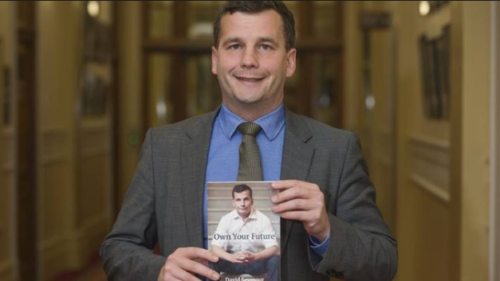
VJMP Reads: David Seymour’s Own Your Future VII

A Liberal Vision for New Zealand in 2017

This reading carries on from here.

The sixth chapter in Own Your Future is ‘Immigration’. It starts with an attack on Winston Peters’s “twenty year racist dogwhistling campaign”, in which Seymour takes the opportunity to position himself as a crusader against racism and bigotry. This is a wise strategic move on Seymour’s part, considering that his party gets more votes from the foreign-born than any other. The Greens are also accused of racism for wanting to lower immigration levels.

Astonishingly, Seymour makes a passionate appeal to New Zealand’s moral obligation to help displaced refugees – but at no point in this book so far has he made any appeal to New Zealand’s moral obligation to help its own people, especially its poorest and most disadvantaged. Here Seymour comes across as the out-of-touch, highly privileged urban dweller who is horrified by a tennis ball to the head.

Ironically, Seymour pillories those who cry “racist” at everyone who claims that we need some immigration restrictions, despite doing the same thing himself on the previous page. This he does in an attempt to position himself as the supporter of a “smart” immigration policy, pointing out that no-one wants no immigration and no-one wants open borders.

He lists at length what he perceives to be the good things about New Zealand, as a way of explaining why so many people want to come here. He claims that New Zealand has a “generous” welfare system, no doubt by way of comparison to Samoa or India. Noting that New Zealand would be swamped tomorrow if we decided to throw open our borders, he seems to think it’s good enough for New Zealand to be doing better than the global average. No word about our domestic violence, child abuse or teen suicide rates.

He also makes some fair criticisms of the current immigration system, such as the absurdity of getting an investment visa from buying and holding for a few years a couple of million dollars’ worth of Government bonds. He laments the shortage of workers at tech companies and hospitals, but manages to resist the temptation of arguing that we need to attract them through lower tax rates.

New Zealand First comes in for special criticism here, with Seymour going as far as to claim that their “poisonousness” is “intended to hurt those who want to bring their skills and settle in New Zealand”. Seymour might not be aware that Maoris vote New Zealand First much more often than white people, so one wonders what he makes of this. Are Maoris racist for not wanting mass immigration? No-one knows.

There are many contradictions in this essay, many of them glaring. Possibly the most grievous encountered so far is when he complains that previous Governments have failed to make sure that the immigrants coming there are those who will integrate and contribute to economic growth, but in the very next sentence complains that those Governments only “reluctantly and begrudgingly” increase the refugee quota when concern about overseas suffering becomes “overwhelming”.

Anyone with the most passing familiarity with the situation in Europe knows that refugees are precisely the sort of person who are least likely to integrate, and who will offer negative economic growth. This contradiction is so glaringly incredible that it’s unclear if Seymour is being dishonest here or if this essay is simply poorly written.

Hilariously, Seymour is willing to grit his teeth and write that New Zealand doesn’t need “upper middle class foreign citizens flashing their bank accounts at us on their way through customs to get to a beach house” – when those people make up most of ACT’s voters. Also, we don’t need more Pacific Islanders “taking the piss” by using family migration to get their extended family “to come and live and take advantage of our generous welfare system”. Seymour writes this, apparently completely unaware that, earlier in the chapter, he pilloried New Zealand First and called them racist for saying much the same thing.

Seymour concludes this chapter with some virtue signalling about how our refugee quota is an “embarrassment”. He doesn’t appear to understand that keeping the number of Muslims and Africans low is the only way that the New Zealand population will remain favourable to immigration in general – this has been the lesson of the last twenty years in Europe. This contradiction is typical of what has so far been the most poorly written and argued essay in this book so far.

*

If you enjoyed reading this essay, you can get a compilation of the Best VJMP Essays and Articles of 2017 from Amazon for Kindle or Amazon for CreateSpace (for international readers), or TradeMe (for Kiwis).

VJMP Reads: David Seymour’s Own Your Future V

A Liberal Vision for New Zealand in 2017

This reading carries on from here.

The fourth chapter in Own Your Future is ‘Education’. Seymour opens this essay with a mention of Vanguard Military School, the establishment of which he credits to ACT. This is an “exceptional” story because New Zealand’s education system is “a mess”. Although he writes that no-one begrudges the $12,000,000,000 yearly cost of educating New Zealand’s 800,000 students, many people have problems with the outcome.

New Zealand has a lot of problems because people aren’t literate enough, Seymour says. This is why employers “prefer a stream of immigrants”. There is a long, rambling passage here where Seymour touches on a variety of themes, including having a go at Hekia Parata. Apparently New Zealand is going backwards in PISA rankings. It’s hard to tell who Seymour is blaming for the mess in question.

Without a hint of irony, Seymour writes that “the outcomes have got worse for kids from poorer backgrounds”. Most Kiwis could tell him that the reason for these worsening outcomes were the policies of the Fifth National Government, which raised GST on those kids from poorer backgrounds while cutting other people’s taxes, and cutting services to those same poor.

What Seymour pushes here is the idea of a variety of schools with different cultures, which he believes will better suit the individual needs of the various students than the current “one size fits all” model. It follows from this that the Government is not the best provider of education services, because they don’t tend to tailor things to the individual needs of the citizens.

Much of this section reveals the specifically Auckland-centric focus that ACT has always had, and which leads it to get very, very few votes outside of that city. The logic behind the school zoning system is dissected at length, but this only really applies to Auckland and, to a small extent, Christchurch and Wellington. Perhaps Seymour is writing more as Epsom representative here.

True to form as a politician, Seymour demands that teachers be better trained and better resourced, but doesn’t explain where this money will come from. Despite this budget hole, it’s hard to deny that Seymour has several good points here. The cultures of individual schools are usually too sclerotic to adjust to the changing needs of pupils, so they could be supplemented by Partnership Schools that more specifically meet the needs of their students.

These Partnership Schools would be run more like private schools and could be easily closed down at any time if they were underperforming. Seymour touts this as a major feature, on account of the difficulty with doing so in the public sector. Students would be best served by flexibility in the educator sector, which is an intelligent way of increasing value without spending more money.

*

If you enjoyed reading this essay, you can get a compilation of the Best VJMP Essays and Articles of 2017 from Amazon for Kindle or Amazon for CreateSpace (for international readers), or TradeMe (for Kiwis).