
VJMP Reads: Ted Kaczynski’s Unabomber Manifesto III

This reading carries on from here.

The next chapter in Industrial Society and Its Future is ‘How Some People Adjust’, namely, how people adjust to industrial society.

The first thing that Kaczynski points out is that people naturally differ with regards to their drive for power. They also vary with regards to susceptibility to marketing and advertising techniques. These people can never be satisfied, because they will always want something else. These desires add to the collective frustration. Adding to this frustration are the wide range of instincts that our oversocialisation causes us to repress.

Other people adjust by joining a political organisation and adopting its goals, because they find satisfaction when some of those goals are achieved. By this method can their desire to partake in the power process be satisfied. Many people experience the power process vicariously through the actions of these larger political movements. On top of this are a variety of surrogate activities, but for the majority of people the desire to experience power goes unfulfilled.

In a section on ‘The Motives of Scientists’, Kaczynski dismisses the idea that scientists are driven by curiosity. Neither are they driven to benefit humanity necessarily, because some subjects (archaeology and comparative linguistics given as examples) are of no benefit to humanity at all. In reality, most scientists are simply motivated by going through the power process by way of scientific endeavour as a surrogate activity. As a result, science itself has become like a destructive juggernaut.

In ‘The Nature of Freedom’, Kaczynski defines freedom as the ability to participate in the power process to achieve real (not surrogate) goals, and without supervision or control by any outside agency. “Freedom means having power; not the power to control other people but the power to control the circumstances of one’s own life.” One does not have freedom if another entity has power over one – having permission to do something is not the same as having the freedom to do it.

We don’t actually have much freedom, because in practice freedom is a function of the economic and technological structure of a society, and not by its laws. A lack of technology makes people more free, because it makes it more difficult for the ruler to enact their will. The press is not freeing because it is tied to major media enterprises, who dominate the informational space through sheer volume. Frighteningly, our freedom is restricted, to a large part, on controls that work on our subconscious.

Kaczynski lays out some of his theory in ‘Some Principles of History’. He considers history to be a function of two subfunctions, one which is erratic and almost random, the other composed of long-term trends. Here he is concerned with the long-term trends. Outlining five basic principles of history, Kaczynski asserts that any chance large enough to change a long-term trend will also change the nature of society, and in unpredictable ways.

New societies cannot just be laid out on paper and expected to function. This is because they are too complex. The economy, the environment and human behaviour are all interdependent, and changes to any one will create changes in the others. Relating to this is the principle that people do not choose the nature of their own societies – this is something that evolves over time, and is not under rational human control.

This is the theoretical basis for his contention that industrial society inevitably will take away more and more of our freedoms. This is the argument in ‘Industrial-Technological Society Cannot Be Reformed’. Resistance is futile – as long as the general trend is towards more technology, the general trend will be towards less freedom. The sentence “It seems highly improbable that any way of changing society could be found that would reconcile freedom with modern technology,” suggests that Kaczynski saw us on a crash course with a technodystopia.

*

If you enjoyed reading this essay, you can get a compilation of the Best VJMP Essays and Articles of 2017 from Amazon for Kindle or Amazon for CreateSpace (for international readers), or TradeMe (for Kiwis).

Bob McCoskrie Is An Absolute Fuckwit

Giving Bob McCoskrie a national platform to rant about “dope” and “Big Marijuana” is like giving your granddad a national platform to rant about Islanders after he’s had a few sherries on Boxing Day. Stuff did it anyway. This column will have a look at McCoskrie’s screed of fuckwittery, with the intent of responding to his shamelessly dishonest rhetoric with some facts.

One can guess from the title of the article (“Legalised dope is a licence for Big Marijuana to exploit young people”) that it is going to be crudely dismissive of the wishes of the New Zealand cannabis community. To have an article with the word “dope” in the headline is like publishing an anti-immigration opinion piece that had the word “niggers” in the headline. He has blatantly chosen the most inflammatory possible term to describe cannabis, one that associates cannabis use with brain damage.

In this piece, McCoskrie recounts his observations from a recent trip to Colorado, one that he undertook to “see first-hand the effects of legalising marijuana”.

His second paragraph mentions “a money-making industry of lobbyists and special interest groups putting profits over evidence-based policy protecting public health and safety, and ready to flout and challenge any regulations,” with the implication that this describes the industrial cannabis lobby, but this description more aptly fits the alcohol and timber industry lobbyists who agitated to make cannabis illegal in the first place.

McCoskrie gets hysterical about the high THC content of the cannabis products he spies in the Colorado “dope shops”, but the facts are that a high THC product actually makes the product safer. Like the fuckwit he is, McCoskrie is thinking about THC as if it was alcohol, so that a high-THC cannabis edible is somehow functionally equivalent to an absinthe or similar.

No-one has ever died of a THC overdose, so comparing it to high-proof alcohol is nonsense. Unlike alcohol, which kills people in New Zealand every weekend, cannabis doesn’t kill anyone. The most dangerous thing about cannabis is probably the long-term effects of regularly smoking it – and these are completely avoided by the edibles and vaporises that McCoskrie rants about. In other words, what he is railing against are the signs of people using cannabis more safely and responsibly to minimise harm.

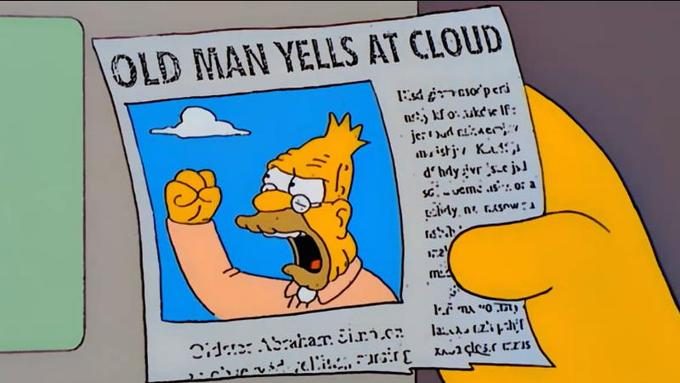
Some of the paragraphs in this article are “Old man yells at cloud” level, and the reader can’t help but to wonder if McCoskrie has some kind of senile dementia that has caused him to see things that aren’t there. He decries people in Colorado “popping a handful of Gummi Bears containing 10 times the legal limit of THC per serving,” but there is no legal limit of THC per serving, any more than there is a legal limit of caffeine per serving. The sentence is simply nonsense.

McCoskrie is so hysterical that at some points in his screed he becomes completely detached from reality. The worst example is when he cites the existence of cannabis suppositories as proof that cannabis producers are deliberately targeting their product at the young. In fact, the vast majority of people who use cannabis suppositories are elderly ones who cannot use other route of administration because of the complications of old age. Perhaps McCoskrie should have tried a few while he was over there?

It’s noteworthy that at no point in his travels through Colorado did McCoskrie see anything untoward happen on account of cannabis legalisation. He talks about the terrible panoply of cannabis-related products as if it were Weimar Republic pimps selling children on a Berlin street, but can’t recall seeing any notable level of crime in Colorado or any homelessness in the streets, or any sign of social decay. This is striking, considering that the state legalised cannabis four years ago, which is easily enough time for anything of that nature to have occurred. McCoskrie is just a wowser.

No anti-cannabis rant would be complete without employing the slippery slope fallacy, and McCoskrie duly gives us the line “they will want legalisation not just of this drug but all drugs – cocaine, heroin, P”. By this he somehow draws a connection between people who want access to medicinal cannabis and people who go on methamphetamine benders, when the two people could hardly be more different.

It’s exactly this kind of rhetoric conflating people who need medicinal cannabis with reckless criminals that fuels the War on Drugs, which means that McCoskrie must share some blame for the suffering caused by cannabis prohibition. It’s because of people like him that people like Helen Kelly have to suffer needlessly as they die.

Predictably, McCoskrie gets savaged in the comments below the article. What he is writing might have been considered mainstream conservatism 40 years ago, but now it goes down about as well as other conservative ideas from 40 years ago, like whipping up hysteria about white people and Maoris sleeping with each other. It’s apparent from reading this article that McCoskrie doesn’t have the faintest idea what he’s talking about, and is panicking for no good reason.

The only thing this piece can be compared to is a sermon by a Third World religious fundamentalist, who has travelled to the West and seen dancing and intermingling between unmarried youths and shit their pants. McCoskrie is a religious fundamentalist – his Family First lobby group want to recriminalise prostitution and further restrict alcohol. Essentially, they are theocrats, and McCoskrie wants to prohibit cannabis for the same reason that the rulers of places like Iran and Saudi Arabia do.

*

If you enjoyed reading this essay, you can get a compilation of the Best VJMP Essays and Articles of 2017 from Amazon for Kindle or Amazon for CreateSpace (for international readers), or TradeMe (for Kiwis).

The Case For Cannabis: Cannabis Is Not A Gateway Drug

A common argument for cannabis prohibition asserts that cannabis is a gateway drug, in that using it inevitably leads people to using harder and harder drugs. The idea is that we need to keep cannabis illegal so as to keep people off the pathway that leads people onto truly destructive substances. As this article will examine, there is a modicum of truth to the gateway effect, but not in the way it’s usually presented.

The usual way that the gateway drug theory is portrayed is as follows. An individual tries cannabis for the first time, and experiences a cannabis high. This is a pleasurable sense of peace and euphoria that the user decides they want to have again. So they try cannabis again, and have a good time again. So they use it some more, and soon find that they need more and more of it to get the same level of hit.

Eventually the user is addicted to cannabis. After a while, cannabis is no longer able to do the job. At this point the drug user naturally comes to seek out harder drugs, such as methamphetamine, cocaine and heroin, in the hope of getting a chance to relive the original amazing high that cannabis gave them. For some reason, the idea that cannabis use leads to heroin use is particularly prevalent in some circles, especially among the elderly (which reveals that the genesis of the gateway drug theory is in old-fashioned superstition).

The logic is that cannabis prohibition should prevent people from getting exposed to that initial cannabis high, by way of making the substance harder to get hold of. The harder it is to get hold of, the fewer people get addicted, and so the fewer people who seek out really hard and destructive drugs. Therefore, cannabis prohibition protects people from the harmful effects of, for example, methamphetamine or heroin addiction.

The reality is that the gateway effect is a phenomenon that is caused entirely by cannabis prohibition, and which would mostly disappear if there was cannabis law reform, except for in the case of people who have a deathwish.

Many drugs are illegal. Of those, cannabis is particularly badly suited to serving as a contraband substance. It has a strong smell, is bulky and doesn’t generate much raw profit if one considers how much time and expense goes into cultivating, transporting and storing it. Most other contraband substances are much easier to deal with and more profitable, especially those of the powdery kind.

For this reason, many unscrupulous cannabis dealers use cannabis as a kind of lure, by which customers can be induced to buy more profitable (and/or addictive) substances. It’s common in New Zealand for cannabis dealers to suddenly “run out” of cannabis when a particular customer comes around, only to offer a hit of methamphetamine by way of compensation. If the customer decides that they do like it (and this is very common), the dealer is right there to sell them a point bag.

When the would-be cannabis user is then hooked on methamphetamine, they are much more profitable than they would have been if the only other option was to sell them an ounce of weed every two weeks or so. A person who is into methamphetamine is able to burn through thousands of dollars in a week. A dealer can potentially make twenty times as much money selling methamphetamine to a person than they could selling cannabis.

So the idea that cannabis is a gateway drug is untrue. There is such a thing as the gateway effect, but this only exists because of prohibition, in particular because of the opportunity that prohibition creates for drug dealers to get naive cannabis-seeking customers hooked on harder drugs. Far from being a gateway drug which leads to people recklessly doing coke, crack, meth, smack and anything else they can find in search of a buzz, cannabis has shown promise as an exit drug for conditions like heroin addiction and even alcoholism.

If cannabis was legal, people who want to use it could simply go to a cannabis cafe or cannabis store, buy their sativa or indica as desired, and then go home without being exposed to methamphetamine or heroin or anything else. A clerk at a cannabis store is no more likely to offer the customers methamphetamine than a bartender would. After all, they already have a steady and secure income through selling a legal drug to a set market, so why would they want to screw that up?

The truth is that cannabis prohibition forces people into the arms of criminals. This is the true causal origin of the gateway effect. Repealing cannabis prohibition would mean that the people who want to buy cannabis don’t need to encounter criminals in order to so, and consequently never get exposed to a dealer offering to sell them a truly destructive drug.

*

This article is an excerpt from The Case For Cannabis Law Reform, compiled by Vince McLeod and due for release by VJM Publishing in the summer of 2018/19.

The New Zealand Student Media is Just as Gutless as the Mainstream Media

It’s rare for a Kiwi to look towards the New Zealand media establishment with reverence or even anything approaching respect, on account of that the profession is little more than a bunch of corporate whores cheerleading for neoliberalism. Even so, it is sometimes astonishing to learn quite how gutless the New Zealand media is, as local anarchist Rick Giles found out earlier this week.

The depths to which the New Zealand yellow press is willing to sink can be observed by the treatment of Giles by Auckland radio station bFm. bFM had Giles on their live show, where he was interviewed by Laura Kvigstad. The segment was called “Anarchy in Aotearoa” and featured Kvigstad and Giles talking about Giles’s interest in anarchy and some of the realisations that had led him to anarchism, and some of the things that anarchism had led him to believe.

This was a part of a wider series called “Wire Worry Week”, which was a week at bFM dedicated to “focusing on the concept of anti government; expanding upon how movements that have worked against governmental systems have influence on the current state of the world.” Giles, as the man behind AnarKiwi, was invited onto the show to speak freely about his political opinions. Readers can listen for themselves to decide whether Giles said anything genuinely worthy of specific repudiation.

In response to – presumably – the shrieking of upper-middle-class Social Justice Warriors all over Auckland, bFM made the following statement:

NB: Following the broadcast of this interview it has come to 95bFM’s attention that the subject of this interview, Rick Giles, espouses political and historical views that the station finds particularly unsavoury. We will not be removing or editing the interview, but wish to make it clear to all listeners that 95bFM does not support or align itself with the personal politics of the interviewee. Our decision to provide Mr. Giles a platform during a week-long discussion on anti-government movements was one that, with hindsight, would not have survived greater scrutiny and vetting process. The station, its volunteers and wider associates do not wish to endorse Mr. Giles’ particular brand of historical revisionism in any way, shape or form and we sincerely apologise for any concern or aggravation caused via our negligence in this case.

It is an incredibly pathetic measure for a radio station to go to these lengths to repudiate a New Zealand intellectual who is guilty only of wrongthink. So gutless are bFM that even when they decide to specifically give a platform to the counterculture they can’t bring themselves to allow alternative points of view to pass without condemnation. Even worse, they are not even decent enough to say exactly which of Giles’s political opinions were so heinous as to be worthy of deplatforming.

What’s hilarious is that you know if Hillary Clinton wanted to appear on bFM to speak to the students of Auckland, they would fall over themselves to provide her a platform, despite that she has killed at least 2,500 more people than Giles, and that’s only counting one of her many crimes. After all, they’re happy to happy to give Peter Dunne a platform, despite the fact that the lies he told about cannabis and about synthetic drugs are responsible for the deaths of hundreds of young Kiwis.

The really terrible part about all of this is that bFM, and by extension the University of Auckland, have failed in their primary purpose of being a university. The primary purpose of a university is to provide a safe space for free-thinkers to discuss ideas that might otherwise be too controversial to discuss in public, on account of that the public would chimp out upon being asked to consider (not accept, just consider) some of the assertions that are necessary to discuss such things.

Apparently the fashionable trend in mainstream media circles right now is to take the exact opposite approach to VJM Publishing; we believe that dialogue is the way to destroy ignorance. The mainstream media don’t care about ignorance; they believe that destroying dialogue and virtue signalling is the way to greater profits. bFM, by making a statement repudiating Giles, are simply learning how to be good, obedient corporate whores. This is, after all, what they will be after graduation.

Part of being a corporate media whore is deplatforming anyone not part of the Establishment (such as Giles) while happily platforming anyone who is part of the Establishment, no matter how many people have died as a result of their negligence or dishonesty (such as Dunne). bFM are willing to give a platform to a Government agent whose ham-fisted cruelty caused New Zealanders to die, but Giles is “particularly unsavoury”.

What bFM did to Rick Giles is a microscopic example of what the mainstream media does to New Zealand all day, every single day. They take uncontroversial ideas, and they sell them as rebellious and controversial so that the desire of some individuals to portray themselves as free-thinkers can be satisfied. In every case, genuinely controversial ideas are ignored as “loony” and their purveyors deplatformed, as happened to Giles. They are a pack of absolute fucking whores, and the alt-media will continue to be a thorn in their side.

*

If you enjoyed reading this essay, you can get a compilation of the Best VJMP Essays and Articles of 2017 from Amazon for Kindle or Amazon for CreateSpace (for international readers), or TradeMe (for Kiwis).