
Category: drugs
The World That Sober People Built
“That person must have been on drugs” is a common response to observing all kinds of wacked-out behaviour, as if taking a psychoactive drug inevitably brings about false kinds of thinking – a cognitive bias this column has previously described as Sobriety Bias Syndrome. But if we look around the world that sober people built, and the moral values agreed upon by sober people, things really didn’t turn out that great.
It was pious and sober people who decided, a few thousand years ago, that mutilating the genitals of baby boys was a legitimate expression of God’s will. It was sober people who decided to adopt this tradition from the foreigners who practiced it, and people are sober when they argue for the “health benefits” of the mutilation.
George W. Bush, completely sober, decided that sending the firepower of the US military after Saddam Hussein’s Iraq was a great idea, even though it led directly to the deaths of over a million people. The US Congress, elected to represent the American people, also soberly decided that this was a great idea.
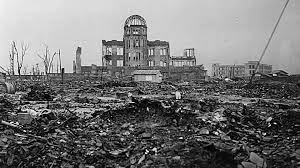
In the 1930s we created and watched “documentaries” such as Reefer Madness, which exhorted us to tell our children that smoking cannabis will turn them into murderers; a dozen years later, with god-fearing sobriety, we built nuclear weapons and dropped them on Japanese civilians, killing hundreds of thousands in one hit.
These are the actions of sober minds. So clearly a person doesn’t have to be intoxicated in order to do terrible things to someone else.
Far from it. In many ways, sobriety can be seen as a kind of virus. Its presence in a person’s mind tends to work to drive out periods of non-sobriety, usually because of egoistic religious delusions about achieving purity of thought. The sober mind tends to have thoughts repeating in it over and over again, and this repetition can lead to a powerful commitment to some ideas.
This is a fact long understood by television programmers, who appreciate how repeated exposure to a short, powerful stimulus is more likely to induce purchasing behaviour in a potential consumer than a single exposure to e.g. a lecture about the qualities of a product.
Because novel psychoactive experiences tend to destroy this conditioning by allowing the conditioned person to see things from new perspectives, if you want to get everyone marching in lockstep then these psychoactive experiences need to be either discouraged or made illegal.
Consequently, entirely sober people have decided, presumably using sober logic, that putting another human being in a cage is a fair punishment for being caught growing a medicinal plant without permission.
Maybe there’s an argument that too much sobriety makes an individual mean from a lack of levity, and a society dumb from a lack of questioning?
After all, the mass shooters making the front pages recently are definitely not smoking weed, taking ecstasy or tripping on mushrooms or LSD, and neither are the genital mutilators, military warhawks and brainwashers that are responsible for most of the world’s evil.
The truth is that the world needs a diversity of ideas if humans are to survive the challenges of coming years. Never mind a diversity of skin colour – such superficial qualities do not constitute real diversity. Real diversity is diversity of ideas, even outlandish ones, even crazy ones, because that is the kind of diversity that saves us from groupthink and prevents us from making the kind of error that arises from self-righteous conviction about one’s correctness.
To that end, sobriety is our enemy and getting wasted is our friend.
What New Zealand Could Learn From the Nevada Legal Cannabis Experience
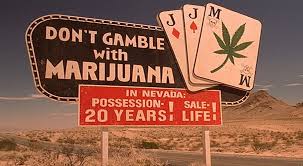
Nevada was depicted in Fear and Loathing in Las Vegas as a harshly repressive place for anyone with an interest in cognitive liberty. As captured in the foul year of our Lord, 1971, the billboard welcoming drivers to Nevada warned of 20 years imprisonment for being caught in possession of “marijuana”. Fast forward to July 2017, and they have recreational cannabis legally on sale in shops. This article looks at what we could learn from them.
Colorado passed a referendum legalising cannabis five years ago, and the results were more or less exactly what cannabis law reform activists had predicted the entire time. Now there are eight American states that allow legal recreational cannabis use, making it all the more pathetic that New Zealand politicians have so far lacked the courage to even discuss the issue.
Nevada is the most recent of these. Recreational cannabis sales became legal in Nevada this July. This first month of legal sales generated $US27.1 million in receipts, about $40 million in New Zealand dollars.
Much of that $40 million is believed to be from tourists who came into Nevada for the sake of their legal cannabis. It was almost double what Colorado sold in the first month of legal recreational sales there, and if one considers that the population of Nevada is 60% that of Colorado it’s three times the amount per capita, so clearly this isn’t all just coming from local demand.
What that tells us is that, with eight American states now with some form of recreational cannabis sales, New Zealand’s edge in the tourist market is rapidly bluntening. In much the same way that Islamic theocracies like Iran and Saudi Arabia that suppress alcohol don’t get many tourists, neither will New Zealand get many tourists when we’re the last ones to legalise recreational cannabis.
At the very least, we need to get the jump on Australia. If Australia, or even one of the major tourist states (Queensland, New South Wales or Victoria), would legalise recreational cannabis it would have a devastating impact on New Zealand’s place in the backpacker circuit.
On the other hand, if we legalised recreational cannabis sales while Australia was still struggling with gay marriage, we could capture a decent sector of the international tourist market. If it were possible to visit cannabis cafes on the main streets of places like Levin and Ashburton (let alone the bigger places) then Australia would start to look like a backwater in comparison.
$40 million in the first month of sales suggests around half a billion dollars a year in recreational cannabis sales for Nevada alone. This equates to some 5-10,000 full-time jobs. On a per capita basis, such a policy might provide 8-16,000 full-time jobs in New Zealand (this is in line with job figures suggested by Waikato cannabis kingpin John Lord).
Of course, Nevada voted to have legal medicinal cannabis in 2000, and New Zealanders haven’t even been allowed to have that yet, so the worry is that if we’re 20 years behind in that regard we will be 20 years behind when it comes to recreational law reform as well, i.e. Kiwis can expect to be allowed to buy a few grams of cannabis and use it like they would alcohol sometime in the mid 2030s.
But what we can tell from the short experience with legal recreational cannabis sales in Nevada is that the process has more or less gone the same way as in Colorado and Washington: no spike in crimes, tens of thousands more white market jobs, a lot more money for schools, and a whole lot of sheepish-looking prohibitionists.
If Speculative Fiction Genres Were Psychoactive Drugs

Every genre of speculative fiction has its own signature atmosphere: often a combination of fantastic, awesome, terrifying and bizarre. So do psychoactive drugs – and the two match up. This article looks at which drugs give a vibe that best matches the vibe from a genre of speculative fiction.
High fantasy fiction matches up to cannabis. Lord of the Rings contains a couple of sly allusions to cannabis use, most notably when Saruman admonishes Gandalf for his “love of the halfling’s weed” while explaining how Gandalf missed a clue that he should have noticed. The scene in the film Fellowship of the Ring where Gandalf and Frodo sit above the drunken revellers and smoke some magical substance from a pipe is one familiar to most stoners.
Some of the experiences that Elric has in the Stormbringer series of novels by Michael Moorcock were also very likely to have been cannabis-inspired. There’s something about Elric’s experience of having an extremely powerful ally that couldn’t really be trusted that speaks to the paranoia that sometimes comes with the cannabis experience.
The sword and sorcery style of low fantasy matches up with psilocybin mushrooms. It’s unlikely that Robert E Howard took any magic mushrooms before writing any of the Conan the Cimmerian stories, but the protagonist’s many adventures in dark, subterranean caves and inside fantastic towers and castles are reminiscent of the depth and range of sometimes terrifying personal insight that often comes with mushrooms.
The Forgotten Realms universe of Dungeons and Dragons adventures, with their massive, dark forests full of elves and goblins also relates closely to the vibe of the psilocybin mushrooms experience. The reason why magic mushrooms enthusiasts are encouraged to try taking five grams in silent darkness is because it leads to exploration of a fantastical inner world, and going down into the subterranean to arise wealthier at some later point is a regular theme.
Most of what sells as science fiction could have been inspired by LSD. Stories like The Demolished Man, with a very strong psychological content, harken to the disintegrative effect that psychedelics can have on the personality. The main character of The Demolished Man, somehow between protagonist and antagonist, ends up having his personality completely demolished (and then rebuilt) as punishment for his crimes, reminiscent of how the psychedelic experience can destroy a person and then build them back as something stronger than before.
This sense of twisted psychology comes through also in the writings of Philip K Dick, who had himself tried LSD. Psychedelics might have inspired the plot of Ubik, in which the character Glen Runciter experiences a believable but bizarre reality while his physical body is “on ice” in a cryogenic chamber. Wondering if you’re really dead or alive is the kind of thing that LSD can make happen to you.
The almost schizophrenic belief in a hidden real world outside of this merely simulated one is a mainstay of cyberpunk literature, and is similar to the impressions one gets on DMT or salvia divinorum. For thousands of years, human shamans have been having experiences of dying to the physical world and being reborn to the real one, like Neo did in The Matrix. In that regard, The Matrix is really a retelling of the ancient mystery school teaching of death and resurrection, reclothed in 21st-century technology.
A description of what might be the spirit of the DMT experience is given in the ANZAC cyberpunk novel The Verity Key. In the chapter Mindknife, the protagonist Jonty Gillespie has his perception altered by ingestion of a drug called Cinque Nuevo, which briefly blasts his consciousness out of his physical body and into an entirely external dimension that is occupied by beings that take the form of balls of light, while mechanical constructs that might be metaphors churn around him.
The datura experience is pretty similar to what befell many of the unfortunate researchers in the Cthulhu mythos of H. P. Lovecraft. A disquieting sense of things not being quite as they should be grows into an intense paranoia that leaps at every shadow and from there to total psychological collapse at the raw horror of reality itself. Alien beings that seem to have come to Earth just to torment you is the kind of thing you’re dealing with in either case.
Datura is also the kind of drug that fits the background of weird horror stories such as those in His Master’s Wretched Organ. Talking to grotesquely deformed entities like Mr. Creamfeather and eating tobacco cakes are the sort of horror that, once experienced, leaves a person never quite the same again. The concept of ordeal rituals that leave you wiser for having suffered come to mind here.
Others are arguable. The steampunk of The Rocketeer might suit opium, the boo-yah aggression of Starship Troopers might suit mescaline, and the gritty military noir of the Altered Carbon series might be the old classics of caffeine, nicotine and alcohol.
It might be hard to read any speculative fiction on most of these drugs, because a person on them is more likely to be occupied with the inner theatre of the thoughts in their head than a book in the external world. However, it might be possible to have a richer experience of reading speculative fiction after having tried some of them, because they could open your awareness to realms of thought previously unimagined.