
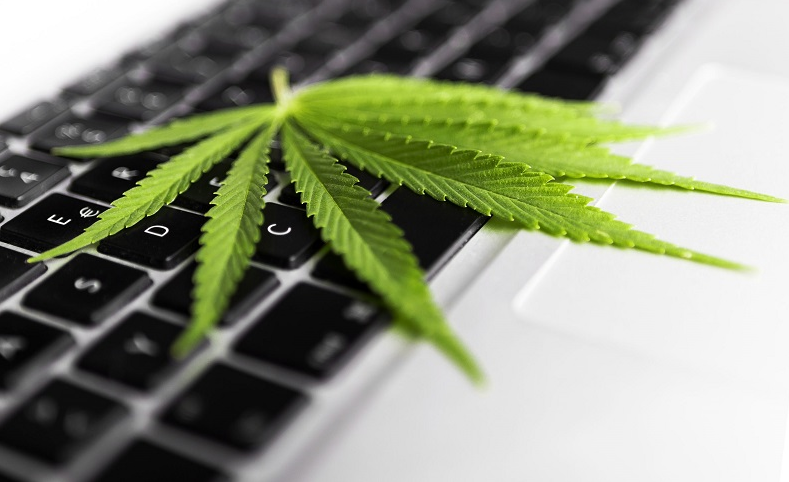
The Case For Cannabis: Reform Doesn’t Mean Stoned Workers

One of the most hysterical arguments against cannabis law reform is that it will lead to a spate of workers coming to work stoned. This will be a disaster, we are breathlessly told, because some of these intoxicated workers are responsible for other people’s well-being. As this article will examine, such fears are not grounded in reality.

The reasoning seems to be that the nation’s workforce cannot handle the temptation of easy access to cannabis, and will inevitably come to start using it all day in the nature of severe drug addicts, such as before work. Images of surgeons giggling maniacally while slicing arteries open are thrown about by pants-pissing old conservatives, who seem to think of cannabis users akin to a horde of zombies.

This argument is false in at least three major ways.

In the first case, people already have access to plenty of legal recreational drugs and choose not to use them. There are a number of industrial jobs that people can’t safely do while drunk, and there are a number of customer services roles that can’t adequately be performed while stinking of tobacco smoke. In the vast majority of situations, employees in either of these roles don’t partake in alcohol or tobacco before work.

If one thinks rationally about the idea, there’s no reason to think that legal cannabis would be any different. The case of surgeon is especially ridiculous – surgeon is a professional occupation. The type of person who works in this profession is hardly the sort of person who would experiment with recreational drugs before they go to work anyway.

In the second case, the availability of swab tests that can test for actual cannabis intoxication means that a blanket ban on cannabis is unnecessary. There may have once been a point in such a blanket ban, on account of that there was otherwise no way of telling if a person was dangerously affected by a cannabis high. But accurate swab tests mean that it is no longer necessary to take urine samples (if it ever was).

Most importantly, legal cannabis does not in any sense mean that employers will lose the right to send home workers who are dangerously high. Workers who are intoxicated on any substance, legal or otherwise, are first and foremost a safety risk to other workers and to themselves. So if an employee comes to work stoned, the employer has every right to send them home on the grounds that they are in no state to discharge their duties.

In the third case, the vast majority of cases of cannabis intoxication are immaterial to the job at hand. This is clearly true if one considers that a large number of people who work in roles where attentiveness is paramount are on sedatives, anti-histamines or psychiatric drugs of some kind, and that this is nonetheless acceptable to their employers, who do not drug test them for those substances.

Psychiatric drugs such as Olanzapine have been shown to increase the chance of fatal car accidents, and benzodiazepines are even worse. Many people drive while sleepy, and many elderly people are significantly more dangerous behind the wheel than the average driver. If all of these risks come within the bounds of acceptability, then a small amount of cannabis in the system is acceptable as well.

The idea that cannabis law reform would inevitably lead to masses of stoned workers is the kind of overblown hysteria that is typical of cannabis prohibitionists. There are at least three major reasons to think that reform would not impact the safety profile of the workforce. Repealing cannabis prohibition would bring protocol about workplace safety back to sanity and logic.

*

This article is an excerpt from The Case For Cannabis Law Reform, compiled by Vince McLeod and due for release by VJM Publishing in the summer of 2018/19.
The Case For Cannabis: Governments Shouldn’t Conduct Wars Against Their Own People

The War on Drugs is a war that governments of the world fight against their own people, supposedly to protect people from the harmful effects of these substances. In the vast majority of cases. such governmental measures cause more harm than they solve. This essay will argue that cannabis prohibition is necessary because it is immoral for a government to conduct a war against their own people without their consent.

The War on Drugs was ramped up to full aggression by Richard Nixon in the late 1960s and early 1970s. Although the majority of recreational drugs were already illegal, the enforcement of them was not brutal until Nixon entered the scene. With the increase in aggressive drug law enforcement came an increase in the incarceration rate of Americans – now four times higher than it was in 1972, even when adjusted for the increase in population.

Nixon’s former domestic policy chief, John Ehrlichman, is quoted in a Harper magazine interview saying “We knew we couldn’t make it illegal to be either against the war or black, but by getting the public to associate the hippies with marijuana and blacks with heroin. And then criminalizing both heavily, we could disrupt those communities.” This quote encapsulates the entire logic of the War on Drugs.

The truth about the War on Drugs is that governments don’t really fight this war against drugs, they fight them against their own people who use drugs. The War on Drugs is really a war against their own people.

In particular, the War on Drugs is a war against those the ruling classes want to destroy. As is clear from the Ehrlichman quote above, the ruling party is not representative of the people. They have their particular enemies, and in the case of the Military-Industrial Complex that profits immensely from defence contracts and from endless war, peaceniks are the enemy.

Likewise for blacks: the Prison-Industrial Complex demands a steady supply of slave workers to labour in prisons. This prison labour is immensely profitable for the prison owners, who occupy the same role as the slave plantation owners of the antebellum American South. So a draconian crackdown on drugs that were known to be used heavily by blacks had the calculated effect of drawing large numbers of them into the prison system.

The reason why the security services are divided into the Police and the Army is because the Army is for fighting wars, and the Police for keeping the peace. When the Government sets the Army onto the people, it’s usually a sign that the Government is rotten to the core and probably not far from collapse. So when the Police are also fighting a war against the people on behalf of the Government, it’s a very, very bad sign.

Everyone knows that the Government isn’t really a protective, benevolent force. Everyone knows that Western governments are not representatives of their people, but rather of whatever corporate interests have declared themselves to have a stake in the country. The point is, this should not be accepted, and governments should never act to the detriment of their own people for the sake of corporate profits.

Conducting a War on Drugs makes it possible for the ruling classes to divide and conquer the people, by way of subjecting some of them to harsh legal punishment and not others. This is a grossly anti-democratic phenomenon, and should not be allowed.

Cannabis prohibition should be repealed because the Government should not fight a war against its own people. The War on Drugs is a war that the Government fights against the same people that the Government is supposed to represent and protect. It’s time for a ceasefire.

*

This article is an excerpt from The Case For Cannabis Law Reform, compiled by Vince McLeod and due for release by VJM Publishing in the summer of 2018/19.

The Case For Cannabis: Cannabis is a Tool For Personal Growth

The cannabis high can teach a person a lot about themselves that they didn’t already know. It brings up a range of different emotions, and some of those emotions provide the sort of challenges that lead to healthy personal growth. This article discusses the idea that cannabis ought to be legal for its benefits as a tool for personal growth.

Personal growth can occur in a number of areas. For those who have suffered previous life trauma, it’s common that personal and emotional development stalls at the stage where the trauma occurred. Heavy physical, sexual or emotional abuse can lead to impulsive, neglectful, destructive behaviour, and getting past such conditioned behaviours is not easy.

The main use of cannabis for psychotherapy might lie in its ability to induce a state of relaxation and fearlessness. In that state, it’s possible to revisit earlier traumas and to reinterpret them. Traumatic events tend to leave the impression that they were more important than they really were, which can lead to them making a change to behaviour that outweighs any learning value the experience may have had.

A person may have become conditioned to react angrily or violently when confronted with a certain emotion or stimulus, when they really shouldn’t. In order to correct this, psychotherapy seeks to revisit the traumatic event and recondition the patient to not react with anxiety when they recall it. This has the effect of settling the psychological tension that had existed ever since the trauma.

Cannabis is useful for its deconditioning effects – although this is also one of the reasons behind why it has been illegal. One man’s psychological damage is another man’s asset, and the brutal learned helplessness that people come to suffer as a result of early schooling tends to make them more amenable to instruction from their overlords in the workplace. Those overlords, therefore, do not want people to decondition themselves, especially if it also makes them free.

Probably the most effective use of cannabis, however, lies in its ability to cause the user to have original thoughts that could not have been generated by any other method. Cannabis has long been associated with creative industries and endeavours, especially music and writing. It does this by preventing repetitive thoughts from occurring, leaving mental space for ideas inspired by the environment.

There are several people whose minds are limited on account of the low range of stimuli they have encountered over the course of their lives. Many of these people, particularly, have been dumped in front of a screen by a parent early in their lives and know little of the outside world or of other people. They have essentially been programmed to accept Disneyland as their reality.

People like this can bring themselves a new lease on life by using cannabis, and allowing themselves to explore vistas of the mind that were previously shut off. As users will attest, entire realms of new thought can open up when one is under the influence of cannabis: all sorts of strange, wonderful and unsettling ideas seem to arise as if from a parallel dimension that one could not perceive until just now.

Related to this, and as mentioned in a previous section, cannabis is a religious and spiritual sacrament. This entails that many people have used it as a tool for spiritual growth.

There is a reason why hippies are associated with terrifying insights into the nature of death, consciousness and reality as well as cannabis – they have seen beyond. Cannabis use can lead to spiritual growth in the same way that meditation does. By way of breaking one’s usual patterns of paying mental attention to petty things, one frees up mental space for new and original thoughts to arise, perhaps from long-suppressed places.

On a darker level, the unpleasant and paranoid aspects of the cannabis experience can lead to personal growth in a grim, meathook sense. Many people have avoided ever really thinking about the fact that they’re going to die, thanks to all the conditioned patterns that come with living an everyday life. So when a person does, perhaps for the first time ever, it’s common for them to feel extremely challenged by it.

Cannabis law reform ought to happen so that cannabis can be used as a tool for personal growth. There are both therapeutic, recreational and spiritual benefits that cannot be explored under prohibition.

*

This article is an excerpt from The Case For Cannabis Law Reform, compiled by Vince McLeod and due for release by VJM Publishing in the summer of 2018/19.