The Case For Cannabis: Cannabis Is Not A Gateway Drug

A common argument for cannabis prohibition asserts that cannabis is a gateway drug, in that using it inevitably leads people to using harder and harder drugs. The idea is that we need to keep cannabis illegal so as to keep people off the pathway that leads people onto truly destructive substances. As this article will examine, there is a modicum of truth to the gateway effect, but not in the way it’s usually presented.

The usual way that the gateway drug theory is portrayed is as follows. An individual tries cannabis for the first time, and experiences a cannabis high. This is a pleasurable sense of peace and euphoria that the user decides they want to have again. So they try cannabis again, and have a good time again. So they use it some more, and soon find that they need more and more of it to get the same level of hit.

Eventually the user is addicted to cannabis. After a while, cannabis is no longer able to do the job. At this point the drug user naturally comes to seek out harder drugs, such as methamphetamine, cocaine and heroin, in the hope of getting a chance to relive the original amazing high that cannabis gave them. For some reason, the idea that cannabis use leads to heroin use is particularly prevalent in some circles, especially among the elderly (which reveals that the genesis of the gateway drug theory is in old-fashioned superstition).

The logic is that cannabis prohibition should prevent people from getting exposed to that initial cannabis high, by way of making the substance harder to get hold of. The harder it is to get hold of, the fewer people get addicted, and so the fewer people who seek out really hard and destructive drugs. Therefore, cannabis prohibition protects people from the harmful effects of, for example, methamphetamine or heroin addiction.

The reality is that the gateway effect is a phenomenon that is caused entirely by cannabis prohibition, and which would mostly disappear if there was cannabis law reform, except for in the case of people who have a deathwish.

Many drugs are illegal. Of those, cannabis is particularly badly suited to serving as a contraband substance. It has a strong smell, is bulky and doesn’t generate much raw profit if one considers how much time and expense goes into cultivating, transporting and storing it. Most other contraband substances are much easier to deal with and more profitable, especially those of the powdery kind.

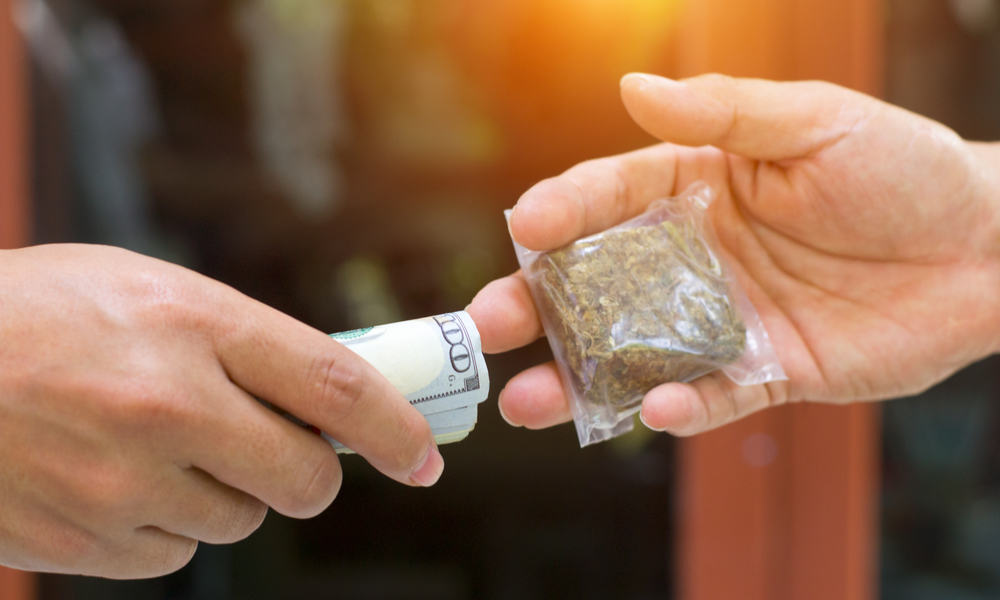
For this reason, many unscrupulous cannabis dealers use cannabis as a kind of lure, by which customers can be induced to buy more profitable (and/or addictive) substances. It’s common in New Zealand for cannabis dealers to suddenly “run out” of cannabis when a particular customer comes around, only to offer a hit of methamphetamine by way of compensation. If the customer decides that they do like it (and this is very common), the dealer is right there to sell them a point bag.

When the would-be cannabis user is then hooked on methamphetamine, they are much more profitable than they would have been if the only other option was to sell them an ounce of weed every two weeks or so. A person who is into methamphetamine is able to burn through thousands of dollars in a week. A dealer can potentially make twenty times as much money selling methamphetamine to a person than they could selling cannabis.

So the idea that cannabis is a gateway drug is untrue. There is such a thing as the gateway effect, but this only exists because of prohibition, in particular because of the opportunity that prohibition creates for drug dealers to get naive cannabis-seeking customers hooked on harder drugs. Far from being a gateway drug which leads to people recklessly doing coke, crack, meth, smack and anything else they can find in search of a buzz, cannabis has shown promise as an exit drug for conditions like heroin addiction and even alcoholism.

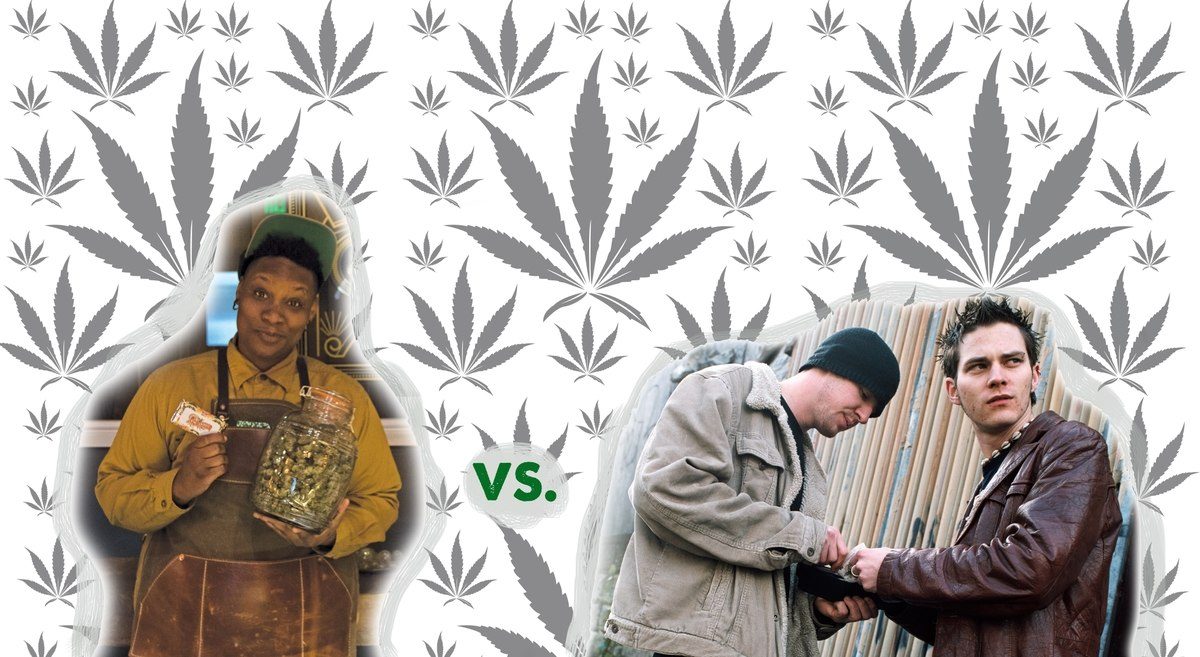
If cannabis was legal, people who want to use it could simply go to a cannabis cafe or cannabis store, buy their sativa or indica as desired, and then go home without being exposed to methamphetamine or heroin or anything else. A clerk at a cannabis store is no more likely to offer the customers methamphetamine than a bartender would. After all, they already have a steady and secure income through selling a legal drug to a set market, so why would they want to screw that up?

The truth is that cannabis prohibition forces people into the arms of criminals. This is the true causal origin of the gateway effect. Repealing cannabis prohibition would mean that the people who want to buy cannabis don’t need to encounter criminals in order to so, and consequently never get exposed to a dealer offering to sell them a truly destructive drug.

*

This article is an excerpt from The Case For Cannabis Law Reform, compiled by Vince McLeod and due for release by VJM Publishing in the summer of 2018/19.

The Case For Cannabis: Prohibition Raises Prices But Also Raises Incentive to Supply

One of the most common arguments for cannabis prohibition is a microeconomic one. The idea is that making cannabis illegal makes it more expensive, which means less people can afford to use it, which means the harmful effects of cannabis use are minimised. The logic is that people won’t be able to afford to harm themselves. As this article will show, this argument, common though it is, is mistaken.

If one assumes that cannabis use is inherently harmful, then one appears to have a clear-cut case for reducing the amount of suffering in the world by making it illegal (that cannabis is not inherently harmful is another argument, and will not be considered here). Making it illegal means that only the black market is able to supply it, which means that the end user has to pay a risk premium that takes into account the cost of Police harassment of the cannabis grower, and the inefficiencies that this harassment introduces into the growing process.

This risk premium makes cannabis more expensive, because the end user has to pay for all of the product confiscated by Police, or stolen by other criminal actors, or which was never grown because the size of the grow room was limited by the need to keep it clandestine. All of these factors serve to drive the price of cannabis up, which – according to the law of supply and demand – serves to reduce cannabis use.

The mathematics checks out. However, the core economic argument that cannabis prohibition reduces harm by disincentivising people from buying cannabis falls down, for a number of reasons.

It is true that prices fall sharply when cannabis becomes legal. The average price of an ounce in Colorado is NZD259, which means that it has fallen almost by half since legalisation took place. Websites that track the price of cannabis across various American states show that the price has fallen as low as NZD100 an ounce in places like Washington, where it is both legal and where the ability to supply is relatively unconstrained.

It isn’t true that this fall in prices leads to more use. Surveys in Washington have found that teen rates of cannabis use remained the same after cannabis legalisation. It is also noteworthy that teen rates of cannabis use in Holland are unremarkable in any sense. These surveys reveal that cannabis prohibition does not deter use.

In any case, the most important question to be asked about the high prices of cannabis caused by prohibition is this: who is getting all the money? In the same way that alcohol prohibition made Al Capone and his fellow Chicago gangsters rich, so too does cannabis prohibition funnel consumer wealth into the hands of the black market. This inevitably means criminal gangs, most of whom are deeply unpleasant people who are using the money to fund enterprises that genuinely do cause mass human suffering.

Once criminal gangs start getting involved in the cannabis trade, it means that there is going to be a lot more violence than if they weren’t involved. The black market means fighting for drug turf, which means intimidating other members of the black market away from certain territories through violence and the threat of violence. It means murders, kidnappings, gun violence, and all manner of other low-rent behaviours that lower everyone’s quality of life.

High cannabis prices incentivise all of this. The higher the cannabis prices are, the stronger the pull of the black market for cannabis on the various shady operators out there. Not only that, but the higher the stakes, the more ruthlessly people are willing to behave in order to secure a share of the profits. No-one is going to kill anyone else over the right to sell cannabis for $75 an ounce.

So the fact is that, in the final analysis, the economic equation balances out. The higher the price of cannabis, the lower the demand, true – but the higher the price, the higher the incentive to get into the black market opportunities for cannabis. If you are a criminal, and you don’t want to work, then growing some cannabis to sell to 15-year olds at $400 an ounce seems like an attractive proposition. If those 15-year olds are happy to wait until they’re 18 to buy it legally at $150 an ounce, well then you’re shit out of luck.

Cheap, legal cannabis would take a large slice of the black market, and render all criminal action in that slice uneconomic. This has several advantages, the foremost of which is that criminals can’t make as much money out of cannabis as before and therefore do not dominate the market. Another advantage is that people will be consuming a much higher grade of cannabis once it’s grown by professional horticulturalists and not gang members, and they will be able to do so more safely.

Cannabis ought to be made legal in order to disincentivise criminal actors from moving into the black market for it. Cheap, mass-produced, high-quality cannabis will take away the profit from what is currently a black market enterprise, which will have the effect of removing most of the criminal element from the cannabis trade. This will have the overall effect of reducing crime and suffering, because the criminal element causes more suffering than is prevented by cannabis being too expensive for some people to harm themselves with.

*

This article is an excerpt from The Case For Cannabis Law Reform, compiled by Vince McLeod and due for release by VJM Publishing in the summer of 2018/19.

The Case For Cannabis: Cannabis Does Not Lead to Crime

One of the reasons offered by prohibitionists for keeping cannabis illegal is that that cannabis leads to crime, by way of some quality inherent to itself. This is a favourite reason trotted out by people whose livelihoods are dependent on government funding for cannabis prohibition, people who are often pigs at the trough in more than one sense. The truth is not only that cannabis is not criminogenic by itself, but that cannabis prohibition is what has caused criminal behaviour to become related to the substance.

One common line of horseshit that people often hear with regard to cannabis use is that it warps people’s brains and makes them impulsive, and thereby criminal. By means of some nebulous kind of brain damage, people who use cannabis lose their ability to control their own inner malice and naturally come to start abusing themselves and other people, both mentally and physically. They come to commit crimes of opportunity when they would normally have resisted the impulse to do so.

Another stupidity is that cannabis addiction leads to stealing to service the cost of the addiction. Confusing cannabis users with the worst kind of crack or heroin user, this stereotype has it that legal cannabis would lead to a large number of people becoming addicted to it and then stealing from other people to get the money to buy more cannabis. Ignoring the fact that finding a dealer who has a proper supply is many times harder than getting enough money to buy the weed in the first place, this idea suggests that prohibition is good because it leads to fewer burglaries and muggings.

The fact is that neither of these glib just-so stories is true.

There is indeed, a link between cannabis and crime, and it comes from the criminal associations that have to be made in order to maintain a cannabis supply. Because cannabis is illegal, the only people that can supply it regularly are professional criminals. So a person who has a need for medicinal cannabis has to deal with professional criminals on account of that they are forbidden by law to deal with a pharmacist.

It is true that, when a person who needs a regular supply of medicinal cannabis comes into contact with a professional criminal, this can lead to crime. What is also true is that this criminogenic effect is a consequence of cannabis prohibition, and has nothing to do with the nature of cannabis itself. The professional criminal might expose the cannabis user to other drugs, or to illegal firearms, or to stolen goods, or even to blackmail. This is a result of the fact that only criminals deal in cannabis when it’s illegal.

Cannabis doesn’t make people stab and rob other people by itself. Going without cannabis, much like going without other psychiatric medicines, mostly just puts people in shitty moods and carries a risk of psychosis. But if you’re the sort of person that does stab and rob people, then its almost a certainty that either you are involved with cannabis or that you move in the same circles as someone who does.

So it’s true that there is an association between cannabis and crime. But this association can be explained by the fact that both are illegal, rather than that involvement with cannabis inherently causes criminal conduct. In places where cannabis is legal, as it (sort of) has been in the Netherlands for some decades now, people who want small amounts of cannabis – even if they want it regularly – can get it without coming into contact with the criminal underworld.

As a result, cannabis does not lead to exposure to harmful criminal activity in places where cannabis is legal at the same rate as it does in places where it is illegal.

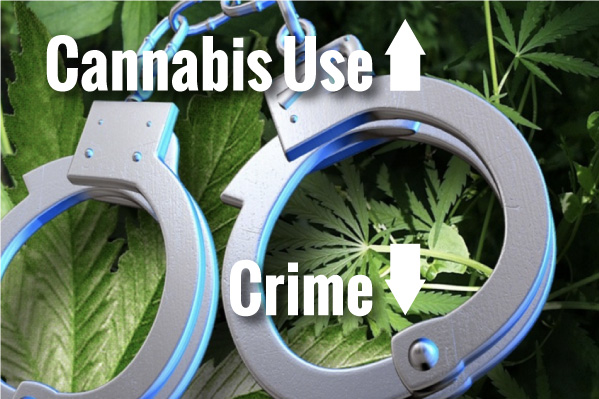
Because of all this, we can state that the truth is really close to the opposite of what’s commonly said. A Forbes article from earlier this year showed that crime had fallen in Mexican states that border America, on account of that cannabis law reform had taken the cannabis trade away from the black market. Homicides related to the drug trade were believed to have fallen 41% because of cannabis law reform, as incidents of turf wars over illegal cannabis sales essentially vanished.

These statistics reveal a couple of things. Not only does cannabis not inherently lead to crime, but cannabis prohibition itself inherently leads to crime. Prohibiting cannabis is to move it onto the black market, which is to ensure that organised crime will fight over territory and distribution profits. Once there are large, black market profits to be made in the trade of an illicit substance, ensuing violence is all but guaranteed.

The laws against cannabis prohibition can only be supported if a person understands nothing of the crime wave that followed in the wake of alcohol prohibition. Cannabis prohibition takes all the legitimate demand for the substance – and the demand for it is legitimate, not “drug addiction” – then gifts all of that demand to the black market, who are the only people willing to supply it. This means that it’s prohibition itself that causes the crime that is associated with cannabis, and not the cannabis itself.

Cannabis law reform is necessary so that people who want to engage in the cannabis trade are not exposed to the criminal underworld. This will reduce crime rates by keeping citizens who would otherwise be law-abiding away from the sort of professional criminal who might take advantage of them, or who might bring their criminal influence into other areas of the cannabis user’s life.

*

This article is an excerpt from The Case For Cannabis Law Reform, compiled by Vince McLeod and due for release by VJM Publishing in the summer of 2018/19.

The Case For Cannabis: Cannabis Meets the Industrial Needs of This Century

For better or worse, humans will always use drugs to help them cope with the demands placed on them by the daily need to survive. Whether to help focus, relax, kill pain or to see beyond, people will always find reasons to want to change their perceptions so as to best meet the demands placed on them. This article will argue that cannabis law reform is superior to prohibition when it comes to meeting the industrial demands of our time.

During the Age of Exploration, the drug of choice was alcohol, usually rum in particular. Rum had a high alcohol volume and was easy to keep. For men spending months or years at sea in ships, rum offered the best bang for the buck. Wherever European sailors took harbour, the rum trade followed. Names like Port Royal and Kororareka became synonymous with drunken debauchery and destruction.

In the first half of the 20th century, we ran out of places to explore and started killing each other over what had been discovered. This required a combination of drugs, and these – because of the necessities of wartime – were indulged in without shame or sanction. Alcohol was still used to a great extent, particularly for its ability to give men the courage to face enemy gunfire, but use of opiates and tobacco were also widespread, the former on account of its use in physical medicine and the latter on account of its use in psychological medicine.

In the second half of the 20th century, the focus shifted from killing the enemies of liberal capitalism to making money. During this time, people were mostly tasked with social office work. This required more tobacco, but also more caffeine. It was here when the idea of becoming “caffeinated” to deal with the pressures of the day came from. The idea was that the buzz from caffeine would make the inherently safe and secure office jobs less boring.

So far this century, a lot of this work has become antisocial. This has necessitated the rise of caffeine, in order to concentrate for longer periods of time despite low levels of stimulation. This rise has been aided by the increasing unfashionability of tobacco smoking, so that caffeine has now become the go-to drug for anyone wanting more yang energy.

It’s not easy to forecast the precise details of the future, but if one understands the basics of a subject it’s possible to forecast general trends. What seems apparent, in the case of the Western World, is that cannabis has come to replace some of these other drugs as the one that best helps people meet the demands of the workplace, and will continue to do so.

Because of automation, it’s no longer as important for the workforce to be attentive, alert and focused. This is still important for certain roles, but those roles have become an ever-diminishing proportion of the workplace. The roles that have become an ever-increasing proportion of the workplace are those in the creative professions, and the demands of these roles are compatible with cannabis use.

It’s widely known and accepted that much of the world’s production of quality music is made by people on drugs, and this is true to a lesser extent of literature as well. Cannabis (especially cannabis sativa) helps with the process of creativity by breaking down old conditioned pathways of thought and replacing them with novel ideas. This has made it a favourite substance of people in many creative occupations – not just music and writing but also design, cuisine, hospitality and programming.

In order to meet these industrial needs, we will not only need to legalise cannabis, but to go further. At a minimum, cannabis will need to become legal so that people who need to use it for the sake of their work can do so. For the sake of creative occupations, it will need to be gently encouraged in the workplace in the same way that coffee is encouraged in offices, and tobacco is encouraged in factories, already now.

The world is changing faster and faster, and as a result of this people find themselves confronted with original situations ever more frequently. These original situations demand original ways of thinking. The desirable qualities for employees of the future will be flexibility, originality and breadth of thought, instead of the obsessive focus and repetition that has characterised the workplaces of the past. These qualities are well enhanced by cannabis, which makes it a good choice for the workplace of the future.

*

This article is an excerpt from The Case For Cannabis Law Reform, compiled by Vince McLeod and due for release by VJM Publishing in the summer of 2018/19.