

The Case For Cannabis: Cannabis is Not Addictive

One of the most common arguments against cannabis is that it is an “addictive drug”. People making this argument raise images of zombie-like addicts burgling houses and selling their bodies in dark alleyways for the money to finance their addiction. Leaving aside the fact that this fear-mongering is bollocks, the argument isn’t even accurate.

The scientific literature warns us of “irritability, anxiety, decreased appetite, restlessness and sleep disturbances“, sleep problems and “a constellation of behavioral, somatic, and mood symptoms.” It’s clear that to stop using cannabis often means that one encounters these problems, but they soon go away. People enjoy using cannabis, but use alone does not count as addiction.

Psychology Today ran an article that stated “The vast majority of those who use marijuana do so occasionally and exhibit no addictive symptoms — no increased tolerance, no cravings and no withdrawal. In other words, they can take it or leave it.”

It’s true that cannabis does not cause meaningful physical addiction. Something that’s really addictive is alcohol. Withdrawals from alcohol are known to cause delirium tremens, a phenomenon known as “the DTs”, which can kill the sufferer. If this is considered an acceptable side-effect of a recreational drug, then the physical addiction potential of cannabis is nowhere near objectionable.

The counter-argument to this is to say that cannabis can still be psychologically addictive. Psychological addiction is a kind of excessive habituation, where a person does not become medically ill but who can suffer “psychological symptoms like anxiety, mood swings and depression”.

At this point, another frightening image is formed. Here, instead of burglars, the stereotype is of slovenly, morbidly obese videogamers who lie around all day drinking Mountain Dew, completely without ambition aside from securing their weed supply, all social bonds long since abandoned in favour of the next puff.

The reality is that it’s not so much a matter of cannabis being addictive, as that people who do not have adequate levels of stimulation search for anything they can to fill the gap, and cannabis fills the gap. Anyone who smokes cannabis every day can tell you this – it’s frequently a matter of having nothing better to do.

As was demonstrated by the Rat Park experiments carried out by Professor Bruce Alexander, addiction is a function of both available addictive substances and a lack of environmental stimulation.

The Rat Park experiments showed that rats that lived in a stimulating and interesting environment, where a variety of exercise, food and mating opportunities were available, were up to 19 times less likely to consume water laced with morphine when compared to rats that lived in a standard laboratory cage. Given that rats are also social (or at least semi-social) mammals, this can teach us some things about the nature of addiction in humans.

The fact is that human society of 2019 has left some people behind to die, and for these unfortunate masses there is not a lot of pleasant stimulation to be had. Some of these people turn to alcohol to fill the gap, some turn to opiates, some turn to tobacco, some turn to cannabis. In all cases, the problem is not the drug itself, but an environment that fails to provide stimulation enough to meet people’s psychological needs.

If sufficiently fulfilling stimulation is available (or at least entertaining stimulation), people don’t tend to smoke cannabis all day. Therefore, the emphasis shouldn’t be on putting people in cages for using cannabis, it should be on creating a society that people freely want to engage in.

Most of the reason why cannabis users have had to take all the blame, instead of the people responsible for constructing society in a way that others want to escape it by using cannabis, is that the people responsible for designing society have all the power. Naturally, therefore, they design society in such a way that all of the other members of it have to take the blame for its failures.

What cannabis addiction ultimately amounts to is blaming cannabis for the problems caused by cannabis prohibition. Just because bored people with nothing to do sometimes smoke cannabis all day doesn’t mean that the cannabis forced them to do it. A healthy society that allowed people to freely use cannabis in (e.g.) coffeeshops, would soon find that people soon get bored of it and drift into other things.

The argument that cannabis is addictive is not sufficient to justify making cannabis illegal. The addictive potential of cannabis is minor, and the withdrawal symptoms from it not severe. Focus should be placed on organising society in a manner that inspires ordinary people to engage with it of their own free will, not punishing cannabis use.

*

This article is an excerpt from The Case For Cannabis Law Reform, compiled by Vince McLeod and due for release by VJM Publishing in the summer of 2018/19.

The Case For Cannabis: The Punishment Does Not Fit the Crime

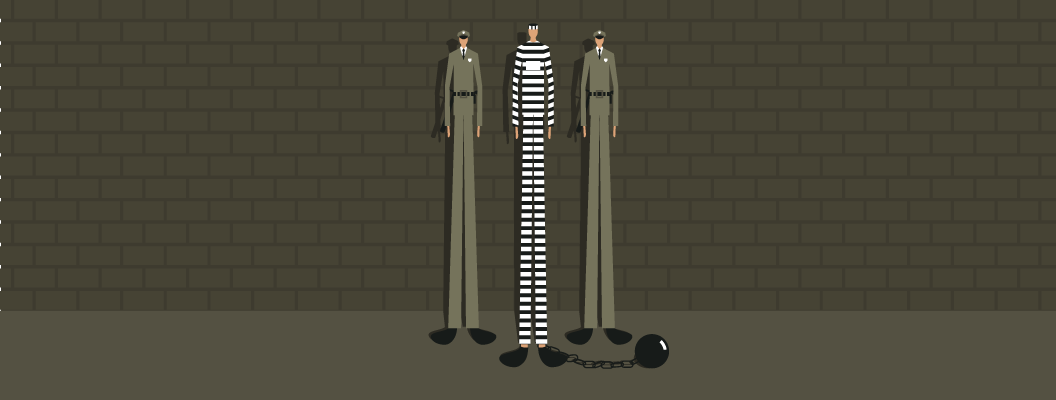
Proportional sentencing is supposed to be a fundamental tenet of our justice system. When a person causes suffering to another, they are given a proportionate amount of suffering intended to discourage: we are told that “the punishment should fit the crime”. As this article will argue, the punishment for cannabis offences is not commensurate with the nature of the crime.

The maximum penalty for possession of cannabis is three months imprisonment, as established by Section 7 of the Misuse of Drugs Act. Most Kiwis can intuitively understand that this is massively disproportionate to any harm caused by the act of cannabis possession, but this law is on the books, and has been for over 40 years without being repealed.

Some might counter here with the fact that essentially no-one gets sentenced to prison for cannabis possession nowadays. This counter-argument misses two essential points.

The first is obvious: if no-one goes to prison for cannabis possession anymore, on account of that society has “moved on” and no longer considers cannabis possession a crime, then it’s an obsolete law. If it’s an obsolete law, then we ought to strike it from the books.

The second is that people still go to prison for cannabis cultivation, which is not any more of a crime than cannabis possession is. Brian Borland was given four years and nine months imprisonment for unrepentantly growing cannabis – an incredible punishment if one considers that no-one was harmed by his actions.

Some people were outraged by the sentence given to Devonte Mulitalo, an Auckland youth worker who groomed and sexually assaulted a 12-year old girl, coercing her to perform sex acts on him. He was given ten months home detention. Many thought this sentence was too light, and in comparison to Borland’s sentence it seems obscene.

Takaka resident Alicia Fulcher-Poole was given three and half years in prison for killing someone while driving high on methamphetamine. It’s incredible that reckless disregard for human life resulting in a death can receive a less severe penalty from the system than growing a medicine without permission. But this is the state of our “justice” system.

It’s apparent to almost everyone that 52 months imprisonment for growing cannabis is a ludicrously disproportionate punishment, when the total suffering caused by growing cannabis is compared to the suffering caused by killing someone through reckless use of a motor vehicle. Even if one assumes the most uncharitable interpretation of Borland’s motives, he didn’t kill anyone.

Borland’s sentence was getting up towards the maximum end of the scale, which is seven years imprisonment. This is a heavier sentence than the sentences that are routinely given out for killing people in motor vehicle accidents.

Moreover, the effect of having a criminal record lasts longer than the sentence, and sometimes much longer. Branding someone a criminal – even if there is such as thing as the Clean Slate Act – is to consign them to a lower class of citizen, one that is precluded from many opportunities that normal people take for granted.

Even a measly cannabis possession conviction is enough to prevent someone from being allowed to enter a variety of countries, most notoriously America. Neither will it be straightforward to work as a Police officer, teacher or other Government employee. This is a heavy, heavy punishment just for being caught in possession of a medicinal flower.

This loss of travel and employment opportunity is enough to significantly lower the quality of a person’s life. Getting involved with cannabis should never mean that a person is consigned to live as a lower class of citizen for the rest of their lives. This is a level of arbitrary cruelty that borders on barbarism.

Cannabis prohibition should be lifted because it’s not right to have such brutal punishments for actions that do not cause suffering. It makes a mockery of the supposed proportionality of the justice system. Using the criminal justice system to deal with cannabis is an absurd over-reaction to something that doesn’t harm others.

*

This article is an excerpt from The Case For Cannabis Law Reform, compiled by Vince McLeod and due for release by VJM Publishing in the summer of 2018/19.
The Case For Cannabis: Cannabis is Not Harmful

One of the most fundamental arguments for cannabis prohibition is that cannabis is harmful. Because of this harm, the argument goes, we need to make cannabis illegal. This will give people less opportunity to use cannabis and thereby have their lives destroyed. As this article will examine, there are at least two good reasons to oppose this argument.

Firstly, we can see prohibition causes more harm than legal cannabis would – and over and above the harm caused by enforcing the prohibition. When a country or state introduces cannabis prohibition, they usually also introduce a number of ancillary laws that are ostensibly to fight the harm of cannabis, but which end up causing more harm.

It’s apparent that burning plant matter and then inhaling the smoke is not the best thing you could do for your lungs. This is not a contentious assertion, and the vast majority of cannabis users are fully aware of it. But when people have tried to take measures to make cannabis use more safe, they find themselves being stymied by the law. In many cases, the law is intended to penalise not just cannabis use but the entire cannabis culture.

Manufacturing cannabis butter to make some brownies changes your crime from possession of a Class C drug to manufacture of a Class B drug. So if a person decided to make some hash brownies, they would then not only be in possession of a Class B illegal drug, but they could also be charged with manufacturing it – which carries a maximum penalty of 14 years imprisonment.

We are told that the schedule of increasing penalties reflects the schedule of increasing harm caused by these drugs. But the harm of cannabis does not increase 56 times because someone made some bud into some brownies. There’s no logic to that at all – if anything, the harm is lessened by virtue of avoiding lung damage.

It’s true that the psychoactive effect of hash brownies will be greater than smoked bud, but the psychological drawbacks of using cannabis have been massively overstated. The cozy consensus that using cannabis causes schizophrenia has been shattered by new research suggesting that it is a genetic propensity to schizophrenia that predicts cannabis use, and not the case that cannabis use alone predicts schizophrenia.

In any case, it’s possible that even cannabis bud does not cause net harm. Yes, smoking it is not great, but the smoke damage may be outweighed by the medical benefits of lower stress etc.

Likewise, the example of “drug paraphernalia” is another one in which the majority of the harm is caused by the law itself, rather than cannabis. People have been arrested for the possession of water bongs and charged with a more severe crime than mere cannabis possession – but using a water bong is more healthy than inhaling hot smoke. Despite being more healthy, possession of a bong carries a maximum penalty of a year’s imprisonment in New Zealand.

The physical harms of cannabis have generally been overstated. Of course, inhaling cannabis smoke is not ideal but even this is transparently less dangerous than rugby, horse riding, skiing and downhill mountain biking. All of these activities, whose level of risk falls into the acceptable threshold, are legal. Therefore the “cannabis is so harmful it should be illegal” is nonsense.

Moreover, even the most ardent cannabis user doesn’t smoke as many joints in a day as a tobacco user smokes cigarettes, and so the level of risk here falls into already established acceptable limits.

Another major argument when it comes to the supposed harms of cannabis is that prohibition is a bizarre response to any supposed harm caused. Let’s say, for argument’s sake, that cannabis is harmful – how does it make any sense to introduce more harm into a person’s life, just because they used it? The idea of punishing an adult into taking responsibility is ridiculous.

The argument that cannabis should be prohibited because it is harmful is mistaken. Cannabis prohibition itself is responsible for more harm than cannabis is. If reducing harm done to human beings is a consideration when setting legal policies, then it’s clear that prohibition ought to be repealed for the sake of a less punitive approach.

*

This article is an excerpt from The Case For Cannabis Law Reform, compiled by Vince McLeod and due for release by VJM Publishing in the summer of 2018/19.

Thoughts of a Luciferian Occultist Upon the Tenth Anniversary of His Apotheosis

On Boxing Day, 2008, I took a heavy dose of psilocybin mushrooms for the first time. It wasn’t a reckless decision. I had been a heavy cannabis user for some years already, and as a schizophrenic I was well accustomed to strange and sometimes terrifying thought patterns. It was about six o’clock in the evening.

Perhaps forty minutes later, I started to feel unusually good. The come-up had already become more pleasant than was possible with cannabis alone (much less alcohol). I felt so good that I decided to go over to my neighbour’s house to split the rest of the mushrooms.

Standing on the road outside my house, on my way to my neighbour’s, I started to feel unusually good. I was certain that this was the best I had ever felt in my life. It was a sense of exhilarating peace, in that all of my suffering had been abolished, replaced with an overwhelmingly confident sense that everything was going to be alright.

My neighbour and I divided up the rest of the mushrooms. After a while, he suggested that we smoke some weed to “kick it on a bit”. So we did. At about 8 p.m. the experience started to become unusual – I started to enter psychedelic space for real.

My ordinary vision started to be replaced by a shimmering field of reds, yellows, greens and blues. These colours took on more and more of my view, but when someone spoke, or if I moved my head suddenly, the room I was in would become apparent again. These colours were not simply placed on top of my ordinary vision, but were a higher-order interpretation of it, as if I was seeing elemental fire, air, earth and water.

Soon this vision collapsed from four colours into two: an electric neon blue, and black darkness. The neon blue was alive, and it seemed to reach out into the darkness as if by sexual impulse. It reached out with tendrils that curved into every available space, but not merely three-dimensionally – the electricity reached into every available space in a countless number of higher dimensions.

What I was seeing was the material world represented as masculine and feminine. This was an ancient Taoist secret: that the world is yang and yin, interdependent and meshed together so tightly that it is impossible to ever see pure masculine or pure feminine in a state of Nature. That I was able to see it was because my mind was rising through the dimensions, into metaphysical space.

Soon this vision also faded, and I was left with no sensations at all, just pure awareness. My mind no longer contained words, until I was asked how much of it I wanted to see. In my mind, I responded: “The full measure.” This is the Luciferian in me – I had waited my entire life, perhaps even several lifetimes, for this exact moment, and I knew what to do.

As if by lightningbolt, the Veils of Isis were lifted, and I looked directly into the face of God. What was seen cannot be described, for reasons that will shortly be explained. It is sufficient to say that the ancient Vedics were correct when they claimed that there is no such thing as space or time, and that behind Maya is absolution.

Looking into the face of God, I realised that everything I knew was wrong. It wasn’t that everything I knew was factually wrong, it was that reality was so fundamentally different to what I thought it was that every assumption had to be revisited. I was open to all possibilities – and in that state of maximum receptivity, and in the presence of God, some things were revealed to me.

There is no such thing as time and space. In the same way that twenty-five still frames a second gives the impression of a moving image, what we think of as time is closer to multiple universes flashing in and out of awareness. This happens so quickly that we think we’re actually moving around, but we’re really just jumping through the multiverse.

The multiverse is not merely a large number of universes. It is, in fact, a practically infinite number of universes, that are related to each other by way of a fractal pattern. This was called the Great Fractal, for the simple reason that it contained all possible perceptions. Maya, or the material world, is a fractal that contains every single possible universe, in every single configuration. Every universe that can exist, exists somewhere in the Great Fractal.

Now aware of this, I felt so profoundly different that I knew I had opened a door that would not be closed again on this side of the death of my physical body. I was now a master of the physical world, in that I could explain it from first principles of yin and yang. But there was more. Eventually I realised that it was necessary to spend some time with God – perhaps years.

As if on cue, knowledge came, about God. I had more-or-less been a materialist atheist up until then, despite considerable dabbling in Eastern traditions, so what came was shocking.

Consciousness is God. This is why it can fairly be said that God is all-knowing, all-powerful and all-wise. God is all knowing because everything that is known is perceived by consciousness, and God is consciousness. God is all-powerful because everything that exists has been created by consciousness, and God is consciousness. God is all-wise on account of the combination of the previous two.

It is true that consciousness cannot be described empirically. It cannot be sensed, and therefore cannot be described in terms of appearance, sound, taste or touch. Neither can it be measured. There is no instrument that can detect its presence or absence. Therefore, it cannot be a material phenomenon.

In understanding this, I understood the first line of the Tao Te Ching: “The Tao that can be spoken of is not the Eternal Tao.” God, as consciousness, is the prima materia of reality. Therefore, God is more fundamental than any human conceptions that may be dreamed up, such as words and language. God is even more fundamental than yin and yang, and therefore there is nothing about God that can be said. Therefore, all the claims of organised religion as to the nature of God are false.

Consciousness is more fundamental than the physical world because consciousness is the prima materia. God is the prima materia. The first thing ever to exist was consciousness, and it is more fundamental than time, and therefore does not need a cause. Therefore, it is not necessary to suppose some kind of “creator” that “willed” consciousness into being.

The only thing that really exists is consciousness, and this is eternal and without blemish. Everything else is merely something that consciousness is aware of, and, because no two consciousnesses are the same, that which is apparent to one is not necessarily apparent to any other. Therefore, nothing material can meaningfully be said to definitely exist.

Because there is no material world, there is also no death. The realisation of this brought me immense elation; I realised that I had suffered awfully under the delusion that the death of my physical body meant the cessation of my consciousness. In reality, it is the consciousness that creates the material body, and therefore the death of that body – like the death of all bodies – does not impact consciousness.

The persuasiveness of the illusion of the material world is the reason for the so-called “hard problem of consciousness”. The hard problem only makes sense if you already assume the presence of a solid material world, inside of which consciousness arose. Explaining how consciousness arose within a material world is, indeed, a hard problem, because it’s impossible. The reality is that consciousness exists, and has dreamed up a world that is as close to plausible as possible, when viewed from the perspective of the conscious present moment.

All that exists is consciousness and the contents of consciousness. Consciousness is more fundamental than the contents of consciousness; the latter is dreamed up by the former. The contents of consciousness, for every individual, is a slice of the Great Fractal. Therefore, it is possible for any individual consciousness to experience anything whatsoever that is possible – it’s just a matter of navigating to that part of the Great Fractal, which may take several lifetimes.

Every possible arrangement of the contents of consciousness is being experienced by God right now, because God is split into an infinite number of consciousnesses. These are not inferior in any way to the original, or to each other. God is experiencing your life ten seconds ago, and ten days ago, and whatever decisions you will make ten days or ten years in the future are already being experienced by God, and forever will be.

Therefore, all of the other people in life are also God, in exactly the same way that you are. They all are consciousness, an extrusion of God into the material world, so that God might experience something. It is true that All is One. We may be separate – and even competitors – in the material world, but behind it all, everything that exists is on the same team, God playing at the experience of being God.

Becoming God is not a question of growing in power as if life were some kind of game of Dungeons and Dragons. There is no spiritual progress to be made, and there are no spiritual points to be earned. You are already God, perfect and complete; you just forgot. Apotheosis is nothing more than anamnesia, remembering something that has been forgotten.

The reason why you forgot – why we all forgot – is clear, if you consider what it means to never forget. Being God is a state of perfect bliss. It is the absence of all suffering and longing. Looking into the face of God, I also felt this complete absence of desire – and realised its drawbacks.

Sitting for eternity in a state of perfect bliss is extremely limited from an experiential point of view. It is boring. It is so painfully boring that it makes sense to dream up the material world, for the sake of having something novel to experience. Thus, you chose to forget that you were God because it’s more interesting that way.

The problem is that, because God is perfect and complete, any change to this must necessarily be a desecration. Because God is a state of perfect knowledge and bliss, the process of individuation into a human consciousness necessary implies the introduction of ignorance and misery. Awareness of this is why so many religious traditions have a conception of a “Fall of Man”.

This is also true of the Great Fractal. There is an ideal life, and there are a practically infinite number of fractally similar lives. All of the fractally similar lives involves imperfections in comparison to the ideal one. Each one of us has a unique pattern of suffering, much like how the fractal forms of other things within Nature are variations of one ideal.

The real mind-bender is that it’s better this way, with all the suffering, than without. Existence as God is so painfully boring that all the misery in the entire Great Fractal is preferable (at least temporarily, and for a change). This means that there is a higher order of morality than mere pleasure and suffering. God seeks relief from boredom, and therefore the suffering of individuals is a good thing, as long as that suffering entertains God.

Therefore, it makes sense for individual consciousness to get slung into the material world (or, at least, to appear to have been) and to fully adopt the illusion of being a particular creature, separate from the wider whole and with desires that work against that whole.

All of this knowledge was downloaded into my mind in an infinitely small passage of time, because God is more fundamental than time and therefore not subject to its laws. Had I not already been a Luciferian, and therefore somewhat prepared, this downloading of knowledge probably would have fried my brains completely.

As it was, it took four years for me to make any sense of it all, six years before I could think about it calmly, eight years before I could be happy about it and ten years before I could write it down. The distillation of the wisdom of those ten years with God is the essay that you have just read.

*

If you enjoyed reading this essay, you can get a compilation of the Best VJMP Essays and Articles of 2017 from Amazon for Kindle or Amazon for CreateSpace (for international readers), or TradeMe (for Kiwis)