

The Case For Cannabis: Effectiveness of The Prison System

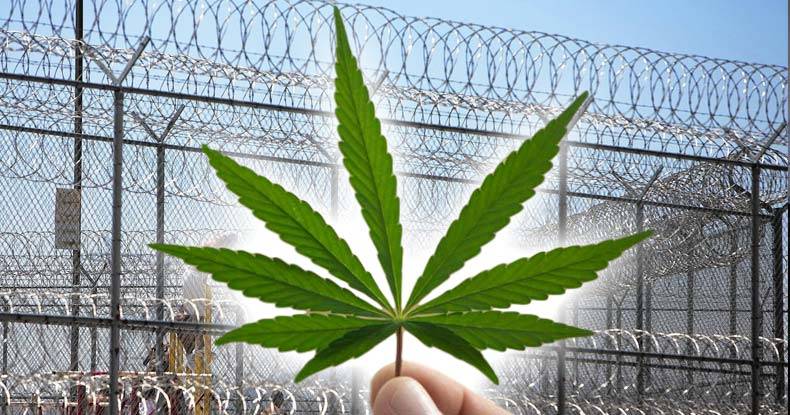
One of the major problems with cannabis prohibition is that it makes other parts of society function sub-optimally. In the same way that prohibition makes policing more difficult, and makes a mockery of the justice system, it also makes a mockery of the prison system. This article looks at the argument for cannabis law reform from the point of view of the prison system.

The prison system, in practice, serves a wide variety of objectives. Ideally speaking, however, it needs to fulfill one primary and one secondary objective. The primary objective is to keep society safe from the predations of criminals. The secondary objective is to rehabilitate those criminals so that they don’t come back.

Cannabis prohibition is in direct conflict with this primary objective. The idea of keeping society safe from someone who grew a medicinal flower doesn’t make any sense, because growing medicinal flowers helps people and doesn’t harm them. In fact, doing so makes society more dangerous, for a number of reasons.

The most obvious harm is caused by taking a person who probably wasn’t malicious (a cannabis user), and putting them in close contact with genuinely dangerous people, who are apt to teach that cannabis user how to become dangerous themselves. Prisons serve as a university of crime, because crime is the one thing that anyone in a prison can count on having in common with other people in a prison.

There’s no overall benefit to putting someone who has grown a cannabis plant in prison with people who are going to teach him how to manufacture methamphetamine, or to embezzle, or to commit other serious crimes. The end result will only be an actual criminal. From the perspective of harm reduction, it’s counter-productive to take a person who wasn’t harming anyone and turn them into a person who does harm people. It’s madness.

Even worse is the harm done to the families of the people incarcerated for cannabis offences. The stress on the partner or parent of someone imprisoned is great, and lasts for at least the time of the sentence. Perhaps the worst of all is the damage done to the children, who, after seeing one of their family members locked up for nothing, inevitably come to see the state as their enemy.

One other consideration is that a person sentenced to prison for a cannabis offence may become embittered. Getting locked in a cage like an animal for an action that caused no harm is not the sort of thing can easily be forgiven. It’s the sort of thing that a person tends to resent for the rest of their lives, making them a nastier person. Everyone loses from this.

In the context of cannabis prohibition, the concept of rehabilitation – the second major objective of the prison system – doesn’t make any sense either.

The idea of rehabilitation involves convincing a criminal that their previous actions caused unwarranted suffering to innocent people, should not have been done, and should not be repeated. If a criminal can learn this, then they can be released into the community and be expected to not commit that crime again. As a result, the community becomes safer.

In the case of a cannabis offence, however, what’s to rehabilitate? How can one go about “rehabilitating” a person who hasn’t caused any harm to anyone? The fact is that it’s all but impossible to convince a normal person that they are a criminal on account of cannabis. It’s impossible to appeal to the harm caused, unlike a genuine crime, because there isn’t any.

Many people who are in prison for cannabis offences grew cannabis to meet other people’s medicinal needs. These people are the opposite of criminals – they are heroes. Although they might not be seen as such by the “Justice” System, they are certainly heroes in the eyes of the people with medical conditions who couldn’t otherwise access an effective medicine.

Every honest person knows that the cannabis laws are an example of illegitimate, unjust dictates, and therefore there’s no “rehabilitating” a person who defies them. The laws make our prison system into a sham by putting non-harmful people there. This causes harm to everyone related to the cannabis user, as well as harm to the average person’s faith in authority.

Legalising cannabis would return our prison system to its primary objective of keeping people free from harm. This would mean that our prisons were only populated by those willing to harm others, and not medicinal flower growers. This would not only make the prison system more effective, but also less cruel.

*

This article is an excerpt from The Case For Cannabis Law Reform, compiled by Vince McLeod and due for release by VJM Publishing in the summer of 2018/19.
The Case For Cannabis: Prohibition Doesn’t Work

Although this book is full of arguments for cannabis law reform, all of them are technically forms of one great metaargument. All of the arguments for cannabis law reform, as the reader will discover, explore different facets of the failure of cannabis prohibition. This essay examines the fundamental argument at the core of the case for cannabis law reform – that prohibition doesn’t work.

Although there are a plethora of different kinds of cannabis law reform, all of them are based on the recognition that cannabis prohibition has a number of costs that could be saved. Although it’s denied by many, prohibition does have costs – the cost of law enforcement, the cost of prisons, the cost of faith in the Government, the Police and the medical establishment, among others.

Therefore, in order for this cost to be justified, cannabis prohibition has to do something good. There have to be profits somewhere to make up for all the costs. If there aren’t, then cannabis prohibition is a failed experiment and must be ended.

So let us ask: what is the objective of cannabis prohibition?

If the objective was to prevent people from using cannabis, that has failed. In 2008, 14.6 percent of the New Zealand population had used cannabis within the past 12 months, which is comparable to the prevalence rate of tobacco use. A decade later, cannabis is even more popular than before, and tobacco even less.

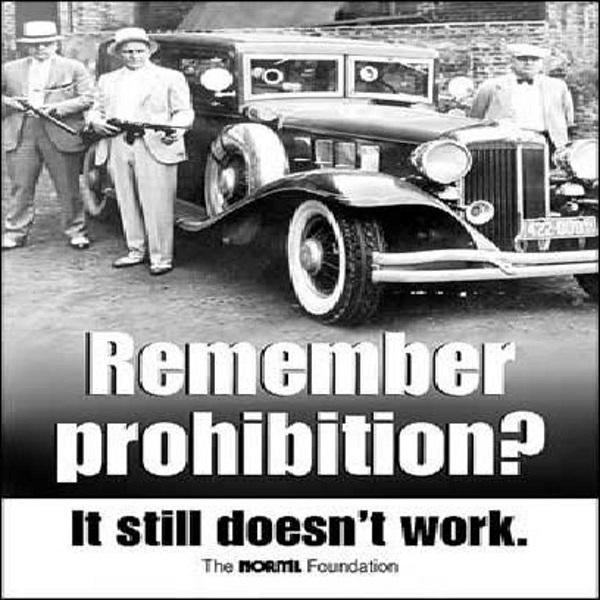
No intelligent person seriously believes that the law can override the people’s will to use cannabis. Exactly like alcohol prohibition, which failed to stop people from using alcohol, cannabis prohibition won’t stop people from using cannabis. Not only do people have a will to use it, but they feel that they have the right to do so. They’re going to keep using it forever.

If the objective was to protect people’s mental health, that too has failed. Not only is there no correlation between rates of cannabis use and prevalence of mental illness on the national level, but there is ample scientific evidence that cannabis does not cause psychosis or schizophrenia. The cannabis-psychosis link is best explained by the fact that cannabis is medicinal for many mentally ill people, and so they seek it out.

Instead of protecting people’s mental health, cannabis prohibition leads to the further social isolation of cannabis users by making them unwilling to speak candidly to mental health professionals, or to their friends or workmates. If cannabis is illegal, then confessing to using it is tantamount to confessing to criminal activity, so many mentally ill people who need help would rather just sit in silence.

If the objective was to protect children from psychoactive drugs while their brains are still developing, that too has failed. Because cannabis is on the black market, and therefore sold by criminals, there is nothing in the way of age checks between young people and the cannabis supply. Gang members will happily sell bags of cannabis to 12-year olds if they have the cash.

People often make the “think of the children!” argument when it comes to cannabis law reform, but the simple fact is that prohibition makes it easier for minors to get hold of cannabis. Proof for this is as simple as asking a minor if it’s easier to get hold of alcohol or cannabis. They’ll tell you that it’s harder to get hold of booze because those selling it are serious about keeping their liquor license.

If the objective was to instill respect for authority, that’s completely backfired. Cannabis prohibition is so stupid an idea that the people at large have lost respect for those pushing at and those enforcing it. Although the idea that one’s politicians are stupid and evil is far from new, these sentiments become problematic when they’re applied to other segments of society. Prohibition, however, makes this all but inevitable.

Many New Zealanders have now come to feel that the Police are their enemy, because Police officers have shown themselves willing to confiscate people’s medicine and to imprison them for using it. Far from being the trusted community servants that they are seen as in places like Holland, they’re seen as enemy soldiers waging an immoral war against an innocent people. To a great extent, this is the fault of cannabis prohibition.

All of these arguments (among others) are discussed at length in the various chapters of this book, but they all support the central thesis – that cannabis prohibition doesn’t work. It doesn’t achieve its stated aim of reducing the sum total of human suffering, and if it doesn’t achieve its stated aims, then it isn’t justified to continue with it any longer.

The men who pushed cannabis prohibition on a naive and unsuspecting public almost a century ago are now dead. Whether they knew they were speaking falsehoods or whether they were genuinely misled is no longer material. The right thing for us to do is to assess reality accurately, so that we can move forward in the correct direction.

If we look around the world honestly, it’s obvious that prohibition has failed. Not only is cannabis culture thriving, even in the most unlikely places, but support for cannabis law reform is rising almost universally, across all nations and demographics. The most striking sign is the ever-increasing number of states, territories or countries that have recently liberalised their cannabis laws.

The cynic might say that this is an example of the bandwagon fallacy, but that is not an accurate criticism. The reason why so many countries are changing their cannabis laws is because the evidence against cannabis prohibition has now mounted so high that it can no longer be ignored. There are now many countries liberalising their cannabis laws for the simple reason that the evidence suggests that it’s a better approach.

Cannabis prohibition simply doesn’t work. There is nowhere in the world that has prohibited cannabis and observed any result other than more poverty, distrust, misery and hatred. It’s fundamentally for this reason that the cannabis laws ought to be reformed.

*

This article is an excerpt from The Case For Cannabis Law Reform, compiled by Vince McLeod and due for release by VJM Publishing in the summer of 2018/19.

The Case For Cannabis: Cannabis Does Not Make People Violent

As ridiculous as it may sound to many, the public opinion of cannabis and its effects have been informed by images like the murder scene from Reefer Madness. In the minds of a large section of the voting-age population, using cannabis leads directly to a desire to murder other people just for the thrill of it, or at least to an meth or alcohol-like aggression. This article looks at the truth.

Anyone who has been part of a cannabis-using scene knows that the supposed link between cannabis and violence is bullshit. It’s simple enough to just contrast the results of cannabis cafes in Amsterdam, or cannabis festivals, with bars and pubs just about anywhere else. Cannabis, by itself, makes people mellow in the vast majority of cases.

The myth that cannabis makes people violent was proven false as far back as 1977. A review published that year in the Psychological Bulletin stated that “The consensus is that marihuana does not precipitate violence in the majority of those using it sporadically or chronically.” All of the further research since then backs up this point.

Interestingly, that article cites the importance of set and setting, which is something that any responsible person would emphasise if they wanted to reduce harms (more on this below).

The presence of a scientific consensus that there is no causal link between cannabis use and violence doesn’t stop prohibitionists from cherry-picking data and research to create the impression that such a link exists. After all, there are correlations between all kinds of things, but (as any honest scientist knows) these correlations are often best explained by underlying third factors.

There is certainly a correlation between violence and cannabis, as there is between violence and everything on the black market. This is inevitable, because anything on the black market is all but guaranteed to be sold by someone who won’t go to the Police if they are ripped off, stood over or killed. Cases like the example of Marlborough man Colin Farrell, who was robbed of his cannabis plants in a home invasion, only happen because of prohibition.

It’s true of everything that if only criminals use it, it will have an association with crime. It’s also true that if something is illegal, then only criminals will use it. Therefore, anything that’s illegal will have an association with crime. This, by itself, explains most of the link between cannabis and violence.

Another reason why an association exists between cannabis and violence is that some people use cannabis as part of a pattern of polydrug usage during nihilistic benders. There are a lot of meth benders that end up with a person smoking cannabis to try and calm themselves down and get to sleep, only to find it not quite working, at which point something really out of order often happens. The same is true of alcohol benders.

This is why the headlines proclaiming things like “Cannabis Crash Tragedy Kills Five” inevitably lead into an article that describes how the driver was also drunk, and/or on meth and/or on prescription sleeping pills. The mainstream media is happy to play up the cannabis angle to these stories, partly because drink driving fatalities are not news and partly because it pleases the alcohol manufacturers who spend millions advertising in that same media.

Logical thinking tells us that, just because a person smoked cannabis and became violent later doesn’t mean that the cannabis caused the violence. This is an example of the informal logical fallacy known as post hoc ergo propter hoc, or “after this, therefore because of this.” This is because people who smoke cannabis and become violent have usually been drinking alcohol or doing methamphetamine at the same time, or haven’t slept for days.

Logical thinking would ask: “Where are the cases of murders and violent crimes being committed by people who were only on cannabis and nothing else?”

Of course, there are few or none – even making an Internet search for examples comes up with little. This is because the people who are using cannabis without also using alcohol or methamphetamine are almost always just quietly using it at home, to relax, in a similar manner to how many responsible people drink alcohol daily.

Much like alcohol, the emphasis ought to go on educating people about the real effects of the substance. Absurd lies like the Reefer Madness story have to be consigned to history, where they belong alongside witch hunts, virgin sacrifices and the persecution of left-handers as embarrassing examples of human superstition, cowardice and stupidity.

The truth about things like set and setting have to be explained to people, so that they can make intelligent decisions about their cannabis use instead of relying on abstinence-based fearmongering (this is true of alcohol as well as cannabis). Part of this involves only using cannabis in situations where they are safe and where they don’t have to be responsible for anything, and preferably around people they like and who won’t harass them when they are high.

Any correctly informed person who is concerned about violence would support the legalisation of cannabis, because it would replace known violence-causing drugs (in particular alcohol and methamphetamine) with something that causes less violence. In reality, the connection between cannabis and violence is so weak that, far from being an argument for its prohibition, it’s an argument to legalise it.

*

This article is an excerpt from The Case For Cannabis Law Reform, compiled by Vince McLeod and due for release by VJM Publishing in the summer of 2018/19.

The Case For Cannabis: An Elderly Perspective

The perception that old people are generally anti-cannabis is far from a myth. Although many elderly cannabis enthusiasts have plenty of friends who are pro-cannabis, statistics show a strong negative correlation between being aged 65+ and voting for the Aotearoa Legalise Cannabis Party in 2017. This essay describes what those enthusiasts already know: that there is a strong case for cannabis law reform from an elderly perspective.

The unpleasant truth about getting old is that it tends to involve a lot more healthcare than being young. Getting old is tantamount to the body crapping out. It’s a miserable truth to acknowledge, but there is a strong correlation between aging and physical suffering.

Because of this elevated degree of physical suffering among the elderly, there is an elevated demand for medicines of all kinds. Everyone knows that old people are always popping pills for some ailment or other. The increased sickness and frailty that comes with aging means that elderly people are interested in all kinds of medicine and, increasingly more nowadays, in cannabis.

One of the areas in which cannabis has shown the most promise for the elderly is an alternative to opiates for the sake of pain relief, particularly in the case of cancer and terminal illness. An article in the European Journal of Internal Medicine describes how cannabis was found to be a safe and effective medicine for the elderly population in this way. Its greatest benefit seems to be found in replacing opiates and thereby avoiding their profound and unpleasant side-effects.

Cannabis has also shown promise in treating a number of conditions that are much more likely to afflict the elderly, such as Parkinson’s, insomnia, some forms of chronic pain, age-related cognitive decline and hypertension. This is only a small sample – cannabis has also shown promise in treating entire classes of illnesses, in particular inflammatory ones.

Despite the attempts by prohibitionist interests to equate cannabis with more harmful substances such as tobacco, the fact is that a vast range of medicinal uses for cannabis are already known. It’s very possible, given the evidence thus far, that further research into cannabis will uncover new ways to alleviate the suffering of the world’s elderly.

Some will make the argument that all of this evidence in favour of medicinal cannabis, which is an entirely separate issue to recreational cannabis. But just because the elderly have plenty of reason to support medicinal cannabis doesn’t mean that they have reason to oppose wider cannabis law reform.

It has been discovered in Canada that freeing up restrictions on recreational cannabis encourages doctors to write prescriptions for it. When “recreational” cannabis is illegal, this normalises the idea that cannabis itself is harmful, and discourages doctors from writing prescriptions for medicinal cannabis. Therefore, the two issues are inseparable.

The fact is, as Edward Bernays might have told us, that the amount of research that gets done into cannabis medicine for the elderly is a direct function of the degree of positive sentiment towards cannabis that exists in the wider society. The more people in general feel that cannabis is helpful and not harmful, the more likely someone is to suggest to research its medicinal qualities, or to agree to fund such research.

So the elderly everywhere have an interest in liberalising restrictions around cannabis, because this will lead to doctors taking an interest in the application of the plant to alleviating the suffering of conditions that afflict the elderly.

All of these things add up to there being good personal reasons for elderly people to support cannabis law reform.

After all, the elderly overseas support cannabis law reform – it has been noted that many of the beneficiaries of cannabis law reform have been elderly. The fastest-growing group of cannabis users in legal jurisdictions are the over-65s. The article linked here, from the Journal of Gerontology and Geriatric Medicine, states “marijuana use seems normalized among the older populations as more of those who ever used marijuana age.”

The fact that many elderly are against cannabis law reform, despite being the major beneficiaries of it, is not a contradiction. Those generations were the ones exposed to a viciously anti-cannabis mentality that was not above telling lies to demonise the plant. Because of this normalisation of the idea that cannabis is harmful, it’s understandable that someone raised in this era might still believe so.

However, there remains a moral imperative to look honestly at the evidence for and against cannabis before making a decision to support its prohibition. This ties in with one final thing the elderly might like to consider: the question of goodwill. This is a question of what kind of legacy they want to leave for those who come after them.

The Police are unlikely to arrest old people for cannabis offences (although they do). They are much more likely to go after the grandchildren of those old people. When the grandchildren of old people get criminal convictions for using cannabis, they have to live with those for the rest of their lives, and (as argued in another chapter) the effects of a criminal record are disproportionate to the suffering caused by cannabis offences.

The elderly don’t win from their offspring getting criminal records.

Ultimately, the elderly might like to think about cannabis law reform, not just for their sake but for their children and grandchildren. It will be those generations who will be looking after them in the old folks’ homes, and many of the nurses who work there would like to have access to cannabis to unwind after a day of work. The smart thing to do might be to stay on their side.

*

This article is an excerpt from The Case For Cannabis Law Reform, compiled by Vince McLeod and due for release by VJM Publishing in the summer of 2018/19.