Medicinal Cannabis Advances in 2017 – A Review

This literature review was conducted using Google Scholar, which was used to find citations of academic papers that referenced “cannabis medicine”, “cannabis psychosis”, “cannabis schizophrenia” and “medicinal cannabis”.

The strands of research that interest us here include: research undermining cannabis prohibition, with reference to psychiatric concerns; research supporting use of cannabis medicine, with reference to psychiatric conditions; evidence for cannabis as a substitute for opioids; other evidence supporting the use of cannabis medicine.

Research undermining cannabis prohibition, with reference to psychiatric concerns

This paper in the Biological Psychiatry Journal was notable for containing the sentence “Meta-analyses suggest that individuals with schizophrenia who use cannabis show better cognitive functioning compared to those who are non-users.”

Another paper in the Schizophrenia Bulletin makes a point of distinguishing between the effects of CBD and the effects of THC, noting that “THC is responsible for the psychotogenic effects of cannabis.” This directly contradicts the received psychiatric wisdom that “cannabis” causes psychosis.

This paper even notes that “independent evidence that CBD has antipsychotic and anxiolytic properties in patients with mental health disorders has been accumulating.” Indeed, doctors in California have been advising people for at least 10 years now that high-CBD strains (such as Northern Lights) were better suited for calming and sleeping purposes than high-THC skunk.

Although this paper is not titled with a journal of publication, it is worthwhile for at least conceding that many of the negative symptoms of schizophrenia are ameliorated by cannabis use.

This paper in the Acta Psychopathologica argues against the prohibition of cannabis on the basis of the Precautionary Principle. According to this paper, almost everyone tempted to smoke cannabis already has, regardless of the law. Moreover, prohibition prevents very few cases of schizophrenia, even assuming a direct causal link. Therefore, the deterrent effect of prohibition is outweighed by the positive effects of making it legal.

Research supporting use of cannabis medicine, with reference to psychiatric conditions

This paper in the the Clinical Psychology Review performed a meta-analysis of recent discoveries about the relationship between medicinal cannabis use and positive mental health outcomes. Perhaps the foremost result of this analysis was “Cannabis has potential for the treatment of PTSD and substance use disorders.” Among cannabis users this is well-known to be one of the main reasons why people smoke it in the first place. It was also noted that “Cannabis use does not appear to increase risk of harm to self or others.”

What is striking about this paper is the absence of Drug War rhetoric. Cannabis use, instead of being described as cannabis abuse (as in the majority of prohibitionist papers), is here given the acronym CTP (cannabis for therapeutic purposes). In the past, a paper that referred to cannabis in this manner would not have been funded or published, so the appearance of the phrase suggests that attitudes are changing.

A comprehensive overview of recent advances in medicinal cannabis science can be found in the Handbook of Cannabis and Related Pathologies Chapters 90 and 91, ‘The Use of Medical Marijuana in the Treatment of Psychiatric Disorders’ and ‘Beneficial Effects of Cannabis and Related Compounds on Sleep’.

Unfortunately, much of the literature continues to make the fundamental error of confusing cannabis extracts and pharamceutical preparations with the actual cannabis plant itself (as seen here). The authors of these papers frequently draw the conclusion that cannabis is not helpful for treating certain conditions because some extract was found to not be helpful. Others (as seen here) fail to make any distinction between THC and CBD, lumping all 100+ cannabinoids under the rubric of “marijuana”.

This paper notes that anxiety is one of the top five reasons given by patients in North America for using medicinal cannabis. It doesn’t go into why, but it’s likely that the calming effects of CBD are involved, as they may also be in the case of schizophrenia. Other papers also support the notion that cannabis has use for treating certain mental conditions, such as social anxiety.

Evidence for cannabis as a substitute for opioids

One of the most promising directions of future medicinal cannabis research appears to be in the direction of using cannabis as a substitute for a variety of other medicines that might have worse side-effects or addictive potential.

One of the most astonishing pieces of research was a study of how usage of pain, anxiety and sleep medication decreased when medicinal cannabis was available. In a survey of New England dispensary members, “among respondents that regularly used opioids, over three-quarters (76.7%) indicated that they reduced their use since they started [medicinal cannabis]…” and “…Approximately two-thirds of patients decreased their use of anti-anxiety (71.8%), migraine (66.7%), and sleep (65.2%) medications following [medicinal cannabis]…”.

Another example can be found here. The linked study is a literature review of 2897 medicinal cannabis patients that found “Respondents overwhelmingly reported that cannabis provided relief on par with their other medications, but without the unwanted side effects.”

In particular there seems to be special promise for cannabis to help with the opioid addiction crisis. Several papers suggest promise for cannabis to help here, as well as act as a substitute for sleep medications.

Other evidence supporting the use of cannabis medicine

Soporific uses appear to be one of the most promising avenues for future research into the benefits of medicinal cannabis. This study found reason to support the idea that cannabis heavy in CBDs is better suited for sleep management than cannabis heavy in THCs.

This review in Clinical Psychopharmacology and Medicine suggested that there might be promise in using cannabis to treat Alzheimers’s, Huntington’s and Parkinson’s diseases, among other neurodegenerative conditions.

Other studies suggest that there is promise for cannabis medicine in alleviating suffering associated with multiple sclerosis.

This study suggested that the savings from prescriptions that don’t get filled in legal cannabis states (because legal medicinal cannabis acts as a substitute for the prescribed medicine) could run into the billions.

What many of these studies have in common is a mention of the need for more research into the potential for cannabis to alleviate suffering, and a lament for the fact that this research has been hamstrung by cannabis prohibition. It’s clear that awareness of the benefits of cannabis medicine is spreading rapidly among the medical community, and that there is much excitement about future applications.

*

Vince McLeod is a former Membership Secretary of the Aotearoa Legalise Cannabis Party and author of the Cannabis Activist’s Handbook.
New Zealand First Risks Destruction If It Opposes Medicinal Cannabis Reform

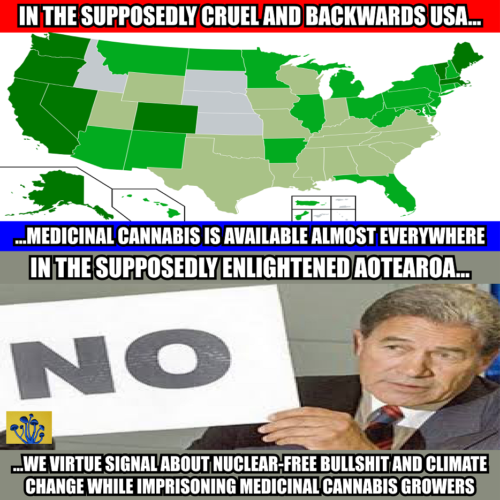
From Jim Anderton to Peter Dunne and now to Winston Peters, New Zealand has always managed to find one piss-soaked old bastard to hold up cannabis law reform

The New Zealand First Party won 8.7% of the votes in the 2014 General Election, which entitled them to 11 Parliamentary seats. Strategic blunders saw them fall to 7.2% of the vote in 2017, still above the 5% threshold but precariously so. New Zealand First is at risk of committing another strategic blunder by opposing Chloe Swarbrick’s Medicinal Cannabis Bill, and this article will explain why.

Dan McGlashan’s Understanding New Zealand provides us with an explanation for what happened here. We can see that the correlation between being Maori and voting New Zealand First was initially very strong, at 0.66 in 2014, when they did very well in the Maori seats. By 2017 the strength of this correlation had fallen to 0.38, as a large proportion of that Maori support abandoned the party.

Between 2014 and the 2017 General Election, New Zealand First came out in opposition to those same Maori seats in which they had done so well. This was a massive error because Maori people are extremely reluctant to cede any kind of political power to the Crown, for the understandable reason that when they have done so in the past, they ended up losing heavily from it.

New Zealand First were punished at the ballot box in 2017, losing 1.5% of their vote, mostly from Maoris who switched back to to Labour.

Between 2017 and the 2020 General Election, we may see another fall in New Zealand First support, and for similar reasons, only this time it may be catastrophic. The difficulty is that Winston Peters risks betraying the wishes of many of the people who support their party by opposing Swarbrick’s Bill.

On the Bill, Peters is quoted as saying “It goes far too far. There’s no restrictions at all, it’s random, it’s haphazard, it’s free for all.” Whether this means New Zealand First will support the Bill through its first reading or not is unclear, but if they vote to dismiss the Bill they run the risk of self-destruction, because they will alienate many of their core supporters.

Invalid’s beneficiaries are heavy supporters of New Zealand First – the correlation between being on an invalid’s benefit and voting New Zealand First in 2017 was 0.47, which is moderately strong. Many of these invalids have found medicinal relief in cannabis, which is reflected in the strong correlation of 0.79 between being on an invalid’s benefit and voting Aotearoa Legalise Cannabis Party in 2017.

These stats suggest that there are a large number of cannabis-using invalids who voted New Zealand First at the last election, and further New Zealand First opposition to cannabis law reform risks alienating these people further.

Although New Zealand First does get more support from older people than younger ones, this is nowhere near as pronounced as most people think it is. The correlation between median age and voting New Zealand First in 2017 was only 0.26, in comparison to the correlation of 0.78 between median age and voting National in 2017.

Therefore, concern about the opinions of elderly Boomers with regard to cannabis ought not factor too heavily in New Zealand First’s calculus. The vast majority of young people support proper cannabis law reform, and New Zealand First risks tarnishing their image among these voters through their conservatism on this issue.

Perhaps the biggest risk that New Zealand First runs by opposing this medicinal cannabis bill is through losing the support of the New Zealand-born, who are not only the biggest New Zealand First supporters by far but also the biggest cannabis law reform supporters by far. The correlation between being New Zealand-born and voting for New Zealand First in 2017 was 0.54, which is moderately strong, but the correlation between being New Zealand-born and voting for the Aotearoa Legalise Cannabis Party in 2017 was 0.73.

Cannabis use is an intrinsic part of Kiwi culture, and it’s not going anywhere. If the New Zealand First Party really wants to make good on its pretensions to represent Kiwis and our culture, they need to accept the fact that we really enjoy using cannabis and are going to keep doing it.

New Zealand First might be tempted by conservative instincts to oppose this bill, but you can’t piss directly in the face of your own supporters in that way and expect that they will turn out to support you when you ask for it at election time. Maoris, young people and invalids are all heavily impacted by our ludicrous cannabis laws, and young Maoris doubly so. They have been crying out for relief, and a recreational alternative to alcohol, for decades.

New Zealand is already 22 years behind California on the medicinal cannabis issue, and New Zealand First is causing this country to fall further and further behind, mostly at the expense of their own long-term voters. If they don’t keep up with the state of play and research in other jurisdictions they risk destruction at the hands of the voters.

*

If you enjoyed reading this essay, you can get a compilation of the Best VJMP Essays and Articles of 2017 from Amazon for Kindle or Amazon for CreateSpace (for international readers), or TradeMe (for Kiwis).

To Deny That Cannabis Is Medicinal Is To Deny The Humanity of Medicinal Cannabis Users

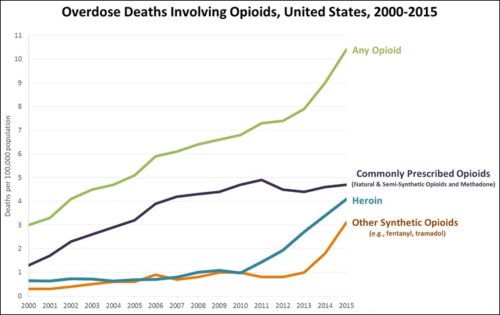
Opioids kill 1 in every 10,000 Americans every year, but they’re fully legal

One of the most awful aspects of being a medicinal cannabis user is getting lied to by doctors and mental healthcare workers who deny the emotional and spiritual benefits of cannabis use. The problem isn’t that they won’t help you get hold of cannabis medicine (because there are plenty of people who will) – it’s that they refuse to have an honest conversation with you about the benefits and side-effects of using it.

It’s impossible, in most places, for a sick person who uses medicinal cannabis to expect that their doctor will listen honestly to what they have to say. If the patient mentions the benefits of their cannabis use, the doctor will insist that the patient must be mistaken when they believe that cannabis helped them. Even if the doctor goes as far as conceding that cannabis has some medicinal value, they will almost always attribute all manner of ghastly side-effects to using it.

Worst of all, it’s impossible to change the mind of your doctor by presenting evidence from jurisdictions that have legalised medicinal cannabis. It doesn’t matter that medicinal cannabis was made legal in California in 1996 after the doctors there looked at the evidence – those doctors are simply presumed to be wrong, and recklessly so. End of story.

This refusal to speak honestly with patients is, from the patient’s perspective, a dehumanising experience. It’s a way of saying that your experience can be discounted, because you are worth less than a normal human being. With almost every other medicine it’s possible to tell a doctor that it alleviates your suffering and have it considered enough to get a prescription.

This is even true of opioids, which kill 1 in every 10,000 Americans every year, and which have been so recklessly overprescribed that the opioid crisis now has its own Wikipedia page.

Not so with cannabis. Somehow cannabis has the mysterious property of causing suffering that only doctors, politicians and pharmaceutical company lobbyists are able to see. A patient might feel that their suffering is reduced from using medicinal cannabis, but unfortunately for them, they are not considered full human beings on account of the claim that cannabis causes psychosis. Therefore, their belief that cannabis alleviates suffering can be dismissed on account of it being a belief held by a psychotic person.

It’s a vicious Catch-22: you might feel that the cannabis takes your suffering away, but this can be trumped by the declaring that using cannabis robs you of your ability to reason, and then anything you say can be dismissed as the ravings of a lunatic.

If a person is suffering psychologically, and they take a substance that they believe to be medicinal, and their experience of using this substance is that it ameliorates psychological suffering, then how can anyone else possibly presume to judge otherwise?

It might be that the side-effects of using some particular medicines are so great that, on balance, it’s better to look for an alternative than to prescribe them, but significant side-effects from cannabis use are non-existent.

The feeling from the patient’s perspective is that doctors are saying that ameliorating your suffering, in particular, is not worth pursuing because you are not valuable. Elderly Baby Boomers are getting stuffed full of opioids at the first murmur of complaint, but if anyone else wants to use some cannabis they have to risk several years in prison.

*

If you enjoyed reading this essay, you can get a compilation of the Best VJMP Essays and Articles of 2017 from Amazon for Kindle or Amazon for CreateSpace (for international readers), or TradeMe (for Kiwis).