

The Case For Cannabis: Cannabis Does Not Cause Schizophrenia

One of the most common pieces of folk wisdom regarding cannabis is that it causes schizophrenia. For some reason, the one thing that every muggle seems to know about cannabis is that, if you smoke too much of it, you go crazy. Like almost everything else that muggles think they know about cannabis, this factoid is bollocks, as this examination will show.

The reason why it is commonly believed that cannabis causes schizophrenia is because of the large number of schizophrenics who smoke cannabis. It is believed that up to 25% of schizophrenics have a “cannabis use disorder”, and there is certainly a strong association between the two, but it isn’t because cannabis causes psychosis.

Most schizophrenics could have told you many years ago (as we did in the Cannabis Activist’s Handbook) that cannabis is medicinal for people with mental illnesses. There is currently much interest in the use of CBD (cannabidiol) medicine in the treatment of psychosis. This is also mentioned here. A Schizophrenia Bulletin article stated that “Interest in the therapeutic potential of CBD stemmed from evidence that it has broadly opposite effects to that of THC.”

The most recent evidence suggests that cannabidiol has the opposite effect of THC in many ways. CBD appears to reduce positive symptoms (e.g. hallucinations) in schizophrenics, which again testifies to its medicinal qualities. It doesn’t cause them – indeed, “even high doses of oral CBD do not cause psychological, psychomotor, cognitive, or physical effects that are characteristic for THC.”

This recent research suggests that some of the cannabinoids in the cannabis plant, particularly CBD, have a calming and soothing effect. This effect is not necessarily limited to people with mental illnesses, but for people with mental illnesses this calming and soothing effect is certainly medicinal. Once the medicinal benefits of CBD are understood, it becomes obvious that much of the reason for the association between psychosis and cannabis is because psychotics find that ingesting the CBD in cannabis alleviates some of the suffering that comes with psychosis.

This study found that it was much more likely that predictors of schizophrenia led to cannabis use than that cannabis use led to schizophrenia; in other words, underlying factors that tended to cause schizophrenia also tended to cause cannabis use. Of some interest is that schizophrenia itself is a predictor of future cannabis use, which supports the idea that the nature of the suffering caused by the condition happens to be alleviated by cannabis. Indeed, cannabis use itself is a heritable trait.

Supporting this was a study that found that “cannabis use was genetically correlated with a wide range of behaviors and personality traits, such as alcohol use and dependence, increased risk taking, and decreased conscientiousness, as well as a variety of mental health disorders.”

So there is mounting evidence that underlying psychological factors explain much of the cannabis-psychosis connection. It’s known that genes heavily influence many personality traits, such as openness and degree of neophilia/neophobia, and it’s likely that such qualities lead naturally to both schizophrenia and to cannabis use. Personality characteristics that correlate with developing schizophrenia also correlate with future cannabis use.

Yet another study found that executive function in schizophrenics was superior if they were cannabis users. Examples of executive function are problem solving, working memory and cognitive flexibility. This ties in with the argument, made at length elsewhere (such as here), that the use of cannabis keeps the mind young and plastic. This may be especially true in the case of schizophrenics because of possible neurodegenerative effects of schizophrenia.

Many schizophrenics are able to tell you that cannabis grants the ability to set aside certain recurring thought patterns, particularly those of the brooding or obsessive variety. It is often possible to get stuck in thought loops and ruminate if one does not have a substance that facilitates novel and original thought patterns. Something about the nature of schizophrenia makes brooding and obsessive thoughts more likely, and so it’s apparent that a substance with the effects mentioned in the studies above will be of benefit to schizophrenics, and that this will cause them to use it more.

So the reality is that cannabis does not cause schizophrenia, but that factors associated with schizophrenia are also associated with cannabis use, and these underlying reasons are why schizophrenics use so much cannabis. In particular, a certain kind of mind has qualities that make then prone to both developing a cannabis habit and developing schizophrenia. We can guess at what some of these qualities are: no doubt openness and creativity are at the forefront, as is an early childhood marked by abuse and neglect.

Most crucially, it’s now more apparent than ever that cannabidiol is highly medicinal for people with schizophrenia. This is the main reason for the association between schizophrenia and cannabis use – using cannabis brings relief from the suffering that comes with conditions like schizophrenia. People with schizophrenia have long known this, which is why they continue to use it at high rates despite intense discouragement from doctors and politicians.

Not only is the argument that cannabis causes schizophrenia false, but the opposite is true. Elements of the cannabis plant act as anti-psychotics that alleviate the symptoms of psychotic disorders. Cannabis should be made legal so that those who benefit from the anxiolytic and antipsychotic properties of, e.g., cannabidiol, can get access to it for the sake of alleviating the suffering associated with their condition. This is especially true for schizophrenics, who seem to benefit greatly from CBD medicine.

*

This article is an excerpt from The Case For Cannabis Law Reform, compiled by Vince McLeod and due for release by VJM Publishing in the summer of 2018/19.
Bob McCoskrie Is An Absolute Fuckwit

Giving Bob McCoskrie a national platform to rant about “dope” and “Big Marijuana” is like giving your granddad a national platform to rant about Islanders after he’s had a few sherries on Boxing Day. Stuff did it anyway. This column will have a look at McCoskrie’s screed of fuckwittery, with the intent of responding to his shamelessly dishonest rhetoric with some facts.

One can guess from the title of the article (“Legalised dope is a licence for Big Marijuana to exploit young people”) that it is going to be crudely dismissive of the wishes of the New Zealand cannabis community. To have an article with the word “dope” in the headline is like publishing an anti-immigration opinion piece that had the word “niggers” in the headline. He has blatantly chosen the most inflammatory possible term to describe cannabis, one that associates cannabis use with brain damage.

In this piece, McCoskrie recounts his observations from a recent trip to Colorado, one that he undertook to “see first-hand the effects of legalising marijuana”.

His second paragraph mentions “a money-making industry of lobbyists and special interest groups putting profits over evidence-based policy protecting public health and safety, and ready to flout and challenge any regulations,” with the implication that this describes the industrial cannabis lobby, but this description more aptly fits the alcohol and timber industry lobbyists who agitated to make cannabis illegal in the first place.

McCoskrie gets hysterical about the high THC content of the cannabis products he spies in the Colorado “dope shops”, but the facts are that a high THC product actually makes the product safer. Like the fuckwit he is, McCoskrie is thinking about THC as if it was alcohol, so that a high-THC cannabis edible is somehow functionally equivalent to an absinthe or similar.

No-one has ever died of a THC overdose, so comparing it to high-proof alcohol is nonsense. Unlike alcohol, which kills people in New Zealand every weekend, cannabis doesn’t kill anyone. The most dangerous thing about cannabis is probably the long-term effects of regularly smoking it – and these are completely avoided by the edibles and vaporises that McCoskrie rants about. In other words, what he is railing against are the signs of people using cannabis more safely and responsibly to minimise harm.

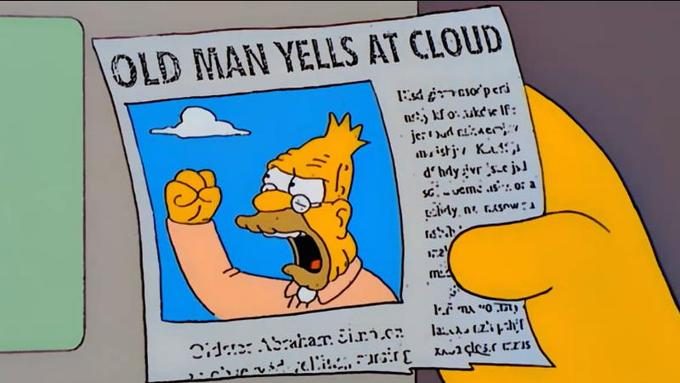
Some of the paragraphs in this article are “Old man yells at cloud” level, and the reader can’t help but to wonder if McCoskrie has some kind of senile dementia that has caused him to see things that aren’t there. He decries people in Colorado “popping a handful of Gummi Bears containing 10 times the legal limit of THC per serving,” but there is no legal limit of THC per serving, any more than there is a legal limit of caffeine per serving. The sentence is simply nonsense.

McCoskrie is so hysterical that at some points in his screed he becomes completely detached from reality. The worst example is when he cites the existence of cannabis suppositories as proof that cannabis producers are deliberately targeting their product at the young. In fact, the vast majority of people who use cannabis suppositories are elderly ones who cannot use other route of administration because of the complications of old age. Perhaps McCoskrie should have tried a few while he was over there?

It’s noteworthy that at no point in his travels through Colorado did McCoskrie see anything untoward happen on account of cannabis legalisation. He talks about the terrible panoply of cannabis-related products as if it were Weimar Republic pimps selling children on a Berlin street, but can’t recall seeing any notable level of crime in Colorado or any homelessness in the streets, or any sign of social decay. This is striking, considering that the state legalised cannabis four years ago, which is easily enough time for anything of that nature to have occurred. McCoskrie is just a wowser.

No anti-cannabis rant would be complete without employing the slippery slope fallacy, and McCoskrie duly gives us the line “they will want legalisation not just of this drug but all drugs – cocaine, heroin, P”. By this he somehow draws a connection between people who want access to medicinal cannabis and people who go on methamphetamine benders, when the two people could hardly be more different.

It’s exactly this kind of rhetoric conflating people who need medicinal cannabis with reckless criminals that fuels the War on Drugs, which means that McCoskrie must share some blame for the suffering caused by cannabis prohibition. It’s because of people like him that people like Helen Kelly have to suffer needlessly as they die.

Predictably, McCoskrie gets savaged in the comments below the article. What he is writing might have been considered mainstream conservatism 40 years ago, but now it goes down about as well as other conservative ideas from 40 years ago, like whipping up hysteria about white people and Maoris sleeping with each other. It’s apparent from reading this article that McCoskrie doesn’t have the faintest idea what he’s talking about, and is panicking for no good reason.

The only thing this piece can be compared to is a sermon by a Third World religious fundamentalist, who has travelled to the West and seen dancing and intermingling between unmarried youths and shit their pants. McCoskrie is a religious fundamentalist – his Family First lobby group want to recriminalise prostitution and further restrict alcohol. Essentially, they are theocrats, and McCoskrie wants to prohibit cannabis for the same reason that the rulers of places like Iran and Saudi Arabia do.

*

If you enjoyed reading this essay, you can get a compilation of the Best VJMP Essays and Articles of 2017 from Amazon for Kindle or Amazon for CreateSpace (for international readers), or TradeMe (for Kiwis).

The Case For Cannabis: Cannabis Is Not A Gateway Drug

A common argument for cannabis prohibition asserts that cannabis is a gateway drug, in that using it inevitably leads people to using harder and harder drugs. The idea is that we need to keep cannabis illegal so as to keep people off the pathway that leads people onto truly destructive substances. As this article will examine, there is a modicum of truth to the gateway effect, but not in the way it’s usually presented.

The usual way that the gateway drug theory is portrayed is as follows. An individual tries cannabis for the first time, and experiences a cannabis high. This is a pleasurable sense of peace and euphoria that the user decides they want to have again. So they try cannabis again, and have a good time again. So they use it some more, and soon find that they need more and more of it to get the same level of hit.

Eventually the user is addicted to cannabis. After a while, cannabis is no longer able to do the job. At this point the drug user naturally comes to seek out harder drugs, such as methamphetamine, cocaine and heroin, in the hope of getting a chance to relive the original amazing high that cannabis gave them. For some reason, the idea that cannabis use leads to heroin use is particularly prevalent in some circles, especially among the elderly (which reveals that the genesis of the gateway drug theory is in old-fashioned superstition).

The logic is that cannabis prohibition should prevent people from getting exposed to that initial cannabis high, by way of making the substance harder to get hold of. The harder it is to get hold of, the fewer people get addicted, and so the fewer people who seek out really hard and destructive drugs. Therefore, cannabis prohibition protects people from the harmful effects of, for example, methamphetamine or heroin addiction.

The reality is that the gateway effect is a phenomenon that is caused entirely by cannabis prohibition, and which would mostly disappear if there was cannabis law reform, except for in the case of people who have a deathwish.

Many drugs are illegal. Of those, cannabis is particularly badly suited to serving as a contraband substance. It has a strong smell, is bulky and doesn’t generate much raw profit if one considers how much time and expense goes into cultivating, transporting and storing it. Most other contraband substances are much easier to deal with and more profitable, especially those of the powdery kind.

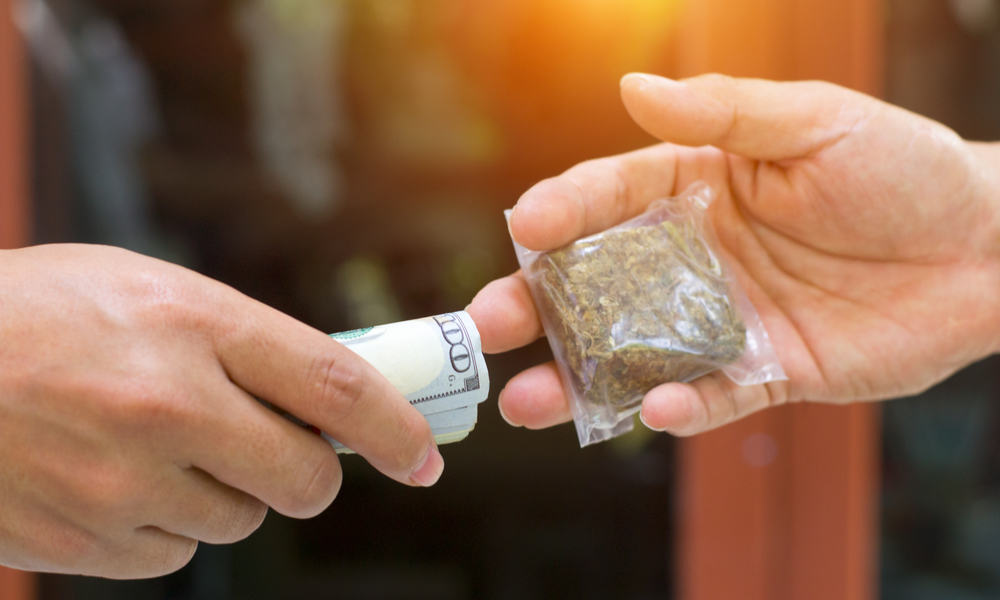
For this reason, many unscrupulous cannabis dealers use cannabis as a kind of lure, by which customers can be induced to buy more profitable (and/or addictive) substances. It’s common in New Zealand for cannabis dealers to suddenly “run out” of cannabis when a particular customer comes around, only to offer a hit of methamphetamine by way of compensation. If the customer decides that they do like it (and this is very common), the dealer is right there to sell them a point bag.

When the would-be cannabis user is then hooked on methamphetamine, they are much more profitable than they would have been if the only other option was to sell them an ounce of weed every two weeks or so. A person who is into methamphetamine is able to burn through thousands of dollars in a week. A dealer can potentially make twenty times as much money selling methamphetamine to a person than they could selling cannabis.

So the idea that cannabis is a gateway drug is untrue. There is such a thing as the gateway effect, but this only exists because of prohibition, in particular because of the opportunity that prohibition creates for drug dealers to get naive cannabis-seeking customers hooked on harder drugs. Far from being a gateway drug which leads to people recklessly doing coke, crack, meth, smack and anything else they can find in search of a buzz, cannabis has shown promise as an exit drug for conditions like heroin addiction and even alcoholism.

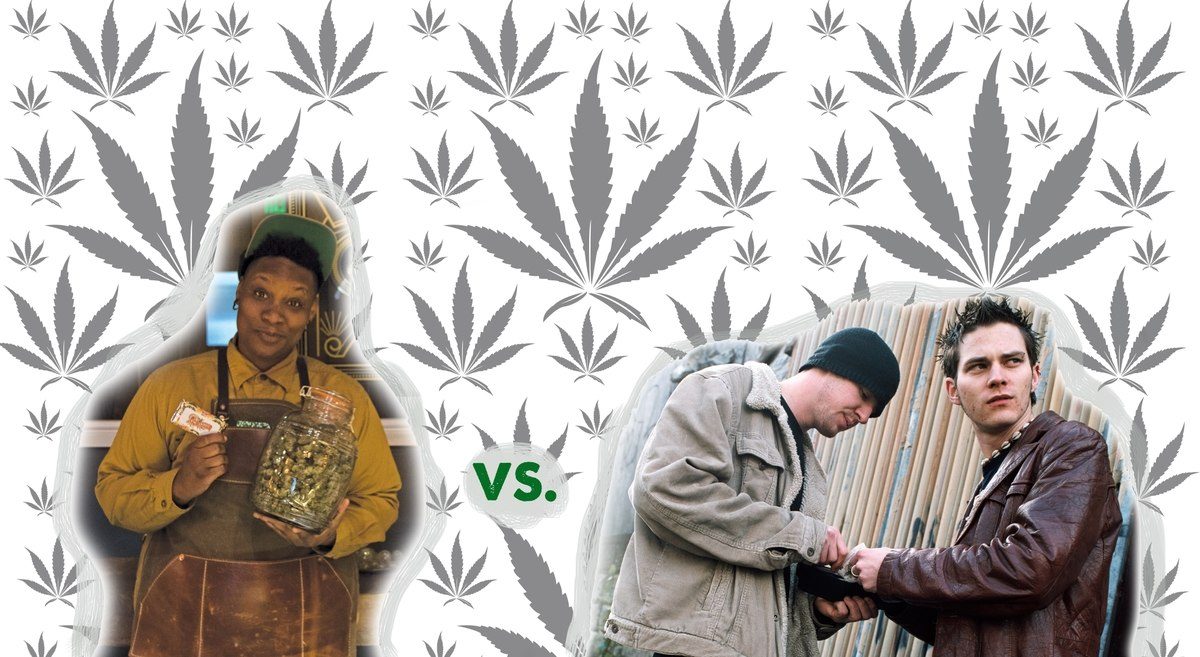
If cannabis was legal, people who want to use it could simply go to a cannabis cafe or cannabis store, buy their sativa or indica as desired, and then go home without being exposed to methamphetamine or heroin or anything else. A clerk at a cannabis store is no more likely to offer the customers methamphetamine than a bartender would. After all, they already have a steady and secure income through selling a legal drug to a set market, so why would they want to screw that up?

The truth is that cannabis prohibition forces people into the arms of criminals. This is the true causal origin of the gateway effect. Repealing cannabis prohibition would mean that the people who want to buy cannabis don’t need to encounter criminals in order to so, and consequently never get exposed to a dealer offering to sell them a truly destructive drug.

*

This article is an excerpt from The Case For Cannabis Law Reform, compiled by Vince McLeod and due for release by VJM Publishing in the summer of 2018/19.
The Case For Cannabis: Prohibition Raises Prices But Also Raises Incentive to Supply

One of the most common arguments for cannabis prohibition is a microeconomic one. The idea is that making cannabis illegal makes it more expensive, which means less people can afford to use it, which means the harmful effects of cannabis use are minimised. The logic is that people won’t be able to afford to harm themselves. As this article will show, this argument, common though it is, is mistaken.

If one assumes that cannabis use is inherently harmful, then one appears to have a clear-cut case for reducing the amount of suffering in the world by making it illegal (that cannabis is not inherently harmful is another argument, and will not be considered here). Making it illegal means that only the black market is able to supply it, which means that the end user has to pay a risk premium that takes into account the cost of Police harassment of the cannabis grower, and the inefficiencies that this harassment introduces into the growing process.

This risk premium makes cannabis more expensive, because the end user has to pay for all of the product confiscated by Police, or stolen by other criminal actors, or which was never grown because the size of the grow room was limited by the need to keep it clandestine. All of these factors serve to drive the price of cannabis up, which – according to the law of supply and demand – serves to reduce cannabis use.

The mathematics checks out. However, the core economic argument that cannabis prohibition reduces harm by disincentivising people from buying cannabis falls down, for a number of reasons.

It is true that prices fall sharply when cannabis becomes legal. The average price of an ounce in Colorado is NZD259, which means that it has fallen almost by half since legalisation took place. Websites that track the price of cannabis across various American states show that the price has fallen as low as NZD100 an ounce in places like Washington, where it is both legal and where the ability to supply is relatively unconstrained.

It isn’t true that this fall in prices leads to more use. Surveys in Washington have found that teen rates of cannabis use remained the same after cannabis legalisation. It is also noteworthy that teen rates of cannabis use in Holland are unremarkable in any sense. These surveys reveal that cannabis prohibition does not deter use.

In any case, the most important question to be asked about the high prices of cannabis caused by prohibition is this: who is getting all the money? In the same way that alcohol prohibition made Al Capone and his fellow Chicago gangsters rich, so too does cannabis prohibition funnel consumer wealth into the hands of the black market. This inevitably means criminal gangs, most of whom are deeply unpleasant people who are using the money to fund enterprises that genuinely do cause mass human suffering.

Once criminal gangs start getting involved in the cannabis trade, it means that there is going to be a lot more violence than if they weren’t involved. The black market means fighting for drug turf, which means intimidating other members of the black market away from certain territories through violence and the threat of violence. It means murders, kidnappings, gun violence, and all manner of other low-rent behaviours that lower everyone’s quality of life.

High cannabis prices incentivise all of this. The higher the cannabis prices are, the stronger the pull of the black market for cannabis on the various shady operators out there. Not only that, but the higher the stakes, the more ruthlessly people are willing to behave in order to secure a share of the profits. No-one is going to kill anyone else over the right to sell cannabis for $75 an ounce.

So the fact is that, in the final analysis, the economic equation balances out. The higher the price of cannabis, the lower the demand, true – but the higher the price, the higher the incentive to get into the black market opportunities for cannabis. If you are a criminal, and you don’t want to work, then growing some cannabis to sell to 15-year olds at $400 an ounce seems like an attractive proposition. If those 15-year olds are happy to wait until they’re 18 to buy it legally at $150 an ounce, well then you’re shit out of luck.

Cheap, legal cannabis would take a large slice of the black market, and render all criminal action in that slice uneconomic. This has several advantages, the foremost of which is that criminals can’t make as much money out of cannabis as before and therefore do not dominate the market. Another advantage is that people will be consuming a much higher grade of cannabis once it’s grown by professional horticulturalists and not gang members, and they will be able to do so more safely.

Cannabis ought to be made legal in order to disincentivise criminal actors from moving into the black market for it. Cheap, mass-produced, high-quality cannabis will take away the profit from what is currently a black market enterprise, which will have the effect of removing most of the criminal element from the cannabis trade. This will have the overall effect of reducing crime and suffering, because the criminal element causes more suffering than is prevented by cannabis being too expensive for some people to harm themselves with.

*

This article is an excerpt from The Case For Cannabis Law Reform, compiled by Vince McLeod and due for release by VJM Publishing in the summer of 2018/19.