
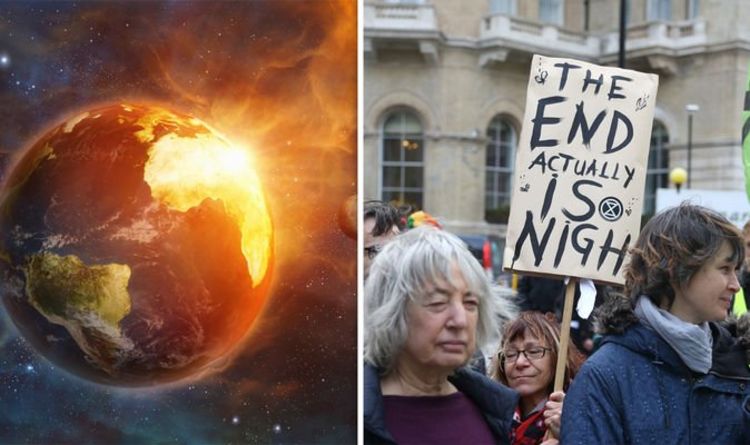
How to Deal With the Fact That We’re All Going to Die

Many psychologists and psychiatrists have noticed a sharp recent increase in the number of people who present to them with anxiety about ecological collapse. The proliferation of media relating to end-of-world environmental disaster scenarios has made many people fearful. This article will give some tips for dealing with the fact that we’re all going to die.

The phenomenon has been called climate despair. Fuelled by headlines about people dying in Japanese heatwaves, how last month was the hottest month in human history, or how humanity only has 18 months to act if catastrophe is to be averted, climate despair is when people give up on life on account of believing that humans have destroyed the climate of Earth, and thereby its capacity to support life.

It could be said to be a kind of existential horror, one that arises at the thought of a future Earth that is barren of life owing to Venus-like conditions. What is the point in doing anything, in struggling to achieve things, if we’ve just wrecked the planet and are all going to die?

Climate despair may not be irrational. Some climate models do indeed predict that we have cooked the planet beyond the point where human civilisation can continue to exist. Even though things are ticking along alright now, there may be several degrees of warming that are inescapable from this point owing to what has already been added to the atmosphere.

However, from an existential and spiritual point of view, climate despair is a needless suffering and therefore ought to be counteracted. The good news is that, in principle, climate despair is nothing more than bog-standard death anxiety wearing a new mask. Therefore, the old ways of dealing with death anxiety are applicable to dealing with climate despair.

The problem that we’re going to die is essentially two problems rolled into one.

The first is that it isn’t obvious, to many people, that consciousness survives the death of the physical body. In much the same way that the Earth intuitively feels flat, many people intuitively feel that the brain generates consciousness, and therefore the death of the brain with the death of the physical body means that consciousness ends.

The second is that it isn’t obvious, to many people, that anything we do here has any meaning. We’re all going to die, and even if consciousness survives this and goes through into the next world, we don’t appear to be able to take anything with us. We can’t take property with us, we can’t take family with us, we may not even be able to take memories with us. Therefore, no actions in this world have meaning, and despair must follow.

Solving the first problem isn’t too difficult. That’s a simple matter of refuting the common illusion that the brain generates consciousness.

If a person makes the argument that the life is meaningless because we all die, and with the death of the body goes our consciousness, therefore we are doomed to forget everything we have done and everything we are, they run into a problem. This problem is called the Argument from Biological Necessity.

Evolution is an extremely efficient process, and it only ever selects for traits that confer an immediate advantage in either survival or reproduction. But, as anyone who has read any Dostoevsky can tell you, being conscious confers no such advantage. The human animal could just as well fight and fuck without being aware of what it is doing.

If anything, consciousness is an impediment to survival, on account of that it leads to depression, anxiety and existential angst and horror. These emotions paralyse us and drive us to suicide. It would be much better to not be conscious – then one could simply do whatever was necessary to best further one’s genes.

If consciousness is not necessary, then it cannot have been selected for by natural or sexual selection, as all of the facets and qualities of the brain have been. Therefore, it cannot be generated by the brain, and therefore there’s no reason to assume that the death of the brain should affect the presence of it.

The second problem is much harder. Even if you can logically and convincingly argue that consciousness must survive the death of the physical body, is not clear that anything apart from consciousness survives with it. This raises the possibility that, after the death of the physical body, one has to start again, as if this life had never happened.

Broadly speaking, there are three ways to get life wrong as a result of all this, and one way to get it right.

One can become obsessed with breeding, and adopt the delusion that one has cheated death by producing offspring. People under this delusion know no greater pleasure than just to rut like animals, and seldom consider the stark fact that their offspring will also grow old and die, as will their offspring etc.

One can become obsessed with physical dominance, and adopt the delusion that just because one is hard to kill that one has cheated death. Even if a man is really big, strong, fit, trained in martial arts and carrying weapons, time will grind him down. Age will weaken his arms, and eventually a major organ will fail. This is no solution either.

One can become obsessed with intellectual dominance, or wealth and social status. Such a person adopts the delusion that one can live on in history if one achieves sufficiently great deeds. Of course, as the example of Ozymandias showed, even the greatest deeds are worn away by time. One can never be famous enough to overcome one’s own mortality because no-one can escape the fact that everyone dies alone.

The solution is to focus on refining one’s frequency of consciousness, because that is something that might well carry through into the next world. This means to use the power of will to work one’s consciousness into a state where it serves to bring peaceful and joyous order to the intellectual, emotional and physical environment.

The Law of Karma tells us that the energy we put out is the energy that we get back. Therefore, one ought to direct one’s will towards reducing the suffering of the conscious beings around you. If one does this correctly and of one’s true will, then chances are that one comes to be reincarnated in a place where beings with similar wills exist.

This act of changing the frequency of one’s consciousness is the only way that we can work to taking something with us into the next world. It’s therefore always possible to improve the quality of one’s spiritual position by working towards the cessation of the suffering of other sentient beings. This is true no matter what the current or future state of the world’s climate.

*

If you enjoyed reading this essay, you can get a compilation of the Best VJMP Essays and Articles of 2018 from Amazon for Kindle or Amazon for CreateSpace (for international readers), or TradeMe (for Kiwis). A compilation of the Best VJMP Essays and Articles of 2017 is also available.

My Belief in The Supreme Being

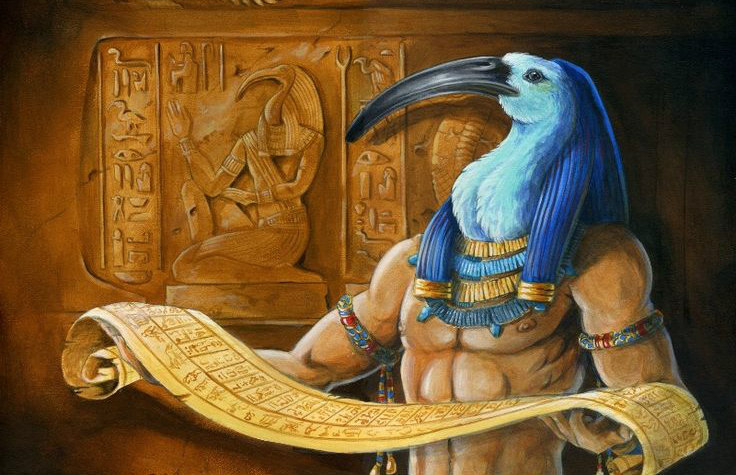
In very simple terms, my belief is that the supreme being is one that not only knows all but understands all, as to simply know is not enough. While my belief in the supreme being is somewhat my own thing the closest person that comes to mind is Thoth the Atlantean who was hailed in Ancient Egypt as the God of writing, magic and wisdom. Coincidentally (or not) my plan in life is to become like him in that sense as much as I can, and I do this through continued study through every field prioritized by usefulness at present time against the potential value of understanding something, and then to some extent applying such information.

In my own reality, I classify the fields of acquiring knowledge into two categories:

  • Knowledge of the physical universe of matter, what we can observe
  • Knowledge of the spiritual and high universes, for most this, what we cannot observe in the present time

Knowledge of the physical universe is simply the world around us and what we can, in terms of the natural malleable environment. For myself, I go about acquiring this knowledge through continuous and rigorous study of the STEM sciences in order to understand more about the world around us and bring myself closer to the state of the supreme being. Science to learn about the various areas of the physical universe and specific knowledge of every area in existence. Technology to be able to apply any piece of man-made or other technology in the space of the various universes for the benefit of me and my allies. Engineering to learn how to control and manipulate matter and be cause to the world around us and Mathematics to be able to both understand the various rules of the universe and be able to communicate new ones in a clear cohesive manner to other scholars. While not strictly required, Education is good for being able to train others in each of these areas.

You can go about your entire life simply doing the above and make reasonable tracks whilst being validated at various steps of the way, there is no strict path to accomplish this. I myself traverse the world of academia and plan to study at least a Bachelor’s degree (with Honours) in each of the STEM fields and then perhaps subsequent Masters and Ph. Ds allowing me to both learn and contribute to the knowledge base for each one in my own time. This can take an entire lifetime to accomplish and is a ‘good enough’ purpose for one to truly bring themselves closer to understanding.

However, I myself yearn for greater pastures and in my risk-seeking nature opt for higher bridges of learning. Knowledge of the spiritual and higher universes consists of study into practices which involve those that are not necessarily observable. This may be controversial, but I take each area of spirituality as a viewpoint and then in my own reality I synthesize and bring them together to my own viewpoint, my own being something I would publish as my own area of study in maybe 20-30 years, once I have understood as many as I possibly could.  

The controversial part being you could take and hold viewpoints in various spiritual practices, and then synthesize them based on what you have observed and what is useful. for example, Reiki, Bowen and perhaps one you may not have heard of, but I would recommend the Melchizedek Method which all has a primary component of application of the various techniques.  

You may ask why I do this. Well, I have a high-risk band and I want to win. If something like levitation or teleportation is possible, I want to be the first one to do it. It either is possible in this form or not or maybe I have to take another form, who knows. I take pleasure in studying both classifications of knowledge, as the most obvious is that, even if taking the spiritual viewpoints to fall through, then I at least have a comprehensive understanding of the physical plan and can boast through my retirement years that I achieved a lot with this model I created while enabling me to take the risk of studying things which perhaps may not come to pass. I believe that there is a disconnect from, my own observation, that many spiritual people lack knowledge in the physical universe while many safe and risk-free individuals lack the bravado to venture into the realm of possibility and theory. Of course, there is nothing wrong with this, but it could be better.

I personally have benefited from studying the various spiritual beliefs across the world and have personally observed these in action. However, the main limitation from studying these is that I cannot actively validate these for the average person, partially due to it being in another dimension and partially because some are incapable of observing such marvels in the present universe. One of my life purposes is to validate some of these on a physical level, perhaps I think levitation would be the honours and comparatively more realistic compared to teleportation, and, if not, then a measurable honours significant effect of using healing techniques could be achievable as time goes on.

In the end, you can take this viewpoint I have constructed as something that is self-evident but further as a viewpoint in a field of many. I believe one could follow this model and do no wrong save if they follow a school and become so focused on that one area that they neglect others, and to some extent, this purpose requires a lot of vigour and information to learn how to learn to achieve a high outcome in life. Me, I want it all, and my first objective is to determine how to live as long as I want to without my body deteriorating so I have control over myself, without having to commit bad acts.

*

Daymond Goulder-Horobin is an academic in Economics and Data Analytics and holds a Master of Business in Economics and a Graduate Diploma in Data Analytics. He is also an executive member of the Internet Party NZ and plans to follow them to the 2020 election.

21st Century Masculinity

To say that the world is suffering a crisis of masculinity is an understatement. The kind of man who Doug Stanhope once described as a “half-faggot” is now a majority. Our old models of what it means to be masculine have to be updated for the fact that we live in a high-technology age of physical comfort. This essay will explore the need for a masculinity appropriate for a new century.

Masculinity has always been represented by the straight line, or number 1, and is opposed to the feminine that is represented by the circle or the number 0. This is why the masculine has always been represented by the Sun (whose rays strike us as straight lines and which impose order) and the feminine by the Earth (upon whose watery surface no straight lines naturally exist).

In the purest esoteric sense, masculinity is the ability to impose order upon chaos. This means the ability to impose straight lines and rules upon the natural world, which is, in its raw state, made up of curves and which only acknowledges laws of iron. The masculine is that force which clears jungles and plants wheat fields, and which builds stone walls around the home city and temples in mountain caves.

When the masculine instinct goes too far, it imposes such a strict order upon the world that life is strangled out of existence. This sort of environment can be found in the equatorial deserts, which is why these areas have produced so many cruel and hypermasculine ideologies. When it doesn’t go far enough, there are no limits to how life carelessly spawns. This sort of environment can be found in the deep seas.

Back in the old days, the most masculine was the man who went out and explored. He was the Viking who got into a longboat and came back with silver and slave women. He was the navigator who led those rowing the great canoes across Polynesia to an island even further than those already known. He was the king who brought the rule of law to neighbouring barbarian tribes.

This masculinity may have reached its apogee in the centuries leading up to 1969, as it led men to conquer the world, then each other, then space. But then, man ran out of space. In the 21st century, there is no longer any physical space to explore. We have been to the ends of the Earth, we have been to the bottom of the deepest ocean trenches, we have been to the Moon.

Even more crucially, we have imposed order not only in a horizontal sense but also a vertical one. We now live in an extreme of comfort, where the vast majority of us can count on living to be elderly if we don’t do anything stupid. Each of us can access a more sumptuous range of food at the local supermarket than anything Queen Victoria could have dreamed of, and our options for entertainment are even vaster.

All of these things are, however, only physical phenomena.

The masculinity of the 21st century will be fundamentally the same as the masculinities of previous ages. The core of it will still be the ability to impose order upon chaos. But it won’t be the physical world that we impose order upon – that doesn’t need any more order imposed upon it. The terrain that needs to be set to order is the forgotten metaphysical.

We’ve spent so long focusing on mastery of the physical world that other, more subtle, disciplines have been lost. This hyperfocus on physical dominance has caused us to lose our orientation in the metaphysical planes. We’ve drifted so far from our spiritual groundings that most of us no longer believe in God. The prevailing metaphysics is purely material; the Earth existed, then we evolved upon it, and so here we are.

We are our bodies, and nothing else – when the body dies, then we are dead. This belief is taken for granted by the majority of people nowadays.

The majority of people don’t understand that this materialism is a primitive superstition that has only arisen because our metaphysical order has collapsed. It isn’t accurate, and not only is it not accurate, it’s a laughably crude and ignorant simplification. The worst of all is that it is a superstition that has driven millions of good people into a state of existential despair, on account of the belief that their inevitable physical death renders all actions meaningless.

Therefore, the future involves spirituality.

That these new spiritual vistas are dangerous ones can be seen from the attitudes that many have towards spiritual sacraments such as cannabis and the other psychedelics. The majority of people are terrified of the effects of psychedelics, much as they were once terrified of the beasts and savages that lay across the sea. But this is precisely why such vistas will be the target of 21st century masculinity.

In the new century, those who channel masculine energy into the world will be the same brave and adventurous individuals that they always were. The difference is that the vistas they explore and map out will not be physical, but will be the terrain of the mind and the soul. The 21st century masculinity will involve less Mars and more Hermes; the 21st century man will be a warrior of the soul first and foremost.

*

If you enjoyed reading this essay, you can get a compilation of the Best VJMP Essays and Articles of 2018 from Amazon for Kindle or Amazon for CreateSpace (for international readers), or TradeMe (for Kiwis). A compilation of the Best VJMP Essays and Articles of 2017 is also available.

Overcoming the Black Pill

Many are familiar with the paralysing despair that seems to leak from the stomach, into the bloodstream, and into all the other organs, especially the brain. One looks around and examines the world, and the resulting despair makes life seems hopeless and pointless, and suicide like a viable way of ending the suffering. Those who recognise it call it the Black Pill. This essay looks at how to overcome it.

It’s worth noting that getting black pilled is very different to being depressed from a chemical imbalance or similar. The Black Pill is not the same thing as depression, which usually arises as a consequence of brain damage brought about by childhood neglect and abuse. Depression is a clinical condition; the Black Pill is an existential one.

Black pills arise for a variety of reasons. They can be generalised into three groups, however, which crudely correspond to the spiritual challenges that this column has described as the Three Hurdles.

The first major black pill is the realisation that no-one knows what the fuck they’re doing on this planet. Basically everything you’ve ever been told by an authority figure (with the exception of a few scientists and similar) has been a crock of horseshit. The world’s politicians, priests and captains of industry don’t see reality accurately. And they’re leading us to disaster.

The environmental situation on Planet Earth is a black pill so large that it has to be taken as a suppository. It’s apparent to anyone who looks at the climate science that we’re currently exhausting the Earth, and some major lifestyle changes are necessary for the human species. The alternative is, potentially, ecological collapse – a collapse that will take us with it.

Anyone searching for meaning in this place eventually realises that it’s impossible to ask any authority for this, because none of them know what the fuck’s going on either, and asking them for direction will only lead to one’s own enslavement. Authority is achieved by understanding the rules of politics and the political environment, not by understanding reality accurately. Therefore, none of our rulers can be said to be legitimate.

The second major black pill is that this life ends, and it isn’t obvious what happens then. The fact that we’re all going to die is about the only material phenomenon that we can predict with absolute certainty. Although many of us entertain thoughts of an afterlife, there are very few who are absolutely certain that they will reincarnate somewhere else.

It really seems that we can take nothing with us from this world into the next, and therefore there is nothing to be won here, nothing to be achieved, collected or hoarded. Therefore, it isn’t obvious that there’s any meaning to life in this material plane. To know that all one’s works are to be dust is not a pleasant experience, but that appears to be the fate before us.

Many who realise that all of their works will be lost with their own death try to get around this by reproducing, but the inescapable fact is that one’s offspring will all themselves die, as will theirs. Simply spawning like any other animal may be a massive distraction that lasts for decades, but it doesn’t make it meaningful. It doesn’t take the black pill away, it just distracts you from feeling it.

The third major black pill is that living for pure pleasure is not fulfilling in anything but the immediate short term. It might be possible to accept that the world is going to end and that we’re all going to die, if only we could enjoy ourselves while we’re here. But it doesn’t seem to be as simple as that.

The human brain is wired up in such a way that repeated exposure to a particular stimulus eventually leads to a weakened response to that stimulus (at least, under normal circumstances). In less technical terms, too much of the same thing eventually becomes boring. This is the reality that every hedonist has tried to escape in vain. You can’t chase the dragon forever.

It might be true that the brain has a reward/punishment system built in that makes us feel good or bad, but there’s no real meaning in just stimulating this system until we die. At least, not in the sense of trying to maximise pleasure. It’s impossible for a mortal being to maximise pleasure because their mortality, and inevitable decline into death, inherently means that their life will be one of misery.

The combined effect of these three black pills has been too much for millions of people throughout history. The butcher’s bill for suicide is attestation enough to that. As a consequence, people have devoted an incredible amount of time and effort into overcoming black pills.

The art and science of overcoming black pills is, more or less, the same thing as spirituality.

All suffering arises from the illusion of separation from God. Where it gets tricky is that all life itself is the illusion of separation from God. It was understanding this grim calculus that caused Buddha to conclude that life itself was suffering. Indeed, life itself is suffering – that is the biggest black pill of all. But the fact is that, once one has accepted this, it’s white pills all the way back up again.

Life, after all, is temporary, and if life is suffering then it follows that suffering is also temporary. No matter what might be afflicting one in this material plane, there is no guarantee that it will continue to afflict one outside of it.

In fact, if life in this material plane is both temporary and suffering, that means that the true state of consciousness is one of bliss, and only through temporarily becoming enthralled in the illusions of the material world do we ever leave it. Therefore, a return to eternal bliss is inescapable. This realisation is the true Good News of spirituality.

Understanding this requires understanding that materialism is a false ideology, borne of the same simplicity that caused people to once declare the world is flat. Just because something appears to be so, doesn’t mean that it actually is so. That is just as much true of the existence of the material world as of the shape of it.

Materialism causes black pills because it insists that the brain generates consciousness and so consciousness is extinguished with the death of the brain. This leads directly to the assumption that nothing has any meaning, and therefore that causing suffering to oneself and others is just as good as doing the opposite.

The truth is that this reality in which we find ourselves is not material, but the dream of a God, whose consciousness has been split into an infinite number of individual consciousnesses, whereupon each of those individual consciousness falls under the delusion that it is the only consciousness that exists. This is for the sake of maximising the sense of novelty arising from exploring the metaverse of illusion, something otherwise known as the Great Fractal.

The meaning of this existence is not to achieve anything in particular, because God is already perfect and there is nothing to achieve. In reality, there is nothing more to do than to entertain ourselves for eternity. God seems to be of the opinion that the game of forgetting the great spiritual truths of reality, and then remembering them again, is exciting enough to repeat over and over again, forever.

We can take our frequency of consciousness with us from moment to moment, and it may be true that we take it past the death of the physical body as well. The Black Pill can thus be overcome by focusing on being the kind of energy that one would like to see expressed in the world. This will cause one to eventually incarnate in a part of the Great Fractal that reflects this energy.

*

If you enjoyed reading this essay, you can get a compilation of the Best VJMP Essays and Articles of 2018 from Amazon for Kindle or Amazon for CreateSpace (for international readers), or TradeMe (for Kiwis). A compilation of the Best VJMP Essays and Articles of 2017 is also available.